
Annual avalanche workshop emphasizes remembering place, community engagement
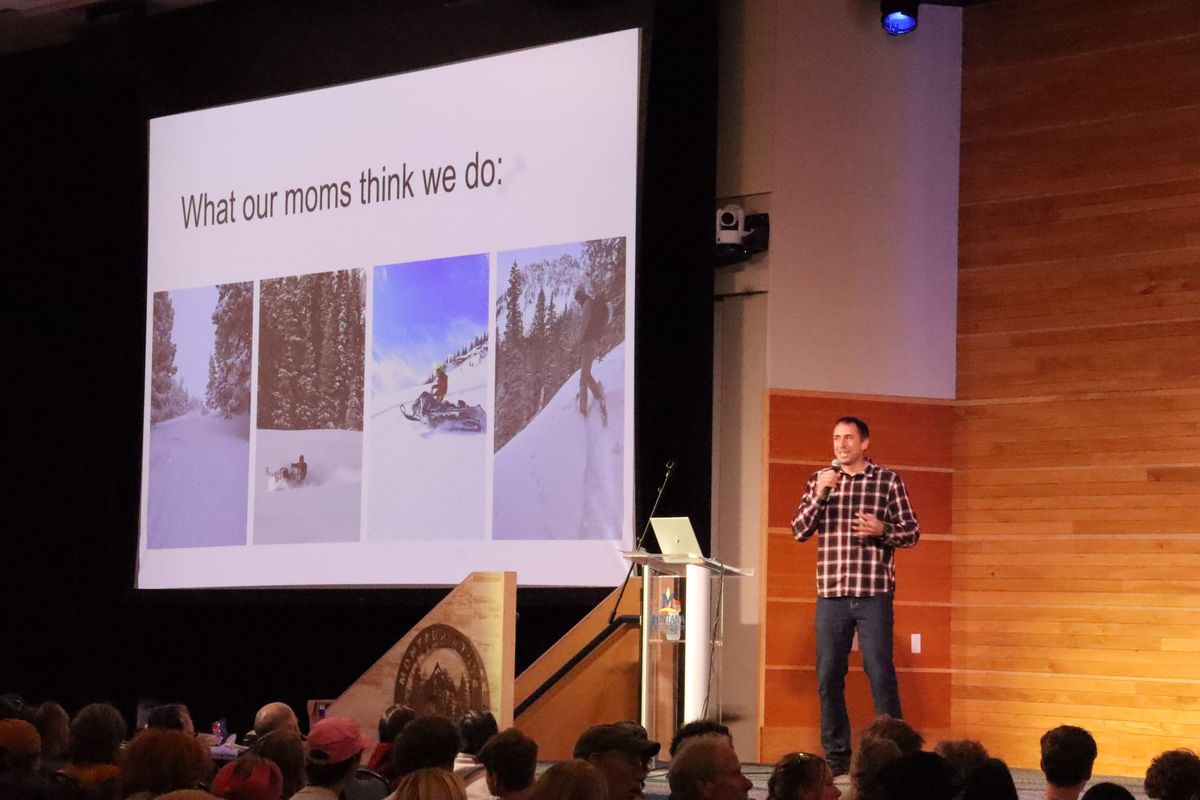
On Nov. 4, MSU hosted an avalanche workshop in the Strand Union Building ballrooms. The event was put together by MSU Dean of Students, Friends of Gallatin National Forest Avalanche Center (GNFAC) and the American Avalanche Association. Also in attendance were local businesses, clubs and nonprofit organizations tabling to promote related work.
The four-hour night included several presentations from professional athletes, people involved in conservation, Friends of the GNFAC and eight MSU graduate students showcasing their work around snow science.
Student and backcountry skier Cole Horner reflected on the purpose of the event. Although there was a focus on safety, Horner said he believed this event went further than the sport of backcountry skiing itself.
“It’s about the greater community, working with organizations, being more inclusive, increasing education and working with the Avy Center,” he said.
To Horner, the event focused on the cultural and climatic safety of places Bozemanites recreate in, serving as a reminder that the landscapes are more than a backdrop and setting we use.
One speaker at the event was Seth Fenner, an ice climber and backcountry skier from the Blackfeet Nation. In his speech, Fenner spoke about his rich connection to the land from exploring the mountains on horseback with his dad, to taking his first turns on a plastic snowboard.
Today, Fenner continues to ski outside of avalanche-forecasted areas. He said this takes significantly more effort and knowledge to recreate safely. Fenner founded Blackfeet Backcountry, which works to make splitboarding more accessible to Blackfeet community members. The organization helps people find equipment and connect with other snow sport enthusiasts.
He also launched the Blackfeet High Elevation Survey to document changes and important historical and cultural elements of the mountains in relation to the tribes.
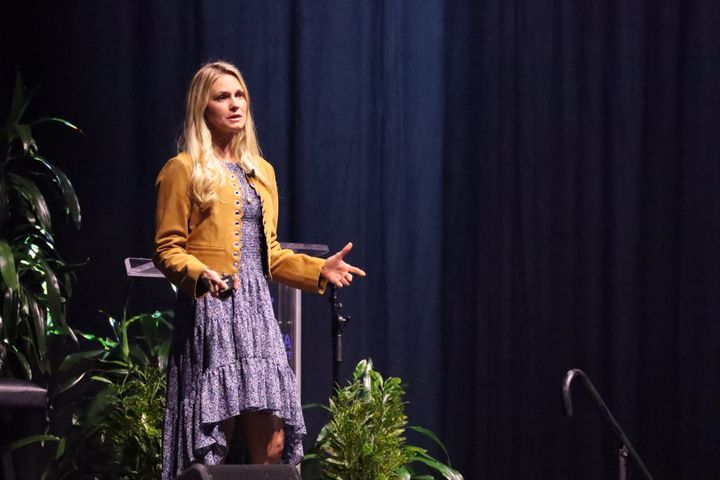
The final speaker of the night was Kit DesLauriers, the first person to ski down the seven summits, the first woman to ski off the summit of Mount Everest and she also won back-to-back Freeskiing World Tours in 2004 and 2005. Instead of recounting her accomplishments, she examined her connection to outdoor spaces. Specifically, DesLauriers said it inspired her conservation efforts and appreciation of culture.
“When we go out there and we think about being in connection with people, with places, with wildlife, with water, with the air, with the spirits, with the sky,” she said. “Realize that it’s just as important to be able to be connected with yourself, with your true self.”
In an interview after the event, DesLauriers expanded on the importance of connection in the backcountry. “As humans, we naturally thrive in connection — on an emotional and personal growth level and safety,” she said.
Channah Katz, the co-vice president and social coordinator for Backcountry Squatters, was tabling at the event.
Backcountry Squatters is an international nonprofit that was founded in Bozeman. The organization supports women and non-binary people entering these spaces by providing equipment and education.
“Something that I thought was very special tonight about tabling was that there were a lot of younger girls from the Bozeman community who were out, who maybe had never heard of our club since we're just on campus,” Katz said. “To be able to show them that you can grow up and find a group of wonderful people who like to do the same things as you and help kind of push the envelope for your space in the outdoors. It was really cool to share that with them.”
DesLauriers said it was special to see that everyone can have a connection to the outdoors.
One of the key subjects of the event was an emphasis on how people can take their passion for recreation and help enact change regarding climate issues and awareness.
GNFAC forecasts across roughly 1,720 square miles. Avalanche data is gathered by community-sourced observations and by forecasters at snow telemetry (SNOTEL) stations run by the Department of Natural Resources and Conservation.
The Friends of the GNFAC spoke about the importance of citizen science — which refers to public participation in scientific research in collaborative ways. For avid recreators, this could look like inputting data on tours, which can be used for research, safety and forecasting.
“We want you to go ski. We want you to go ride. And we want you to contribute. And the way we want you to contribute is submitting observations,” said Dave Zinn, an avalanche forecaster for GNFAC.
To learn more about how to engage in citizen science, visit https://communitysnowobs.org/. To submit observations on a ski tour, visit https://www.mtavalanche.com/observations#/view/observations.
Comments ()