
Answering the caller: Generations carry on contra dancing tradition in the Gallatin Valley
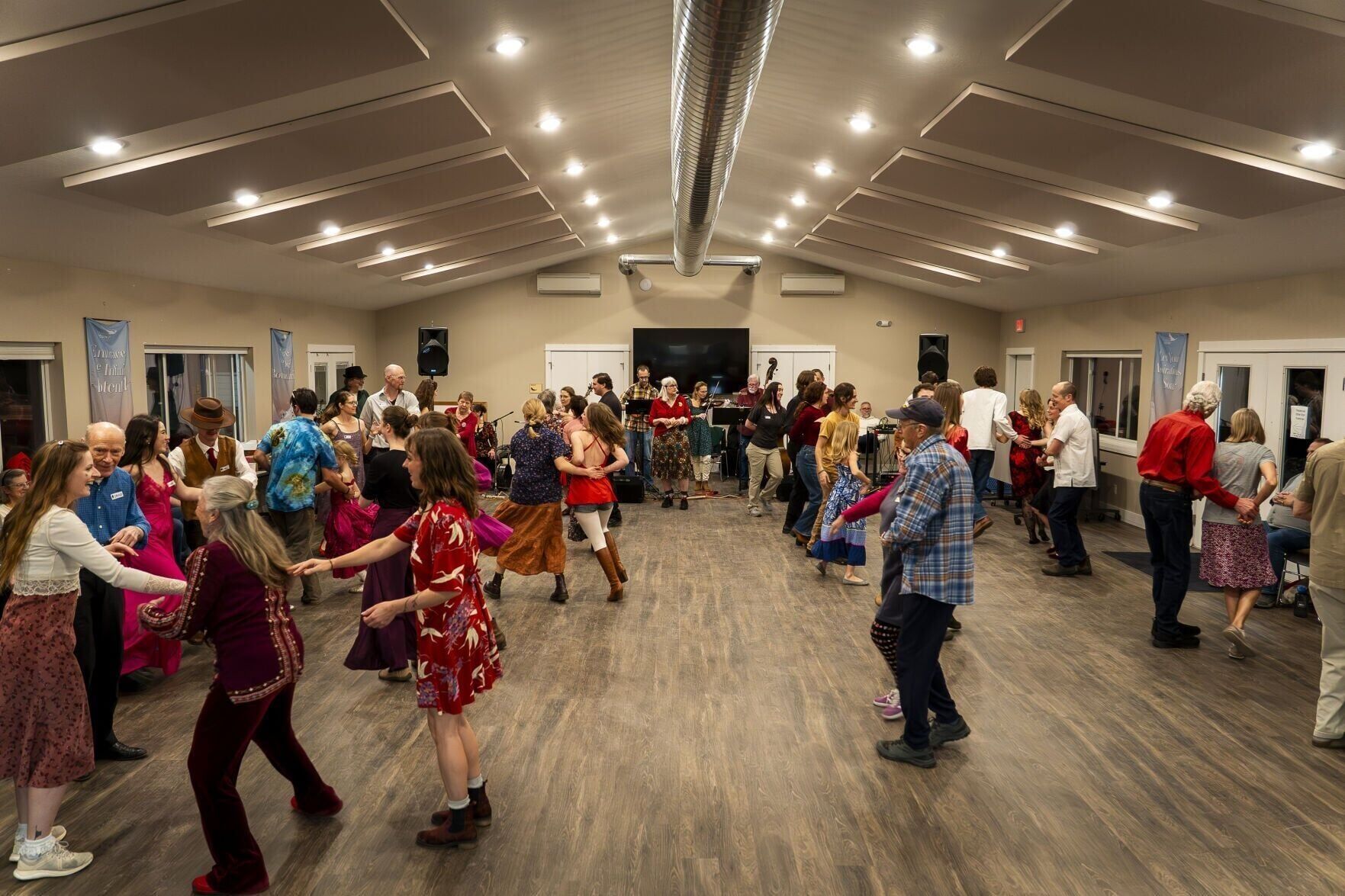
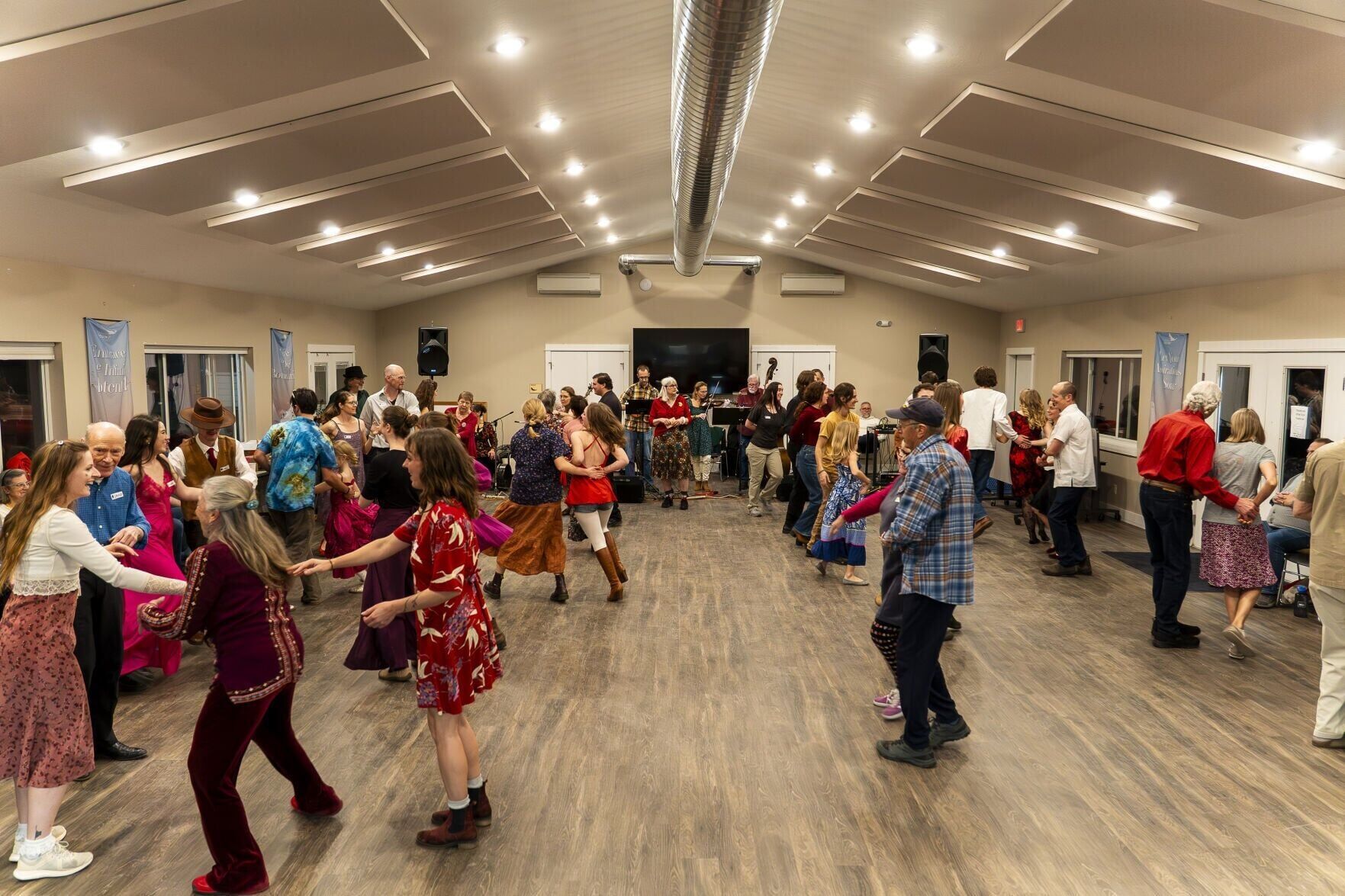
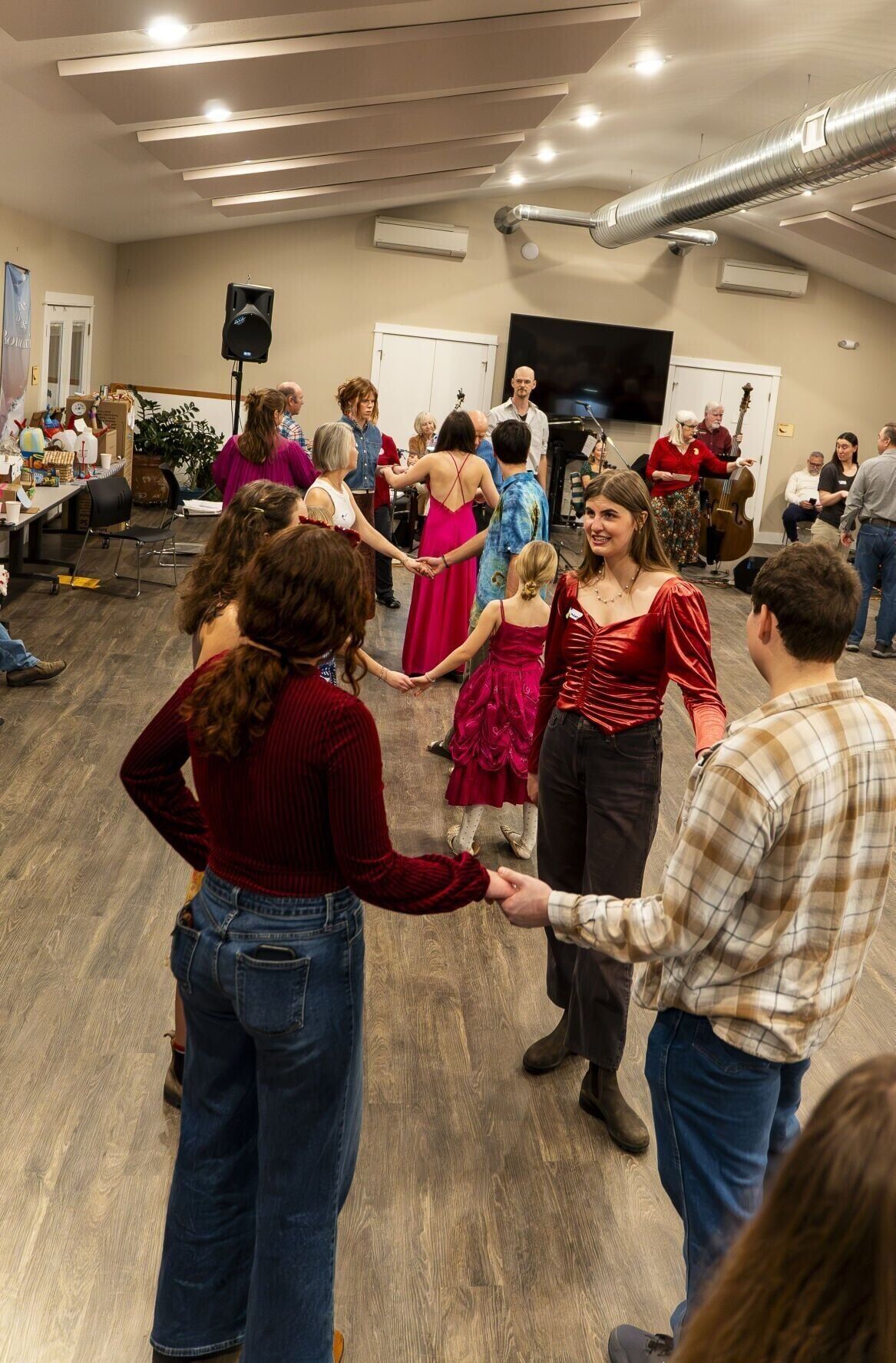
It’s a busy night at the Bozeman Senior Center as an unexpected group gathers together for a weekend of contra dancing.
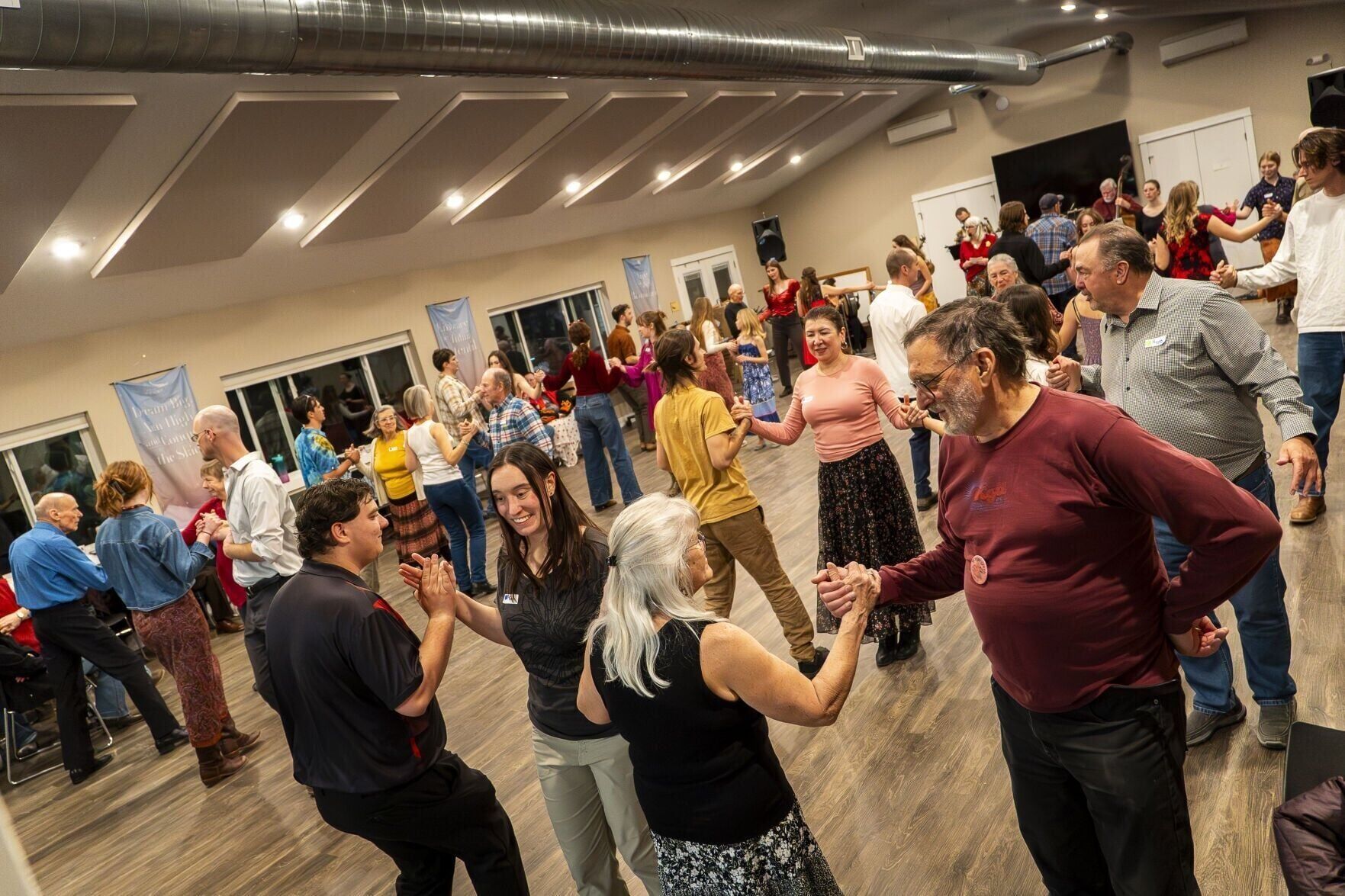
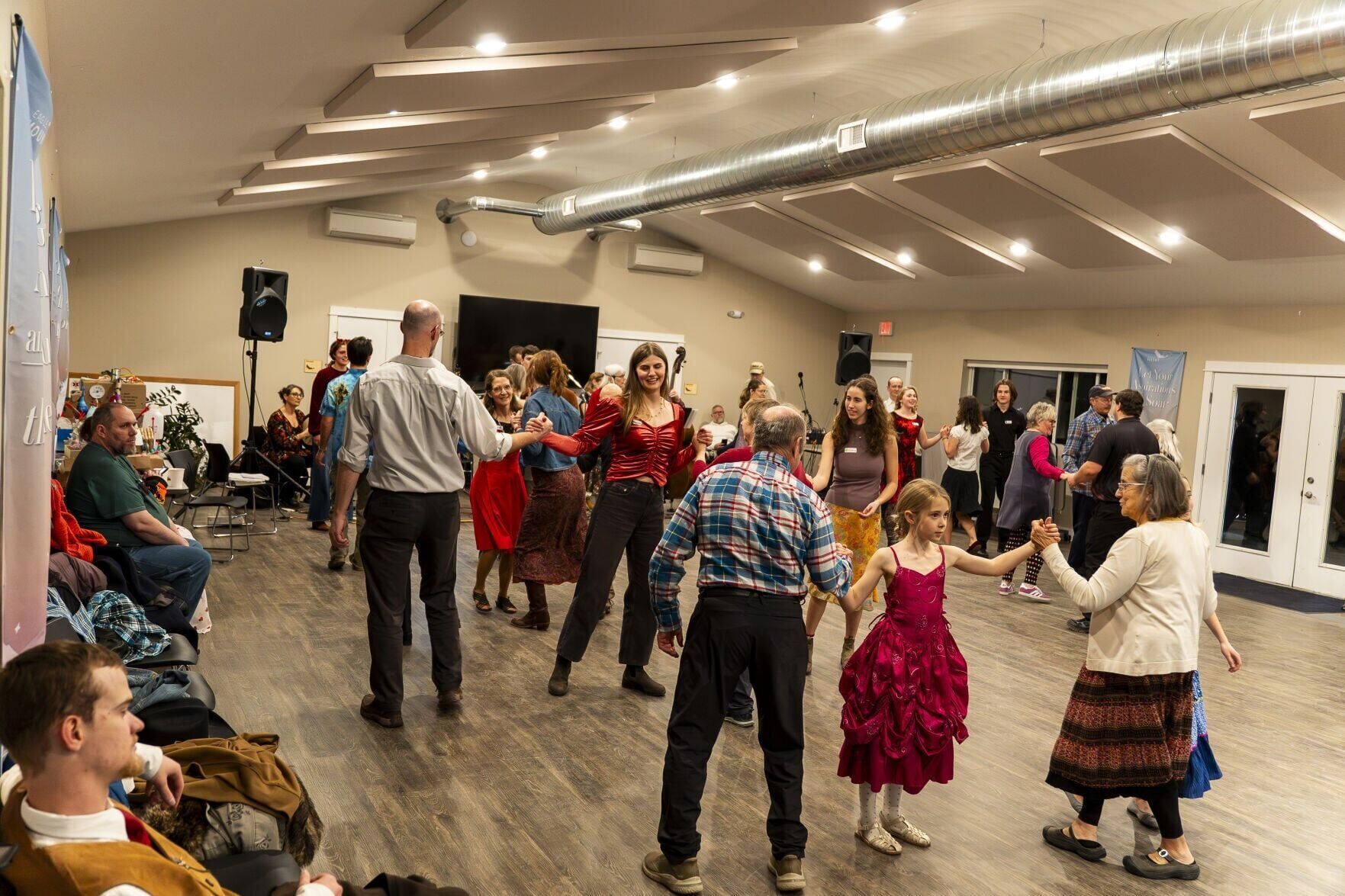
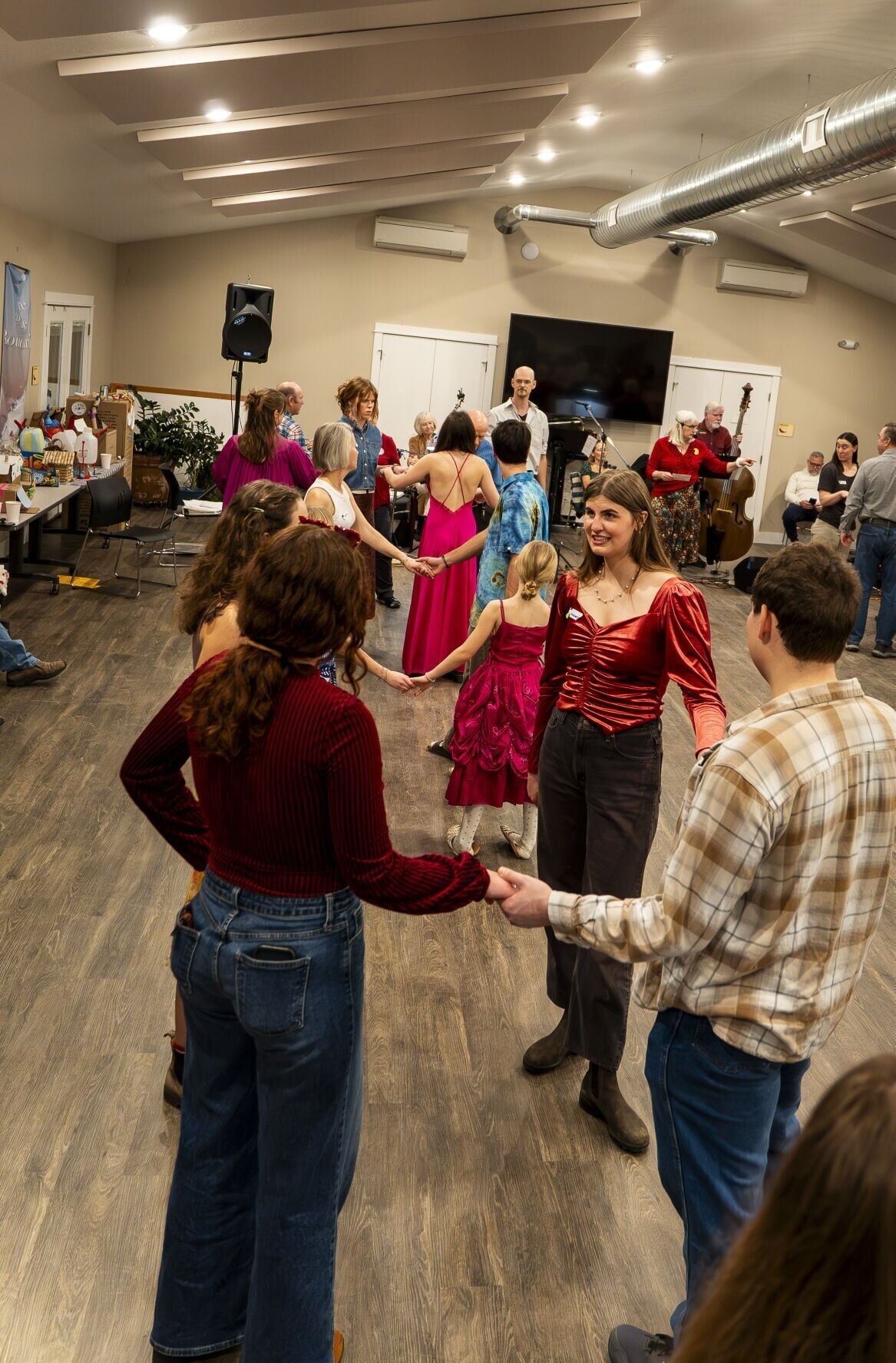
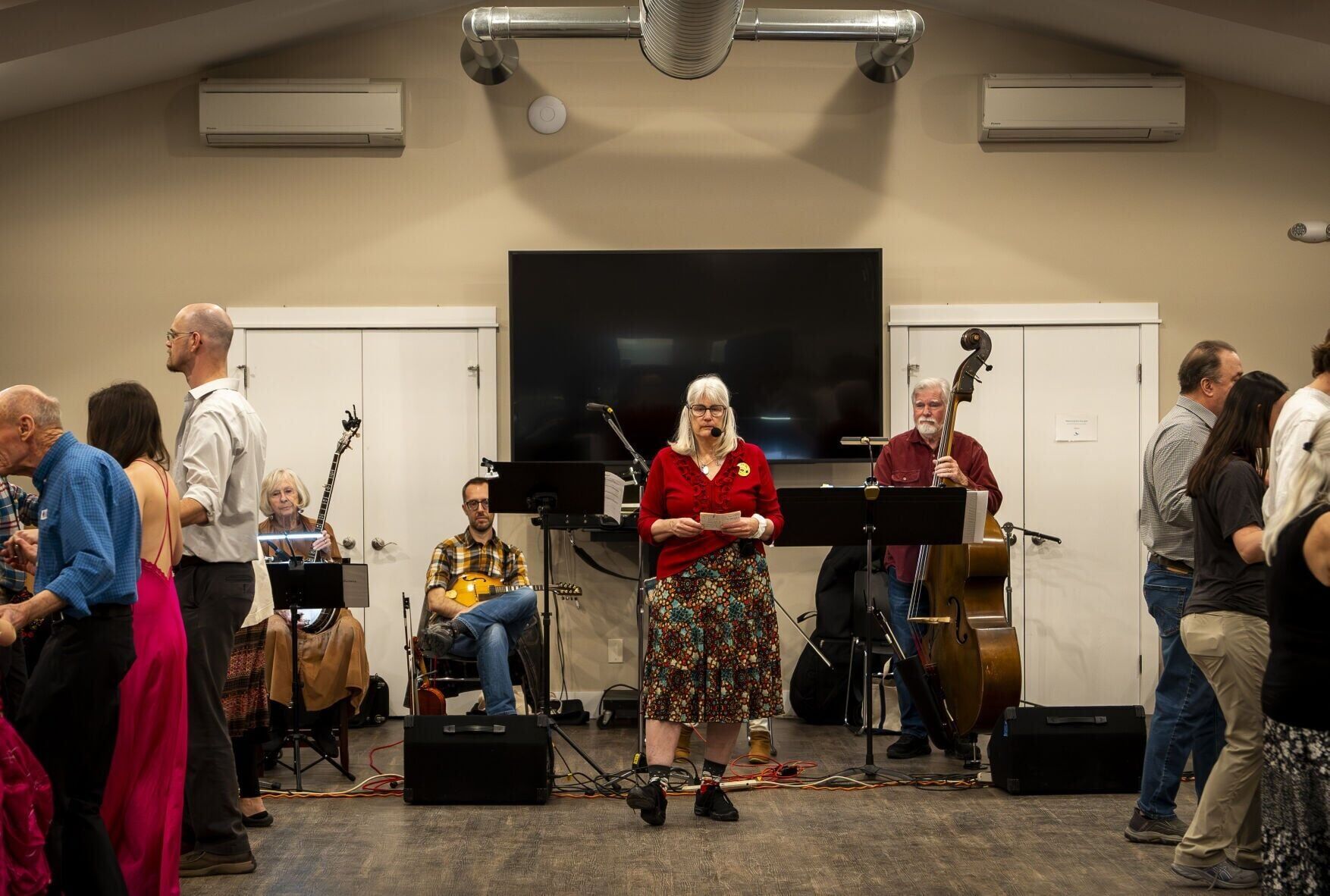
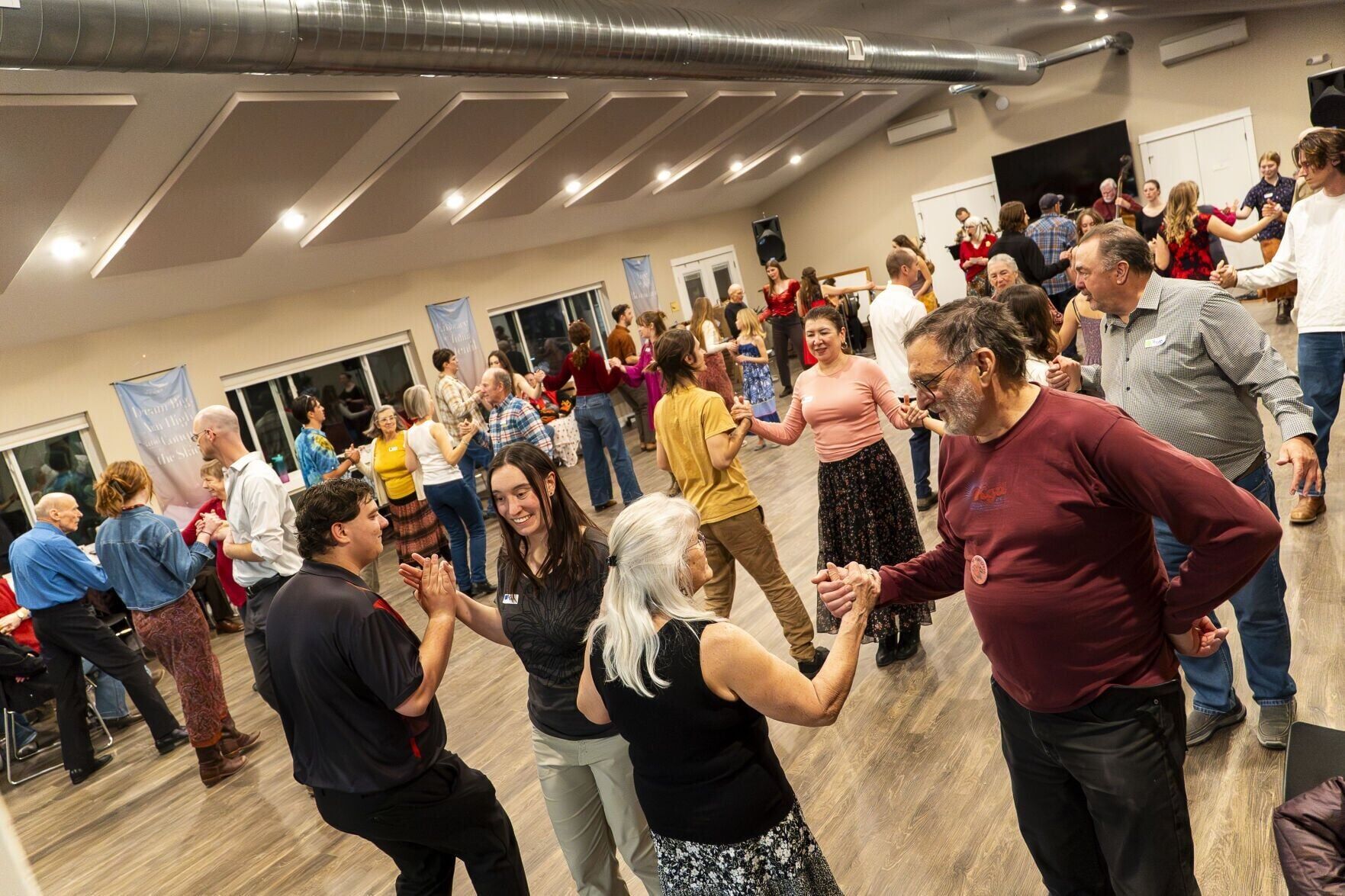
Long lines form on the dance floor as young adults partner up with more experienced dancers to form rows. Eyes turn expectantly toward the stage where the caller begins to direct the crowd.
A diverse group from all around Montana and surrounding areas, including Seattle and Tacoma, have come together for the annual Wintergreen event. Hosted by the Bozeman Folklore Society since 2002, this dance weekend helps carry on the longstanding tradition of contra dancing.
The event offers ample time for group dancing, square dancing classes, and dance calling workshops with the mission of building a strong community of musicians and callers.
Origins of contra dancing
When most people think of contra dancing, they associate it with the English country dancing of the 1600s. However, modern contra dancing has historical roots in a variety of cultures around the world.
The dance developed in places as far away as French villages and Scottish hamlets. Similar styles of dance gained popularity during the Renaissance era, when it first became acceptable for members of the opposite sex to dance together.
Contra dance has long been accompanied by live old-time music and a caller. Contra music has been notably influenced by Black folks in the American South who contributed banjo and fiddle traditions in social dance settings. The “caller” teaches participants each dance and calls out the dance figures as the music plays, lowering the barrier to entry for new dancers.
As aristocrats developed the dance style, line dances were simultaneously shaped by farming families in rural towns. This sense of egalitarianism still resonates with those who attend contra dances today, bringing together intergenerational groups with assorted backgrounds.
Over the centuries, contra dancing evolved to reflect the political and cultural trends of the time. This style of folk dancing was an integral social engagement for earlier colonizers in New England who gathered most weekends for dances, sometimes traveling to nearby towns to connect with neighbors.
During the 1800s, political candidates in New England would host line and square dances to win over voter support. After a dip in popularity in the 1940s, contra saw a resurgence in the 1960s when the dance attracted alternative young people who often rejected mainstream American values of the time, many of whom were farmers.
Today, contra dances are held throughout the United States, with notable regional variations in style and instrumentation. Several dances created during the 1700s, such as The Virginia Real and Money Musk, are still danced today. Many modern contra dances are substance-free events that offer a social alternative to bars and clubs.
Contra dancing in the Gallatin Valley
At the 2026 Wintergreen event, David Mogk presented a beautifully articulated oral history of contra dancing in the Bozeman area. Mogk describes how, “It (the resurgence of contra in Bozeman) all started in the winter of 1983-84 at a meeting of the Alliance for a Non-Nuclear Future.”
At this gathering, Mogk connected with Hallie Rugheimer and Doug Mavor. The three collectively decided to revive the old-time music and contra dancing scene in the area. They held their first contra dance at the Lindley Center, where they had 50 excited attendees.
After this initial dance, a group of musicians regularly met at Rugheimer’s house to play old-time and folk tunes, eventually forming a more formalized group known as The Broken String Band. Mogk shares that at one of these jams, “I admitted to having no musical ability other than to make noise on a mouth harp, so they gave me a copy of Don Armstrong’s Caller/Teacher Manual for Contras and said, ‘You’re the caller’. So, I was pretty much thrust into being a self-taught caller.”
The Broken String Band provided a welcoming environment for anyone interested in playing old-time music. Mogk recalls that, “All told, Hallie and I counted over 200 Broken String Band alumni who played with us at one point or another over 20 years.”
Throughout the decades, the venue for contra dances shifted, ranging from the Bozeman United Methodist Church to public school gyms to the Eagles.
“In those days, the Eagles sponsored Thursday night amateur boxing matches upstairs, so when we arrived to set up for our Friday night dances, we had to muck out the room, air it out from stale cigar smoke, and mop up the floors from spilled beer,” Mogk reminisces.
The Broken String Band went on to play at contra events around the West, though eventually many of the members parted ways, passing along the continuation of the contra tradition to the Bozeman Folklore Society. This group of dance lovers formed the organization in 1991 with a mission of promoting a variety of traditional dances. The organization hosts annual and monthly family-friendly dance events.
The next generation of contra dancers
Today, there is a lively group of young folks throughout Bozeman re-engaging with contra dance, attending events hosted by the Bozeman Folklore Society and at the Labor Temple. The Labor Temple is an affordable venue that attracts the 20s and 30s demographics, who often host dinners, parties and concerts in the space.
Rab Cummings, a long-time contra enthusiast and caller in the Gallatin Valley, creates a beginner-friendly environment, strategically choosing simple dances and taking time to offer personalized tips. Cummings prompts attendees with instructions such as, “now swing your neighbor,” and “robins chain across and back.”
Ethan Rhodes, 28, lives in Dillon, and frequently travels to Bozeman for the monthly Labor Temple dances. He grew up square dancing with his family at small dance halls in Kentucky. One of Rhodes’ favorite parts of contra dancing is connecting with new community members.
“You switch partners throughout the night, and you get to meet a lot of people. I like the young adult and intergenerational aspect. It’s a great way to connect with younger folks.”
This sentiment harkens back to the original appeal of contra for many in the 17th century, providing an opportunity for connection between townsfolk they might not otherwise meet.
Lily Johnston, 28, plays fiddle with the local group Blue Moon String Band for the Labor Temple dances. Growing up in Maine, she would often attend contra dances where her dad would play in the band. Unsure if she would find a contra community in Bozeman, she was excited to discover dances around town.
She enjoys how approachable this style of dance is and appreciates the patient teachings of local callers. Johnston has played in a variety of bands and venues throughout Montana, but notes that, “It (contra) is one of my favorite events to play. Everyone really appreciates the music. So much old-time music was written to be played for dances. It’s fun to see how much the tunes you pick impacts the energy of the room.”
She also expresses that in a town where many people take recreational activities seriously, contra dancing provides a relaxed and playful space for people to connect in a noncompetitive environment.
While contra has long been an important part of the Bozeman community, people in the area are finding new ways to engage with this historic style of dance. With every recurring dance, more folks welcome in their friends from the farm, classmates from Montana State University, and bluegrass jam partners.
In a day and age where youth struggle to engage offline, contra dancing provides a space to look your neighbors in the eyes and physically connect, even if just for the length of a tune.
Comments ()