
As RiverStone battles against kratom, some county businesses resist substance's ban
Yellowstone County's health department, RiverStone Health, is planning to initiate legal action against food establishments after some have repeatedly ignored notices warning about their serving of kratom.
Thus far, compliance has been voluntary.
Roughly 25 places, like convenience stores and restaurants, began following the rule after its January implementation. But even with months of warnings, RiverStone Health CEO Jon Forte estimates there are five establishments holding out. Neither side seems willing to back down.
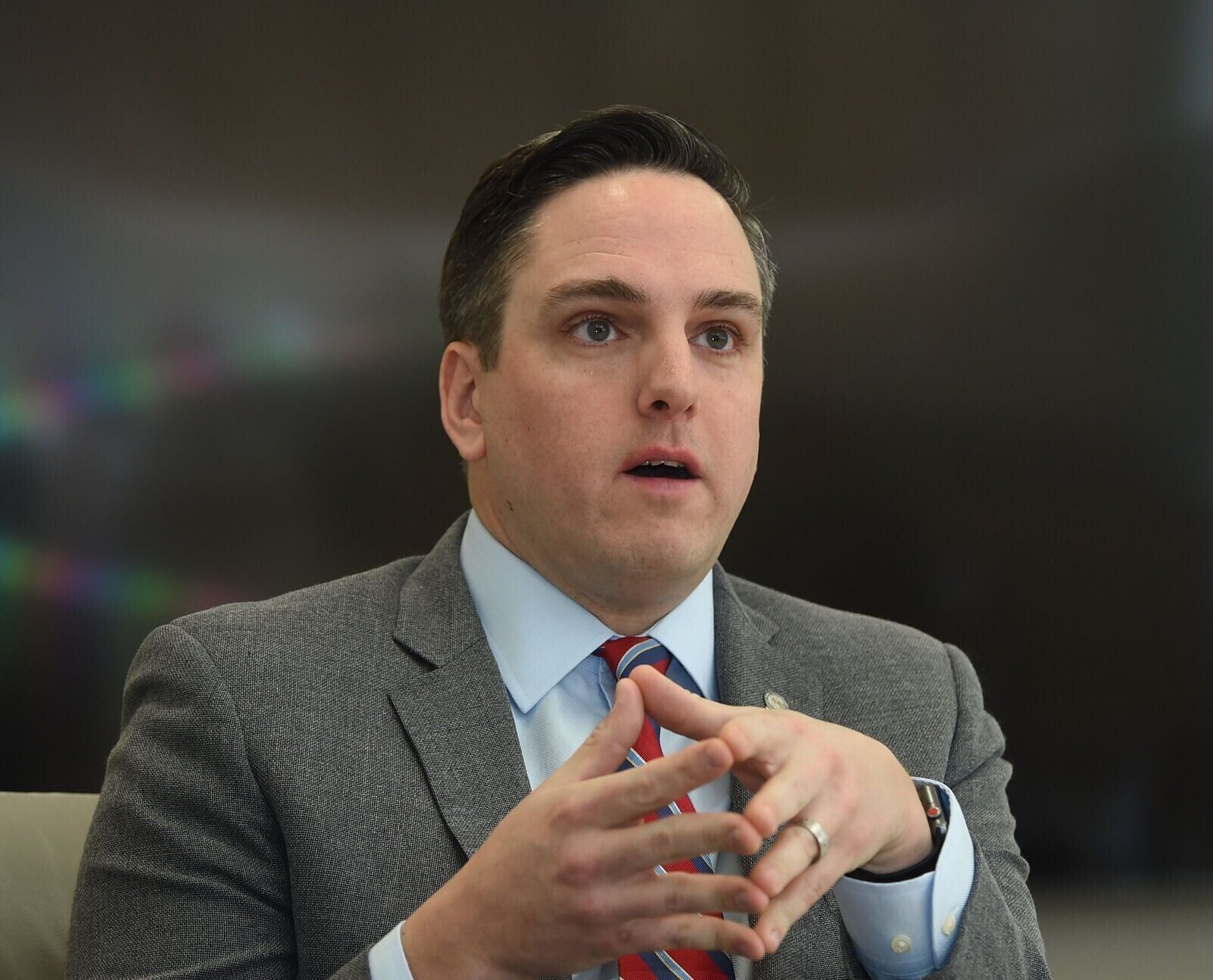
“Most understood and respected the relationship they have with their local health department and wanted to do the right thing,” the health officer said. “Now, we have five establishments remaining that want to test public health authority.”
After three violation notices — which Forte said the remaining businesses have far exceeded — the establishments' food licenses can be revoked or made invalid. RiverStone will meet with the Yellowstone County Attorney’s Office to consider appropriate enforcement actions later this month. There are roughly 1,200 issued food licenses in Yellowstone County.
In a Jan. 29 letter, the attorney’s office affirmed it would be working with the health department to legally enforce Montana Food Code, which can regulate sold ingredients. The letter said it delayed the potential of legal enforcement until March 31 to, “ensure consistent and fair treatment of all affected businesses and allow for compliance.” The letter also noted meetings with some businesses to help explain the ban.
A court order can direct a party to stop certain conduct, like the selling of kratom through injunctions, though a lawsuit can take months or years to conclude. One of the five spots, a kava bar, has already retained an attorney for the impending legal fight.
Forte, who arrived at RiverStone in January 2023, said the surge in kratom’s popularity has far outpaced regulation in Montana. It’s an especially pertinent problem for Yellowstone County as the only county in Montana with kava bars. Other Montana health departments have reportedly halted the licensing of kava bars outright, the health department leader said, preventing them from even opening.
And while kava, a soothing ingredient often in teas, isn’t targeted or a regulatory concern of RiverStone’s, Forte said those bars' names should be changed to kratom bars. He estimated that 60% of kava bars’ revenue comes from the ingredient.
“(Other counties) cut the head off the snake before it had an opportunity to exist,” Forte said. “So, we came in. We shocked the system. I have kids, and it's like when you let your kids get away with something, and then you come back and tell them, ‘No, sorry, you can't do that.’ And so once you let somebody get away with something that's illegal, it's harder to correct that behavior if you don't enforce the law from the very beginning.”
RiverStone’s mid-December announcement of the kratom ban came roughly two weeks after the federal Food and Drug Administration determined that the substance was unsafe. Inadequate information was unable to prove there wouldn’t be significant health risks with kratom.
“FDA has warned consumers not to use kratom because of the risk of serious adverse events, including liver toxicity, seizures, and substance use disorder,” FDA’s website states.
Kratom is derived from leaves of an Asian tree and is considered useful by consumers for self-treating depression and anxiety, in addition to helping with opioid use withdrawal.
Overall, the federal body has mostly focused on a concentrated byproduct of kratom known as 7-hydroxymitragynine (7-OH), which amplifies the effects of kratom and is considered to be similar to morphine.
Similarly, the kratom lobby and Montana’s attorney general have also focused on that synthetic spinoff. There have been at least 29 deaths in Montana involving 7-OH.
Depending on perspective, those deaths can be attributed to kratom, which Forte did during a University of Montana seminar in March. Or the kratom byproduct 7-OH can be blamed, as kratom supporters and some legislators have done.
RiverStone has referenced the FDA's December language repeatedly as it tries to inform the public, businesses and regulators about the ban and the dangers of kratom. Forte said the regulation is akin to how the health department has previously denied activated charcoal, which is popular in detox smoothies.
Since the charcoal wasn’t approved by the FDA, it couldn't be served as food. He’s less concerned about the debate between kratom and 7-OH in RiverStone’s regulations, though he’s said he’s been called every name in the book after his targeting of kratom.
“The actions that we're taking as the health authority in Yellowstone County are not concerned about the debate over natural leaf or highly concentrated 7-OH,” Forte said. “It’s about whether kratom or charcoal or ashwagandha or any unapproved food adulterant is in a food or beverage. That's what we are concerned about.”
Holdouts
Forte noted that of the five remaining holdouts, one seemed willing to reach a resolution before an upcoming attorney meeting, leaving four total. Forte declined to provide the names of remaining businesses to, “not throw them under the bus.”
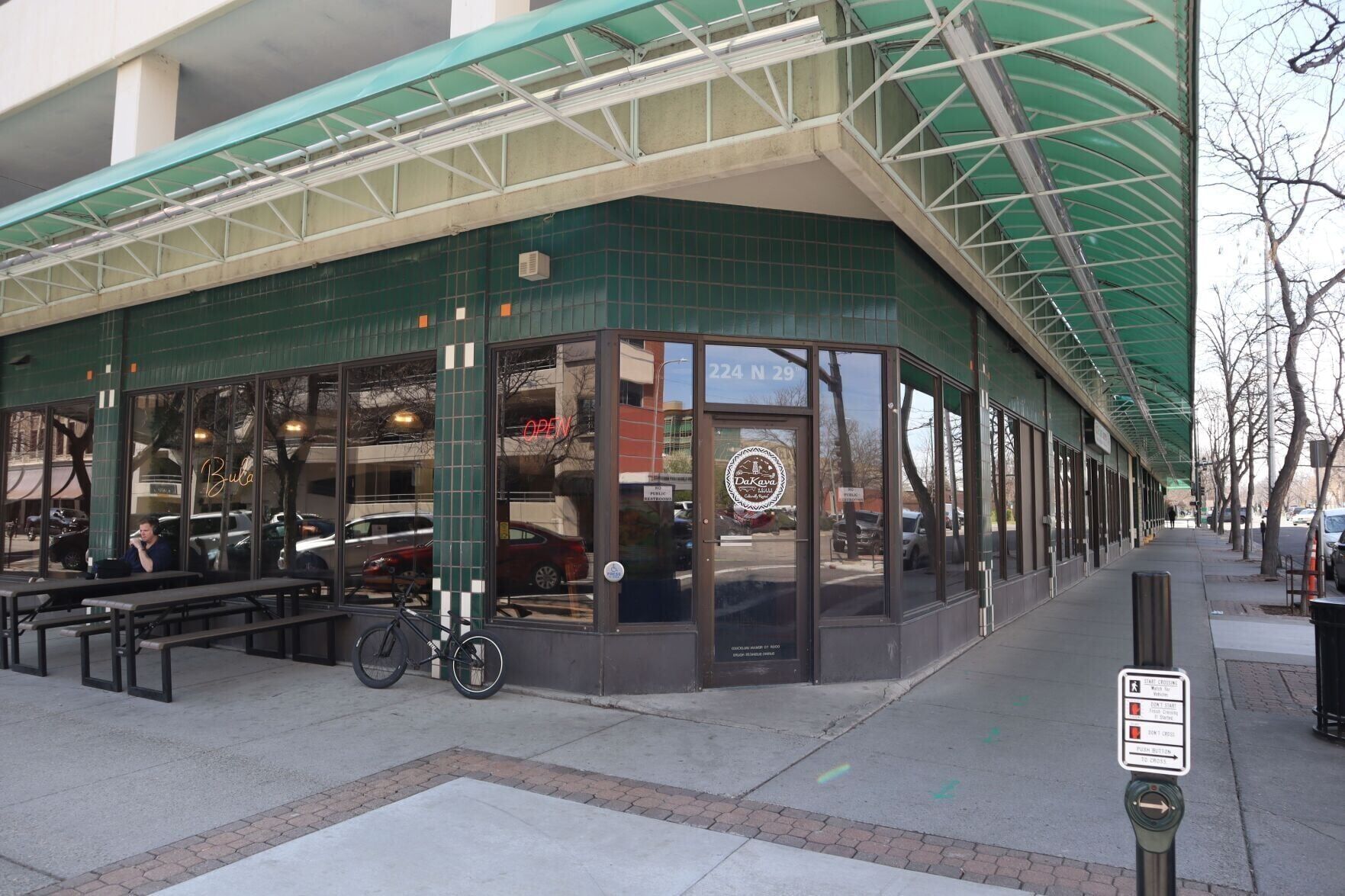
There are four kava bars currently operating in Yellowstone County. DaKava House Downtown is likely one place RiverStone remains concerned about.
Owner Will Grundhauser hasn't hesitated to attack Forte and the regulations. He called the CEO a “piece of work” within the first minute of a phone interview. He later said Forte should be, “ran out of town.”
“It's just a massive overreach,” the owner said. “There isn't anything wrong with a leaf that we sell. 7-OH? Huge problem. I don't like it. I don't sell it. None of it's in any of my businesses. That's where the confusion is. That's how little they know about it, he doesn't even realize they're different.”
Grundhauser wouldn’t disclose the exact dollar amount, but said he and other local kava bars are paying thousands a month to retain an attorney and a lobbyist in Helena. The Gazette was given his number months ago by a public relations firm with offices in New York and Washington, D.C.
In February, Grundhauser joined the Montana Kratom and Kava Association. On March 31, when legal enforcement was set to begin, the group posted a GoFundMe on their Facebook page saying that local kava bars risk closure with local regulations, although they could still serve their namesake kava. The GoFundMe was created by Koby Jeffers, an owner of Billings’ Kava Roots.
Grundhauser points to firefighters, police officers, judges and lawyers coming to his business as evidence of kratom's safety, in spite of RiverStone’s cautioning.
“They start their day with one of my teas, and they go to a professional job carrying firearms,” he said. “It is perfectly safe, and (Forte) knows this s–t.”
Grundhauser said he and other kava bars are the foremost experts on kratom and should be recognized as such when it comes to influencing regulations, as action is being currently considered by the state government.
"We're self-regulating anyways, which we don't have to do.” Grundhauser said. “We could sell this to kids if we want in really small doses. I don't think it's dangerous either, but we're not doing that, and wouldn't do that just in case. Like I said, I'm not a doctor. I don't know what'll happen in 40 years if the kid consumes it too often.”
Throughout the interview, Grundhauser criticized RiverStone and Forte. He said the health department’s own sanitarians know the rule is "ridiculous," with food inspectors embarrassed to enforce it. He pointed to the misspelling of kratom on his food and beverage license that he believes will allow him to dodge any enforcement actions.
Forte, in an emailed statement, defended the county’s sanitarians saying they take absolute pride in their work and found it “highly inappropriate” to defame “dedicated public health professionals who keep our local food supply safe.” The Gazette has made a records request to RiverStone for DaKava House Downtown's issued licenses.
The business owner also said the real reason why RiverStone is targeting kratom is that they are losing revenue from a decline in suboxone prescriptions, with more people choosing to self-medicate with kratom.
In response, Forte said there is zero financial incentive to enforcing Montana’s Food Code as expected for a city-county health department. He noted strong financial stability with RiverStone, though he said pending changes to Medicaid brought by the Big Beautiful Bill might threaten revenue.
Lastly, Grundhauser said that even if he doesn’t have a food and beverage license, he could convert his kava bar to a martial arts gym. He currently owns several such businesses across the U.S. and Canada.
“I could put a mat in the center of the floor and have one class a week there, and I don't need their food and beverage license anymore,” Grundhauser said. “The only thing I'd have to do, instead of us mixing their drink, I set it on a counter and they mix it.”
Forte said such a business would still need to have a valid food establishment license even if the drinks are given for free, he said. However, currently vape shops and dispensaries are able to dodge regulations in Yellowstone County in the absence of state or federal action.
Attempts at regulations
Montana is one of about 20 states that do not control or regulate kratom in any manner, though that number is likely to shrink. Both the business owner and the health officer were hopeful that regulations around kratom would be enacted as were discussed during the past legislative cycle. But nothing passed.
Forte said the health department delayed their own regulatory action to receive legislative guidance, before finding out there would be nothing.
In December, the health department was looking toward working with the Montana Board of Pharmacy on an emergency scheduling of 7-OH as requested by Republican Rep. Jodee Etchart of Billings. Such an action would outright ban the sale of the kratom-derived substance and could regularly be renewed every 120 days until there is regulation. Florida has taken similar action.
The Board of Pharmacy ultimately decided against the emergency scheduling, based on multiple discussions around legislation planned for 2027.
One factor influencing the decision was a letter from 17 state legislators.
The Feb. 5 letter was critical of RiverStone in all but name. It urged local government and public health leaders to recognize the distinction between kratom and 7-OH, and not focus on kratom products.
“Local actions that ignore current science, conflate fundamentally different substances, or attempt to substitute local judgment for an active state legislative process risk creating confusion, undermining consumer safety, and exceeding appropriate local authority,” the mostly Republican legislators wrote.
As of mid-February, the American Kratom Association has spent more than $10,000 on lobbying efforts in Montana since 2025. Half of it was spent during the legislative session. The other half was spent following it. Like the legislators in the letter, the group is advocating for policies that distinguish between 7-OH and kratom, according to an April 1 press release.
That press release was in response to a Centers for Disease Control study. It noted an increase of 1,200% in kratom-related exposure reports from the National Poison Data System from 2015 to 2025.
The lobbying association said the increase is only natural with the growing popularity of kratom. The report also noted kratom use remains a public health concern, despite ongoing counterclaims by some legislators in their letter that RiverStone isn’t following the science.
With the legislative body set to attempt action again, three interim committees discussed regulations related to kratom in just the last month.
In the Children, Families, Health and Human Services committee one bill requested by Billings Republican Sen. Mike Yakawich seems to take a more broad-brush approach. It would prohibit the commercial sale of all unregulated psychoactive or intoxicating substances, likely including kratom, unless authorized by state law. Yakawich did not sign onto the letter that criticized the lack of a distinction between 7-OH and kratom.
In the Law and Justice Committee, Republican Sen. Barry Usher of Laurel, who did sign the letter, used the discussion of kratom to deliver prepared remarks criticizing RiverStone. The senator said he’s since contacted the FDA over RiverStone’s actions, with the agency telling him they’re focused on 7-OH and not kratom.
“(Forte’s) not interpreting what they said properly,” Usher said. “And so I think that's part of the issue with Yellowstone County.”
The top page when searching FDA and kratom on Google is the agency’s December webpage stating it’s unsafe as a food additive. And in a statement, a spokesperson for the Department of Health & Human Services, which oversees the FDA, said regulatory actions specifically target 7-OH. Natural leaf kratom is not a focus. Still, in the same email to the Gazette, the spokesperson provided information stating the FDA continues to warn consumers not to use kratom over health concerns.
The other issue Usher took with the health department is its assessed “winners and losers” in the regulations. He noted how places like vape shops are still able to sell kratom drinks in Yellowstone County because they aren’t licensed food establishments that can be regulated by a health department.
Forte said he's repeatedly tried calling Usher to explain the regulation as the county health department seeks to work with legislators. Usher told the Gazette he's received no calls or messages directly from Forte and insisted that FDA is focused on 7-OH.
Usher said Forte is "mixing statistics up." He still said he would welcome a conversation between the differences of kratom and 7-OH as he considers draft legislation.
Forte said the resistance currently seen is partially residual from the past pushback around health regulations during the pandemic.
“When we see a new threat to the public's health, we need to do something about it,” Forte said. “Everybody wants to attack our credibility, and so if they don't accept our interpretation of FDA Food Code and Montana law and federal regulation, I am hopeful now that they will accept the Yellowstone County Attorney and our judicial system's interpretation of Montana law and federal regulation. That’s where we’re at.”


Comments ()