
ASMSU considering crisis response center, new diversity adviser
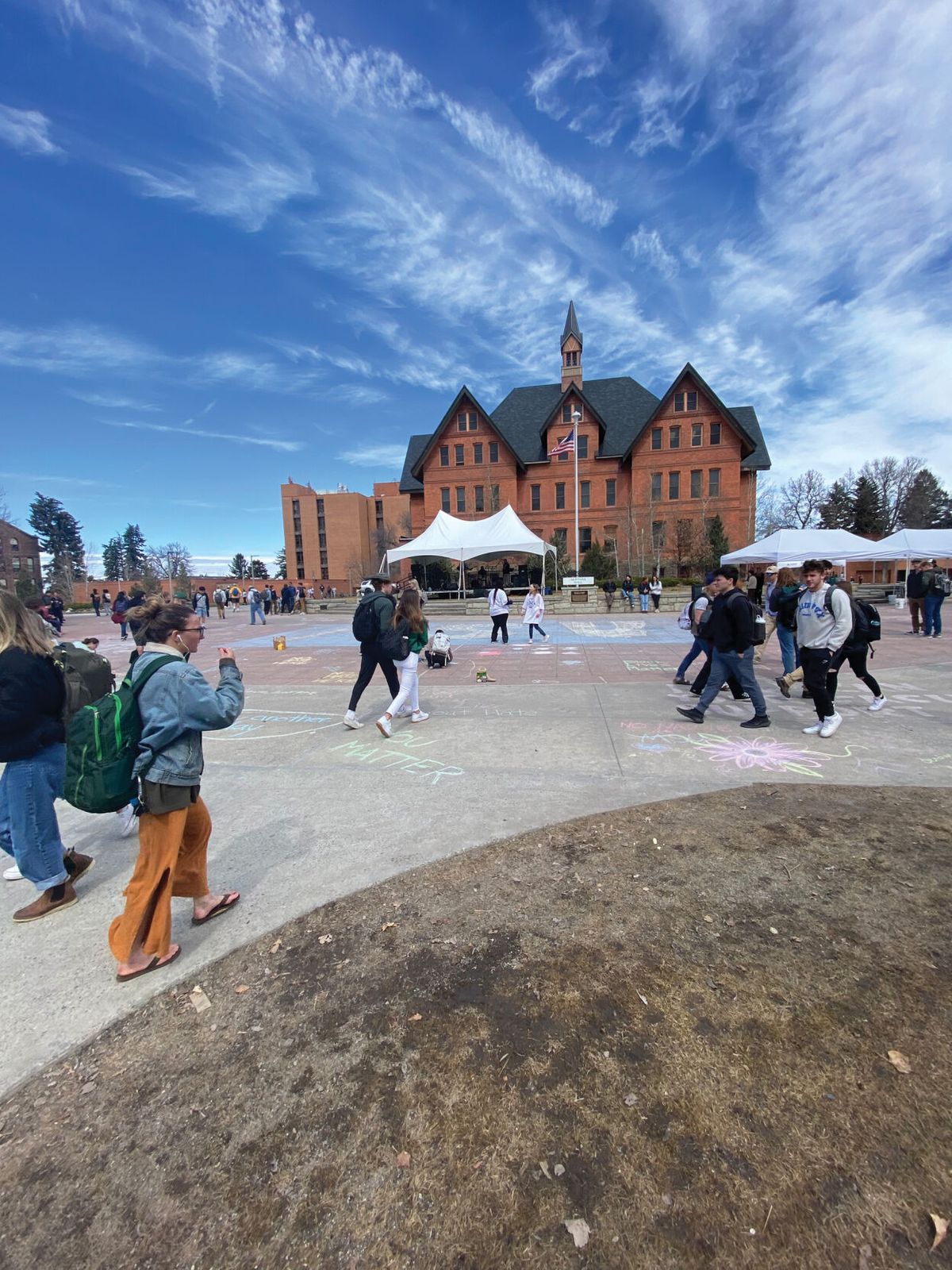
A new crisis response center and diversity adviser position on the student government’s Executive Council are in the early stages of development, prompted by feedback received during MSU’s Week of Belonging.
The Week of Belonging, a series of events organized by the Associated Students of Montana State University (ASMSU) and the Office of the President, was designed to promote and foster a culture of belonging on MSU’s campus so that every student feels they are a valued member of the MSU community, said ASMSU President Lucas Oelkers.
“I honestly think that it went extremely well. The people who engaged in the events ended up in a more positive light of the university, the administration, of ASMSU, of the general situation,” Oelkers said of the week as a whole. “And I mean, it wasn't perfect, but its goals were to create a sense of belonging on campus, which is a cultural thing. So it's not a one-time event, that's a perpetual thing that we must keep on striving to do. This was the start of it.”
ASMSU gathered feedback from the week using QR codes with input forms along with posters and murals students could write on, said Oelkers and ASMSU Vice President Isabella Roccisano. However, interpersonal communications were essential for gathering the most input from students, and these interactions happened at the resource fair and the teach-in, Oelkers said.
“We got a lot of feedback during that week, which is very valuable,” he said.
Melissa Ramirez, ASMSU vice president-elect and the current senate speaker Pro Tempore said she had many conversations with people before and during the Week of Belonging to pinpoint sources of anger and figure out what could be done to channel that anger in a productive way.
“I think after getting a bunch of feedback from a bunch of different people, I condensed it into one thing, and it was like, this university just doesn't have the toolbox to do what needs to be done,” she said.
“We have the brains, we just don't have the toolbox. And so, that's where a lot of things just get slipped or we mess up, like the ball was obviously dropped in this situation. But if we can better equip our university, then in the future, we can be more preventative instead of reactive,” she said.
Ramirez explained that what happened was a crisis, so a crisis response was needed. She said the VOICE Center is one of the best examples of an organization that can do that because it is a crisis response team. However, they are experts in the field of sexual violence, and to do that on top of protected class crises is way too much for one office, she said.
To that end, ASMSU and the Office of the President are aiming to create an office very much like a VOICE Center, but for protected class identity, Ramirez said. “Every time a student, faculty member, administrator experiences a bias-based discrimination, they will be able to go to the center, and that center will be able to navigate the entire process for them, so it's not on the back of that person who experienced it,” she said.
This office would be able to take charge of the situation, including coordinating with the Office of Institutional Equity and Office of Legal Counsel and speaking to administrators about the event so that the person who experienced the act is only responsible for unpacking what they went through, according to Ramirez. “So right now it's called the MSU Forward Center, but it's in the very, very, very, very early stages of everything,” she said.
There are many land-grant universities who have a model like this up and running, Ramirez said. However, ASMSU is currently in the research phase of this proposed office.
“We’re going to have to adapt and mold and change this model to best fit our campus and everything that we need. But looking at land-grant universities who have this up and running with populations similar to ours will give us a better vision for where this is going,” she said.
Oelkers said there’s going to be a working group this summer which will research and travel to other universities where this model exists to study how it functions and fits into the structure of the university, what staffing and budget will be required, and more such data.
“There's a lot of things and information that needs to be gathered, but the gathering process is starting, and there are steps being moved forward,” he said.
Vice President of Communications Tracy Ellig said in an April 3 statement to the Exponent that the university is committed to looking at this proposal. “We look forward to working with ASMSU this summer and part of that work will be to determine how we proceed with evaluating this proposal and determining, together, what the desired outcomes will be and how they’ll be implemented,” he wrote.
Additionally, the ASMSU Senate had a first reading on a bill last Thursday, April 27, to establish a new admin position on the student government’s Executive Council, Ramirez said.
“I call it the senior diversity adviser,” she said. “So basically, that person will sit on [Executive] Counsel as a nonvoting member, but as an advisee to all things DEI (Diversity, Equity and Inclusion) so it's always the main conversation at the table moving forward.”
“They’re the policy person, so if there's legislation regarding DEI matters, they give consultation, they give advice,” she said. This executive would go to ASMSU Senate and Supreme Court meetings, have office hours, lobby legislation, talk to senators and advise the Executive Council among other things, Ramirez said.
This person would serve underneath the executive branch, a non-voting member of the admin council, Oelkers said.
“I think it will add important conversations and points to the future of ASMSU,” he said.
Moving forward, Roccisano said she wanted students to get excited for the coming changes. “If you've got thoughts about [the changes], please tell us. We would love to incorporate opinions, experiences, needs, values, anything into this process. And if you have the opportunity, submit your input as soon as possible because we would love to get it in in the beginning and not rush it in towards the end,” she said.
“Your voice was heard, your voice is valued, and we’re listening to you,” Oelkers added.
Ramirez said that she wants to tell students to trust ASMSU, because it is doing a huge amount of invisible work behind the scenes and many actionable items are coming out of the body. “We want to institutionalize solutions, and we will get there. We have the people to do it,” she said.
President Cruzado said in an April 25 statement to the Exponent that she had gained some salient takeaways from the Week of Belonging. MSU will consider having a Student Resources Fair like the one held on Monday, April 10, four weeks into the start of the fall semester and four weeks before the end of the spring semester. “Faculty, students and staff expressed that, in this manner, we remind students about the services that are offered by our student support services, right when they might need it the most,” she wrote.
Additionally, she explained that as a corollary to the Week of Belonging, MSU has launched the Bobcat Showcase, which is a mini-concert series meant to bring people together for 30 minutes every weekday on the Mall. It began on April 17 and will end on May 5.


Comments ()