
ASMSU Supreme Court to launch pilot program for academic mediators
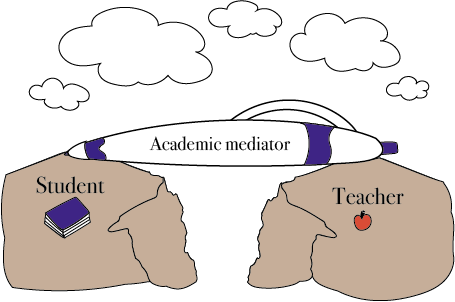
The ASMSU Supreme Court is gearing up to launch a new academic mediator pilot program for solving grievances between students and faculty members.
The project, led by associate justices Kaylee Stubbs, Garrett Wright and Jackson Krause, sprung from the process of revising the student Code of Conduct in the fall semester and follows an effort by ASMSU to inform students about their rights on campus. When the revised code was adopted by MSU in the last weeks of the fall 2022 semester, it included a new Student Bill of Rights.
During the process of revising the code, “We were having a lot of conversations with students, faculty and staff about how the academic grievance process works,” Stubbs said. “On the student side of things, we were getting feedback that when you go into that informal meeting with your professor, it can be kind of intimidating.”
At the ASMSU State of the Union at the end of the fall semester, other campus groups such as the Voice Center and Students Against Sexual Assault (SASA) also voiced opinions in favor of introducing a mediation service.
The idea behind mediation is to bring in a neutral third party to help ease tensions between students and faculty when confronting academic grievances.
“Mediation, in a sense, isn’t about a direct way to solve an issue,” Wright said. “More than anything it’s about a way to facilitate a conversation between two people on a more mutual playing field, in a way that gives both parties an opportunity to speak.”
In the past, MSU had an ombudsman, a paid mediator to facilitate these kinds of meetings, said tenured political science professor Paul Lachapelle, one of a number of faculty who responded to a survey about the program in January. However, this position was terminated about 10 years ago.
The proposed plan includes a student coordinator in the Office of Off-Campus Life who would be in charge of approximately 10 contracted mediators. This student would be in charge of organizing meetings convenient for the student and professor involved with a grievance, then involving the mediator.
The justices are currently gathering data and assessing outcomes for the project. “We expect to have a viable project with standard operating procedures ready to launch for fall 2023,” said Marianne Brough, director of the Office of Student Engagement. However, updates will be made along the way based on student and faculty feedback. Currently, the project is funded as an initiative through the ASMSU Activity Fee, Brough said.
Although the permanent funding for the program is still undefined, the justices hope to source half of the program’s funding from the university and half from student fees.
To see a lawyer, the student legal fee is $10, according to Stubbs. This fee may be subject to an increase in order to accommodate the mediation program. However, students and faculty would not be required to use the service unless they felt it was necessary.
“The service would be completely opt-in,” Stubbs said. “The student could reach out to the Office of Off-Campus Life if they felt a mediator would be necessary for their meeting with their professor.”
The justices also recognized that confronting academic grievances can be intimidating for faculty. “It’s also scary for professors to [meet about grievances],” Wright said. “I think this service will open up an avenue for students who feel that maybe an issue they’re having with their class or a professor who’s having an issue with their student… Having this service available might give those different groups a chance to express how they’re feeling in a more open manner.”
“ASMSU collected surveys from faculty about their interest in the program and the value of the service from their perspective,” Brough said. “81% of faculty who responded to the survey indicated that they would consider attending mediation for academic grievances.”
On average, most professors don’t experience academic grievances often, Stubbs said. If they do, it’s typically one to five per semester.
Transparency is critical to the function of a public institution and a democracy, Lachapelle said.
“Any process that allows scrutiny allows opportunities for students to be able to talk through issues deserves an independent review. Faculty work for the students,” he said. “Sunshine is the best disinfectant.”
Although the idea to introduce mediators is primarily to target academic grievances, the justices are hoping to expand the project to the MSU Residence Hall Association to deal with roommate and resident adviser disputes later on.
“While there might be administrative hiccups along the way, it’s really important to emphasize that the service you’re getting, the mediation, is going to be top-tier trained professionals,” Stubbs said.
“I think the importance of having a mediator there is just to establish a third party, to maintain civility,” Krause said. “To steer the conversation in a good way instead of it going off-topic.”
To any students interested in hearing and contributing to this conversation, “Decisions about programs and funding are proposed and debated in open public ASMSU meetings,” Brough added.
As the project continues to develop, the justices encouraged students to reach out with questions they might have. The ASMSU office is located in SUB 221, across the hall from the Office of Student Engagement.
If you’re interested in giving public comment, the Supreme Court holds public meetings every Wednesday at 4 p.m. in American Indian Hall in the Elders Room. The ASMSU Senate holds its public meetings every Thursday at 6 p.m. in the SUB in the Alumni Legacy Lounge.


Comments ()