
Awoken by Missoula's warm weather, ticks are out early this year
The early T-shirt weather in western Montana this year comes with some costs, including ticks and other bugs waking up weeks before normal.
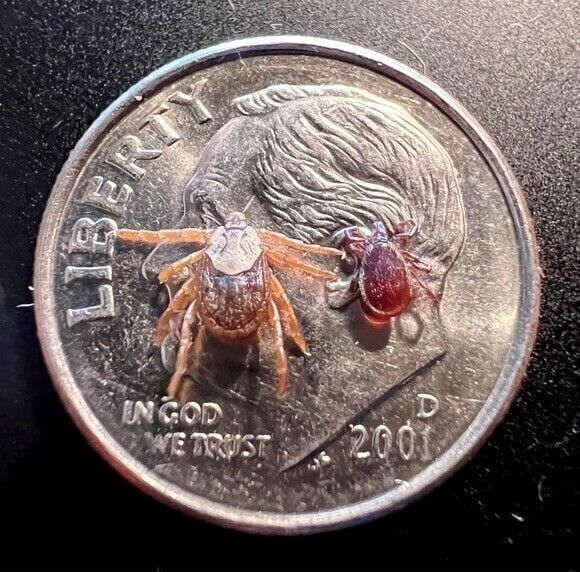
Runners, hikers and dog-walkers taking to the trails around Missoula have been attracting the parasitic hitchhikers in recent weeks, as much as a month before the tiny arachnids typically begin appearing on clothes and exposed skin. As is often the case, the trails through Mount Sentinel’s tall grass have emerged as an early-season hotspot.
“I do think we need to be careful and start taking some tick prevention early,” said Devon Cozart, a vector-borne and zoonotic disease expert with the Montana Department of Public Health and Human Services. “As soon as we have consistent days that are over freezing, as the daily average, we can start having tick activity.”
Record-breaking warmth this past winter might be a harbinger of a bad bug season in general, with no major cold snaps to set back local populations of ticks, mosquitos and other pests. But Cozart noted it’s a bit more complicated when it comes to ticks, which regenerate on two-year population cycles, meaning the effects of this winter might be more pronounced in 2027.
“It might depend a little bit too on how how humid our spring is,” she added. Ticks tend to be more active under wetter conditions. “A warm winter and a wet spring really sets us up for a bad tick season, usually.”
Missoula is emerging from a winter unlike any in recent memory, with snowfall a rarity and steadily mild weather that was the second-warmest in 130 years of record-keeping, according to the National Weather Service. March has continued the trend, including a pair of 70-degree days last week that set single-day records and prompted some of the year’s first daffodils and other flowers to begin blooming weeks early.
The most common tick to feed on humans in western Montana is the Rocky Mountain wood tick, Cozart said. The species is a carrier of several diseases, most notably Rocky Mountain spotted fever, which is somewhat rare but can be deadly if left untreated.
Symptoms include flu-like symptoms and headaches within the first two weeks after a bite, then progressing to nausea and other gastrointestinal issues. Finally, a full-body rash that gives the disease its name indicates the disease is progressing to its most dangerous stages. Cozart recommends seeking treatment as soon as any of those symptoms appear after a tick bite.
The local wood ticks can also carry Colorado tick fever, which can cause severe fatigue and fever, but typically goes away on its own.
“Thankfully it’s not as deadly, but don’t get me wrong, it is still miserable and can and will take you out for a couple weeks,” she said.
Western Montana appears to remain free of the ticks that carry Lyme disease — feared for its potentially serious effects on the neurological and cardiac systems. But blacklegged ticks, more often called “deer ticks” on the East Coast, have been recently documented a handful of times in a pair of eastern Montana counties. And Cozart noted they could also begin pushing toward the state from the West Coast, where a type of deer tick can also carry Lyme disease.



Comments ()