
Barley Breeding Program holds sensory evaluation to determine market potential of barley
Editor's note: The headline of this story has been changed to specify that the program within the Malt Quality Lab that organized the taste test is the Barley Breeding Program. A correction has also been made to reflect that the students serving the samples were from the Food Product Development Lab, rather than Gallatin College.
MSU turned 130 years old last Thursday, Feb. 16. Founded in 1893, our beloved alma mater was originally dubbed the Agricultural College of the State of Montana. What better way to celebrate that heritage today than to participate in a taste test of the university’s latest experimental grain variety.
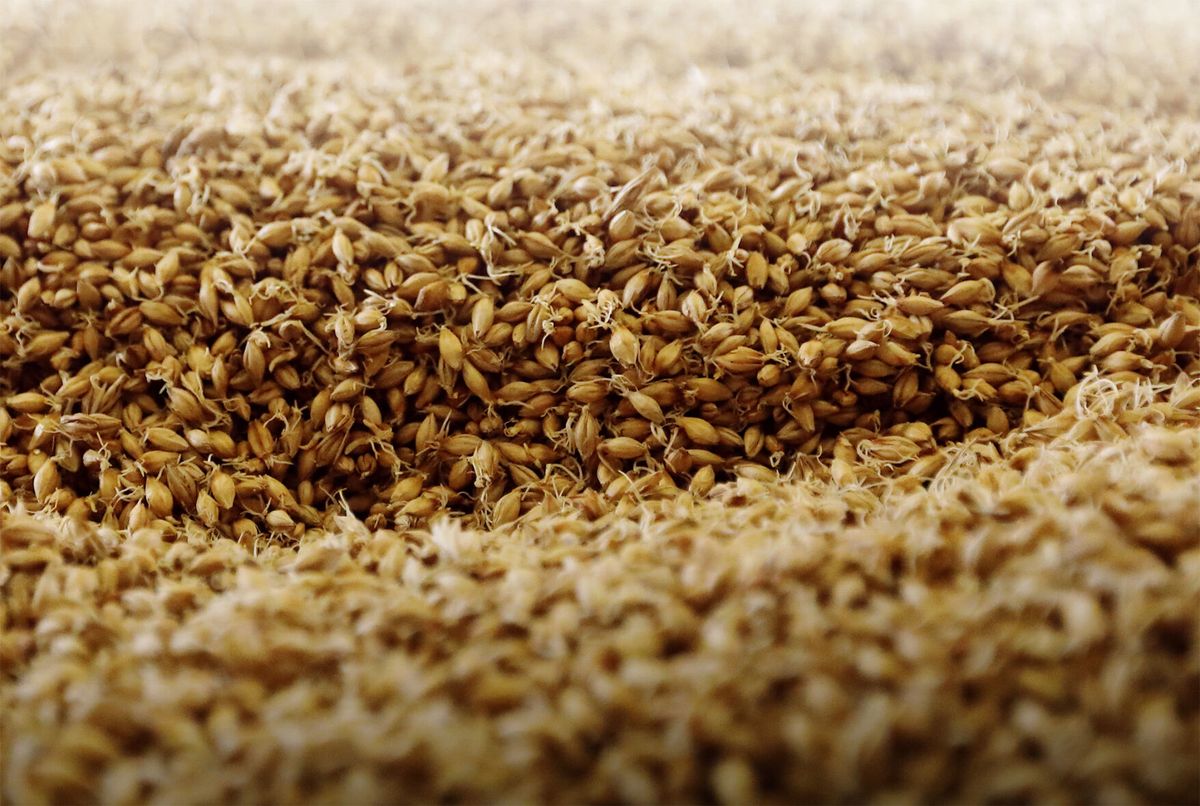
That latest variety is barley. MSU researchers are interested in its potential as a greater source of nutrition. They hope last week’s taste tests will help pave the way for more barley use in food and diminish the risk for companies to invest in growing this new grain.
“Barley is not used very much as human food,” said Dr. Janice Sherman, director of the university’s barley breeding program.
Sherman said barley is rich in protein, soluble fiber and has a low glycemic index. Unfortunately for humans, each grain is enclosed by a hard, indigestible hull. MSU’s new free-threshing variety will shed its hull upon harvest, hopefully spreading the benefits to a new generation of human consumers.
“The organic food market is interested in free-threshing barley because it is so nutritious,” said Dr. Sherman. She also thinks barley could also be exported to Asia as a rice replacement in certain processed foods.
Sherman said that with any new cereal product, “the difficulty is finding a market.”
Participants in a Feb. 17 human sensory evaluation study followed their noses — or, rather, signs telling them where to go — to Gallatin College’s culinary classroom in Hannon Hall. After being greeted at the door, they were quietly ushered to their seats.
Although each table seated four test subjects, none spoke. A plastic laminated sheet resting on each carefully draped white tablecloth instructed participants to please not communicate with each other.
“It was kind of ominous walking in,” said Charlie Farr, a freshman studying mechanical engineering. “It was very silent. Not what I was expecting, but kind of cool.”
After cleansing their palate with a glass of water, participants raised their hands to be served. Students of Gallatin College’s culinary program emerged to present the evening’s samples.
Three different barley pilaf samples were served side by side. Each was seasoned lightly and garnished with shredded carrots and parsley. All three samples had a sweet, nutty taste, but the texture differed.
“I really liked the left. The right was alright. The middle one was my least favorite” said Farr, although other participants may remember the order differently.
“We also randomize the order. Some people taste the sample on the right first, some taste the sample on the left first, and some taste the middle one first” said Dr. Wan-Yuan Kuo, director of MSU’s food product development lab and organizer of the study. Kuo says this precaution, in addition to the silence, is to minimize the spread of bias between participants.
The pilaf is only the first barley recipe to be developed by Kuo’s lab. “Products like barley crackers can be developed and manufactured using the [food] extruder,” said Kuo, referring to the university’s own Bühler BCTM 20D Pilot Twin-Screw Food Extruder.
In a food extruder, pressurized batter is forced through a small orifice to create “puffed snacks, breakfast cereals, pasta, and plant-based meat analogs,” according to the food extrusion lab’s website. The unit owned by MSU “allows for easy addition of vitamins, colorants, or flavoring agents” and has a “throughput of up to 50 kilograms per hour”.
“Montana exports the majority of its products without processing, and relies on imports for the majority of processed foods consumed within the state,” said Kuo. She hopes extruded products made from local crops will bring Montana’s food supply chain closer to home.
The sensory test was funded by a grant from the Montana Wheat and Barley Committee. Montana grain farmers paid into a voluntary fund that benefits research into new crops specifically bred for Montana’s growing climate, according to Dr. Sherman.
“It takes a lot of effort to breed [grains],” said Sherman, “a company is not going to breed if it cannot earn a high enough return.” Like many research projects at MSU, Sherman says the goal is to lower the risk for companies to invest in a new product.
“It’s sharing the risk for the common good,” Sherman said. “If I’m not moving things forward for the food supply, then I’m not moving things forward for the common good.”



Comments ()