
Big Sky touts water reuse as Montana panel examines expanding water recycling
Could one of Montana’s most expensive resort communities be an example of water reuse and conservation for the rest of the state?
Or is the process so costly and complicated that reproducing Big Sky’s success at recycling as much as 170 to 190 million gallons of water a year is out of reach for any other community? For comparison, that’s as much water as a community of 10,000 would use in 170 to 190 days.
House Joint Resolution 74, passed by the 2025 Legislature, has tasked the Water Policy Interim Committee to investigate the issues of water reuse.
The committee’s meeting on Thursday, March 26, came at the end of a historically dry winter for much of the West. Montana received minimal amounts of low-elevation snow combined with some historically warm temperatures that could threaten summer streamflows.
What’s being studied
Big Sky’s ability to recycle wastewater is just one area the committee is exploring. The group is also looking into existing statutes and rules related to reuse, seeing what other states are up to and who else in Montana is reusing water and for what purpose.
Montana already provides guidelines or regulations for seven out of 10 uses of reclaimed water, including agriculture, environmental restoration and industrial applications. The state has no such oversight for reuse of onsite collected rainwater, onsite nonpotable water or consumption by livestock.
“While it seems like the department has kind of created a framework and a pathway, it doesn't seem to be used very regularly,” said Toni Henneman, deputy research director for the Legislative Services Division.
That’s in contrast to much drier states, like California and Arizona, where “it's sort of understood that you're going to reuse your treated effluent,” said Scott Buecker, a wastewater engineer for AE2S who has worked with Big Sky.
By September, the committee is expected to — if necessary — propose legislation to “incentivize and facilitate water reuse programs in the state.”
The impetus, as Rep. Bob Carter, D-Missoula, noted in his introduction of the resolution last April, is that water is a finite resource and aquifers are being depleted faster than they are being replenished. He also is concerned that Montana has seen around 22% less rainfall since 1991.
Laura Collins, of the Montana Environmental Information Center, told legislators last year it would be smart for the state to be efficient with the water it has.
Big Sky panel
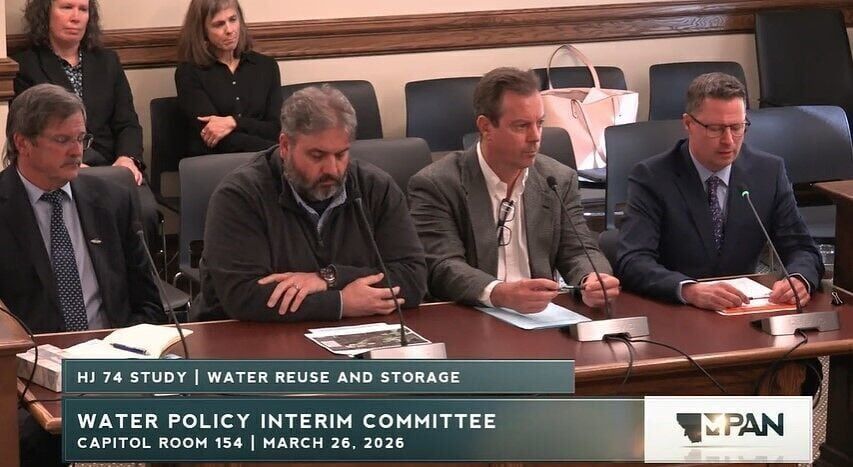
While testifying before the Water Policy Interim Committee last week, representatives of Big Sky hailed their recycling project as a large, if not also expensive, success. For more than 30 years Big Sky has recycled its treated wastewater, using it to irrigate the community’s golf course and open spaces.
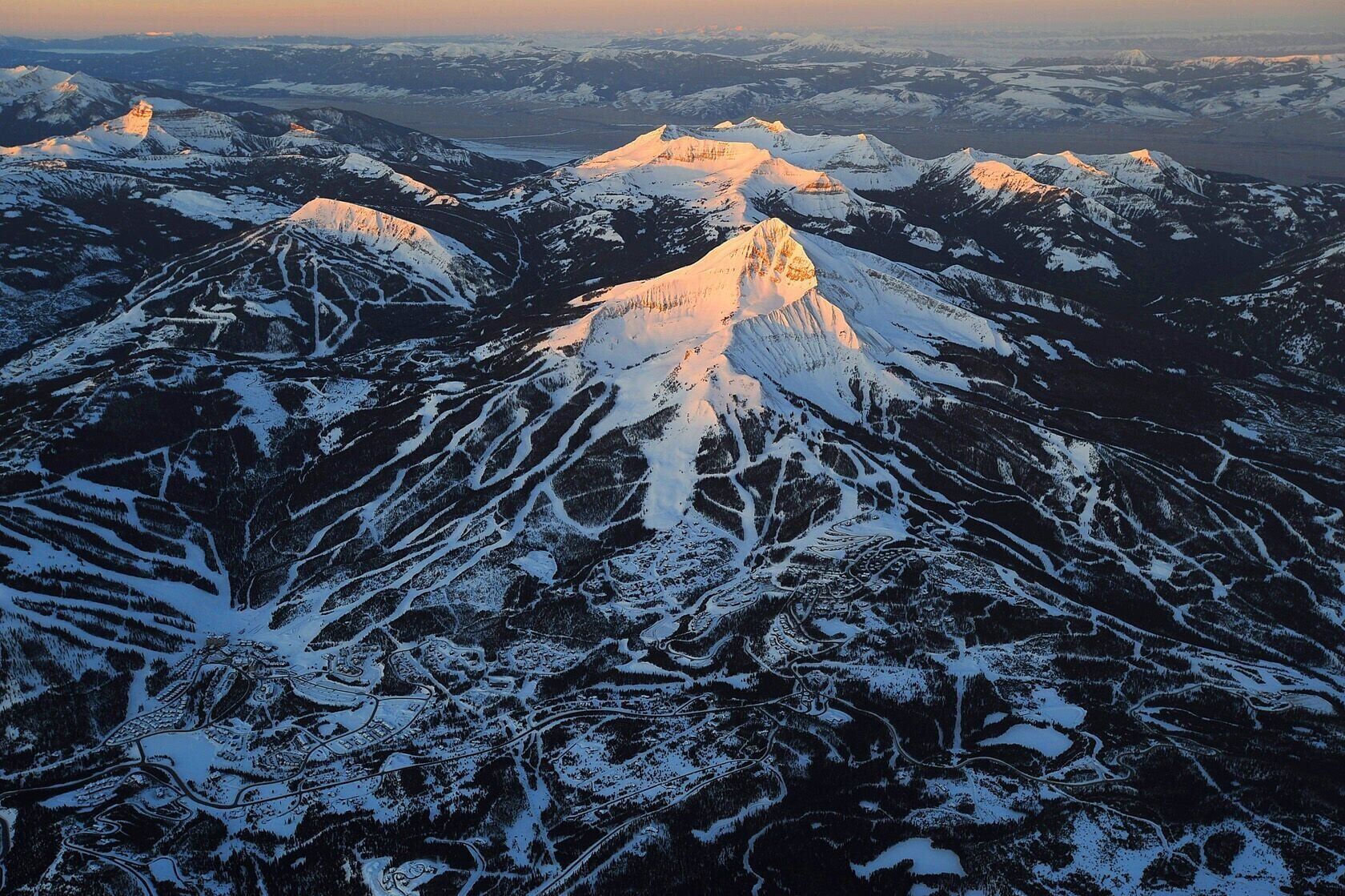
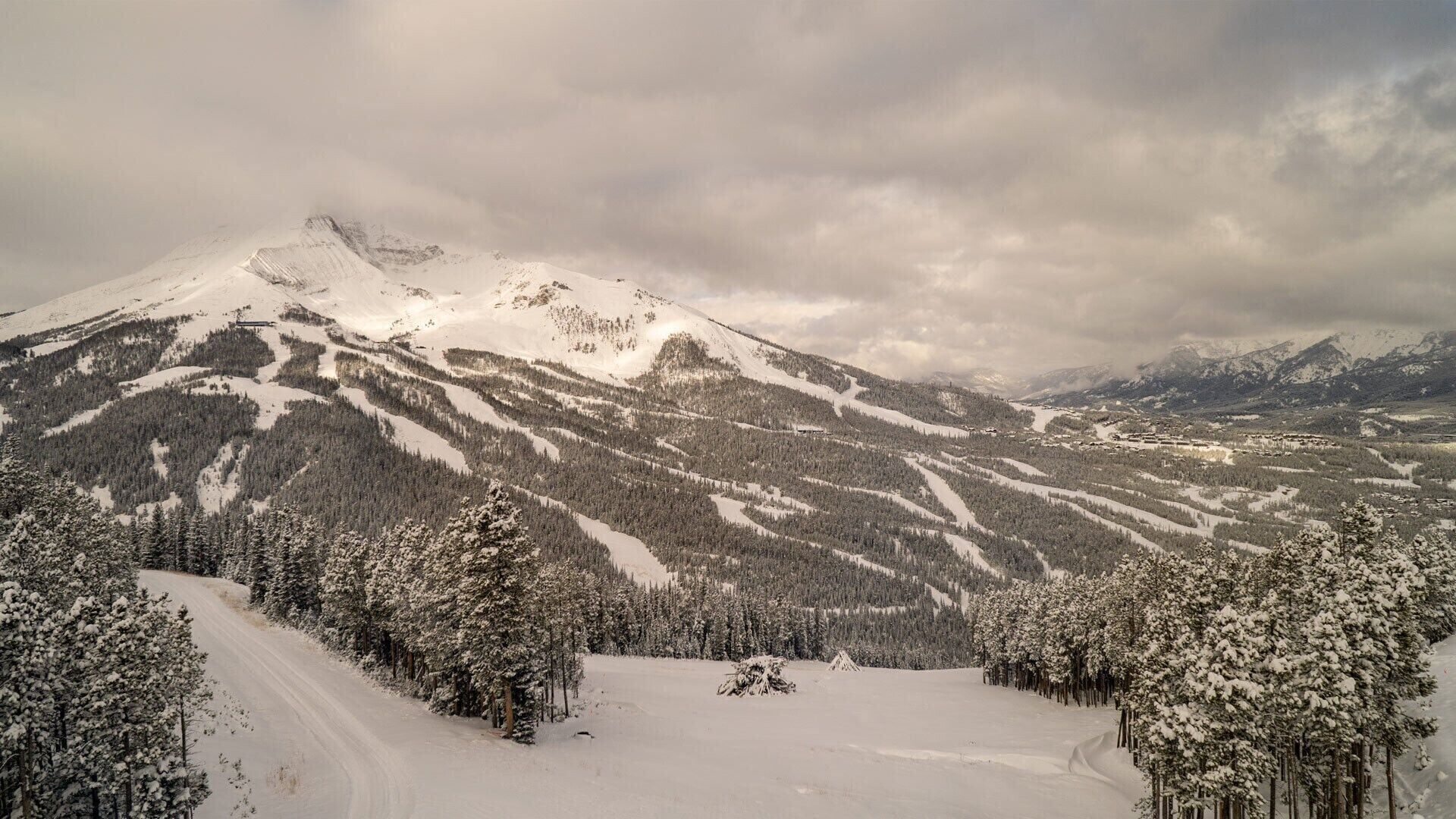
Beginning in 2010, the resort area considered adding snowmaking to its water recycling program. Eleven years later, the Yellowstone Club’s private ski area became the first in the state to receive authorization from the Montana Department of Environmental Quality to use reclaimed water for its snowmaking program.
It took a $50 million investment to upgrade Big Sky’s Water Resource Recovery Facility, on which construction began in 2020, to be able to turn on snow guns by November 2023. The guns are approved to utilize 25 million gallons.
In 2025, neighboring Spanish Peaks Mountain Club was authorized to use 43 million gallons of recycled water for snowmaking.
“What's most important for this committee to know is that this water would otherwise be sourced from groundwater or surface water,” said Rich Chandler, vice president of environmental operations at Lone Mountain Land Co., which oversees the two developments for parent company CrossHarbor Capital Partners.
The investment in upgrades to the water treatment plant and infrastructure — such as pipes, lagoons and pumps — cost around $100 million. A big chunk of that, $60 million, came from the community’s resort tax.
“Not every community has that option,” Chandler noted. “And from my perspective, that's one of the biggest gaps if we're thinking about scaling this statewide.”
Looking ahead, another 10-year $50 million project would fund a secondary system at Big Sky to take pressure off the domestic water supply by providing irrigation for homes, fire suppression and “strategically placed defense mechanisms” to provide greenbelts to slow wildland fires, said Johnny O’Connor, executive director of Big Sky Water and Sewer District.
Water rights
Although none of the Big Sky panel members cited state regulations as being a “big hurdle,” Buecker said the community may be unusual from others in the state because it has the water rights to support reuse.
More than 140 communities may draw from a water source, like a river or reservoir, and discharge treated wastewater back into a river or stream to ensure that downstream users with water rights aren’t shortchanged, he said.
Communities that treat wastewater using lagoons also are limited in what they can do, Buecker said, because of the lower water quality. To apply the water to agricultural fields would require additional treatment, meaning further expense.
Another hurdle could be operational costs. O’Connor said Big Sky is spending close to $1 million for its recycling program, but the community’s visitation, and therefore usage, can vary greatly because of tourism.
One issue that wasn’t raised was past research showing that wastewater treatment doesn’t remove pharmaceuticals from the water. The possible downstream effects on plants and animals, as well as ag crop uptake when recycled water is applied, has raised concerns among conservation groups.
Benefits
On the beneficial side, Big Sky’s snowmaking operation keeps water in the area longer because the compacted snow takes about two-and-a-half weeks longer to melt, Chandler said. As the water melts and runs off, he claimed the water is further cleaned as it infiltrates into the ground.
This meltwater recharges the aquifers that feed cold water into streams downhill, which includes the popular Gallatin River, one of the main tributaries to the Missouri River.
Pat Byorth, of Montana Trout Unlimited, said his group was initially skeptical about collaborating with Big Sky but has since become convinced of its benefits.
“So water is coming out cleaner, there's more of it coming out, and it's serving both the fish that swim between Big Sky and the Gallatin Valley, but also the downstream senior water users that every year on the Gallatin are subject to calls and administration by (a water) commissioner,” he said.
Scaling to other towns
Despite possible roadblocks, Chandler said he thinks the technology for recycling water is applicable to municipalities. One example he used was making snow that, when it melted, would recharge aquifers.
Chandler suggested the state also invest in public education to explain the benefits of reclaimed water and how it is treated to an extent that it doesn’t pose harm to human health.
“Secondly, I think that there's a serious conversation that needs to be had about incentivizing other communities if we want broader participation,” he added. “We need to think about tools to encourage it. Concepts like improving the (Department of Natural Resources and Conservation), water right mitigation requirements or other incentive-based approaches could certainly help bring more communities and stakeholders to the table.”
It’s up to the state to “create conditions so that more communities can actually do this work,” Chandler said.
“We want to be a model so others can find ways to keep more water in the state itself, rather than sending water downstream.”


Comments ()