
Bozeman rallies around Treasure State Hostel
At around 3 a.m., exhausted and unsure what else to do, Treasure State Hostel owner Nina Erickson stepped onto her back deck and recorded a video.
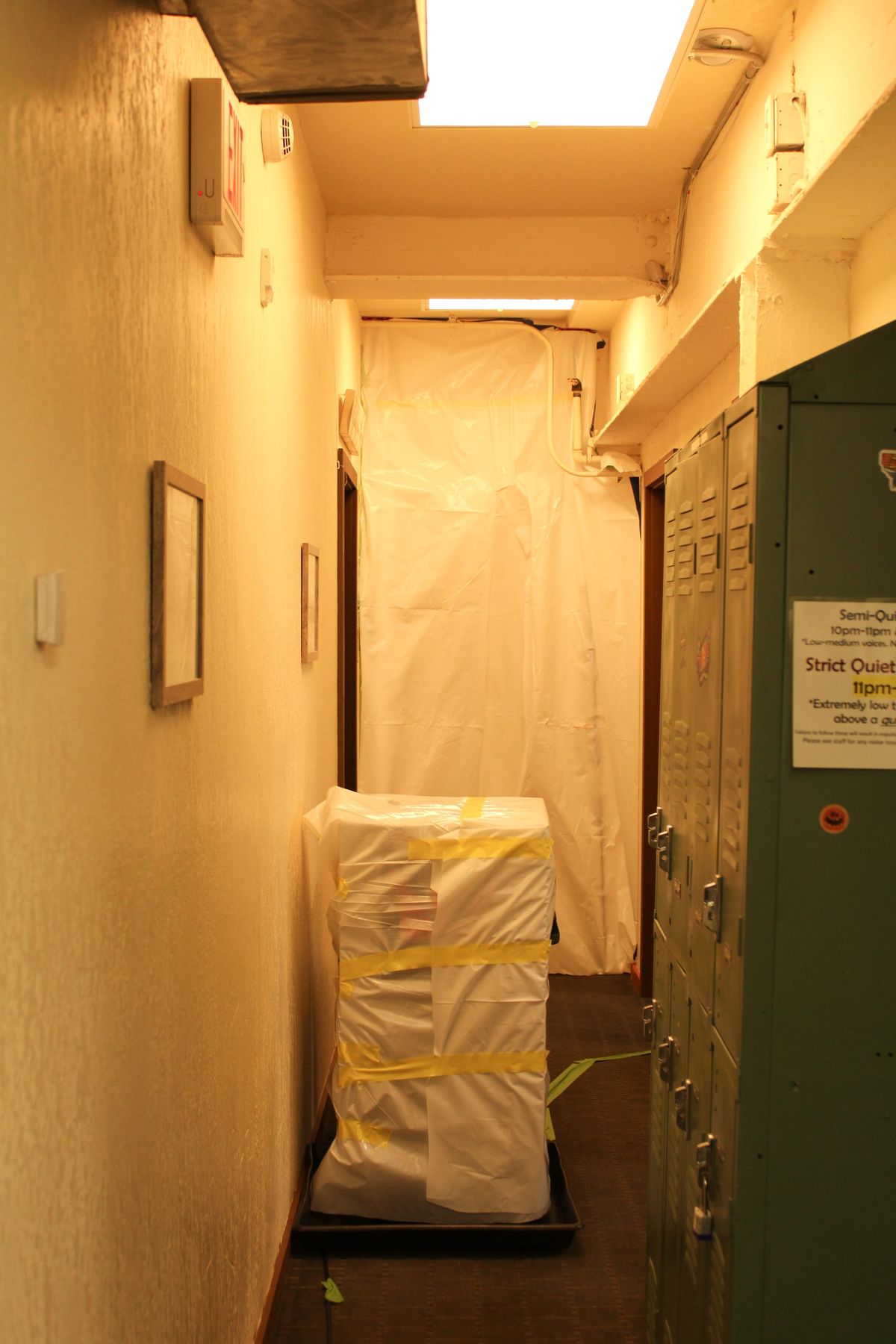
Her downtown hostel had been evacuated after a fire in the upstairs business. This led to water from the emergency response reaching her basement business. As a result, rooms were damaged and the staff had been left displaced. Erickson said it was the latest in a series of floods that had repeatedly interrupted the hostel’s operations.
“Usually I can make a game plan, crisis coordinate, figure something out,” Erickson said. “But
this time, I was just like, ‘Holy cow, what do I even do?’”
This time, she told her story publicly. Before 8 a.m., Erickson said at that least 10 people had already contacted her asking whether the hostel had created a fundraiser or a GoFundMe.
The response changed what Erickson described as the business’s “most grueling moment” into a broad show of support for one of downtown Bozeman’s few remaining low-cost lodging
options.
“I see how the community is showing up for me, showing up for our little downtown,” Erickson
said. “It’s so beautiful to see people show up that way.”
Erickson — a Bozeman-area native and MSU graduate — opened Treasure State Hostel 11 years ago. The idea grew from her own experience traveling abroad, where hostels offered not only inexpensive beds but shared spaces where strangers could quickly become companions.
When her parents asked what she would do if she could do anything, her answer was
simple: open a hostel.
Erickson called its creation “1,000 strokes of luck.” Her goal was to give budget-conscious
travelers a safe place downtown without forcing them to spend most of their money on a private
hotel room. The hostel’s 40 beds give travelers more autonomy regarding how they spend their
money in Bozeman.
“I want to go outside these four walls. I want to go adventure,” Erickson said, describing the
travelers she built the hostel to serve.
Her hope was that guests could “go get a burger, go get a beer, go hike, go see what Bozeman has to offer.”
That mission became especially apparent after the flood. Guests expecting to pay about $30 for
a bed suddenly faced a booked weekend in Bozeman, with replacement hotel rooms costing
hundreds of dollars. Although the hostel itself needed money, Erickson and her staff decided the
first donations should help those displaced travelers.
The team proposed giving each canceled guest $100 per night for Friday and Saturday and $50
for Sunday. Erickson estimated the immediate effort would require roughly $4,000. If donations
fell short, she said, the hostel intended to cover the remainder itself. “They’re struggling. They’re
tired. They’re displaced, and they’re looking at me like, ‘Let’s ride,’” Erickson said. “That’s what
I’m most proud of.”
Following this, the wider Bozeman community joined in. According to Erickson, hotels offered discounted rooms, with some lowering rates to $69 or $96 and others effectively matching the cost of a hostel dorm bed. Residents offered spare rooms and short-term rentals. Bars and restaurants donated gift cards, allowing displaced guests to still eat, drink and experience downtown while the hostel coordinated refunds and emergency assistance.
Erickson and her staff built spreadsheets and distributed money in real time. They posted lists of
available lodging and special rates online, then directed travelers toward those resources.
“That is community,” Erickson said. “That is people stepping up to help their neighbors, people
stepping up to help people they’ve never met, just because they’re coming to Bozeman and
they don’t want them to be stranded.”
Other businesses began planning fundraisers for the hostel itself. Erickson said Gute Laune, the
German restaurant and brewery above the Rialto, planned a pint night for Oct. 2, while Texas Roadhouse offered to donate 30 percent of proceeds from a fundraising night. A free weekly stretch class, normally hosted at the hostel, moved to Beall Park so the gathering could continue without the building.
Still, the damage will not disappear as quickly as the first wave of support arrived. Erickson said
the hostel faces demolition, rebuilding, insurance paperwork and an uncertain closure period. She described the recovery as “a marathon, not a sprint.”
For now, however, she wants to direct Bozeman’s attention toward the travelers whose plans
were disrupted before turning fully toward the hostel’s longer-term needs.
“We want to do the passing of what Bozeman is giving us to those people who are jostled,”
Erickson said. “People who are coming here for a couple nights don’t have months to rebuild.”
According to Erickson, Treasure State Hostel previously closed for six weeks following a flood last year, and other flooding incidents occurred before that. She said those disruptions, along with the broader difficulties of running a small hospitality business through the COVID-19 pandemic and changes in international travel, had brought the hostel close to shutting its doors.
This time, she initially felt closer to giving up than ever. Yet once the community understood what had happened, Erickson said it gave her a reason to continue.
“The community showed me that I should keep fighting, that I should keep going,” she said.
That fight is larger than one basement business. To Erickson, Treasure State Hostel represents
a version of Bozeman that still has room for visitors without luxury budgets. As the city becomes more expensive, keeping those travelers in the community has become integral to the hostel mission.
“We want to keep Bozeman accessible to not just the hyper-wealthy,” Erickson said. “We want to keep it accessible to backpackers and ski bums and people who make it so much richer than just one demographic.”
“Now the community is just rallying together,” Erickson said. “I think it’s rare to see in such a real, holistic way. I do think that’s rare, but it’s not extinct — and I think that it’s something worth fighting for.”


Comments ()