
Bridger Bowl looks ahead, keeps focus on community
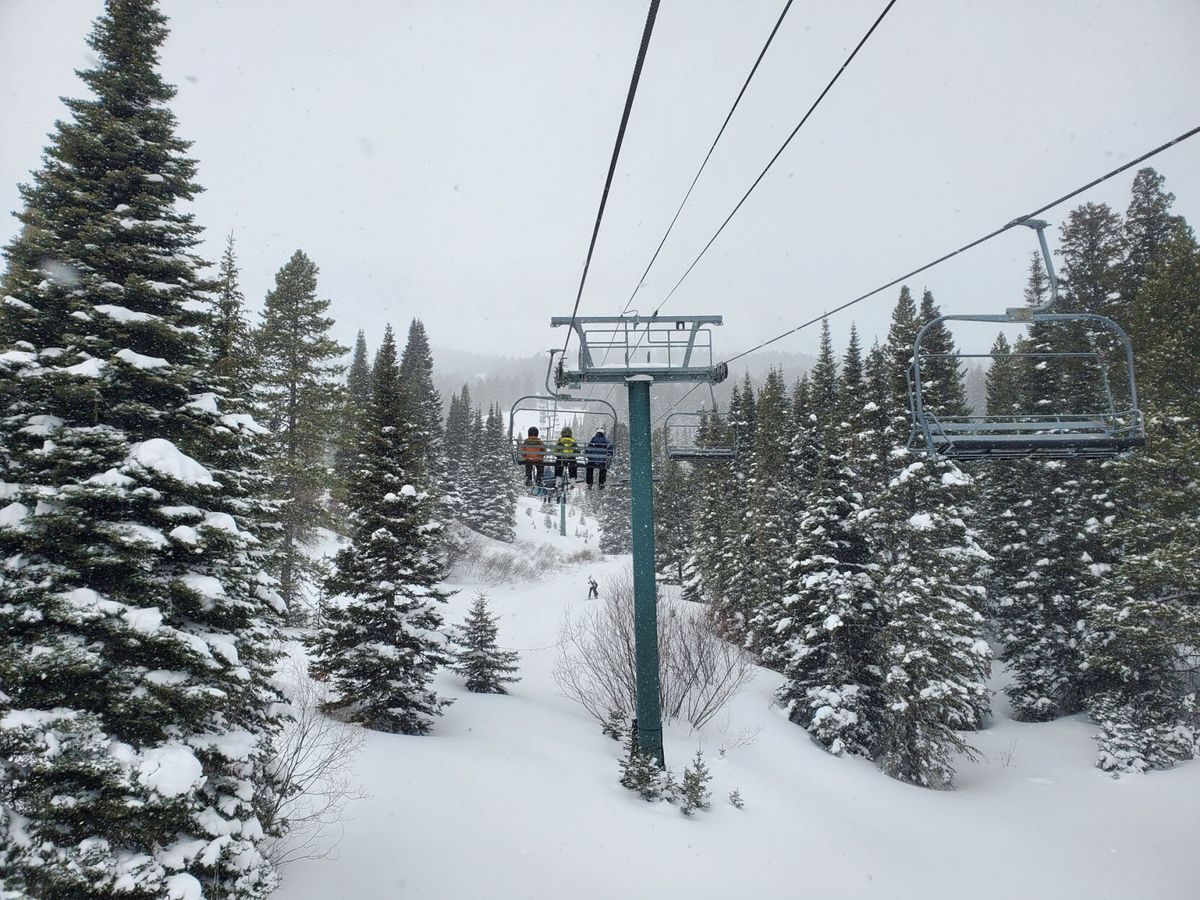
In recent years, Bridger Bowl has experienced record-breaking visitation. As the parking lots overflow with skiers and snowboarders eager to spend time on the hill, the organization looks to the future, with the announcement of its most recent Master Development Plan (MDP). The plan proposes numerous improvements to terrain access, guest services and mountain operations.
Bridger Bowl released the MDP on Feb. 19 for public input before it is submitted to the Custer Gallatin National Forest (CGNF) for approval. The MDP is a conceptual document designed to provide guidelines for potential upgrades to the ski area — many of which aim to address increased skier/snowboarder traffic.
“We have more people that want to be here than we can accommodate right now,” said the Bridger Bowl General Manager Hiram Towle. “The demand has outstripped the supply.”
According to Erin O’Connor, the marketing and communication director, three of the ski area’s top nine busiest days occurred this season, and its busiest day on record — with 6,457 skier/snowboarder visits — took place last year on Jan. 20.
The MDP sets out to improve the guest experience and accommodate these bigger crowds while still preserving the ski area’s essential community feel. “Our focus would be not to change the vibe. There’s no hotels being built. There [are] no condos. We’re not putting in a Starbucks — it’s going to be Bridger Bowl,” Towle said
Bridger Bowl operates under a special use permit issued by the CGNF that requires the ski area to release a new MDP around every ten years. Each MDP signals the organization's intentions for potential future developments, Towle said.
However, even if the CGNF approves the MDP, individual projects must then receive site-specific approval per the National Environmental Policy Act of 1970. According to Jason Prasek, the mountain operations manager, this could take anywhere from three to five years depending on the CGNF’s schedule.
Towle stressed that all proposals are subject to change before — and after — initial CGNF approval of the MDP. “They can certainly change based on public input, based on operational considerations and definitely based on what the [CGNF] will accept in that plan or not,” he said.
For the time being, Bridger Bowl is focused on gathering community input before submitting the MDP. Prasek explained that once the ski area considers the feedback and finalizes the MDP, it will submit the plan to the CGNF. “If they accept it, we will decide what projects we want to prioritize,” Prasek said.
A comprehensive digital story map of the MDP outlines the specific developments proposed by the ski area. Terrain improvements include 70 new acres of developed runs, two new beginner lifts, two new intermediate lifts, a new patrol lift and a terrain park rope tow.
The MDP also proposes an expansion of the Alpine Cabin on-mountain restaurant, a new food and beverage facility, a new ski-school hub and improvements to the Jim Bridger Lodge. Other upgrades include additional parking, increased snowmaking, night skiing and an expanded trail network for summertime recreation.
Bridger Bowl hosted four open house events last week to gather input and address questions about the MDP. The first three were held in the Saddle Peak Lodge: Feb. 26 for Bridger Bowl employees; Feb. 27 for members and pass holders and Feb. 28 for stakeholders, including local businesses and community partners like Crosscut Mountain Sports Center (CMSC) and Eagle Mount. The final open house was hosted for the general public at the Hilton Garden Inn in Bozeman on Saturday, March 1.
During the events, attendees could examine four maps displaying different upgrade plans for the ski area detailed in the MDP. These included plans for snowmaking, the base area, summertime recreation and general winter upgrades. Board members and employees were available to answer questions and attendees were encouraged to provide feedback on the plan through a QR code linking the digital story map of the MDP and an online survey.
“It’s your ski area, so we want to hear what you have to say,” Towle said to the room at the beginning of Saturday’s event.
The events on Thursday and Saturday also featured their own Q&As between Towle and attendees. Many questions were raised, with skier/snowboarder capacity being a primary concern. “The last thing we want to do is go add 400 parking spaces and crowd the hill,” Towle said to attendees on Thursday.
Joe Seymour, a member of the Long-Range Planning Committee on the Bridger Bowl Board of Directors, echoed this sentiment. “Our current [CGNF] special use permit has 6,400 skiers permitted. That's about the maximum we've ever had. We're not proposing anything that would expand that number. We want to make the daily experience of our community skiers better,” he said.
One such community skier is University student Kailash Moore, a current employee of the MSU student government’s Outdoor Recreation Program (ORP). Moore expressed concern about the proposed lift near Bradley Meadows, which is currently backcountry terrain just north of the ski area boundary. According to him, such a development could interfere with the ORP Avalanche I and II courses taught there.
“We utilize the Bradley Meadows area a lot, and so I think just having a lot of alpine, non-backcountry skiers in that area might detract from our ability to teach there,” Moore said. “Once they build a lift, a ton of people are going to ski there because it’s awesome terrain.”
According to Towle, the Bradley Meadows lift is a point of contention among other community members, as the area also serves backcountry skiers and riders seeking access to beginner-friendly terrain.
“We know that that will change an important piece of what Bridger is, so we’re mindful of that and that’s why we’re having these community sessions,” Towle said.
MSU student Dean Cronin said he supports the proposed new lift, claiming it would help relieve congestion from other parts of the ski area, namely the Alpine and Powder Park lift lines. “I enjoy going over to the Alpine [Cabin] to get a beer and some food every once in a while. But some days it's just not an idea that comes to mind because the lines are just not worth the wait to get all the way over there,” he said.
Cronin spoke optimistically about the MDP, viewing it as inevitable progress reflective of larger, industry-wide trends.
“I think development done in the correct way can be beneficial and an efficient solution for many [of the] problems we have,” he said. “The ski industry is growing for better or for worse right now, so why fight the change and development? Because if you don't develop, your ski resort is just going to fall behind.”
According to Towle, community members have until March 17 to provide their input, after which the ski area will develop a final draft of the MDP that it hopes to submit to the CGNF by mid-April.
“There's a lot more process to go, but it all starts with what the community wants. We’re pretty proud to be able to have all our rabid followers say their piece because they are all heavily invested in this place — they love it so much,” Towle said.
To learn more about the MDP and fill out the online survey, access the digital story map at https://storymaps.arcgis.com/collections/3c0dc28f577641ddb9a5923737723dc1?item=1.


Comments ()