
Bridger’s Early Closure Sparks Disappointment Amongst Student Shredders
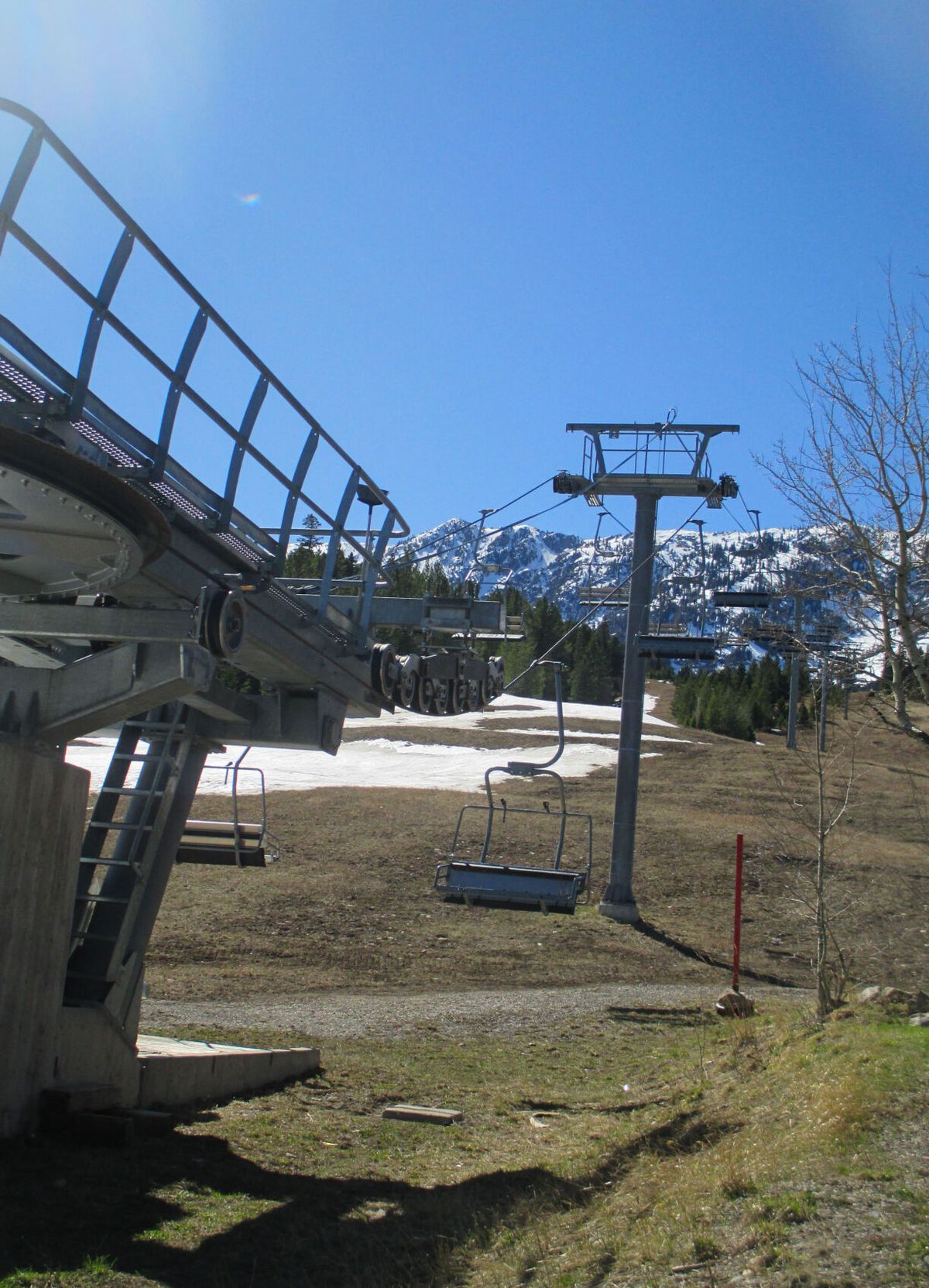
“Mid.” “Disappointing.” “Slow.” That’s how MSU students are describing this Bridger Bowl ski season, which ended earlier than expected.
On March 20, the ski area posted a video on Instagram featuring General Manager Hiram Towle standing in an ankle-deep puddle of water at the base area. In the video, he announced that the mountain would close in just two days, three weeks before the projected closure.
Both disappointment and appreciation filled the comment section as snowsport enthusiasts reacted to the abrupt end of a season that never quite arrived.
For students, the early closure capped off a winter defined by thin snowpack, warm temperatures and low expectations. While many of them understood the conditions were beyond the ski area’s control, frustration simmered over the sudden timing.
Sophomore history student Avery Earley, a Bridger season pass holder for many years, said she couldn’t attend the closing day celebration due to the last-minute announcement.
“I was pretty bummed, especially because it was so sudden,” she said.
Bridger Marketing and Communications Director Erin O’Connor said the ski hill closed early primarily due to a lack of snow at the base area.
“You have to have snow to get people down the hill,” she said.
According to her, these kinds of conditions create challenges for ski patrollers, as they are unable to transport injured people to the patrol room. “Safety is a huge part of it,” she said.
Earley felt Bridger’s Instagram announcement was well-intentioned, but she would have preferred that the ski hill announce the early closure sooner. “Maybe they could have warned that, ‘Hey guys, this ski season, we might have to close earlier,’” she said.
According to O’Connor, Bridger did not know it would close early until the day the announcement went public. “The closure became the most likely outcome basically the Friday we decided to close,” she said.
Earley said she doesn’t blame management for the poor conditions, but voiced frustrations with the early closing.
“It’s hard to dish out a thousand dollars every year and then get such a bad ski season — and also on top of that, you get a month cut off. I just don’t think that’s super fair,” she said. “And obviously that’s not their fault. It’s Mother Nature and broader climate issues.”
According to O’Connor, Bridger’s goal is to keep skiing affordable and the pass prices reflect that. “Most of our passes take 11 days or less to pay off,” she said.
O’Connor also said that the decision to close is much more nuanced than the average passholder might realize and does not rest on the shoulders of a single person.
“Every department was involved in the decision-making, and how it would affect each department,” she said. “There’s a lot that goes into the decisions that we make like this.”
O’Connor also emphasized that the ski area tries to be transparent with the public. “We want everyone to know what’s happening and that’s for any large decision that is unforeseen,” she said.
Bridger’s new closing day fell on the last Sunday of MSU’s spring break, so some students who had traveled out of town were unable to attend.
“I figured they’d close early, but I didn't know it would be this early. I'm so devastated I’m missing my first closing day at Bridger,” said freshman film and photography student Kai Welch.
Sophomore graphic design student Sonja Bell, a second-time season pass holder, said the early closure was unsurprising given the conditions, even if the season fell short of expectations.
“I feel like I got my money’s worth, but not as much as last year,” Bell said. “I feel like the quality of skiing wasn’t really what I paid for, but I still went enough times to make it worth it. I still enjoyed it every time I went.”
Caleb Unger, a giant slalom and slalom ski racer for the MSU Alpine Ski team, said the lack of powder days was not all negative. Ski racing requires icy and packed conditions, so December through February were promising for MSU alpine athletes, according to him.
“Speed racing is more attuned to, ‘We want snow, we want enough snow we can train on, but not so much snow that we can’t compete,’” he said. “We had a really good training season; we had lots of really good days that were hard and icy and things that I have literally never experienced at Bridger Bowl before.”
Unger recognized that students often choose MSU for its proximity to ski areas and the expectation of heavy snowfall. “A lot of students imagine that they are going to get lots of powder days. I think that [powder days] were few and far between,” he said.
The dry winter and warm temperatures impacted more than day-to-day training — they also altered major race plans. Unger said the NCAA Division I Skiing Finals were supposed to be held at Bridger but were canceled, marking another missed opportunity for the mountain to host after a previous cancellation in 2020.
“We were supposed to have national championships in Bozeman in 2020 — like we were set to host. They canceled the race in 2020 because it was literally right when COVID started,” Unger said.
Since then, the ‘Cats have waited patiently for six years for an NCAA-granted bid to host the event, and this season, the opportunity was missed yet again for reasons beyond their control.
“It just sucked, because we kind of missed the opportunity to showcase and do our thing at home — sort of build a following in the areas around Bozeman,” Unger said. “I was really, really looking forward to that, like I was able to have a nationals at home, connect with people and show what we do.”
Despite some disappointment, admiration and love for Bridger’s fun mountain vibes and hardworking employees did not fade when the lifts stopped running.
Welch said the season, while inconsistent, reinforced his appreciation for Bridger’s community and culture. “There was joy to be found, and we can still be appreciative,” he said.
Even amid frustration, most students stopped short of blaming Bridger directly.
“It’s bad luck, but what can you do about it except just keep moving forward and pray for snow next year, I guess,” Unger said.
O’Connor echoed this sentiment. “Just do your snow dances and hope for a better year next year,” she said.
For now, that’s where students are left — watching their season end early, hoping next winter delivers what this one did not.

Comments ()