
Broadview data center leadership face questions from locals on power, water and cost
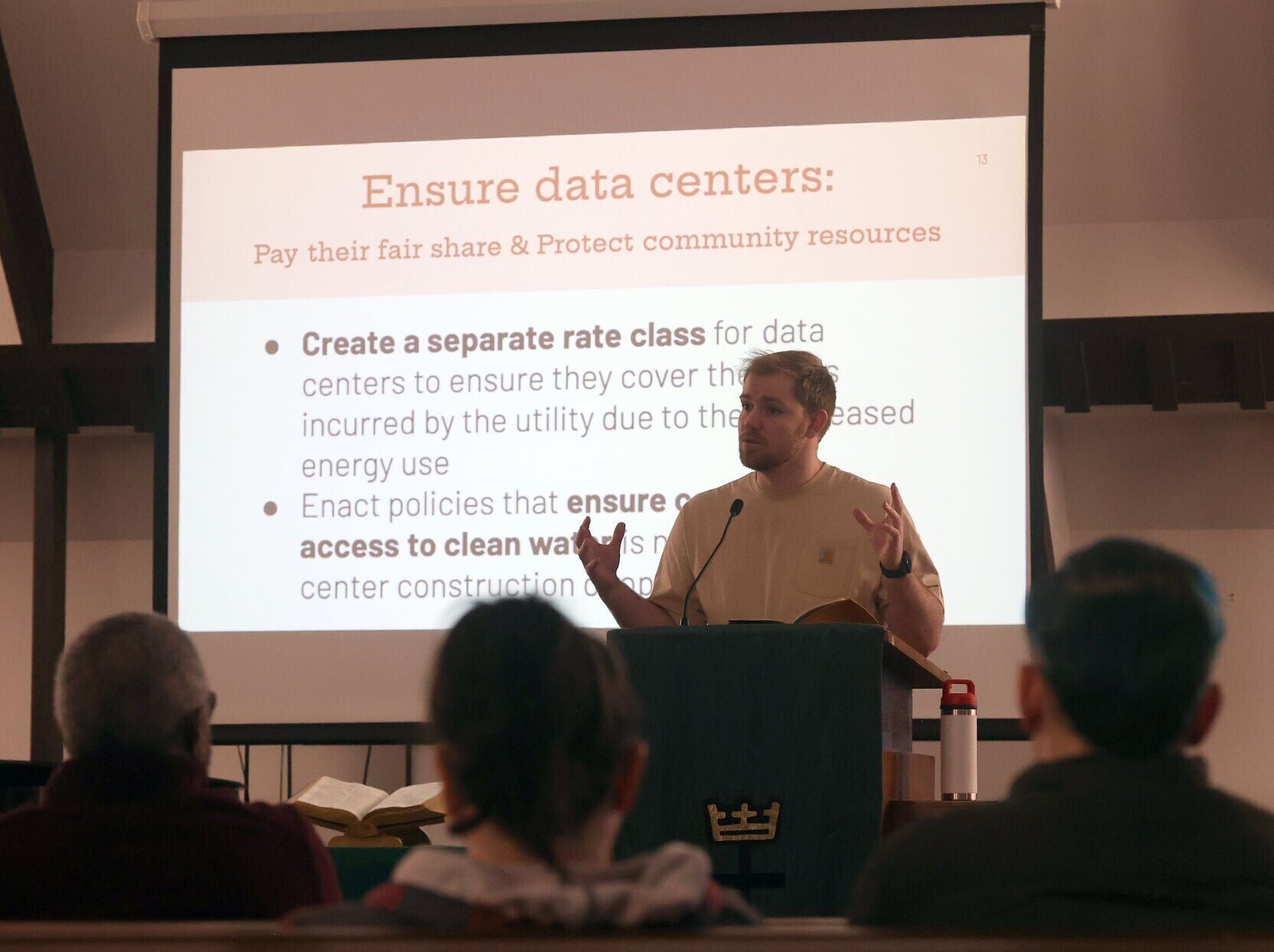
In college amphitheaters, community centers and even church pews, Yellowstone County residents have been learning more about the data center that might be their new neighbor.
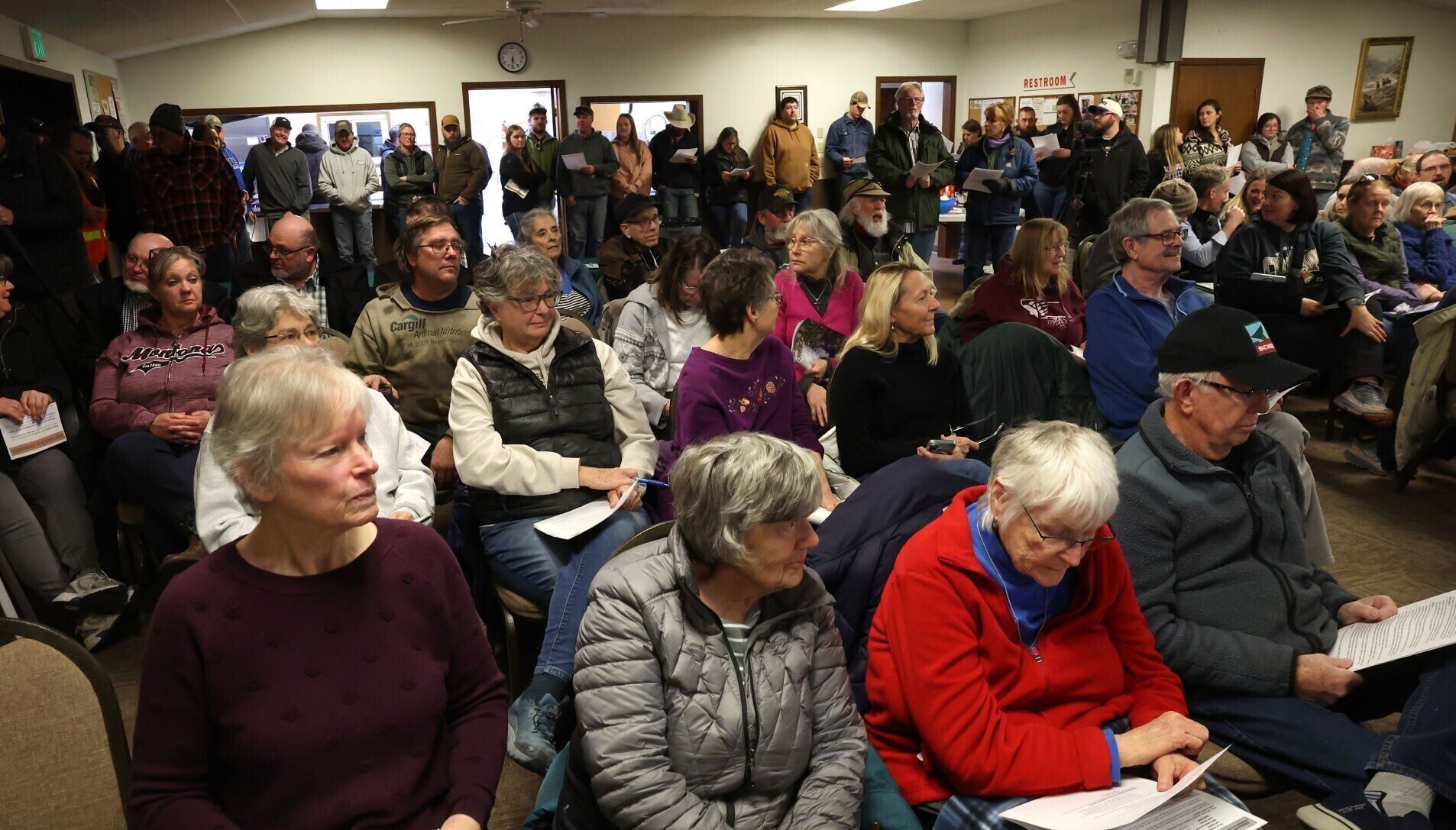
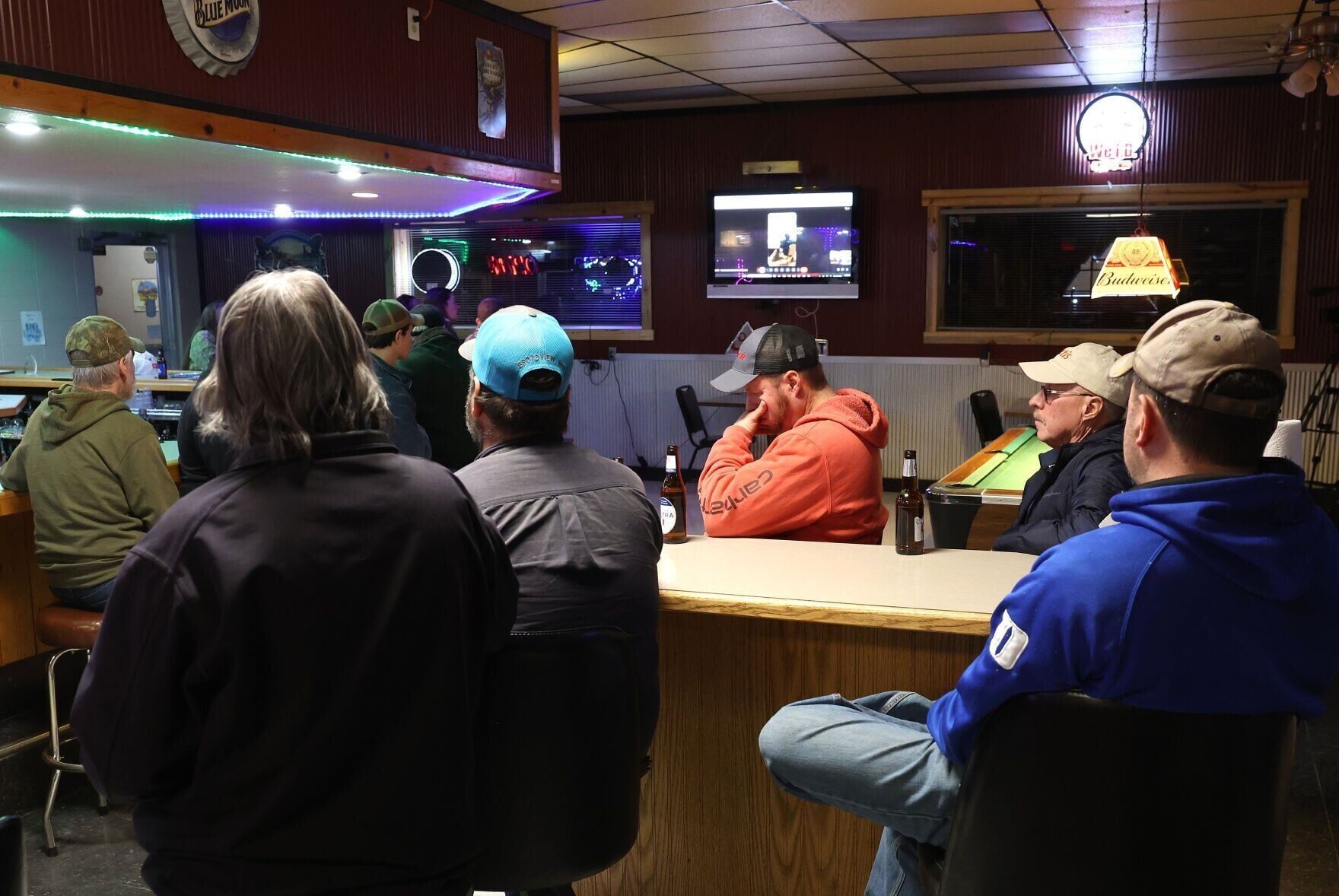
At Rocky Mountain College’s nearly 200-seat amphitheater, people had to be turned away as seats filled. At the Broadview Community Center meeting, some of the crowd leaned against walls, eager to learn whatever they could.
“We are here because we don't know all the answers, but we do have a lot of questions, and we think that those questions need to be answered,” Montana Environmental Information Center Director Anne Hedges told the crowd at Rocky.
The meetings, organized in part by Hedges' environmental group, provided a single-page sheet of more than 50 questions from everything to power to water to tariffs for attendees.
The attendees at the event included representatives with the data center from Quantica Infrastructure and associated Big Sky Digital Infrastructure, the project’s developer. They said they tried to get someone up on the stage to explain things, but were rejected.
Following the meetings, data center leadership admitted they don't have all the answers themselves.
One problem is the data center doesn't have a customer yet nor any permit requests submitted. Although the company said they are seeing “strong interest” from multiple companies since they announced the project. They're still gathering data on the environmental impacts associated with the project and related community input.
Still, compared to other projects that require a years-long process of connecting to the grid, the Broadview data center could get off the ground relatively quickly — with initial plans to power it by 2028. Developers have access to resources that they wouldn’t have to go through as arduous a process for. And given some of the project’s existing connections and the 5,100 acres of land and 40,000 acres of renewable energy leases already owned, it represents the most serious entrant in Montana for a future data center in pushing forward the AI boom.
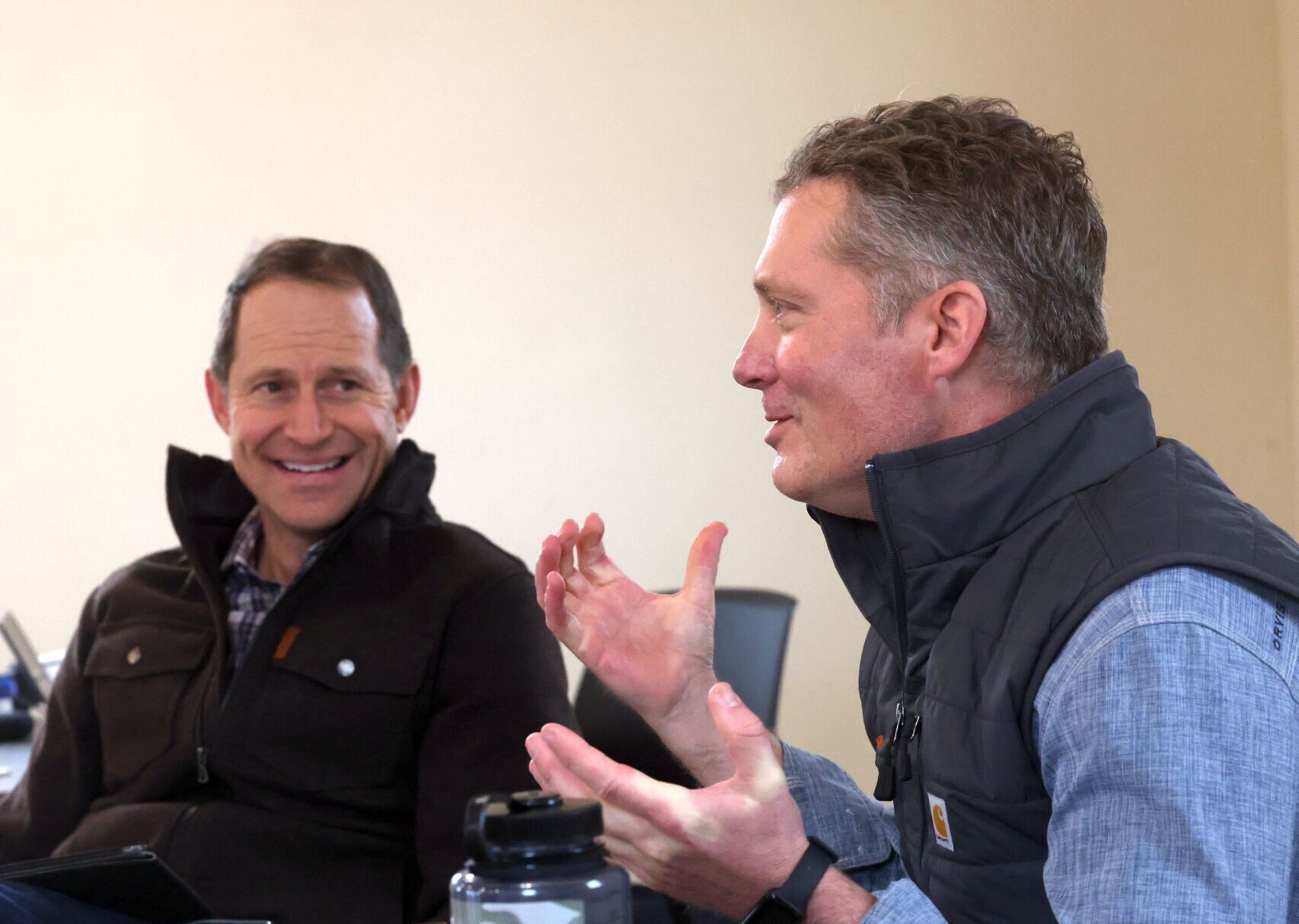
After some of those contentious meetings and ahead of a future one Thursday morning before the Yellowstone County Commission, the Billings Gazette talked with leadership about three primary concerns facing their data center: power, water and cost.
Power
With a data center, power can mean two things. The first meaning is the actual power needed. The second is the power to get it through the public process. At least 25 data center projects were cancelled across the county last year, a sharp increase from six in 2024 and two in 2023, as pushback builds with the projects.
Although NorthWestern has an agreement to provide up to 1,000 megawatts of power for the data center, the Quantica's current office in Broadview struggled to be connected to power when it opened last year. An extension cord had to run through a window, getting electricity from a neighbor.
“We're one piece at a time here,” Jess Peterson, who does community engagement for the data center, said. “It was embarrassing to say, as an electric company, we couldn't get power in here.”
They had a soft opening of the building on Halloween. The developers have also been present in Broadview flipping burgers at the community’s summer festival and posting up a climbing wall for the community.
The office itself stands out somewhat in the small town of Broadview — population 136 in 2025. On the highway that runs through the town 30 minutes north of Billings, other buildings show signs of being closed for years. The building Peterson has open officer hours in was brought in as a teacher’s home for the nearby K-12 school. Alongside a defunct jukebox, adorning the walls are artworks of wind turbines.
Peterson previously was involved with community engagement with Wibaux Wind in Wibaux County, a project that received enough pushback that county commissioners implemented county-wide zoning, rare in even Montana’s largest counties, to restrict development. While construction was planned on the project in spring 2025, multi-billion-dollar energy company AES has since gone dark on updates.
Yellowstone County is more Peterson’s territory though. He’s the head of Billings-based communication and public relations firm Western Skies Strategies. He's also chair of the Billings Chamber Board of Directors, a position previously held by Billings Mayor Mike Nelson and, several years before that, former mayor Bill Cole. The chamber intends to support the forthcoming jail bond that Yellowstone County leadership has sought out.
Peterson said the Broadview project is different from other projects because it doesn’t require National Environmental Policy Act (NEPA) review. The review process can prove to be another hurdle for developers' plans processed through the Environmental Protection Agency, a requirement for developments taking place on public land. All 5,100 acres of land, obtained years ago, are on private land. The same seems to go for the energy leases.
“I think that's what sets this apart. You've seen other projects in the country because of the NEPA factor — part of NEPA is public engagement — the first time the public can learn about it is when they're presenting that evening,” Peterson said.
He said once the public learned of the developer’s power purchase agreement with NorthWestern, they had to go in front of the public and initiate engagement, compared to the more sudden process associated with NEPA.
The developers admitted NorthWestern doesn’t have the up-to-1,000 megawatts of power to provide currently, with the plans to be supported by existing renewable energy assets they’ve acquired from founding company EnCap Investments. One undeveloped Yellowstone County project that Quantica possesses is Buffalo Trail and Wind. It was previously estimated to provide 250 megawatts of solar and 250 megawatts of wind. Another is Broadview Solar with 80 megawatts of power. Those three projects total 580 megawatts of power.
But since they still don't have a customer, it’s unclear exactly how much power the data center will require.
Initial deployment for power is targeting 500 megawatts for the data center, “scaling at least to 1 megawatt,” the company said in a statement.
Like other data centers, it would run nonstop, likely being bolstered by batteries and NorthWestern’s power.
“For residents, operations will be quiet and low-impact: facilities run 24/7 with minimal foot traffic, no production waste, delivery trucks on scheduled routes,” Quantica said in a statement.
While few massive data centers have been officially announced in Montana yet, the company stated there’s abundant potential for power, transmission access and a “stable regulatory environment.”
Massive data centers are untested in the public process in Montana, though wind and solar development might bring another form of opposition. Like with Wibaux Wind project, this week multibillion dollar utility NextEra Energy halted their Glendive Wind project. The halting followed the tumultuous implementation of citizen-led zoning relating to larger partisan animus around renewable energy. However, NextEra spokesperson Amanda Paez told the Gazette it was because the project wasn't selected in the customer bidding process, preventing further advancement for the time being.
Most data centers have relied on gas power when they choose to not fully rely on utilities, making Quantica somewhat unique. The company said they’re looking at wind and solar as part of maintaining a reliable and affordable grid for its project.
“These projects have been around for a while, so we have a head start on what it would take to build them,” the company stated. “Local power generation also benefits the community through lease payments to landowners. Our approach is to harness the region’s available energy options to power the project and help Montanans.”
Water
At some past events, people threw out the possibility of the data center consuming 10 million gallons a day. For comparison, a town like Missoula uses about 40 million gallons of water on an average summer day.
Water usage is a focal point of many as large-scale data centers crop up in states that often deal with severe water scarcity issues like Montana. Centers need the water to cool computers and protect the chips within.
Quantica Chief Financial Officer Charlie Baker is unsure where that 10 million number comes from. The Broadview project, he said, wouldn’t use that much. He admitted that past old-school data centers cooled through the evaporation of water could run through significant amounts of water that way, but technology has evolved since then.
He said the data center would implement a closed loop system to reduce water usage in its dry, arid place near Broadview. A closed loop system means it would mostly retain the water throughout the cooling process, though specific details would still need to be worked out depending on the customer and infrastructure availability.
“So technology is changing really rapidly in that area, because water is a challenge,” Baker said. “Broadview doesn't have a lot of water, so we're going to have to do something of a closed loop system.”
Baker said Quantica’s exploring some of the deep well aquifers in the area. One such option he mentioned was the Madison aquifer, thousands of feet below the surface in some areas.
The Central Montana Regional Water Authority started tapping into that water supply, giving communities like Roundup clean water within the past decade.
Hydrologist Jon Reiten said in a Broadview community meeting that the data center wouldn’t likely get enough water from wells like nearby farmers rely on. Most would yield at most 10 to 15 gallons a minute or respectively about 14,400 gallons to 21,600 gallons a day.
Beyond the piping of water, such an option would likely force an additional treatment center on the data center’s campus, Baker said. The water obtained below ground would likely be hot, and would need to cool off before being applied to computers.
Baker noted that he couldn’t provide more specific details than that on water usage, as, like other things, water plans were still preliminary.
“We don't have those details today,” Baker said. “I know that that's a frustration to folks that we don't have all the answers, but we're trying to work through this. We're trying to develop a plan, and as soon as we have that sorted out, we're going to share it with the community.”
Cost
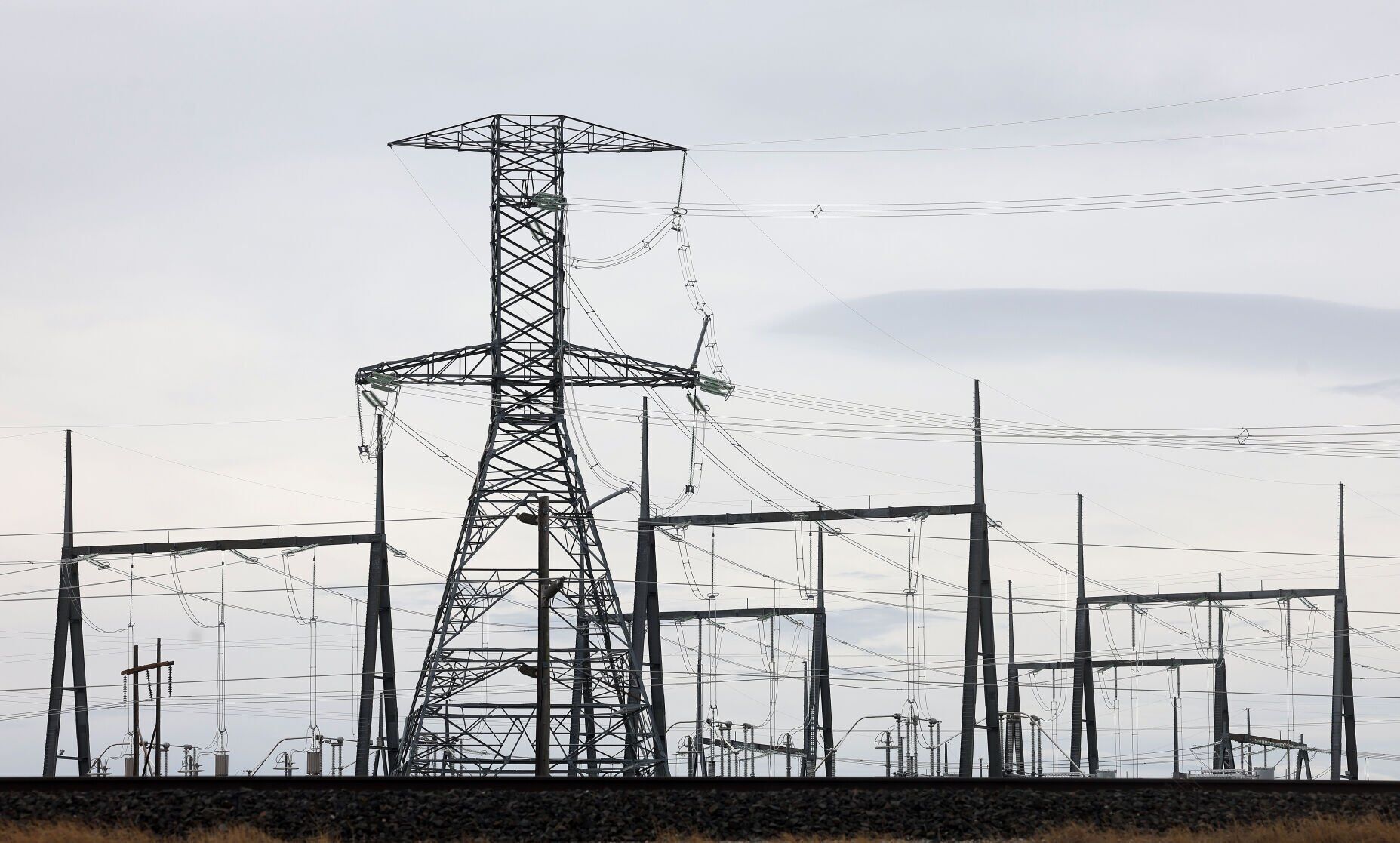
The project would likely total somewhere in the billions if they do find a customer, relying on undeveloped renewable assets and existing NorthWestern infrastructure like the nearby Broadview substation.
A concern that’s generated growing bipartisan concern is how much of the data center’s cost and related infrastructure upgrades will then be transferred to utility ratepayers, something that’s already been seen in other communities nationwide. After states have tried to incentivize data centers, now developers have begun expressing an interest in paying their fair share.
Quantica’s no different in that aspect.
“We feel that the data center needs to pay its fair share of costs associated with taking on the new generation, and we’ve stuck to that,” Baker said. “We do not want to see impacts to residential customers.”
To pay a “fair share,” NorthWestern would have to adjust rates.
The energy company initially announced its plan to submit a large load tariff on data centers by the end of December, to ideally offset the costs faced by residential customers. The tariff has yet to be submitted to the Public Service Commission. NorthWestern Vice President Jason Merkel wrote in January to newspapers across the state boasting about the imminent large load tariff.
“Montana doesn’t need to repeat the mistakes made in other states,” Merkel said. “With guardrails crafted for Montana’s interests, we can ensure those outcomes won’t happen here.”
Yale Climate Connections reported this week that NorthWestern CEO has delayed the submission plan to mid-2026.
Quantica seems willing to surmount a cost that has likely been a prohibiting factor for other data centers eyeing Montana. The majority of Montana doesn’t have robust access to large fiber optic networks, with most large metro areas that tech companies rely on far away.
To establish their data center, Quantica would have to put in at least a thousand miles worth of fiber optic cable. Baker estimated about 1,800 miles of cable for the project, with potential routes including connecting Broadview to Chicago, Denver, Salt Lake City and Seattle.
Baker said that one thing that sets their data center apart is nearly everyone part of Quantica has a power generation background, with several having previous work experience for Talen Energy, the Colstrip power plant operator. Another is the batch of renewable energy that they’ll have ready to power the place.
Still, he hears and recognizes the criticism and concerns that have bubbled up at community meetings before even a permit application.
After the interview, another meeting was planned in the Broadview Community Center titled “Montana’s Digital Prison (under construction without your consent!). On March 10, community organizers are planning to voice their opposition to the project to the Broadview City Commission.
Baker expects future challenges. He hopes to improve communications and transparency whenever they might go forward with the plans.
“I think data is a necessary part of a lot of our lives, and it's evolving very quickly,” Baker said. “Some people are scared of that, and some are not. People think data centers consume a lot of energy and they consume a lot of water. Those are real concerns, and that's what we're trying to address in this project there.”
Community relations manager Peterson pitched the data center as giving residents of hollowed-out Broadview a place to stay.
“If you graduate from Broadview today, what jobs do you have here in town to stay?” Peterson said in the developer’s local office. “A lot of folks say we're here and we don't want it to change. And do you mean keep losing your kids? What part of the change do you not want to see happen? I want to see these kids that are going here, that have ties to the community, saying we have an opportunity to come back and work with this community that we love. A community’s only as great as the opportunities you provide.”


Comments ()