
Butte in 1923 — the good, the bad and the ugly revealed
EDITOR’S NOTE: The newest prequel to the popular television series, “Yellowstone,” is currently being filmed in Butte. “1923” is the story of Dutton ancestors, Cara and Jacob, matriarch and patriarch of the Dutton family. Set in the years preceding the Great Depression, the most recent addition will take viewers back in time to prohibition and to an era of revived interest in the West. The Montana Standard thought it would be fun to take a look at what Butte was like that year. “The good, the bad and the ugly” are featured below.
As the dawn of a new year became a reality, the editorial editor at The Anaconda Standard must have viewed himself as some type of seer.
On Jan. 1, 1923, the editor predicted the year would have its “ups and downs, its trials and vicissitudes,” but that “courageous hopefulness and cheerful helpfulness will perform miracles.”
Butte was sorely in need of a miracle, as the year quite literally started out with a bang or two.
Hosted by members of the Robert Emmet Literary Association, a New Year’s Eve dance was in full swing at the Hibernian Hall in Centerville. A veritable “who’s who” of Butte’s Irish residents were in attendance, including James Shea, who at 1:30 a.m. noticed dynamite had just been wedged onto a window sill.
The dynamite was immediately dislodged, falling to the ground below. Shea reportedly then ran down the stairs, grabbed the five sticks and threw the dynamite over a fence, seconds before detonation.
Nearby windows shattered and The Anaconda Standard reported the explosion was heard more than a mile away.
Meanwhile, down near the intersection of Porphyry and Wyoming streets, there was something brewing underground and residents were about to celebrate the New Year with a series of unexpected explosions.
Area sewers had accumulated a good deal of moonshine mash, so much so that some heavy gas exploded as it came close to the surface. Nearby buildings rocked back and forth and residents, near and far, heard the explosions. Manhole covers were flung about, too.
It was reported that the mash dumped into the sewers had become such a problem that it had “resulted in some of the mains becoming almost completely choked.”
Some good news was shared a couple days later as Eddy’s Bakery announced plans to open a plant in Butte. The firm purchased Lutey’s Sunlit Bakery at 41 W. Galena St., which had 4,000 square feet of floor space, giving the company plenty of space to bake some fresh bread.
In an announcement published in all three Mining City newspapers, The Butte Miner, Butte Daily Post and The Anaconda Standard, John D. Ryan, chairman of the board of the Anaconda Copper Mining Co., and its president, Con F. Kelley, announced the company’s intention to negotiate “for control of the Chile Copper Mining Company.”
The acquisition was indeed massive, totaling $150 million, and would later be approved by Anaconda stockholders.
The month of January had not quite come to an end when the murder of Detective Fred Greenbeck would make front-page headlines.
Months earlier, Greenbeck had been hired by a “citizens’ committee” to enforce the existing laws against gambling and drinking. Those laws did not sit well for many Butte residents, including well-known gambler Harry "Fat” Allen.
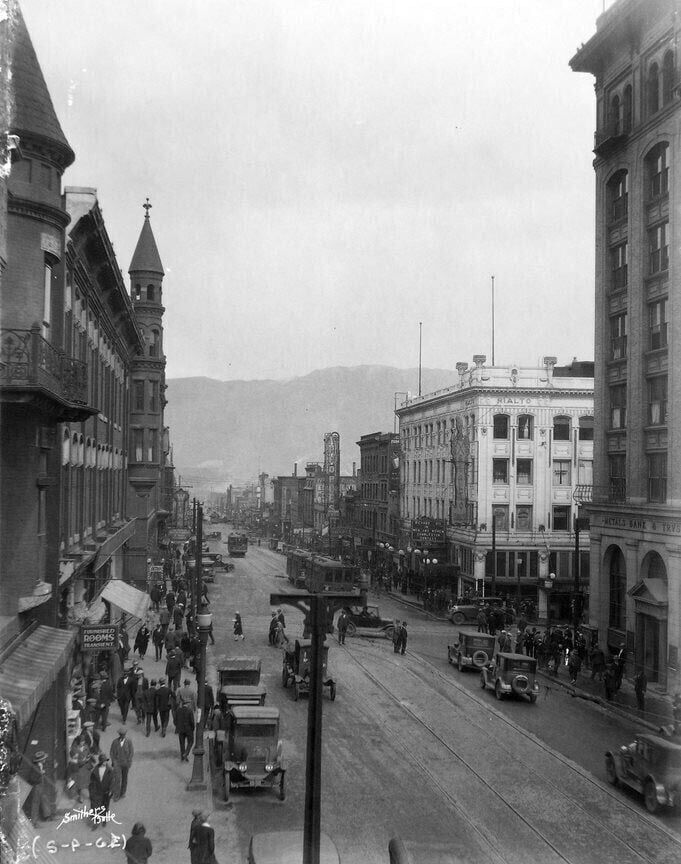
As Greenbeck stood outside the Rialto Theatre on Park and Main, Allen reportedly shot Greenbeck in the face, bringing him to his knees. The detective attempted to crawl away, according to a number of witnesses, but Allen continued his assault until there were no more bullets left in his revolver.
For his crime, Allen was found guilty of manslaughter on May 12 and given a prison sentence of five to 10 years. The Anaconda Standard reported that the verdict was a “compromise to save the county the expense of another trial.”
Four jurors wanted to find Allen guilty of first-degree murder and eight others, despite the numerous witnesses to the crime, had pushed for an acquittal.
Greenbeck may have been the first murder victim of the year, but he was not the last. Throughout the rest of the year, 10 more residents would lose their lives to violence, including an infant boy.
While some safety measures were set in place underground, being a miner remained a dangerous endeavor.
Accidents were a common occurrence throughout the year and 37 miners were killed underground.
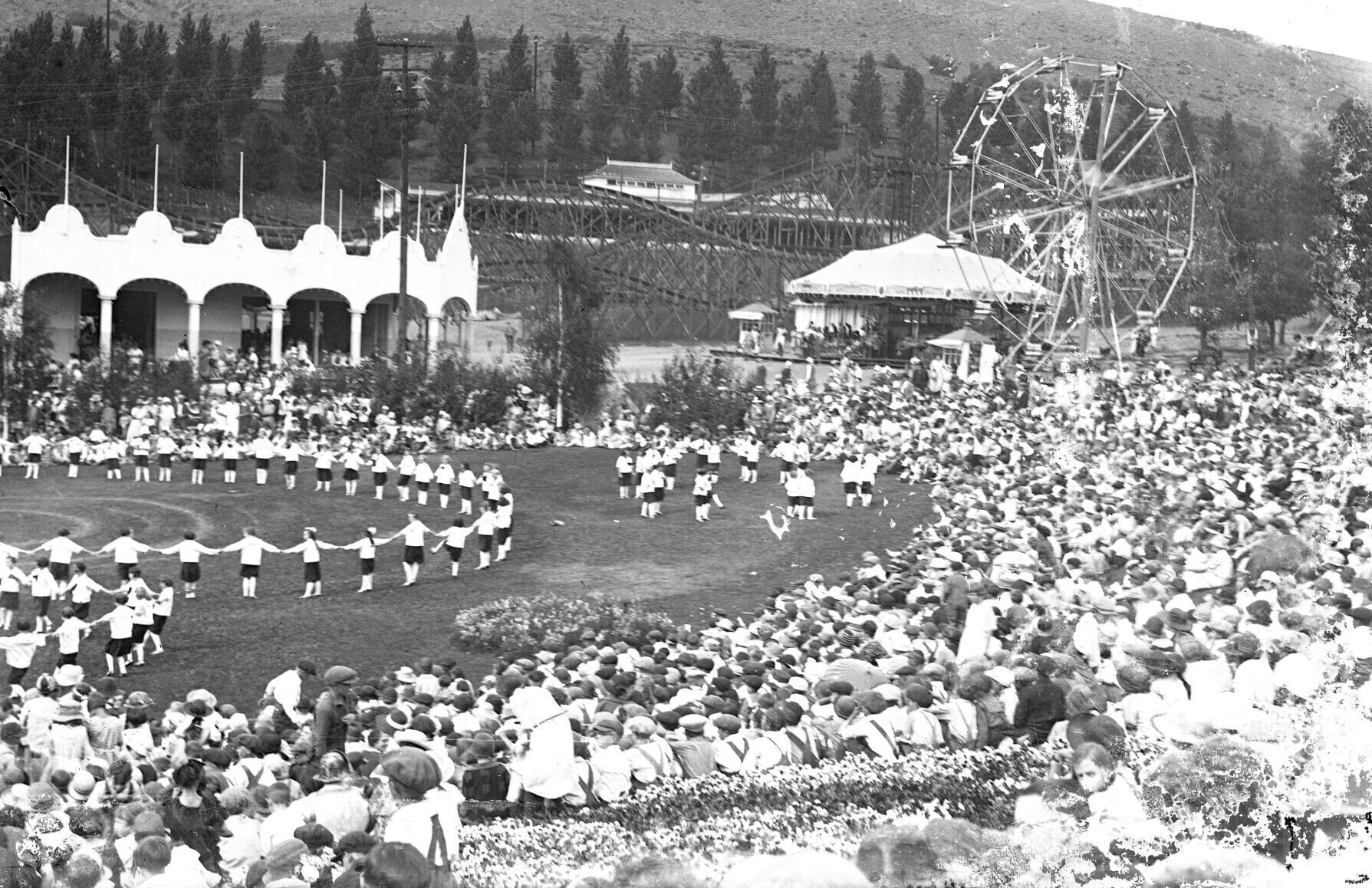
On March 19, residents were in mourning. Jesse R. Wharton, who managed the Butte Street Railway and the Columbia Gardens, had died at the age of 65.
“Mr. Wharton’s life was intimately interwoven with the magnificent Columbia Gardens,” reported The Butte Miner, “and that children’s paradise will stand as a monument to his untiring work.”
Long-time friend Eugene Carroll told an Anaconda Standard reporter that “the boys and girls of Butte have lost one of their most loyal friends but the city has lost a man that has perhaps done more for Butte than any other citizen in the same circumstance.”
Incumbent James G. Cocking was out and William D. Horgan was in. That was noted on the front page of Butte newspapers on April 3, 1923.
Horgan, the newly elected mayor, was thankful for the votes and told an Anaconda Standard reporter, “I am more than grateful to the people of Butte who have so generously given me this opportunity to serve them.”
Less than three weeks later, on April 20, two men, William Harris and Monte Harris were hanged for the crime of murder at the Silver Bow County Jail.
The men, who were not related, had been found guilty the previous year of the Nov. 25, 1921 killing of hotel operator, Cyril Schilling. The crime had been described as “one of the coldest blooded murders in the history of Butte.”
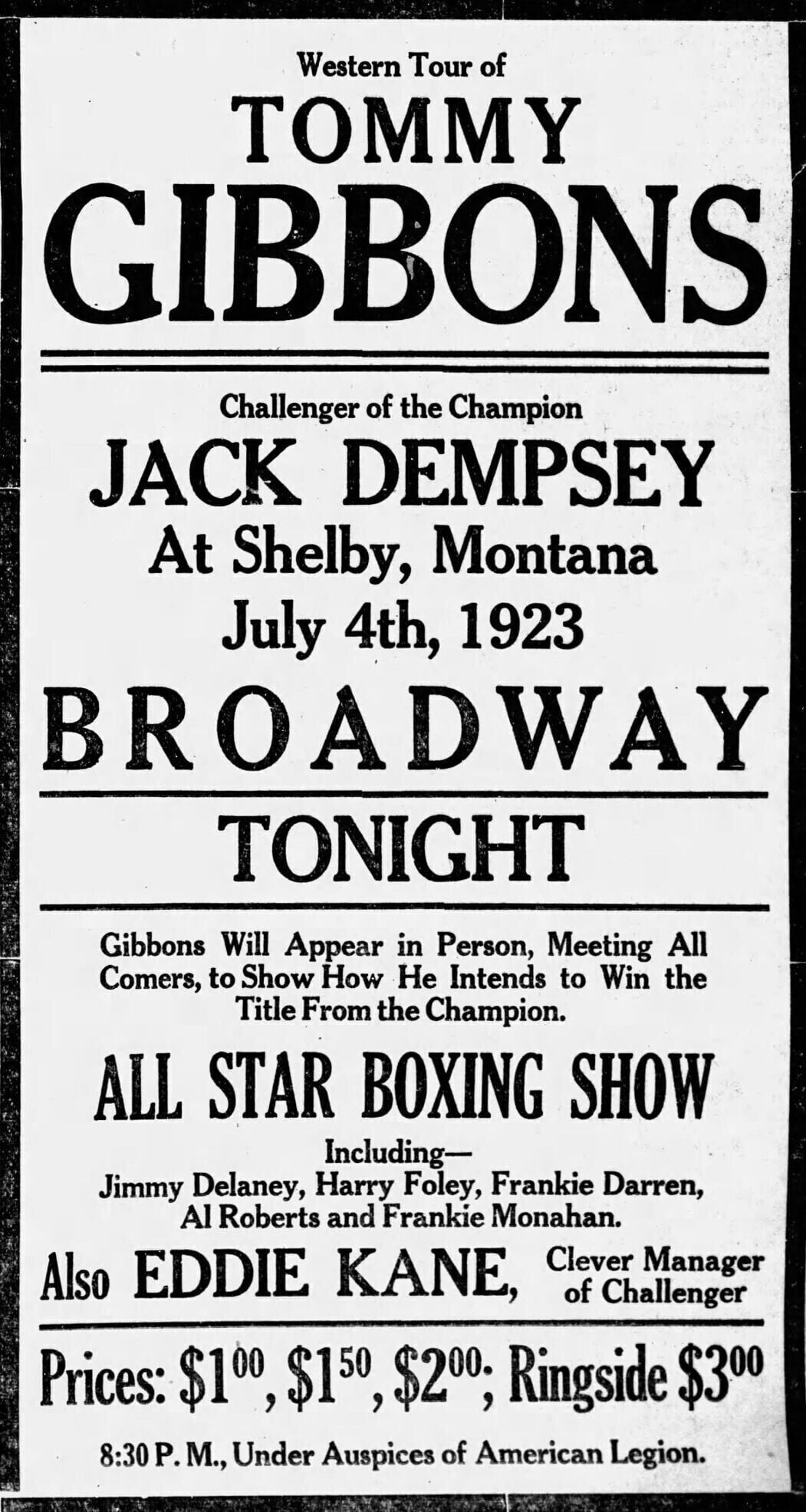
The upcoming championship bout between top pugilists Jack Dempsey and Tommy Gibbons was big news in Butte and across Montana.
The bout was set to take place in Shelby on Independence Day, but the two boxers were on separate tours beforehand to promote the big event. Dempsey made a short stop in Butte on May 15, and according to The Butte Miner, radiated “the joy he feels over the prospects of soon answering a gong in defense of his crown.”
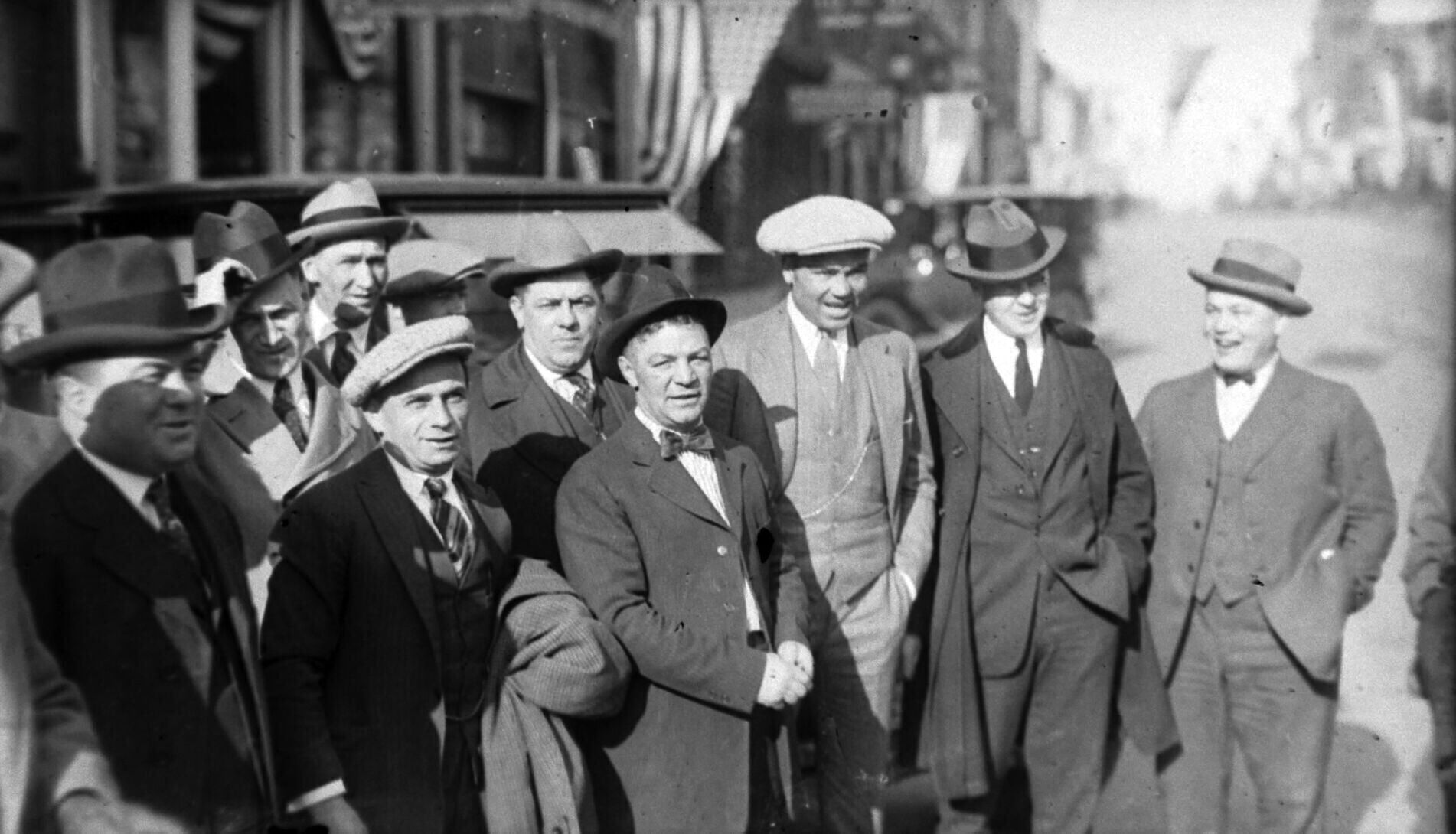
Gibbons, on the other, stopped and stayed awhile in Butte, even putting on an exhibition at the Broadway Theater for his many fans. It was pretty obvious who Butte fans favored for this particular bout. A large crowd, including a band, met Gibbons as he came off the train on May 22.
“Like a welcome to presidents and field marshals was the one given the big boxer when he alighted from a Great Northern Pullman at 3 o’clock yesterday,” reported The Anaconda Standard on their May 23 front page. “Handshakes, a stirring march from the Twin Cities band and a huge banner flaunting the words ‘Butte’s welcome to Tommy Gibbons’ met him.”
That popularity didn’t wane, even after Gibbons lost the 15-round bout to Dempsey on July 4. “Challenger First to Face Champion and Stay on Feet” was the front-page headline.
An Anaconda Standard reporter, who went only by his initials, R.R.K., was ringside at the event, and clearly felt that although Gibbons lost, he came out a winner.
“Tommy Gibbons, the St. Paul tinner, is tonight the idol of fight fans the world over,” wrote R.R.K. “He lost this fight but there isn’t a doubt in the world that he has shaken the confidence of Dempsey and he has loosened the champion’s hold upon his title.”
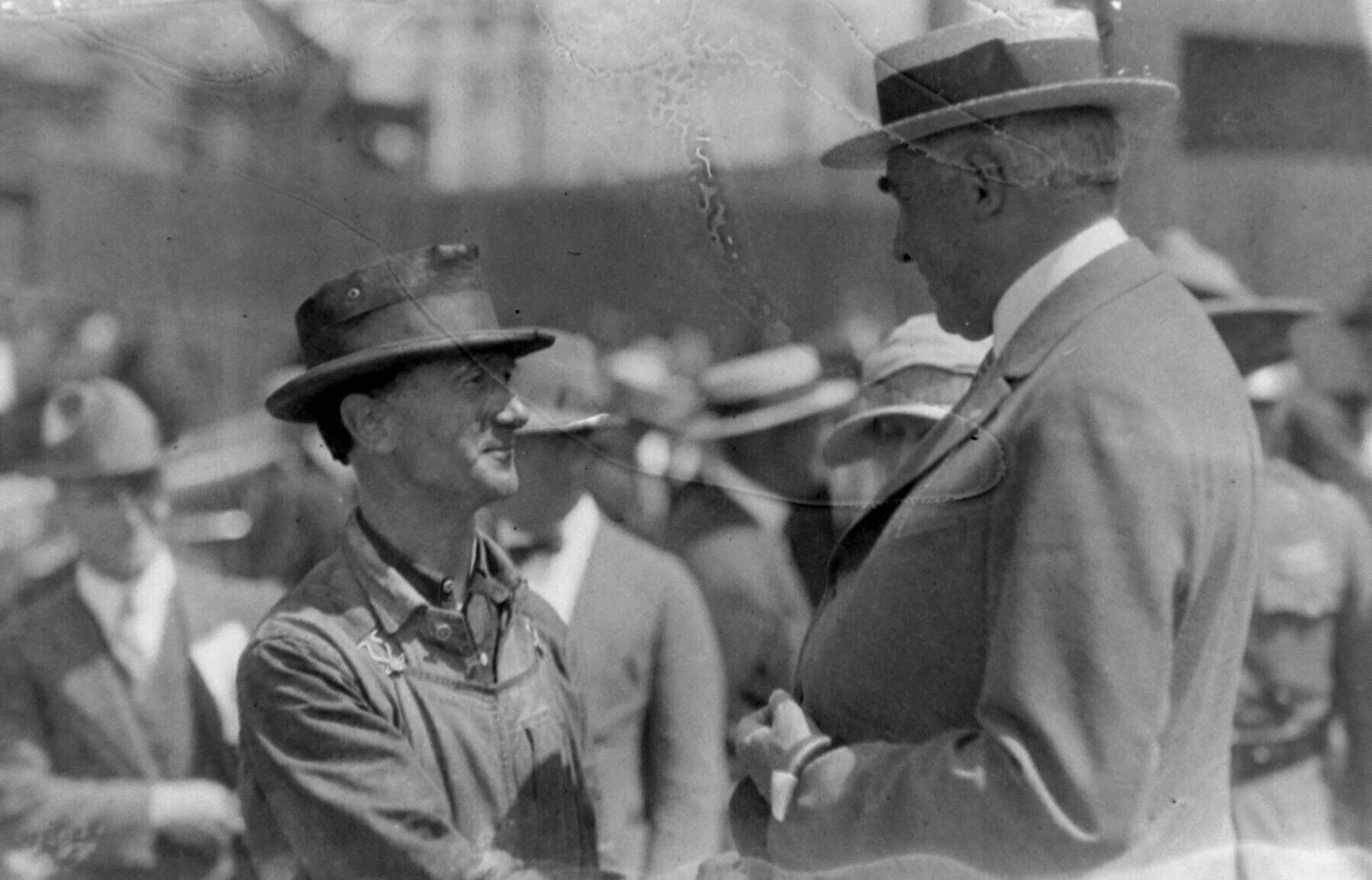
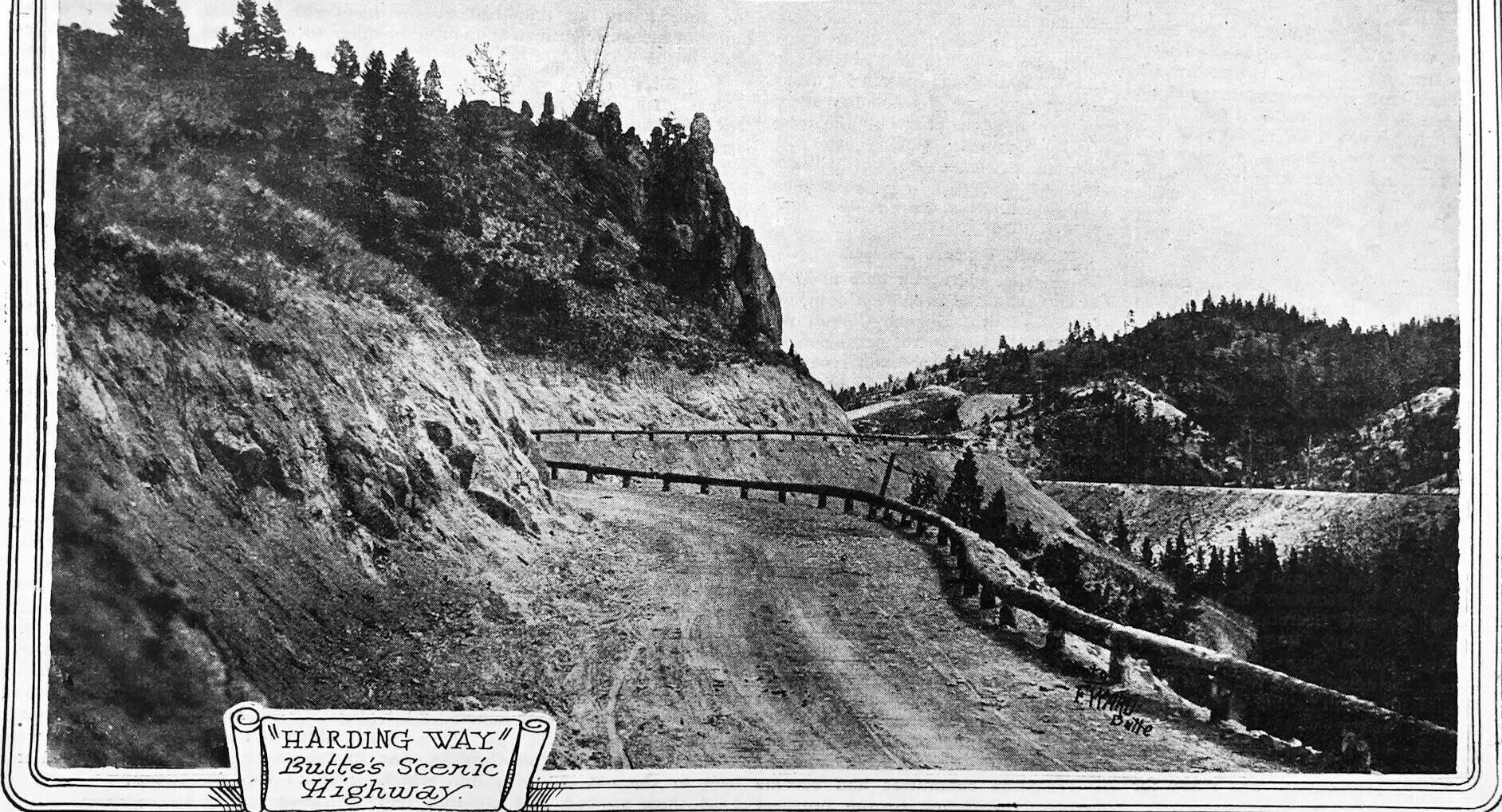
President Warren G. Harding, along with his wife, Florence, stopped on by on June 29, 1923. Part of his entourage included his wife, Florence, Henry Cantwell Wallace, U.S. Secretary of Agriculture, and Frederick Gillett of Massachusetts, speaker of the U.S. House of Representatives.
The sun was shining in Butte when the nation’s chief executive arrived.
According to The Anaconda Standard, “Montana’s most glorious sunny day of the season greeted the presidential party yesterday morning and the braying mountain air was keenly enjoyed by them after the hot oppressive and sultry days of the low country through which they had come.”
Harding would not make a return visit. Exactly five weeks later, the 29th president would die of a heart attack in a San Francisco hotel. He was 57 years old.
It was announced on July 4 that long-time Butte businessman, John McQueeney, had passed. The 80-year-old had made his way to Butte in 1881 and would later establish the McQueeney Transfer Co. He didn’t come alone, bringing his wife, Isabel, and their already-built home.
The home sat south of Butte for a year, but was then moved to its permanent residence at 943 S. Wyoming St.
Besides being a businessman, McQueeney dabbled in politics as well. He was also a bit of an environmentalist. He and his wife are credited with planting the first trees in Butte.
Move over Jack Dempsey. By July 23, Butte had a champion to call its own.
Robert Hossfeld, 50, beat out a much younger competition to break the world’s mucking record during a Miners’ Field Day competition at the Columbia Gardens.
A miner at the Mountain Con, Hossfeld was teased and taunted as he made his way to the line. Many spectators thought he was way too old to compete in the “young man’s” game.
“Whatcher going to do, grandpa?” one young man asked. “Goin’ to pray the rock in the box?”
That young man would later eat those words as Hossfeld managed to do something no one else had yet to accomplish — shovel a half ton of rock in one minute and 55 seconds.
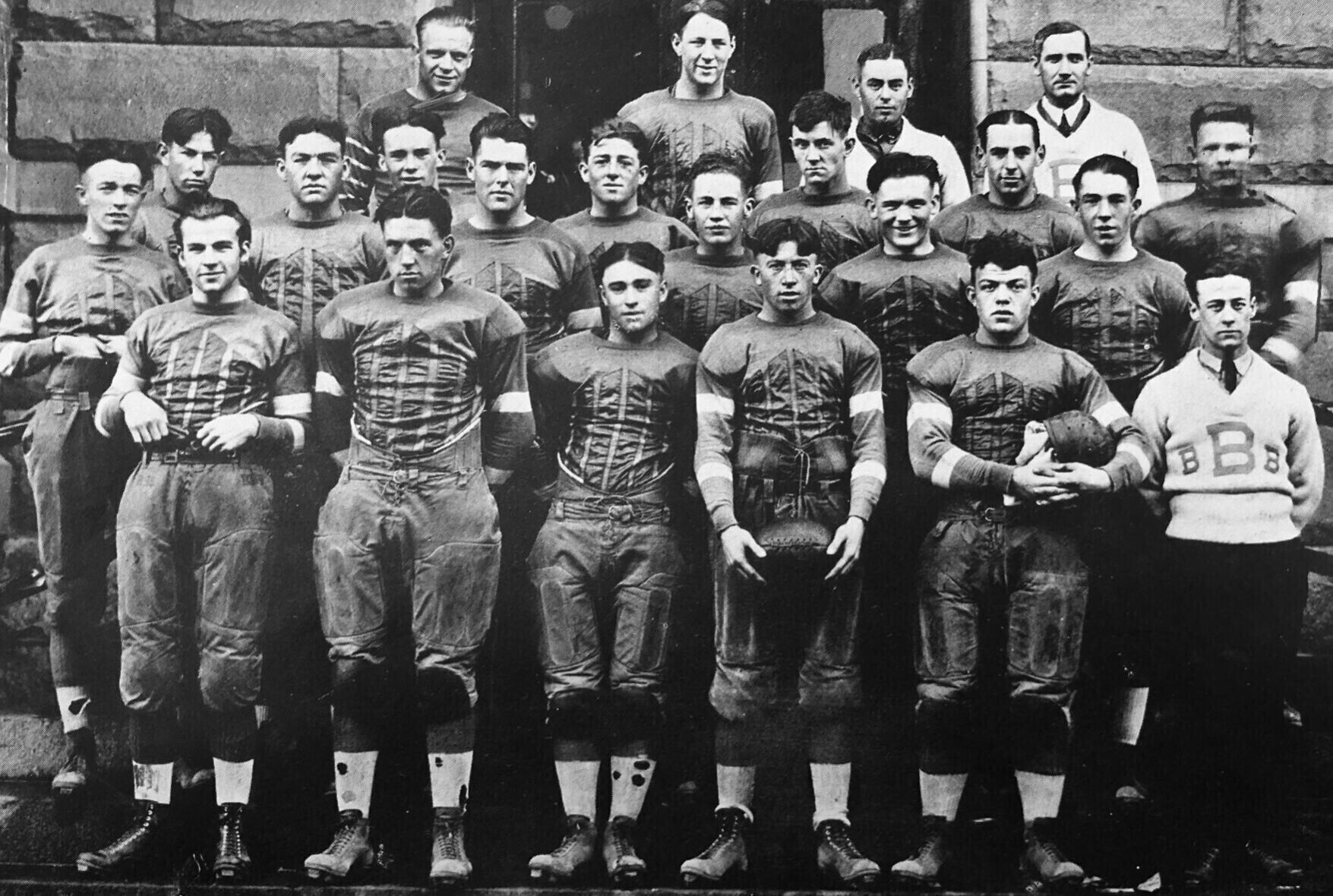
The Bulldogs of Butte High were the talk of the town on Sept. 29.
It was the first game of the season and the purple and white team did not disappoint fans. Under the leadership of Coach Swede Dahlberg, the Bulldogs took down the team from Whitehall by a score of 96-0.
“Butte attacked the Whitehall aggregation viciously from the start and never let up, except in the third quarter, when the entire first team was replaced by substitutes,” wrote an Anaconda Standard sportswriter.
Strikes were a regular occurrence throughout Butte’s history and 1923 was no exception.
By Sept. 30, film operators, stage employees and theater musicians had walked off their jobs, causing six Butte theaters to close up shop.
The following day, drugstore clerks would join the ranks, and by Oct. 3, department store clerks refused to come to work, too. The decision to strike caused the doors to shut on Butte’s three major department stores, Hennessy’s, Connell’s and Symons.
By Oct. 16, some but not all had returned to work. Theater workers were still holding out. By Nov. 3, though, the theaters were back in business.
With no chance to belly up to the bar, tempers flared from time to time — so did the violence.
Deputy Charles Kelsey of the U.S. Marshal’s office was beaten unconscious by a gang of men on Nov. 12, near Mercury and Main streets. Several men reportedly stood by and watched the attack, but did nothing to help the deputy.
The leader of that gang was Ellis Drakos, who had recently been charged by Kelsey with violating the federal liquor law.
Drakos was taken into custody, jailed for assault, but those charges did not stick. By Nov. 21, Drakos was a free man and the charges had been dismissed.
A Nov. 24 editorial in The Anaconda Standard touched on the subject.
“There is no telling where the fight against John Barleycorn is going to end,” the editor wrote. “The government is constantly handicapped by a popular disregard for the justice of the amendment.”
Reformed outlaw Emmett Dalton was in Butte on business the first week of December.
The one-time member of the infamous Dalton Gang that held up stagecoaches, banks and trains stopped by The Anaconda Standard office to chat with the editor.
Dalton, who had been convicted of second-degree murder in 1893, was released from prison after serving 14 years. Once pardoned, he left his life of crime behind and became not only a realtor, but an author and actor, as well.
“We killed only to save our own lives,” Dalton told the editor. “For that I paid the penalty and I think I am now entitled to a chance to come back.”
The year was coming to a close, ending on a good note.
On Dec. 22, residents woke up to the news that the opening of the new Finlen Hotel was just weeks away.
The Butte Miner predicted that the hotel would be “the pride of the city in reflecting Butte’s prosperity and hospitality.”
Funny how some things really do stay the same. Nearly 100 years later, the Finlen remains a source of pride to Butte.



Comments ()