
'Butte is very dear in my heart': Don Peoples' lifelong devotion to the town that raised him
EDITOR’S NOTE: When news filtered throughout Butte that former Chief Executive Don Peoples Sr. had died, the accolades were swift and abundant. The Montana Standard looked back at his career, from start to finish. His accomplishments were many and what stood out was his unwavering love for Butte.
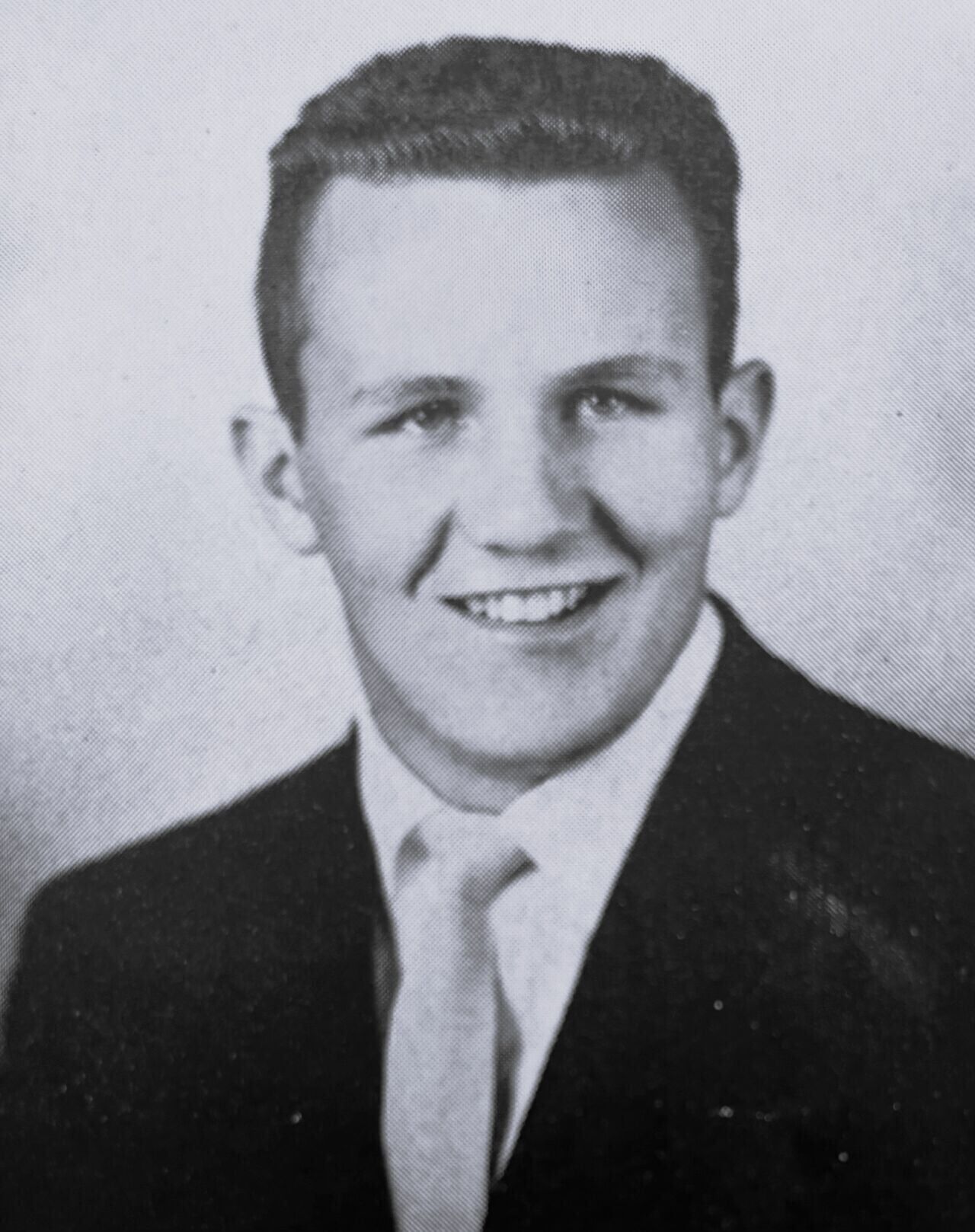
Fresh out of college, Don Peoples Sr. was just 22 years old when he started his career in Butte.
Appointed on April 4, 1962, as the city’s recreation director, Peoples was chosen from a field of 16 applicants, with a starting salary of $6,000.
It was the beginning of his lifelong commitment to his hometown.
Peoples excelled at his first position, earning the nickname “the go-get-'em director.”
“Recreation should provide opportunities,” Peoples told The Montana Standard in 1964.
Peoples took a different career path in 1967, becoming the director of athletics at his alma mater, Butte Central High School. He would hold that position until November 1972, when he was hired as Butte’s public works director.
In a May 31, 1974, interview, Peoples told a Montana Standard reporter, “We must all try to do our jobs to provide a quality community for ourselves and our neighbors, so we can make for a nicer, better local environment.”
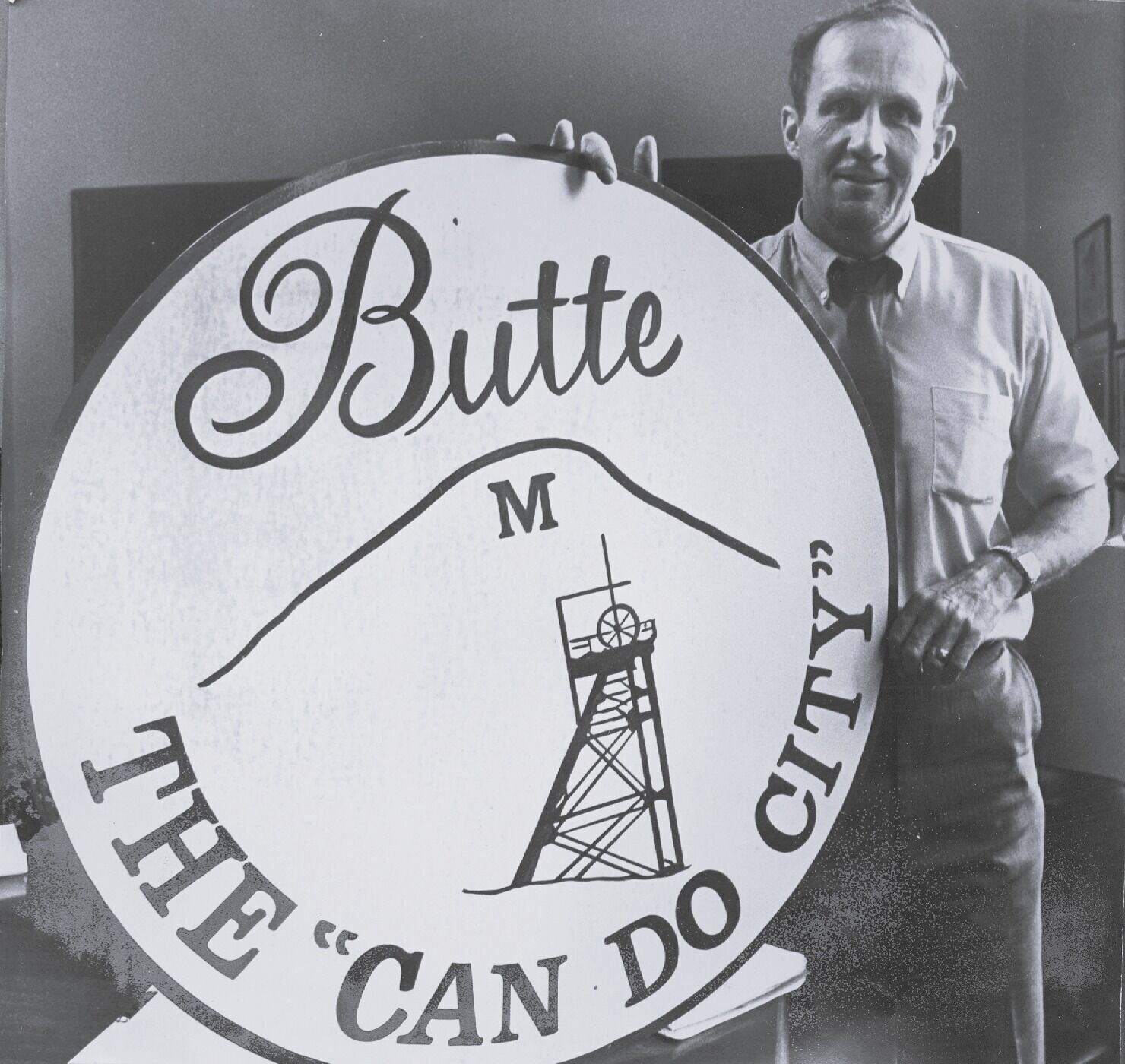
In the waning months of 1978, Peoples sought a new position as Butte’s chief executive, a job previously held by Mike Micone, who stepped down to take a job with the State of Montana.
“I know first-hand the difficult problems facing the local government and I seek the position of chief executive because I believe I possess the qualities and skills necessary to do a successful job for the residents of this great community,” he told the Butte-Silver Bow Council of Commissioners in December 1978.
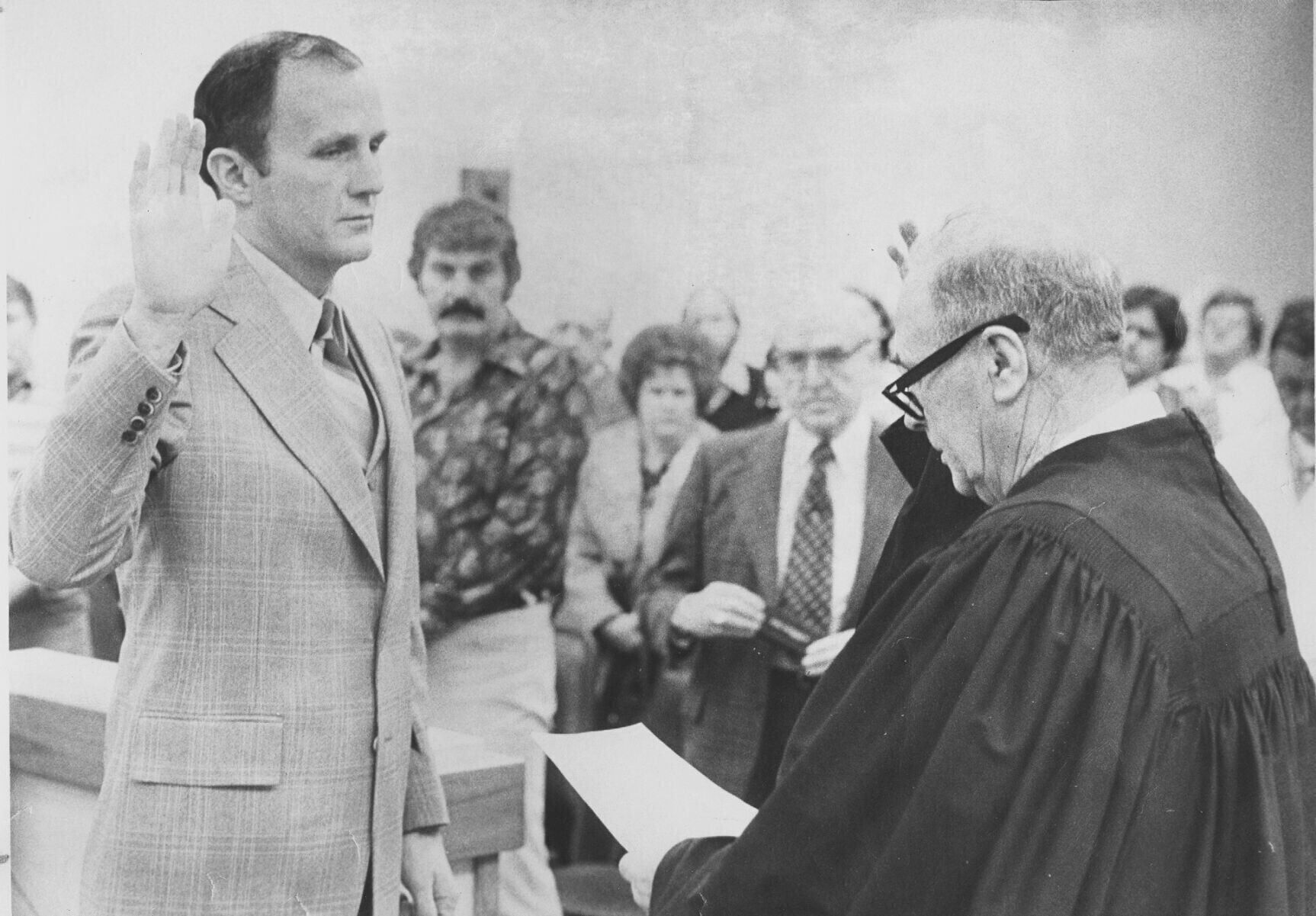
Eight of the 12 commissioners voted for Peoples, who said after the vote he was relieved it was “over with at last.”
Peoples would take office on Jan. 15, 1979, not knowing some bleak times were ahead for Butte. In a few short years, for the first time in more than 100 years, Butte mining would cease to exist.
It took some time, long hours and hard work, but Peoples took control and his eventual success in bringing back mining did not go unnoticed.
On Dec. 16, 1984, the Great Falls Tribune featured an interview with Butte’s chief executive.
Peoples told Tribune reporter Les Rickey that when Anaconda Co. pulled out of Butte, a lot of people predicted Butte’s economy would fall like a house of cards, but it didn’t happen.
“We’re on the road to recovery, and in the next few years, Butte will be just like any other good town in Montana,” said Peoples.
The chief executive continued his quest to improve Butte, applying for local government grants and pitching ideas in Washington, D.C., all of which required extensive travel.
“I’ve put on a lot of miles, there’s no question about it,” he said on Aug. 11, 1987.
Butte’s road to recovery at Peoples’ helm caught the eye of the publication U.S. News & World Report. In December 1987, the publication chose Peoples as one of America’s top 20 mayors.
He was in good company, as Tom Bradley of Los Angeles, Coleman Young of Detroit and Henry Cisneros of San Antonio, Texas, also made the list.
“He brokered compromises from labor, tax officials and a utility to reopen the mines under new ownership. Some 300 jobs and a $7.3 million payroll were saved,” was the reason for the honor.
More accolades were to come for Peoples when Butte was designated an “All-America” city in a nationwide competition on June 11, 1988, involving 871 cities and towns.
It was the first time in the competition’s 39 years a Montana town was chosen.
Butte’s chief executive called the designation the most coveted award for municipal governments in the U.S.
“Butte should be extremely proud to have come from a plant-closure city to an All-America City in five years. It took the hard work of 35,000 people,” said Peoples.
A year later, Peoples was considered as former Montana Gov. Tom Judge’s running mate in the upcoming gubernatorial election. He turned it down.
“It was important for me personally to stay. People here have been decent to me, and I have an obligation to stay,” said Peoples.
Family was his main reason for remaining in Butte.
His wife, Cathy, told The Montana Standard on April 30, 1989, as busy as her husband was, every time he was needed at home, he was there.
“He always made time for the kids, never missed a game or a dance revue. He never missed anything that I felt was important for him to be there,” she said.
Peoples stepped down as Butte’s chief executive on July 22, 1989, after accepting a position with Montana Energy Research and Development Institute (MERDI).
“It was a tough, tough decision to make, but I look at the opportunities for me personally and professionally. I had to try and find the place to be for the betterment of Butte and Montana,” he said.
For more than 15 years, Peoples would excel as director of MERDI.
On Oct. 6, 2001, he shared with The Montana Standard the company was making more than $25 million annually.
For his many contributions to his hometown, Peoples would receive one last honor on Oct. 15, 2025, as the old Montana National Guard armory was renamed the Don Peoples Sr. Butte-Silver Bow Complex.
“Butte is very dear in my heart,” he said in his last interview that same day with The Montana Standard.


Comments ()