
Committee jostles over race in sanctuary city hearing
A legislative hearing Tuesday on a bill to ban local governments from enacting sanctuary city laws veered off course when the committee chair shut down opponents to the bill for suggesting the legislation is rooted in racism.
The 19-member House Judiciary Committee was considering House Bill 200, which would stop state agencies or local governments from enacting laws to disengage from federal law enforcement on immigration matters. Montana has no sanctuary cities, said the bill's sponsor, Rep. Kenneth Holmlund, R-Miles City, but the legislation would be "proactive." The same committee will hear another bill, House Bill 223, on Wednesday. It would authorize local law enforcement to take up federal immigration enforcement duties.
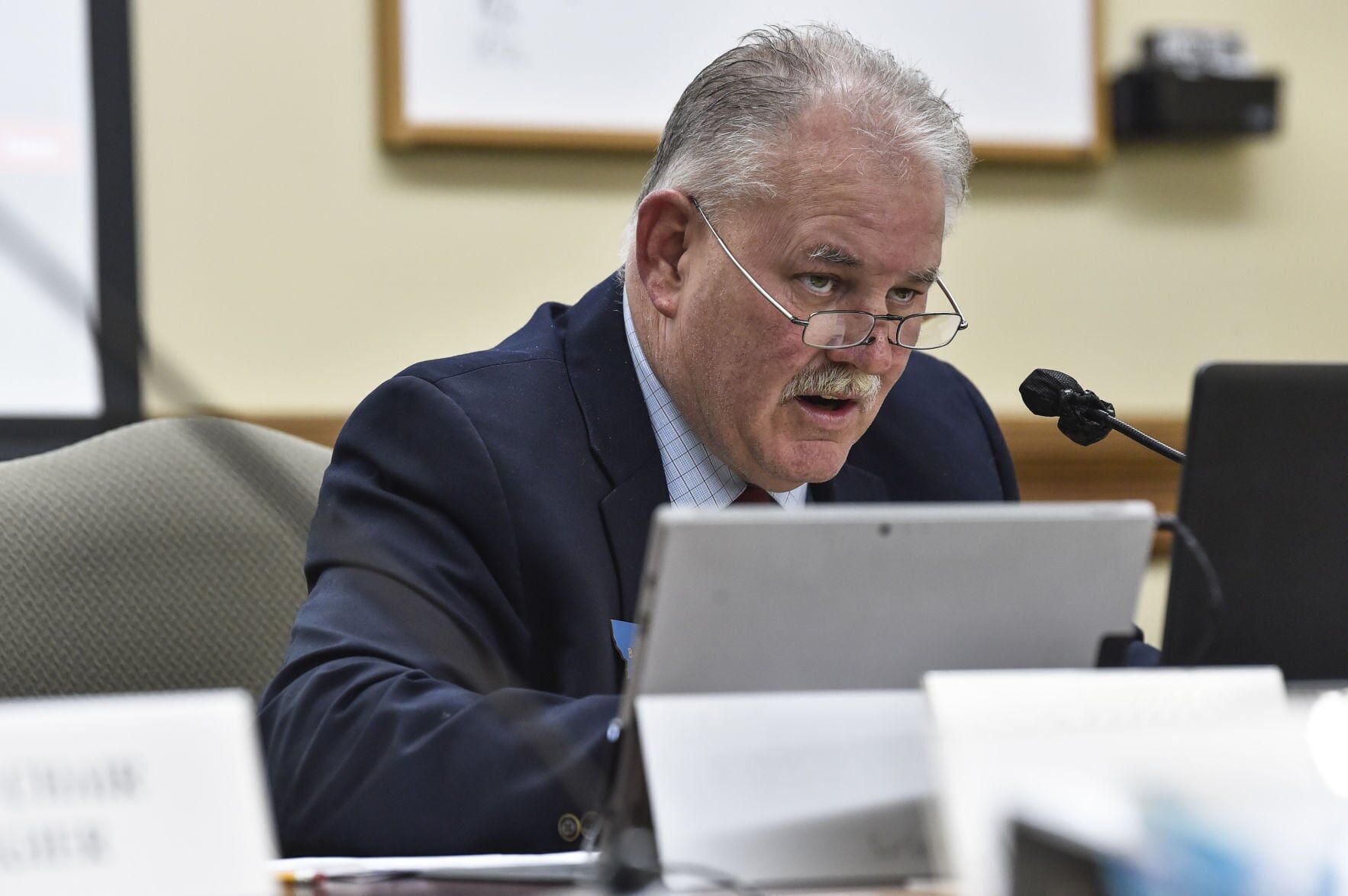
During the hearing, committee chair Rep. Barry Usher, R-Billings, cut off two opponents to the bill: a reverend and a rabbi. Rev. Laura Jean Allen, of Helena, had started speaking about her personal comfort level with law enforcement as a white woman when Usher ended her testimony.
"This is not about racism," Usher said. "It is about legal and illegal immigration."
Allen still submitted a written objection to the bill co-signed by nearly 70 faith leaders from around Montana and was later able to finish speaking to the committee.
Later in the hearing, Rabbi Laurie Franklin, of Missoula, spoke more directly to her thoughts on the source of the legislation.
"This bill is driven by an underlayment of white supremacy, bigotry and hatred, plain and simple," Franklin said.
Rep. Derek Skees, R-Kalispell, interjected and said he believed the comment is "nowhere in the bill" and could therefore not be submitted through testimony. Legislative rules let committee chairs halt testimony that strays from a bill's topic.
From there, Democratic lawmakers began chiming in on what they said was an inconsistent application of the rules governing when someone can or cannot speak to the bill with matters that do or don't directly apply to the bill's language.
"I wish I had spoken up earlier when we had a proponent for the bill discussing people from various nationalities and their behaviors," Rep. Danny Tenenbaum, D-Missoula, said. "That, to me, did cross the line."
Four people spoke in support of the bill, including Mark Limesand, who said he was living in Massachusetts in an immigrant community of mostly people from Central America when new Mexican immigrants moved in. After that, Limesand claimed the community saw littering, open alcohol containers and an increase in drinking and driving. While there wasn't an official "sanctuary city" law in place, police didn't arrest any undocumented immigrants, so it had been a de facto sanctuary city, Limesand said. He added he moved away from the area because of that issue, and now lives in Bozeman.
"If people believe that having societies where you don't enforce immigration laws is beneficial to other people here in these poor communities … they will find out that it's absolutely terrible in those communities," Limesand said, adding that his immigrant neighbors were also upset with those who had moved in. "You start seeing people with open containers, far more drinking and driving going on."
Republican lawmakers pushed back during the hearing that the rules of testimony had not been applied fairly. Rep. Seth Berglee, R-Joliet, argued talking about people from different countries was different from talking about personal feelings on people of different races.
"None of the speakers made any claims about the types of people they were, they simply were making claims about how those people from those areas acted and the effects that those had," Berglee said. "I think the ideas of racism and bigotry and anything else is totally different from stating where a person might be from."
Rep. Laurie Bishop, D-Livingston, was one of the Democratic lawmakers who said the rules of testimony had not been applied fairly. After the hearing, Bishop said recent testimony on other legislation, for example women's health care, has seen statements that questioned health care providers' motives, and no one objected to those statements during testimony.
She also said decoupling race from conversations about immigration ignores the racism sometimes embedded in those discussions.
"To completely eschew the intermingling of race and our conversations about immigrants, it's inappropriate to even try to find that line," Bishop said. "We have to acknowledge those issues."
Usher, after the hearing, disagreed.
"They're not the same," he said. "Immigrants can be from anywhere in the world and races are from specific areas of the world.
"My intent of being chair is I want to be fair and equal as much as possible. And I do make mistakes but I am also trying to make sure the heat of the conversation stays at a level that we can all hear, because as soon as the level gets up, people stop listening."
During the hearing, after Usher had shut down Rev. Allen's testimony, he met with her in the hall and tried to explain his position. Later in the meeting, Allen was allowed back up to the podium and finished her testimony.
"My greatest concern," Allen said, "is implementing a ban on sanctuary cities will hurt the trust in police when tensions are high. I think every person, regardless of documentation, should feel safe calling police when they've been the victim of a crime."



Comments ()