
Course correction: Sentinel Missile program still moving forward in central Montana
LEWISTOWN — There’s no word yet on whether Lewistown will be a workforce hub for the Sentinel Missile project, according to Air Force officials at a town hall meeting Tuesday evening. It is possible some missile silos in central Montana may be decommissioned.
In the largest project ever undertaken by the Air Force, the military is planning to replace the 450 aging Minute Man III missiles located in silos across Montana, Wyoming, North Dakota, Colorado, and Nebraska with a new missile system called Sentinel. Sentinel is being designed and built by Northrop Grumman.
Tuesday evening, Lieutenant John Mayer, Commander of the Sentinel Task Force, told the audience that 55 of the 150 Montana Intercontinental Ballistic Missile sites will be moved. Reasons include the need for all-weather access to missile sites, high water tables that impact silo locations, and drive distance from Malmstrom Air Force Base in Great Falls.
Exactly which sites will be decommissioned is part of a Supplemental Environmental Impact Statement that will get underway this summer. Decommissioned sites could be filled with dirt or gravel, or imploded.
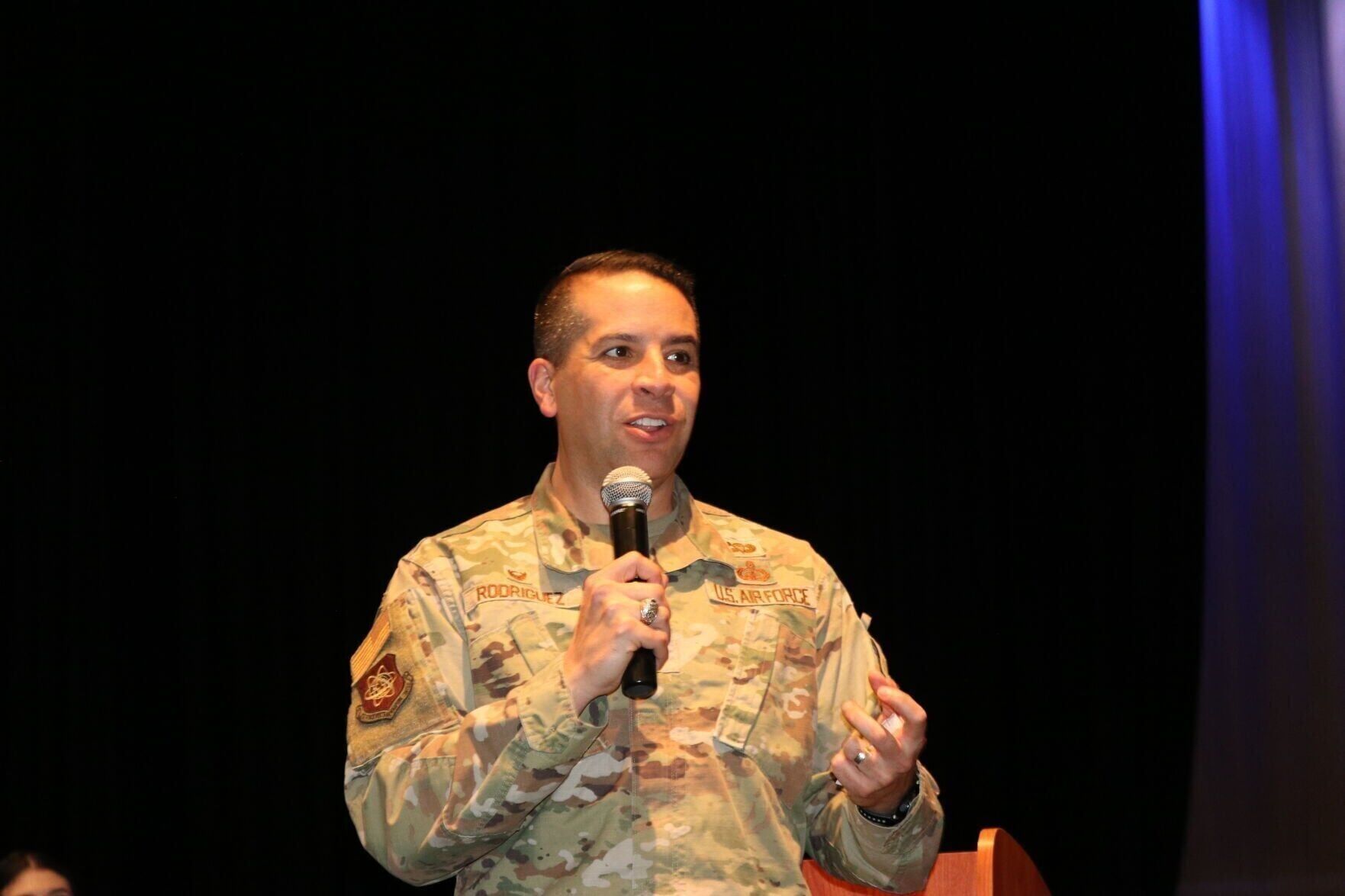
Colonel James Rodrigues from Hill Air Force Base, who is responsible for Sentinel Launch Systems, said the Air Force is working with landowners to secure necessary easements for the Sentinel project, including new fiber optic lines and larger launch sites.
“We have folks out walking throughout the missile field to confirm where communication lines are now and to see where we need to acquire construction easements,” Rodrigues said.
Currently, a utility corridor pilot project is underway north of Kimball, Nebraska, to see whether the 16.5-foot-wide utility corridor is going to be wide enough for the work required. The new missiles will communicate using fiber optic cables, so the old copper cables will need to be replaced.
“We have a 20-mile-long test project north of Kimball where we have acquired all the easements,” said Director of ICBM Infrastructure Peter Sturdivant. “Also, starting this year we will be testing silo construction methods.”
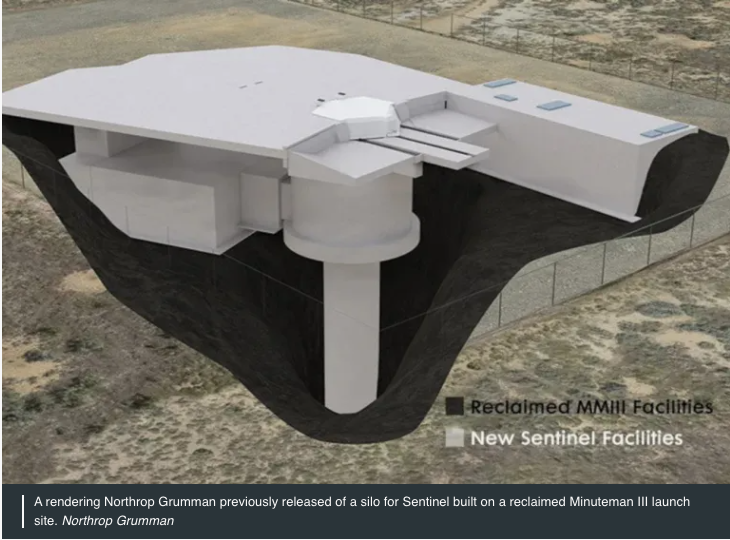
Originally, the existing Minute Man III missile silos were to be reused for Sentinel, but last year the Air Force announced that due to age, deterioration, and other reasons, all new silos must be built. Except for the 55 Montana silos that will be relocated, new silos will be constructed on the same sites as the Minute Man III silos.
“We will need a larger site because digging out the old silos and bringing in the materials for constructing the new silos just can’t be done on the existing 1-acre sites. We will be working with landowners to increase the launch sites to 5 acres,” Rodrigues said, adding that command sites will be 10 acres in size.
A prototype of the new launch silo is currently under development by Northrop Grumman in Promontory, Utah, according to an Air Force press release on March 27. In an effort to contain costs, Northrop Grumman will create a modular silo design that can be repeated at each of the 450 sites. Construction of the silo prototype will tell the Air Force what size of workforce is needed.
“We want to lower the number of workers we need, but we will still need to bring in outside labor,” Rodrigues said.
“A lot depends on the efficiencies we find as we go through the prototype development,” Sturdivant added. “We haven’t decided yet how to split the job up. We need to build the new silos quickly, so we probably need between 1,000 and 1,500 people.”
Originally estimated at $77.7 billion, the Sentinel program cost estimates ballooned to $141 billion by 2024. As required by the Nunn-McCurdy Act, because of the cost overruns, the program had to be re-approved by Congress, causing a review of the timeline and project implementation. Recently, the Air Force determined it could not reuse existing silos but must build new ones, another impact on the budget.
When asked about the current cost estimate on Tuesday evening, Sturdivant cited the current cost estimate at $141 billion but also said he did not know if there was an upper limit for the Sentinel project budget. Sturdivant said he expects the Sentinel missiles will be operational sometime in the early 2030s.
Air Force officials encouraged members of the public to voice their concerns during the supplemental EIS process, which begins this summer. According to officials, the “Sentinel SEIS will assess changes to the proposed action that have occurred since the Sentinel design has matured after the May 2023 publication of the Record of Decision for the original Sentinel EIS.”
Look for documents, schedules, and comment periods for the SEIS on the website www.SentinelSEIS.com.




Comments ()