
Creating an analogue refuge in Bozeman's digital world: Meet Mike Somerby
The 1990s were a time of economic prosperity, technological advancement and, perhaps, a dagger in the heart of analogue media. As the influence of the World Wide Web evolved and metastasized, it nestled itself into increasingly smaller vessels, shrinking from room-sized computers to desktops, to laptops, to cell phones.
“One only need to reach into a pant pocket to cure all boredom; to quench any thirst of curiosity; to have any desire of the material world delivered to a doorstep within hours; to have an artificial mind take on the burden of thinking for you, writing for you, talking to you, and even loving you,” Mike Somerby, owner of Bozeman’s Bone Marrow Publishing, writes. “It is unsurprising we became so glazed over by convenience that no one noticed the bad juju wafting from it.”
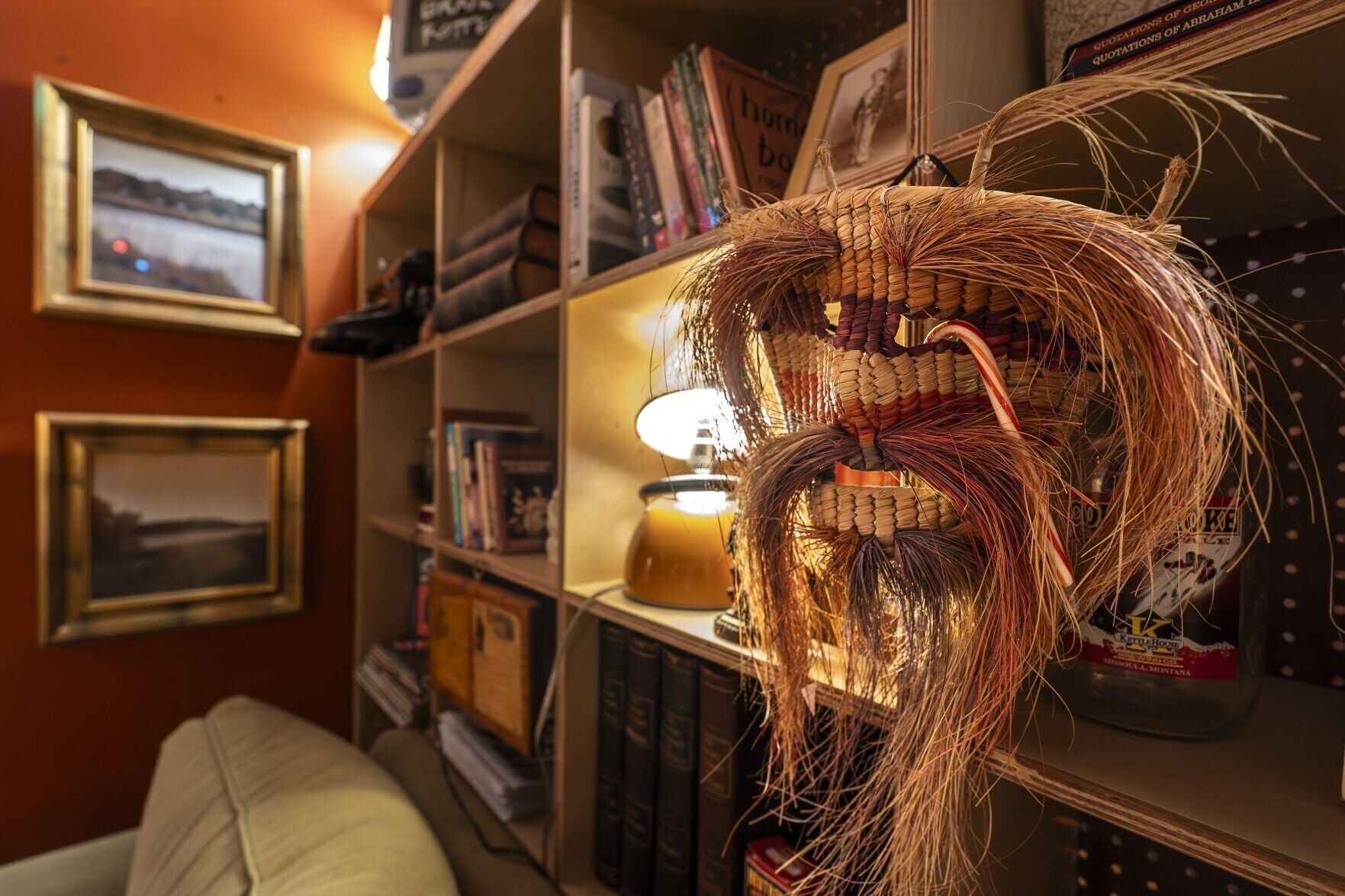
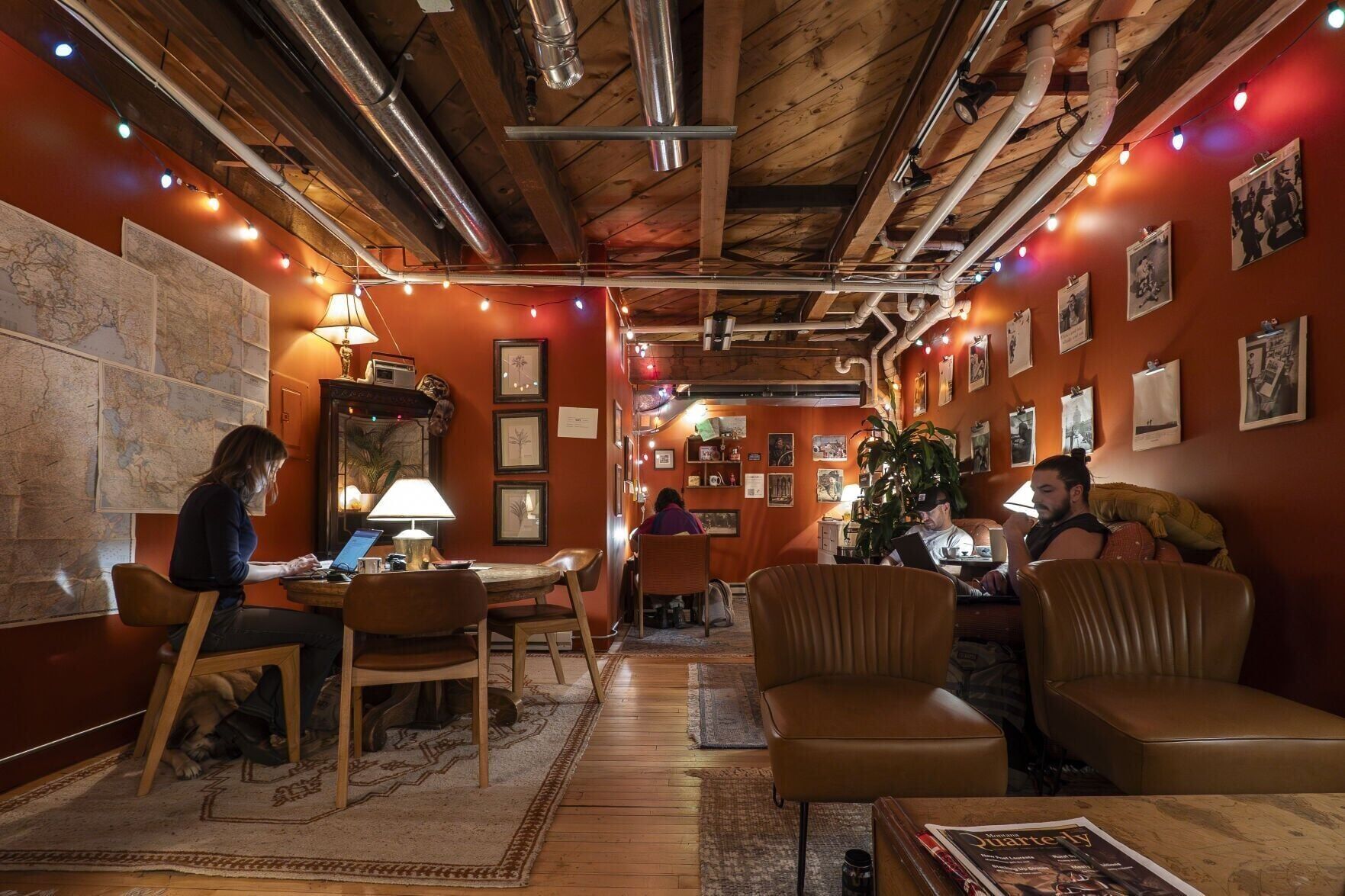
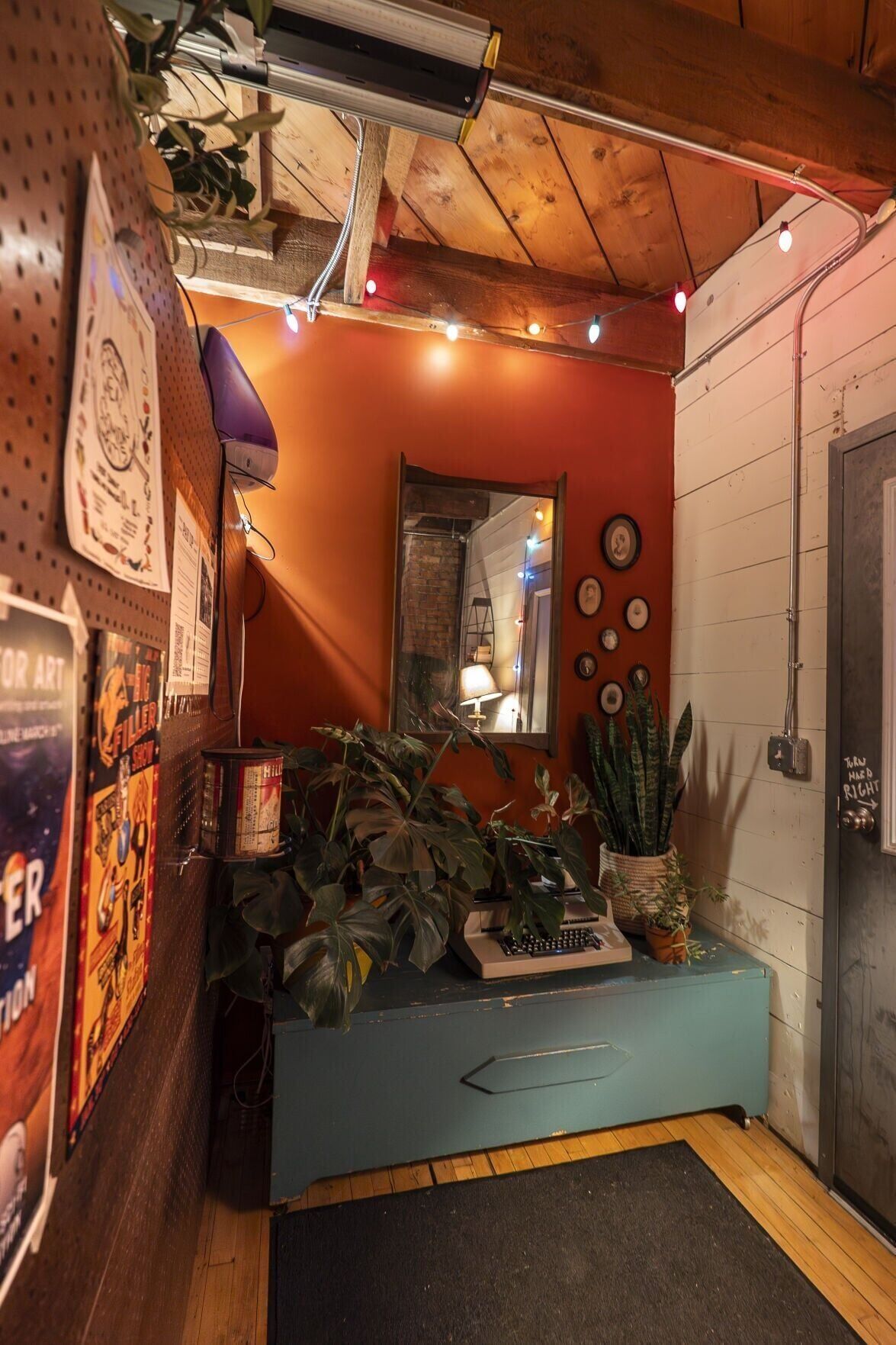
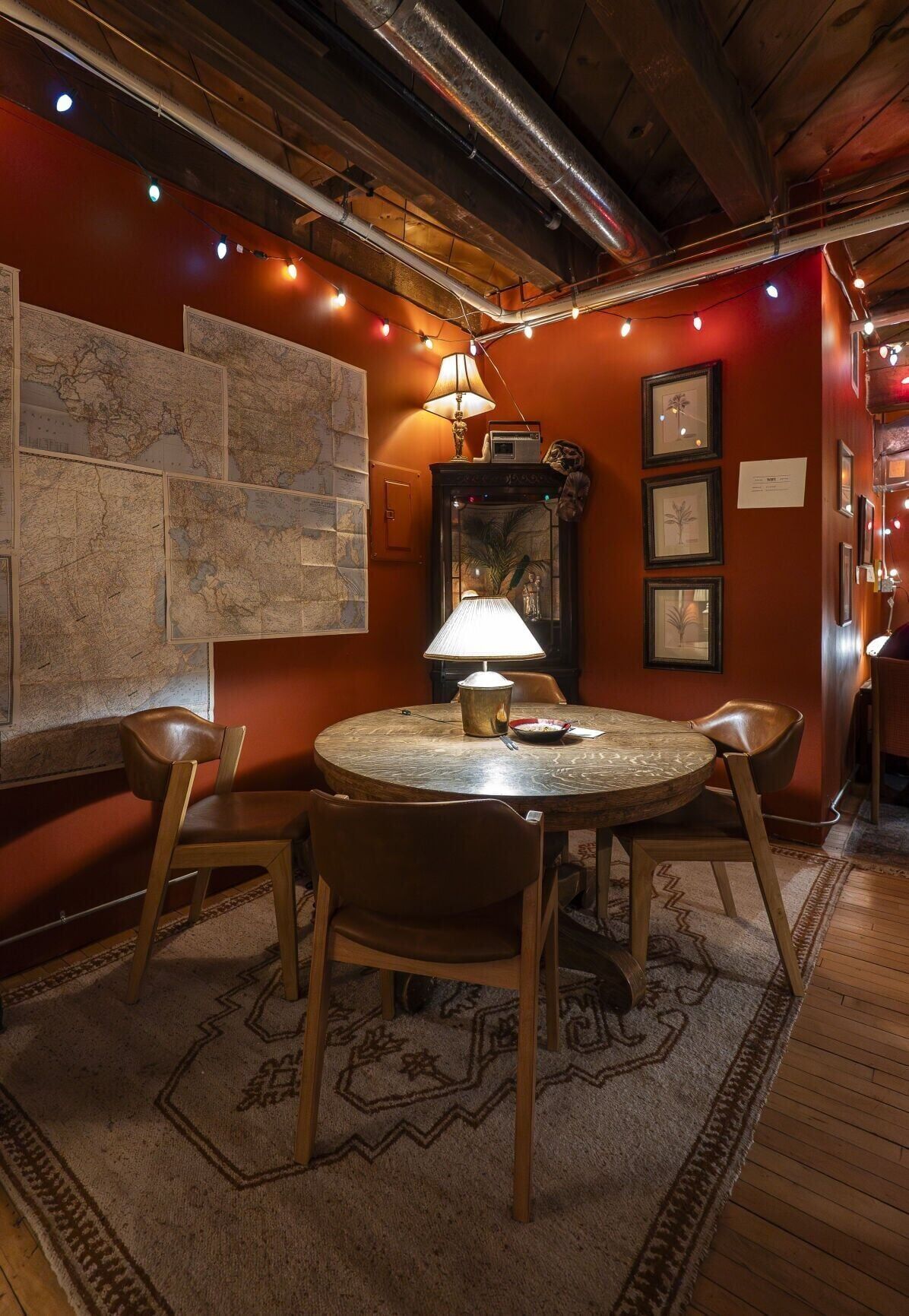
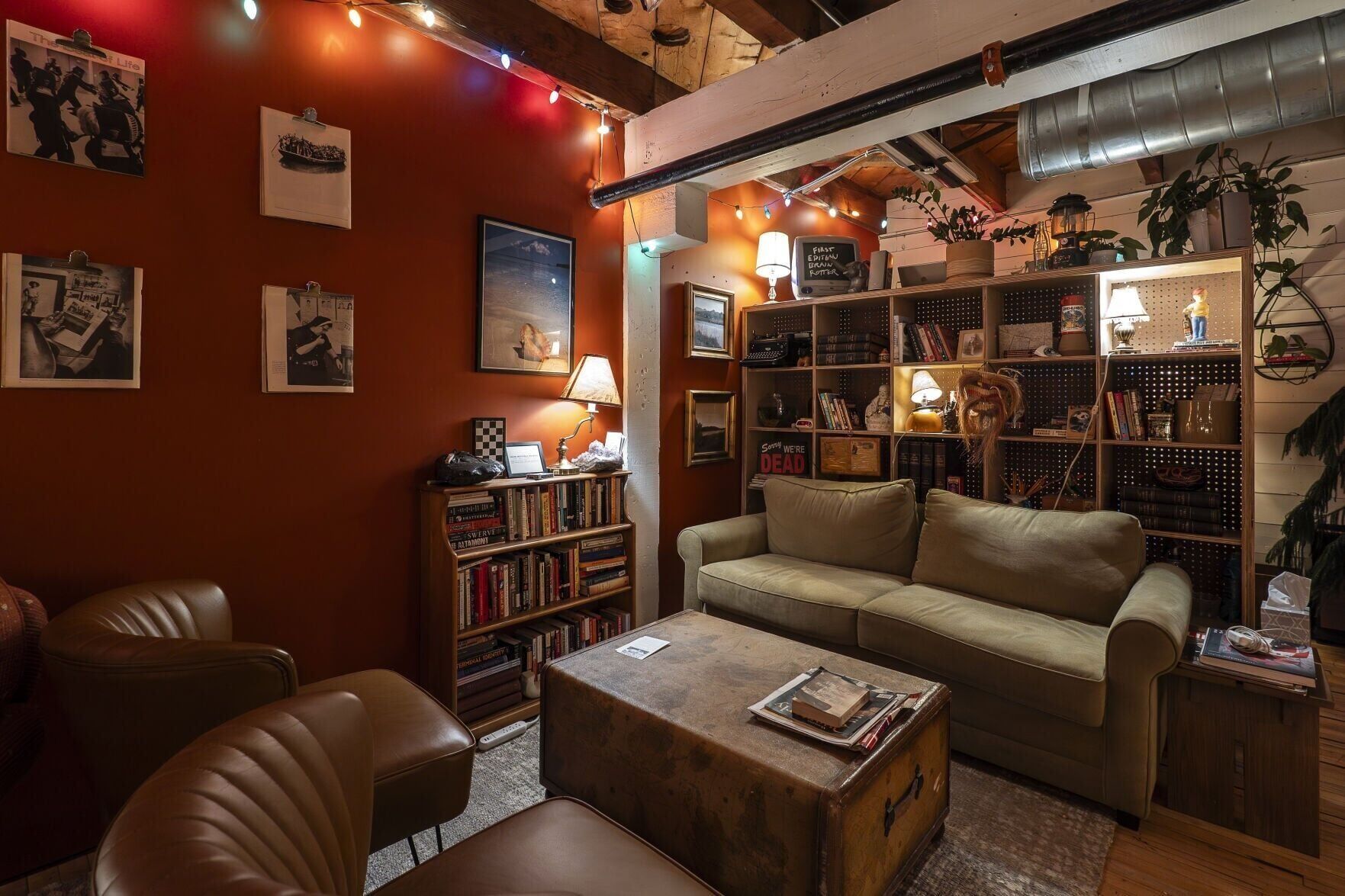
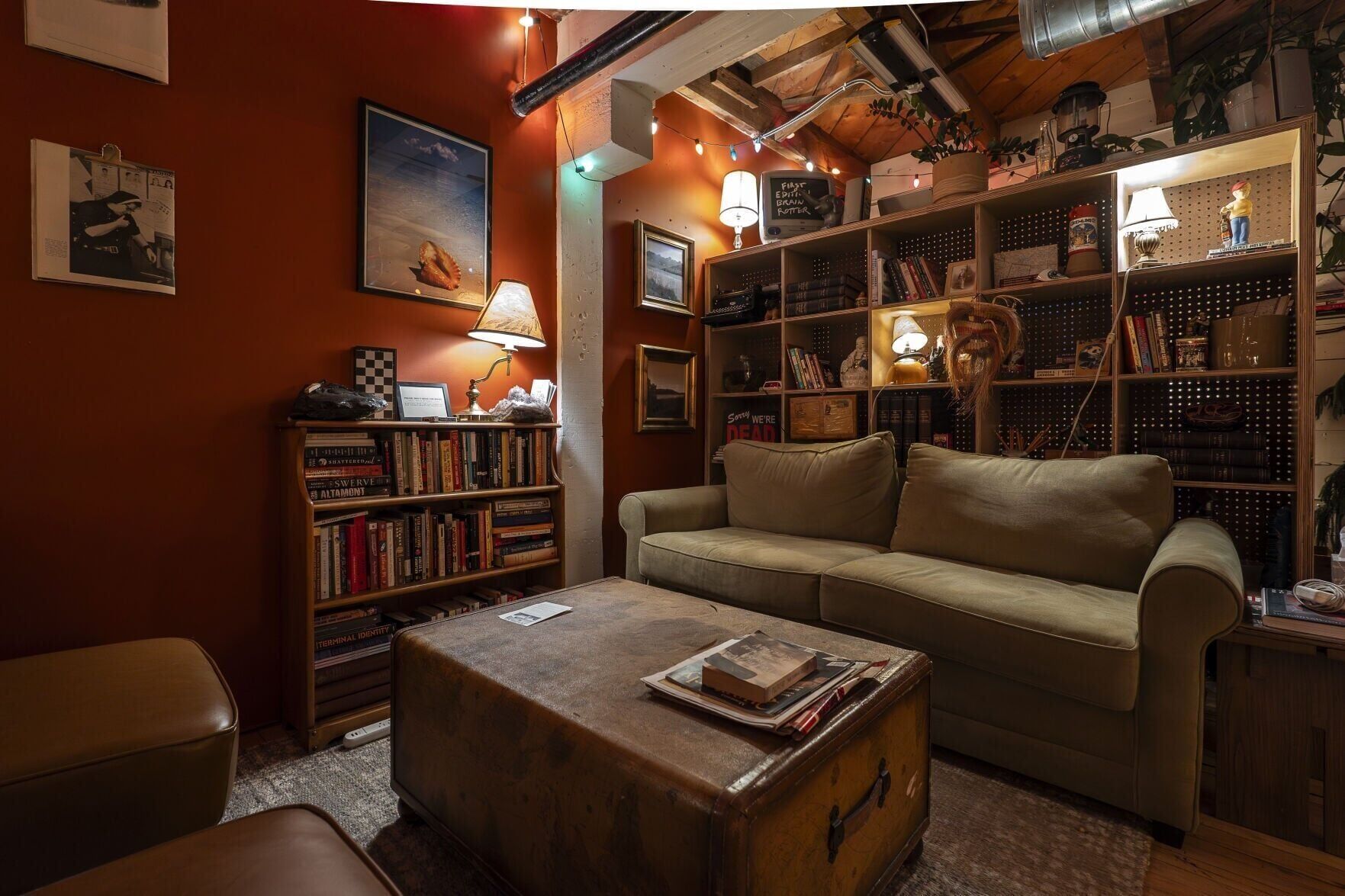
Somerby opened Pulphead, a “night-owl spot to work on your thing,” last November. The 500-square-foot room seems to be a neo-Luddite haven, with typewriters and a cassette radio player tucked in with vintage magazine prints and an old, boxy computer monitor with “FIRST EDITION BRAIN ROTTER” scrawled across it in messy white script.
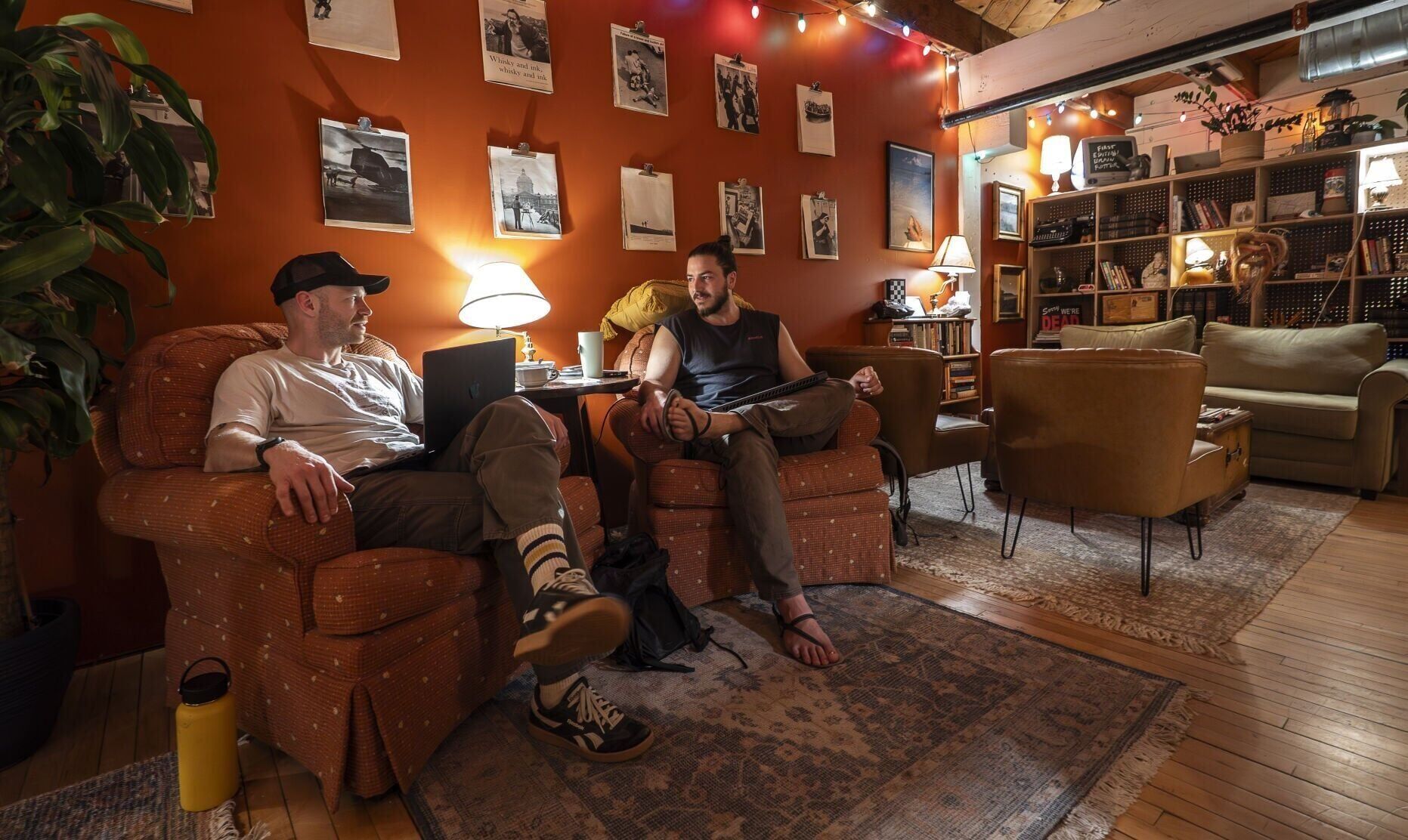
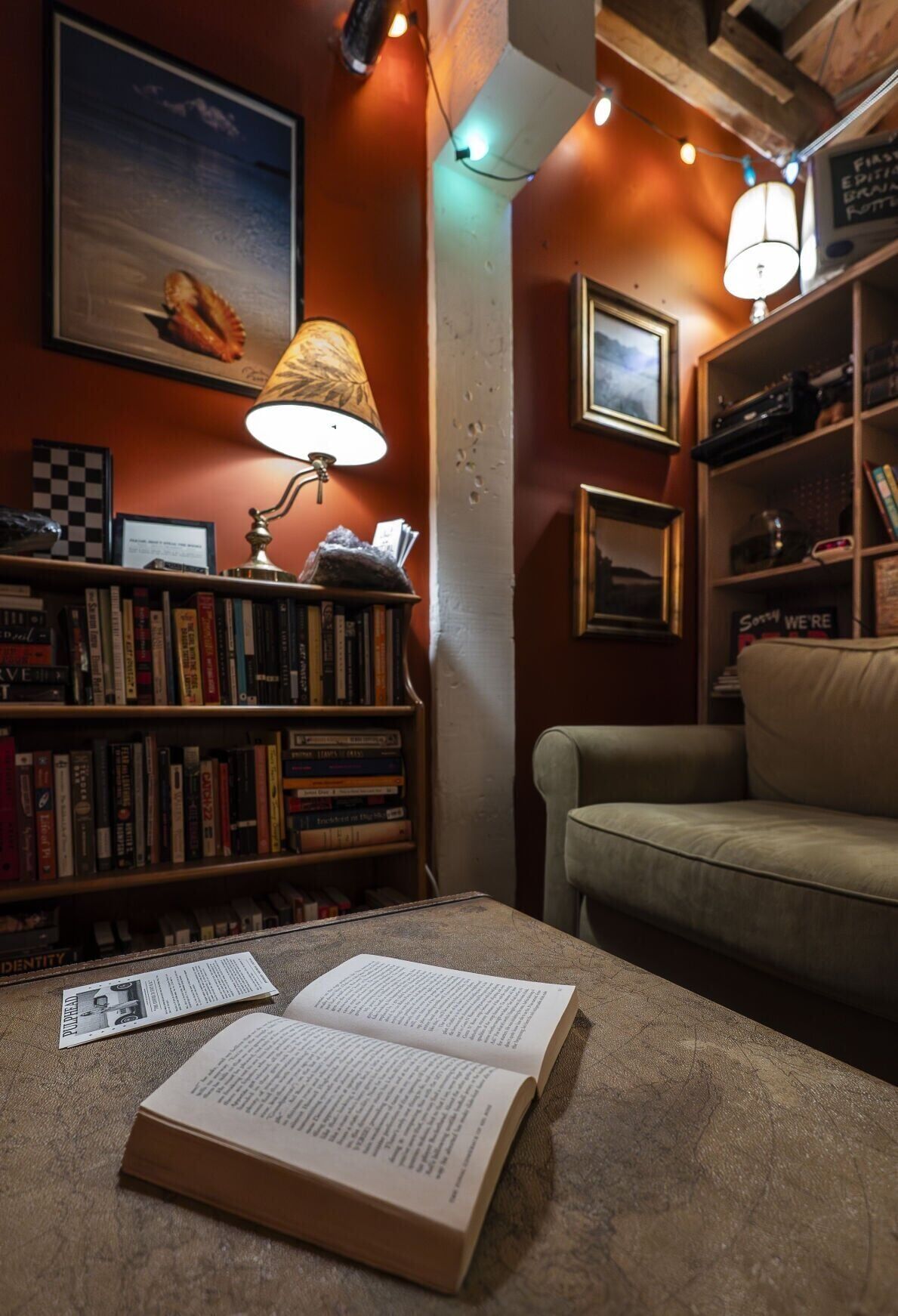
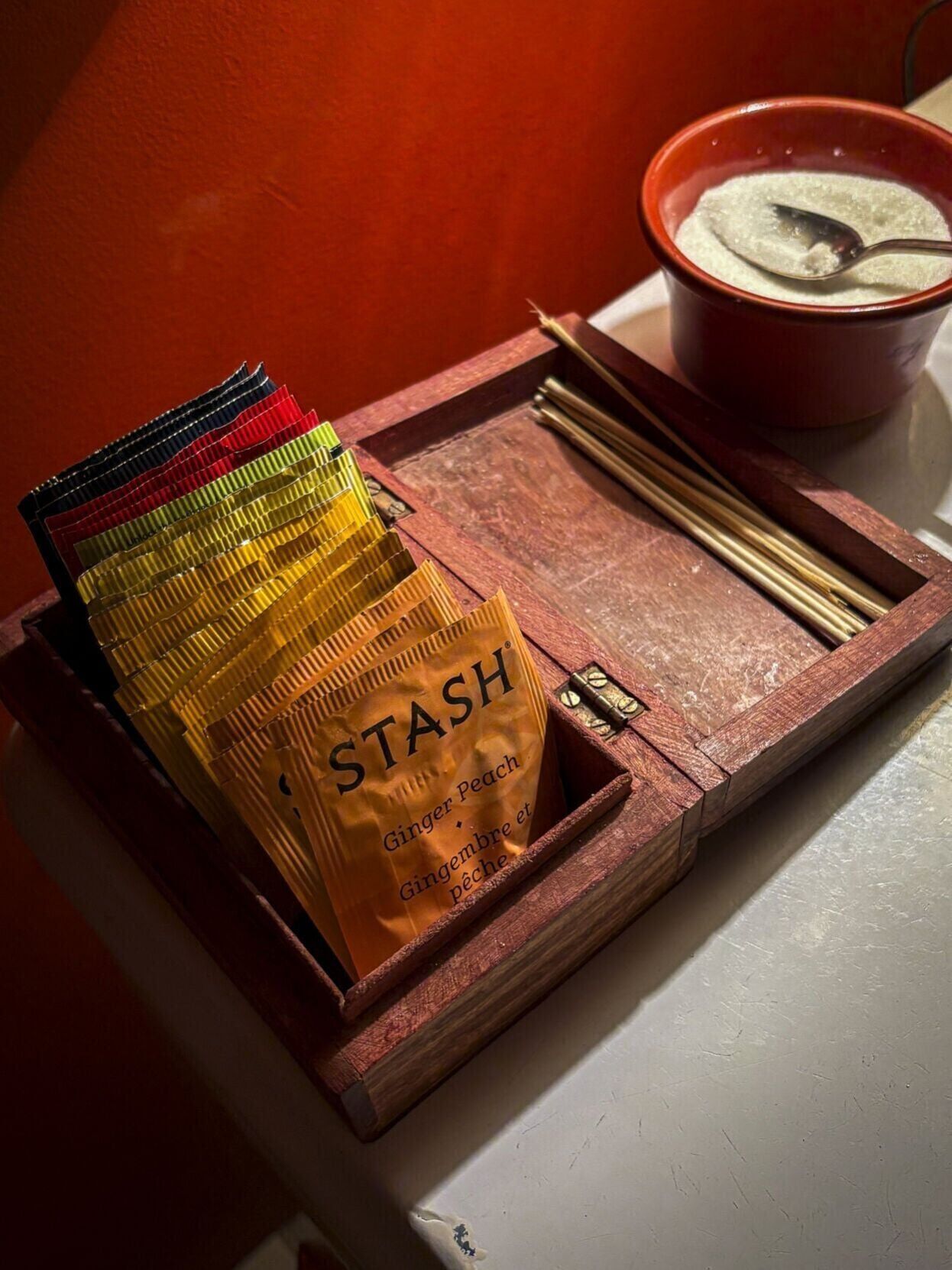
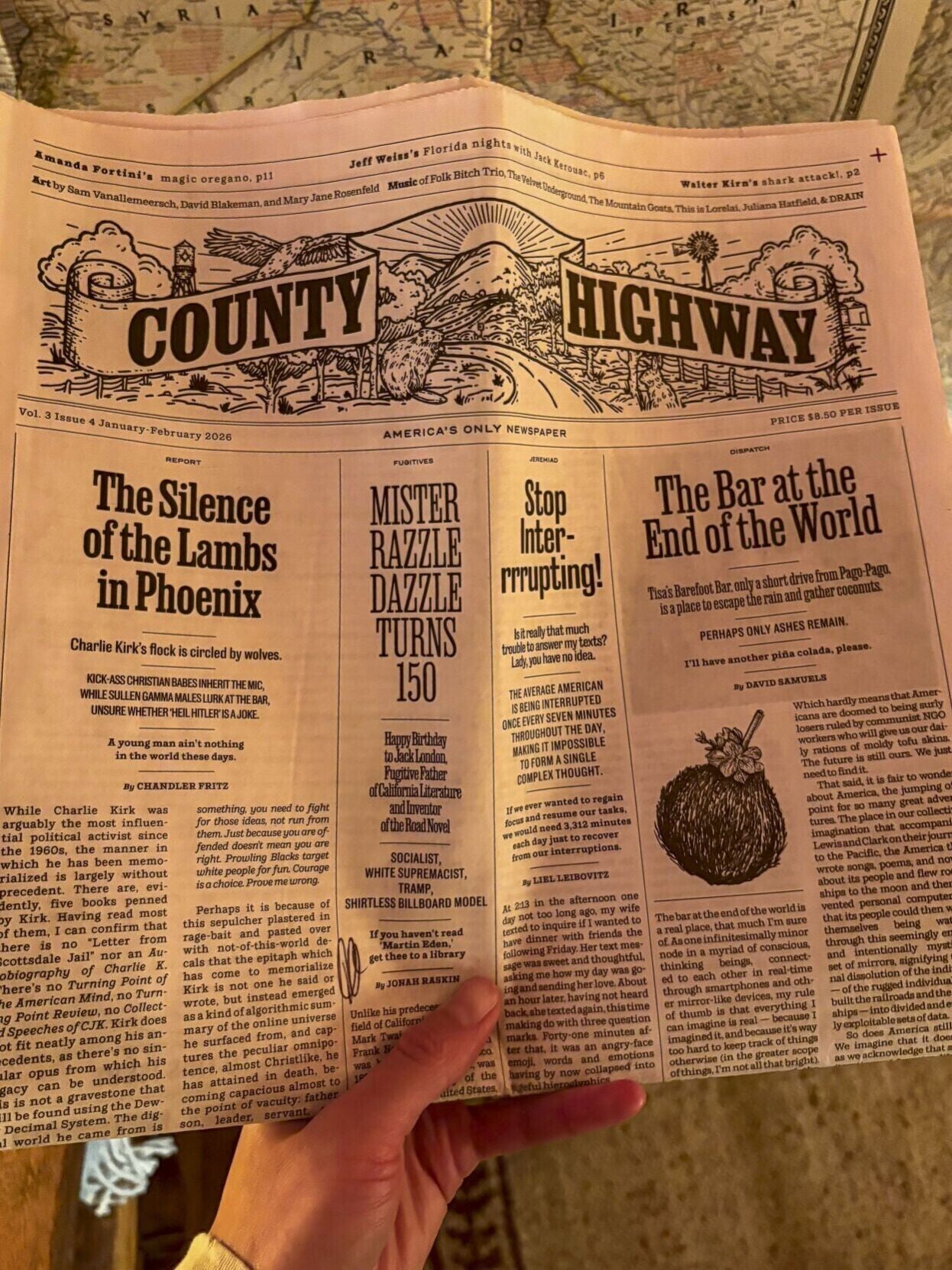
The warm, red walls are illuminated by a mix of lamps and string lights that provide ample illumination for patrons of any age to read magazines, newspapers, or books of their choosing. Thirteen seats — 14 if three people pile onto the couch — are arranged across the space, crowding around tables adorned with bowls of corn nuts and BIC pens.
Somerby sat cross-legged in a plush red armchair embroidered with yellow tulips, vaguely resembling corn cobs. Garmin on his left wrist, iPhone face down on the table beside him, he typed steadily on his MacBook.
“If I got terribly sick, I would still want the very best technology to help heal me,” he said, gesturing to the computer in his lap. “It wouldn’t be realistic to have 13 typewriters clacking away here. Of course, that’s an old-fashioned newsroom, right?”
Pulphead tows a delicate line between vintage and contemporary, idealistic and realistic. Sure, it would be great to shut out all the outside noise, impulses, bombardments of selectively relevant, objectively disheartening information, but in today’s society, Somerby’s lounge might just be the closest thing.
“I wanted to give a literary community a space to engage with one another. Whether it’s writing, whether it’s reading, or just having philosophical chats,” he said. “Think of it as a third space with a specific cultural influence.”
Pulphead is open 6 p.m.-2 a.m. Wednesday-Saturday. A flat $5 fee buys patrons evening lounge access and unlimited cups of “just OK” tea and coffee. Patrons can pay their dues via a rusted Hills Bros Coffee stationed at the front door or through Venmo.
Somerby, like most of us living in the modern, digital age, finds himself frequently tied to a computer.
“It’s the most efficient way to get things done, but then it gets muddled down with everything else,” he said. “You can have a tab for writing, but as soon as you go onto a new site, it’s pop-ups, ads, blah, blah, blah.”
This swollen, unrelenting stream of information and influence has prompted Somerby to undertake another venture: Anemone, a “print-only magazine devoted to the imperiled analog perspective.”
“The root word in Greek means wind, and you can find a pretty easy life analogy there just in spreading information,” he said. “There’s an incredible song called “Anemone” by The Brian Jonestown Massacre, and the band’s whole thing is trying to revive an older sound in modern times.”
“And lastly, it’s an allusion in some way, I have childhood memories with my dad of going out and looking for anemones.”
Somerby, in typical kid-around-tidepool fashion, would poke the sea animals, watch them retract, before finding another to repeat the ritual.
While Somerby grew up in Connecticut, he spent summers in Ennis, where his grandparents and great-grandparents resided.
“I came out every summer and became very acclimated, as much as a visitor can be, to what the lifestyle was at the time,” he said.
Somerby attended college at Elon University in North Carolina, where he received a bachelor’s in journalism. After a brief stint teaching high school in rural India, he moved back stateside to the Big Apple, where he “made television ads for national clients or whatnot.”
During his time in NYC, he oversaw post-production for ESPN’s College Football Championship campaign and produced content for Nike and Facebook.
“I worked on true, TV cable ads,” he said. “It was back in the day, before (Instagram) reels were the primary forms of advertising.”
In 2018, Somerby touched down in Bozeman for the first time.
“It was a bit of a shock when I got here,” he said with a laugh. “I just didn’t know Bozeman was such a vibrant, semi-urban type of town.”
Work brought him to Big Sky, where he landed a gig as a digital editor for Outlaw Partners before being promoted to the director of new media in 2020. When the pandemic hit, Somerby also assumed the position of communications director for Big Sky COVID-19 Relief Fund.
“I’m sure there were really good, solid edicts of taking a step away from the pandemic information, but I was professionally paying attention twofold,” he said, sinking further into his chair. “I just got burned out in the early days of the pandemic.”
Eager for a change, Somerby accepted an offer to be the chief marketing officer for Duckworth, a Bozeman-based Merino Wool clothing company. He transitioned the company to a digital marketplace until July 2025, when he shifted his attention to Anemone and Pulphead.
“I found this place on (Facebook) marketplace, actually,” he said from his Facebook marketplace chair. “It looked totally perfect for what I was trying to do.”
Pulphead is located at 201 S. Wallace Ave in the historic Gallatin Valley Seed Co. complex, which dates to the 1910s, when the pea industry boomed in Bozeman. From 2011-2025, the building’s “dilapidated basement” served as a home base for a shared gallery and studio space called the Cottonwood Club.
“They were sort of a rogue enclave of artists renting it, and so there’s a legacy of artistic endeavor in this building,” Somerby said.
Before it became the warm, inviting refuge Somerby envisioned, Unit B1B was a laser photonics lab.
“There was massive circuitry and cartoon-style switches to turn the machines on and off,” Somerby gestured to the western wall, now covered with seven National Geographic maps dating to 1944. “And there were these really, really bright, industrial lights overhead.”
Of all the carefully curated inanimate tenants of Pulphead, Somerby said the lights are his favorite. From porcelain-based lamps with intricate glass shades to oversized strings of vintage incandescent Christmas lights, he says they inspire comfort.
So, when it came to the large, industrial, motion-censored LED lights, Somerby did everything he could to disable them.
“They’d give you a headache if they ever came on. I pulled out the circuitry, but they’re hardwired in,” he sighed. “When I opened the (circuit) box, I decided it was a little above my pay grade in terms of electrical work.”
The LED lights, litany of Apple products, and music drifting steadily through a Bose speaker are all reminders of the inescapable modern era.
“Initially, I was having music play out of that,” Somerby said, pointing to an old radio. “But if they put on some extreme metal all of a sudden, it can shake the whole ambiance.”
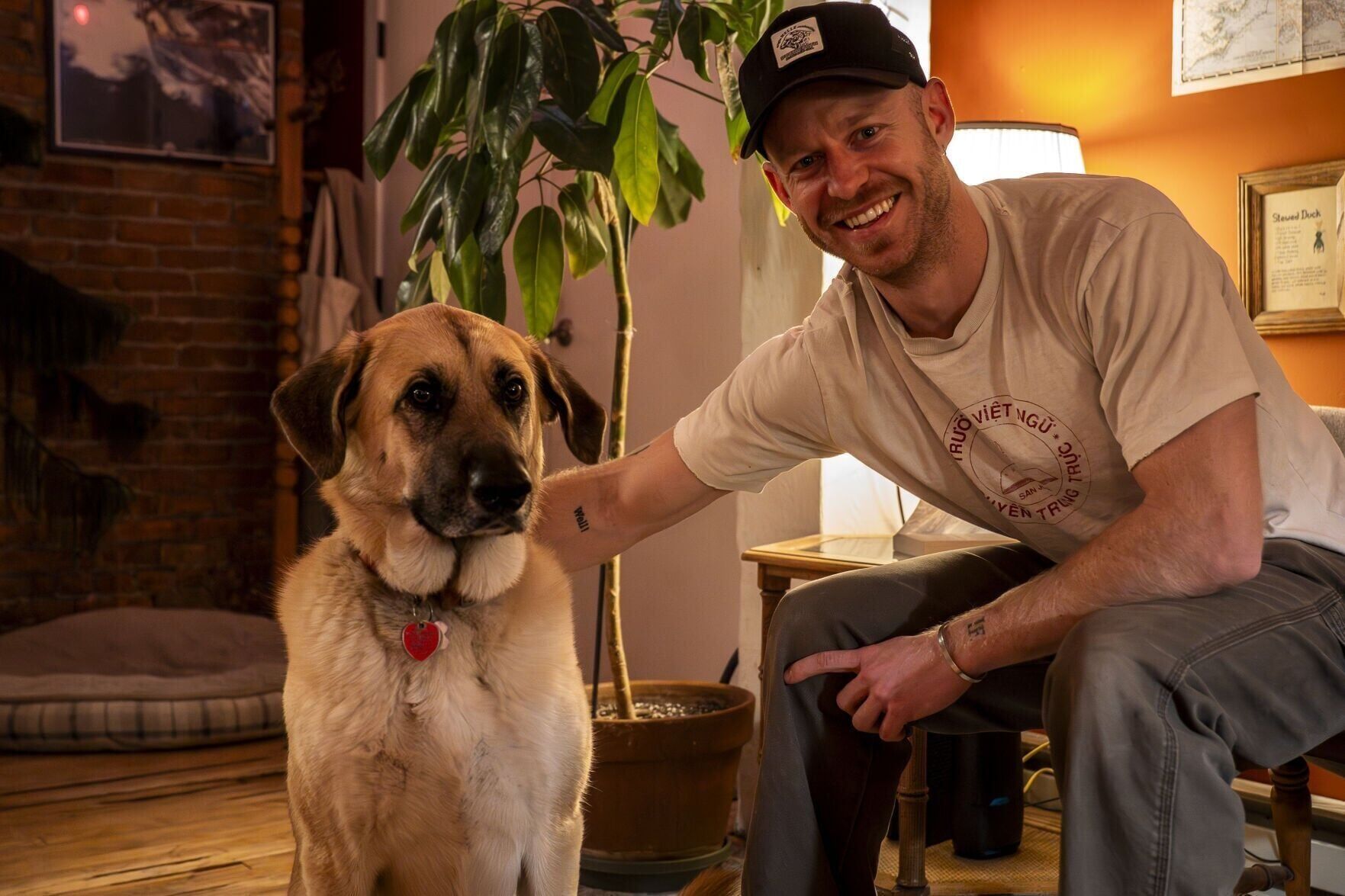
Pulphead is a late-night creative or an I Spy book enthusiast’s dream come true: Warm lighting, the aroma of coffee warming on a burner, shelves packed with bent and battered books, healthy houseplants that somehow thrive in a windowless room, and Somerby’s behemoth Anatolian Shepard mix named Monkey, for his curiosity.
For weeks, Somerby collected furniture, lighting and decorations from Facebook Marketplace, thrift stores, and off the side of the road.
“Very few pieces in this room are brand new,” he said. “You can make a place look cozy with just secondhand stuff. It’s not a foreign concept to Bozeman people, but a lot of new Bozeman builds have a very chic, sleek, new building design.”
Since leaving Duckworth in July, Somerby said getting Pulphead off the ground has consumed most of his time.
“I tinker around (writing), but for many months, I have been able to focus on anything else,” he said, glancing at his computer screen and updating a Google Doc he uses to track the lounge’s capacity. Four of the 13 seats were occupied.
“This occupies so much of my time,” he said. “People ideally come here, and they’re able to focus, but I’m breaking my focus quite a bit to make sure things are going smoothly.”
Somerby keeps the coffee and corn nuts replenished, orchestrates seating to ensure patrons can sit with the people they arrived with, and updates the live capacity counter religiously.
But when he does get the time to write, Somerby gravitates towards nonfiction essays. Fitting, considering Pulphead’s namesake.
“John Jeremiah Sullivan wrote a collection of essays called ‘Pulphead’. It’s deceptively simple, but when it came out, everyone was like ‘this is the writer everyone should be afraid of.’ He wasn’t making it too flowery or too purple; it gives way to how sophisticated it is eventually without jamming it down your throat.”
Somerby’s other favorite titles include Hunter S. Thompson’s “Fear and Loathing in Las Vegas” and “Kitchen Confidential: Adventures in the Culinary Underbelly” by Anthony Bourdain.
“I find that people who have lived an eccentric, uniquely American experience are some of the more interesting reads for me,” Somerby said. “These are people who find the American Dream in a dive bar or find that the best of society can be found in the back of a kitchen in a restaurant.”
He finds that the value of the written word can exceed that of many material items, and hopes to share this sentiment in Anemone.
”I would rather try to sell people something that intellectually benefits them, something they can have for the rest of their life, right? If you read an essay that changes your life, you could have it till the day you die. There are few physical goods like that.”



Comments ()