
Creating bonds of support with MSU’s first-generation students
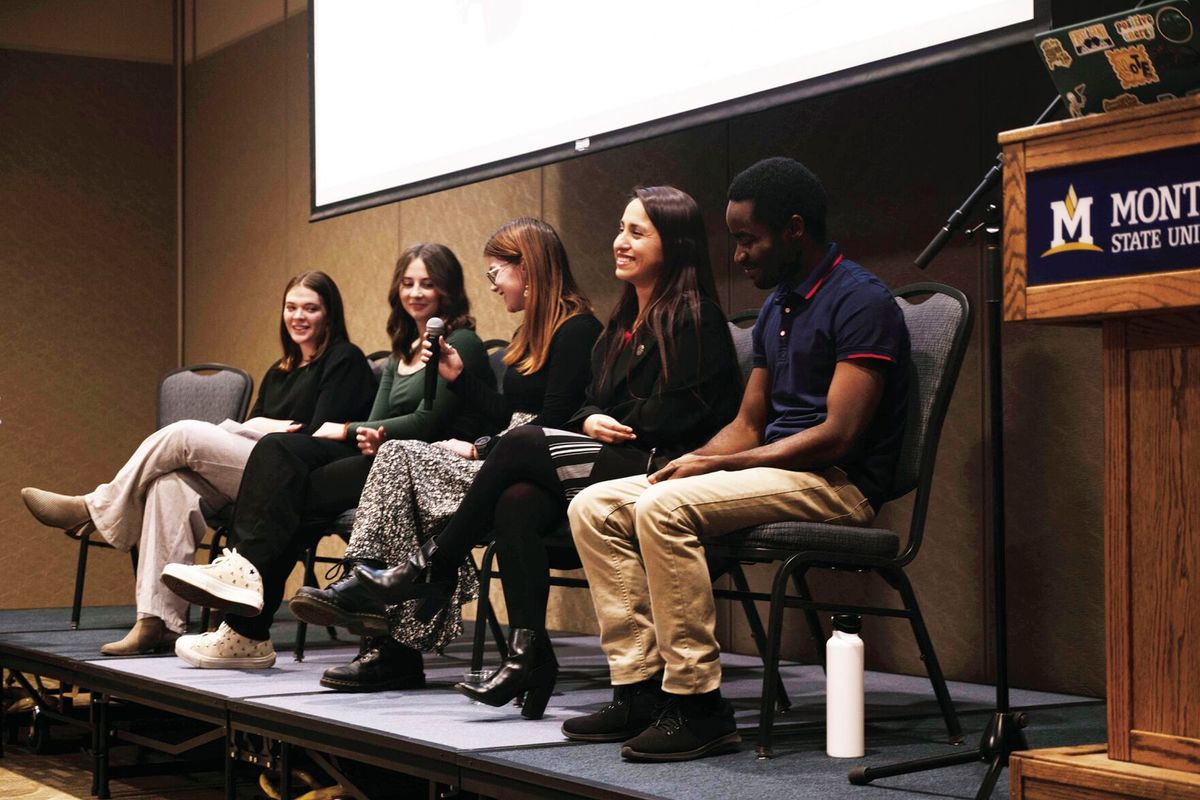
The First-Generation Students Association (FGSA) at MSU hosted the “First-Gen Experiences — A First-Gen Student Panel” last Tuesday evening in the Strand Union Building. The event was organized to create a welcoming atmosphere for first-generation students, it included a panel of first-generation students ready to talk about their journeys. Being first-generation means that neither of your parents graduated from a four-year college or university, according to the U.S. Department of Education’s Higher Education Act of 1965.
Among the panelists was Flor Vega-Castillo, a Peruvian international student pursuing a master's in public administration. The FGSA was founded by Vega-Castillo in the spring semester of this year and is aimed at supporting first-gen students on campus.
During the Nov. 7 panel, the event started with moderated prompts before ending with an inquiry from the audience. Each of the panelists was given time to express their perspective on the question before the next round of questions were asked.
During the panel, Dean of Students Matthew Caires posed a question to the panelists.“Your parents and your family members might not understand what you're experiencing here at college. What would you like them to know about the college experience, especially about our experience at MSU?”
Doctoral candidate Bernard Yeboah, an international first-gen student from Ghana, answered. “It's almost impossible to inform my family about my research, but maybe we can tell them or let them know that we have another family, like an extended family, here,” Yeboah said.
In a separate interview with the Exponent on Nov. 13, Yeboah added that not having your parents as a role model when entering college makes it more difficult to transition. “When it happens that none of your parents ever attended college — both my parents are farmers — it's difficult to convince them what you want to do. You even find it difficult to speak with anybody, apart from being in school. That's not a good feeling.”
When asked about peer support and what MSU students should know about first-gen students, Yeboah said, “When you happen to find yourself here for the first time leaving your family. You are at that point where you need to create a new family to give you the support you need to succeed in your academic work.” He added that faculty support extended into both high school and college, having found mentors and strong support systems.
Another perspective on support was provided by Vega-Castillo in an interview with the Exponent on Nov. 10 — she looked at not only what support first-gens receive but also what they offer. “Last year was my first semester. I got invited to a series of meetings that the first-gen committee put together. The idea that the committee had back then was to connect students to each other as a way to encourage them to create a student unification,” she said.
“When I came to MSU, I discovered a new community, a bigger community with more student organizations, more supportive offices, with many things to do on campus and many events to attend. So when I heard about it, I just got excited and I said, I want to be a part of this. I really, really want to discover my own potential, but also meet these other people and help each other in our journeys.”
“I want people to know that even though we have potentially faced very strong challenges, I also believe that everyone is so capable of accomplishing many, many things and this is something that I always tell my members. I really appreciate them putting themselves in a vulnerable situation like sharing their stories,” Vega-Castillo said.
During the panel, it was announced by Mackenzie Spence, a program manager at MSU and host of the panel, that this initiative follows MSU's recent inclusion earlier this year in the 2023-24 cohort for the First Scholars Network, marking the university as the first in Montana to join this group. According to the Center for First-Generation Student Success’s (CFGSS) website, having designated faculty to serve as the institution's leadership team, being a higher education accredited university and a member of the National Association of Student Personnel Administrators institution, our campus meets the network's eligibility.
The CFGSS has partnered with more than 270 higher education institutions serving over 1.5 million undergraduate students, including more than 500,000 first-gen students.
Now that MSU is a member, it is obligated to take part in the network’s four-phase detailed development plan in first-gen support titled the “First Scholars Network Journey,” which envisions the implementation of evidence and research-based frameworks to support students.
Spence detailed the campus’s involvement with the CFGSS’ multi-phase plan. “We've set a couple of goals which include taking a deep dive into our data about the first-gen population here at MSU, we're also working towards crafting a needs assessment and a First-Gen focus groups so that we can hear first hand from students,” she said. “We're also doing a lot of professional development, we have the book club, reading the hidden curriculum, we as well have some seminars coming up. At the conclusion of this year, we are hoping to garner a first-gen forward designation.”
According to the center’s website, a First-Gen Forward designation is the second phase in their multi-phase plan. They defined it as: “a demonstrated commitment to advancing first-generation student success. Building upon the Network Member year, First-Gen Forward institutions engage in regionally-based community meetings, networking and professional development, and share knowledge as leaders in this important work.”
Speaking to both her first-gen peers and the entirety of MSU’s population, Vega-Castillo said, “MSU is a place where people should be happy, thankful and celebrating that first-gen students are here with them because we have a lot to bring to the table.”


Comments ()