
Emergency forest project aims to protect Butte's drinking water
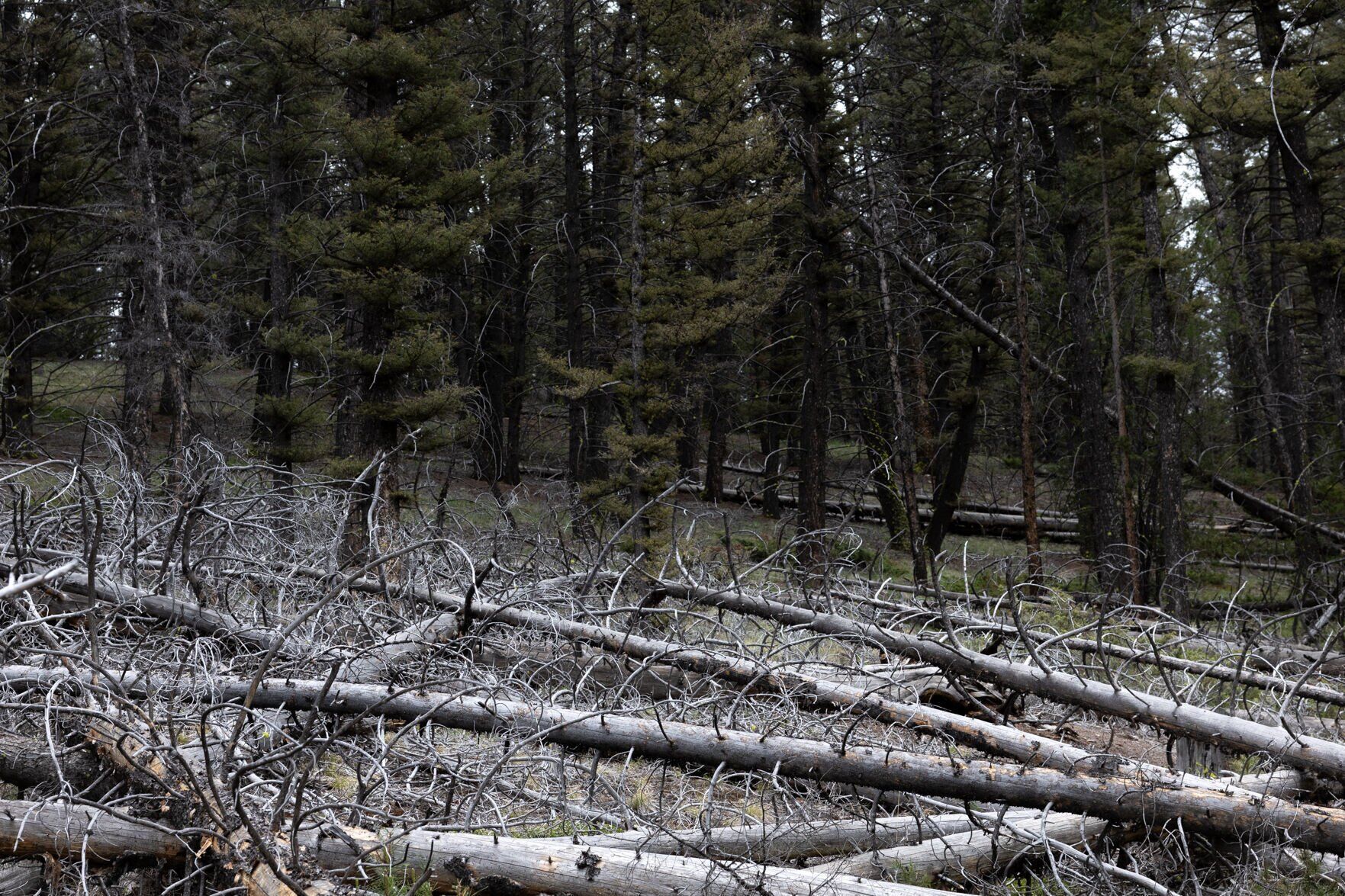
The lingering stacks of jackstrawed deadfall beyond the project’s current boundaries provide a hair-raising glimpse of the catastrophe that could have been and could still be.
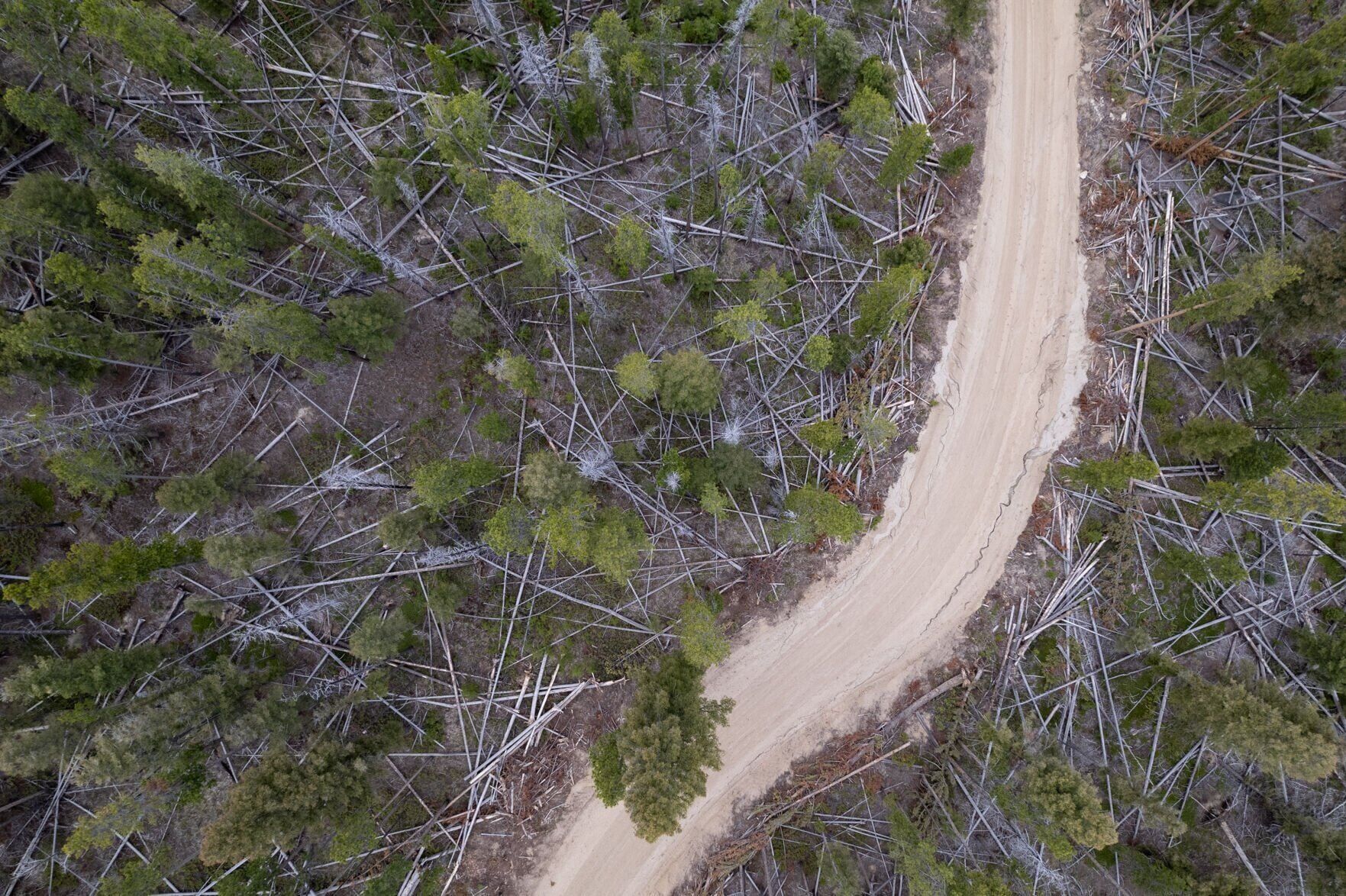
Mountain pine beetles decimated lodgepole pines in the vicinity of Basin Creek Reservoir in the early 2000s. Today, skeletal trees remain standing. Many others litter the forest floor, creating stacks of trouble waiting to burn.
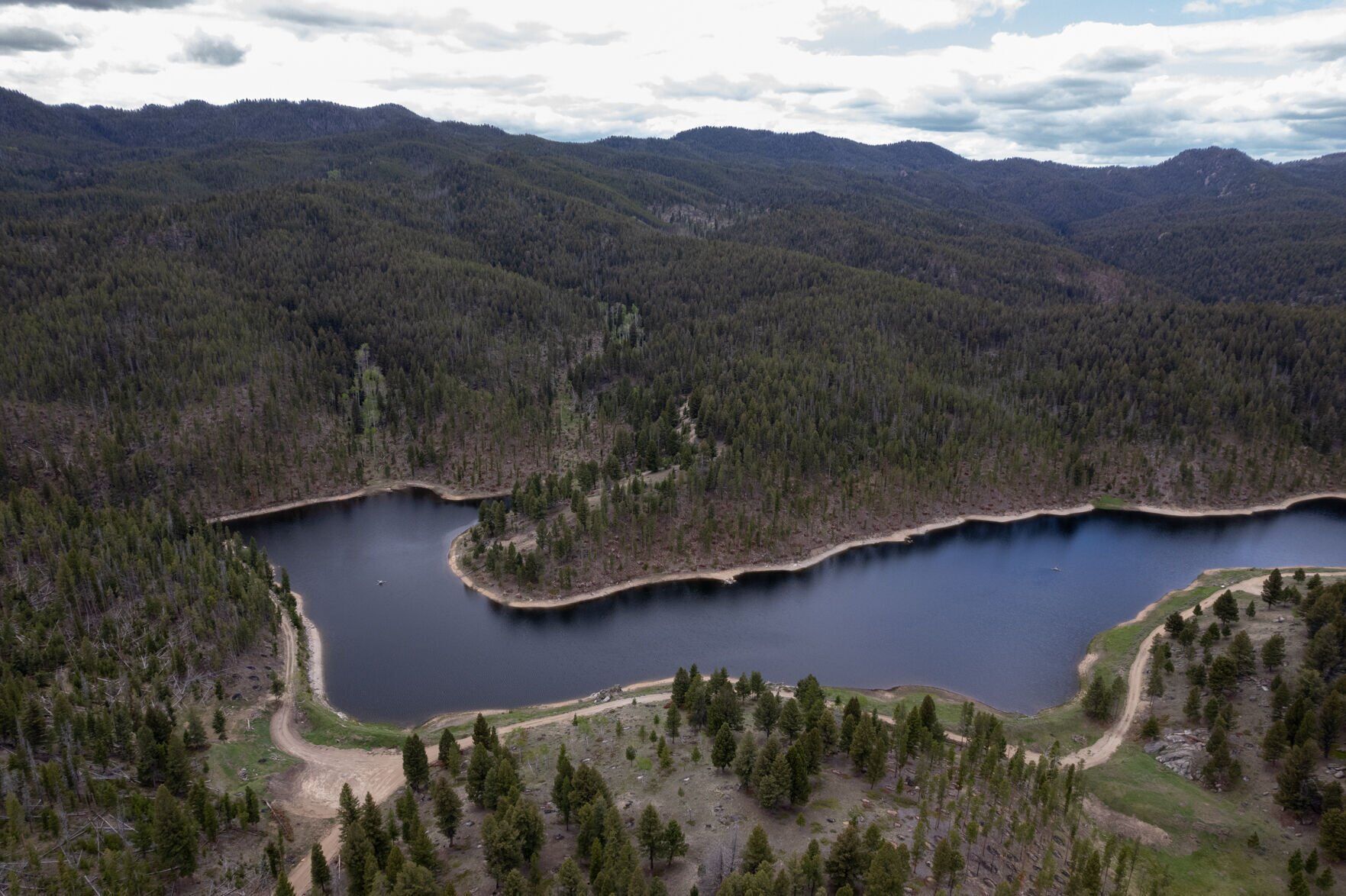
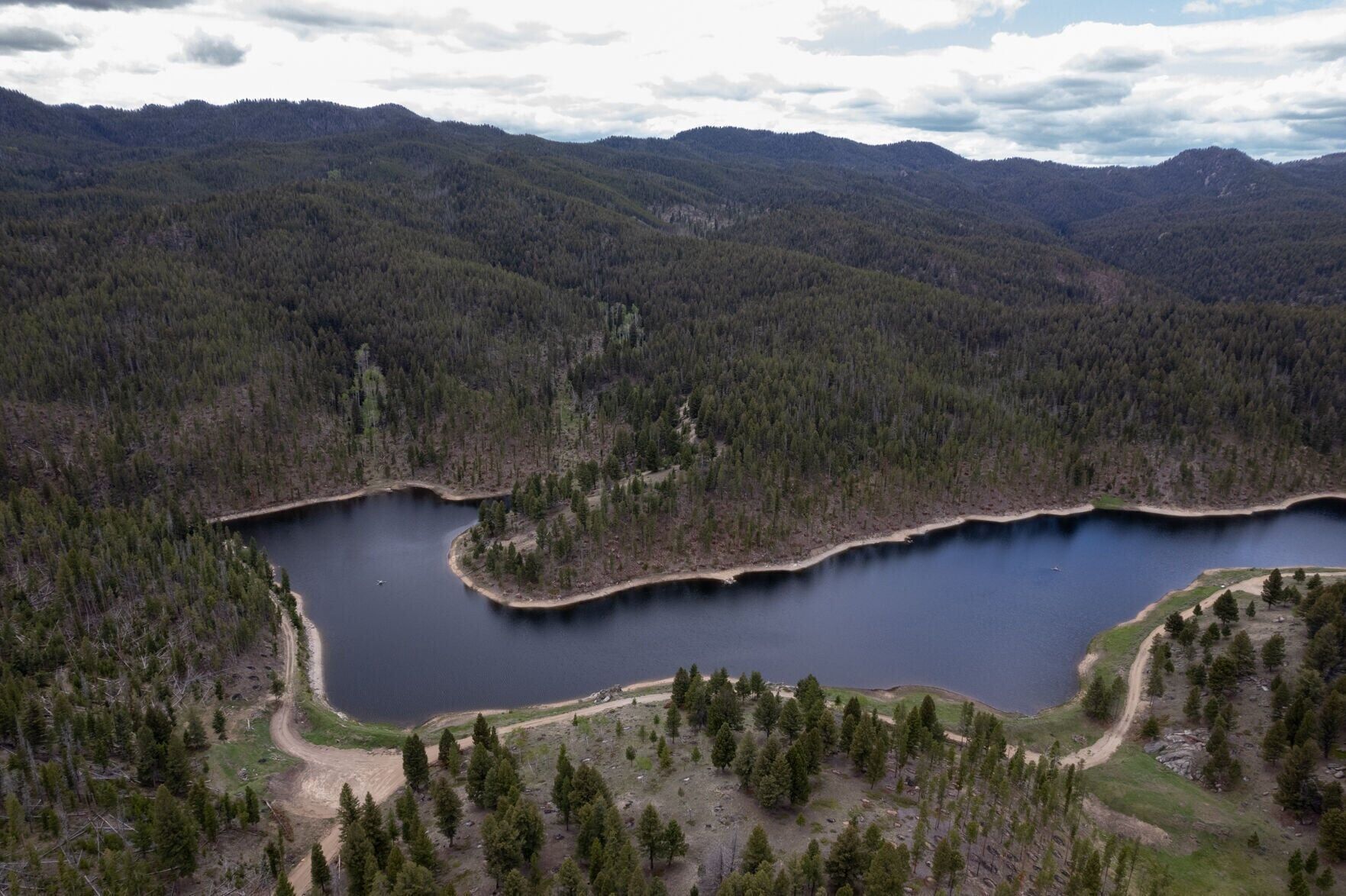
These foreboding tinderbox conditions have ringed the Basin Creek Reservoir, the dominant source of drinking water for Butte-Silver Bow County.
It’s the sort of wildfire-abetting landscape that could disable the water supply and be deadly to firefighters.
Jim Keenan, water treatment superintendent for Butte-Silver Bow County, and others recognized the clear threat. A potentially calamitous wildfire fed by downed-and-dead fuel could trigger severe erosion of the decomposed granite soils.
Sediment and ash could choke the Basin Creek Reservoir and put it out of commission for years.
Keenan, along with the U.S. Forest Service, the Montana Department of Natural Resources and Conservation and Butte-Silver Bow County adopted strategies to reduce the wildfire threat.
The city-county’s work began in 2021. The agency work began in 2023 and will continue in the years to come. The reservoir is incrementally safer but it's still not safe. A lot more work remains, Keenan said.
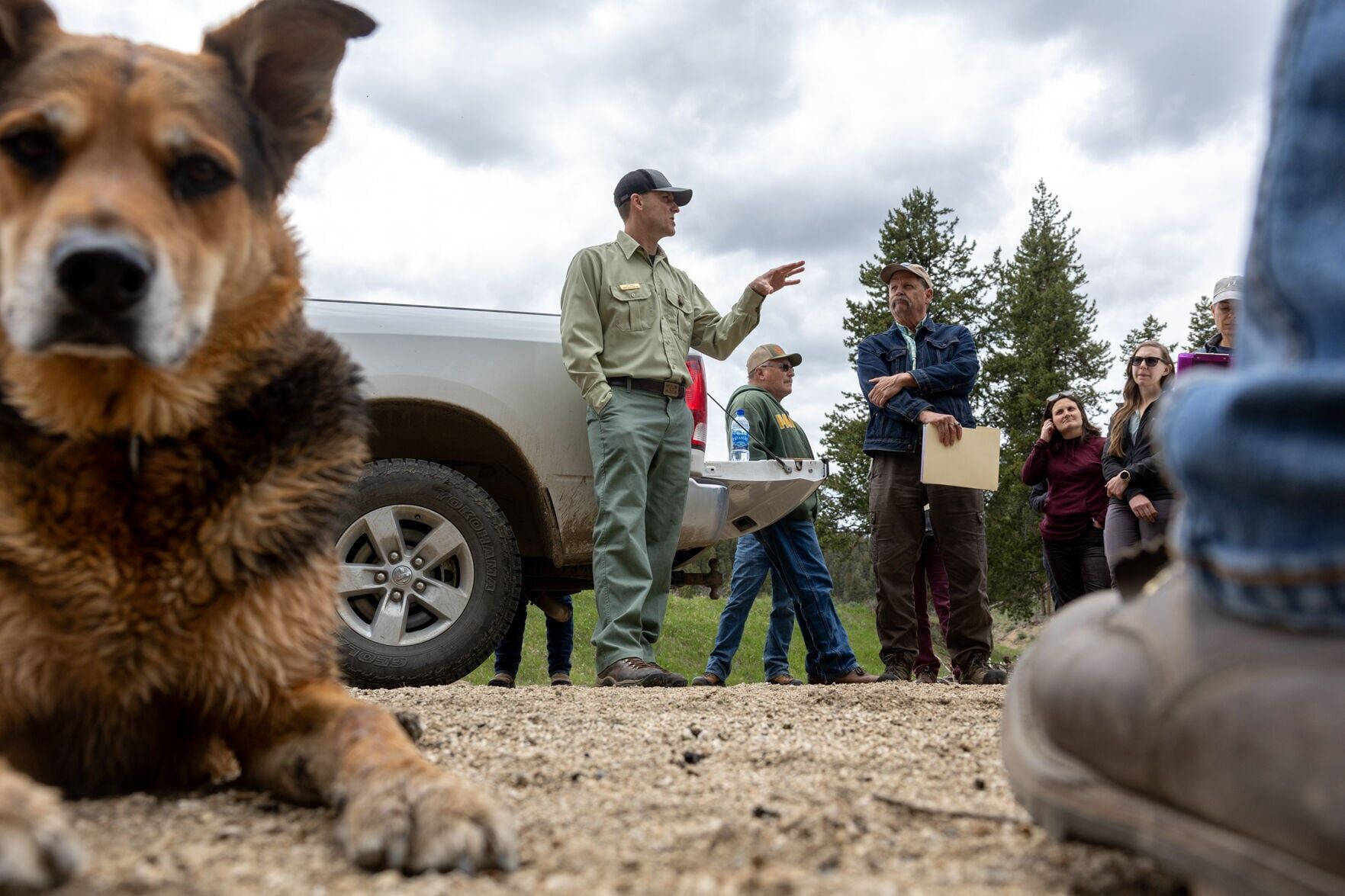
On June 4, project participants offered a tour of the work-to-date to members of the Beaverhead-Deerlodge National Forest Working Group,
Typically, in boilerplate descriptions of projects involving federal, state and local government partners, the word “collaboration” surfaces as predictably and often as a diving grebe.
Yet, from time-to-time, the description seems altogether apt. Which appears to be the case for the Basin Creek Watershed Project.
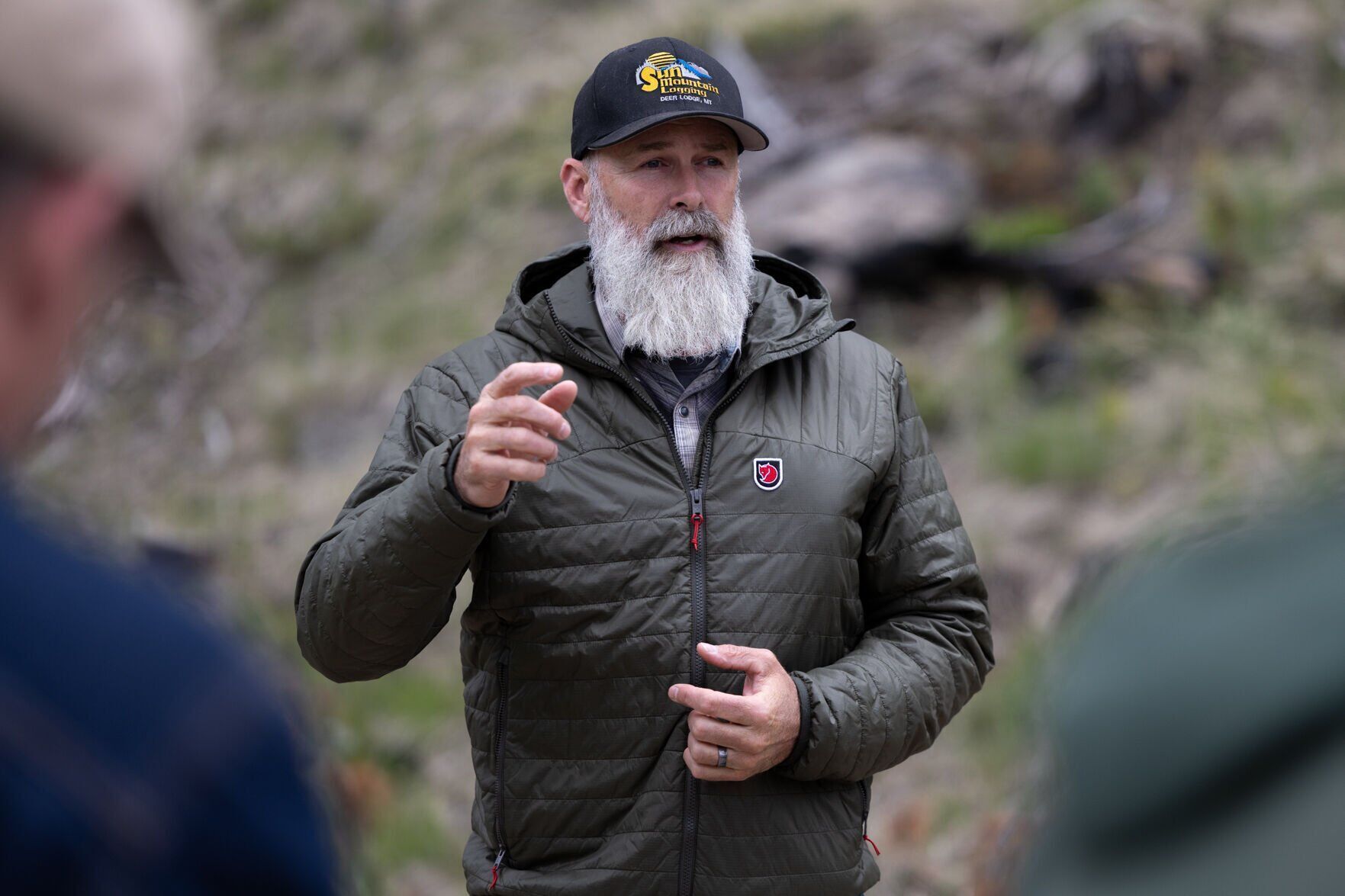
Sean Steinebach, outreach forester for Sun Mountain Lumber in Deer Lodge, is co-chair of the Working Group. He participated in the June 4 tour, which began at the Basin Creek Reservoir. But his history with the project began years ago, when still a forester with DNRC. Steinebach was a key and supportive catalyst for the project, Keenan said.
"Sean was the first champion of the project," he said. "He connected me with the right people."
During last week's tour, Steinebach did not mention his early role. Instead, he complimented the cooperation that moved the work forward.
“To pull this project together took an incredible amount of effort,” Steinebach said. “The work on the part of the Forest Service, the DNRC and the county — I’ve never seen it come together like this. They’ve done a fantastic job.”
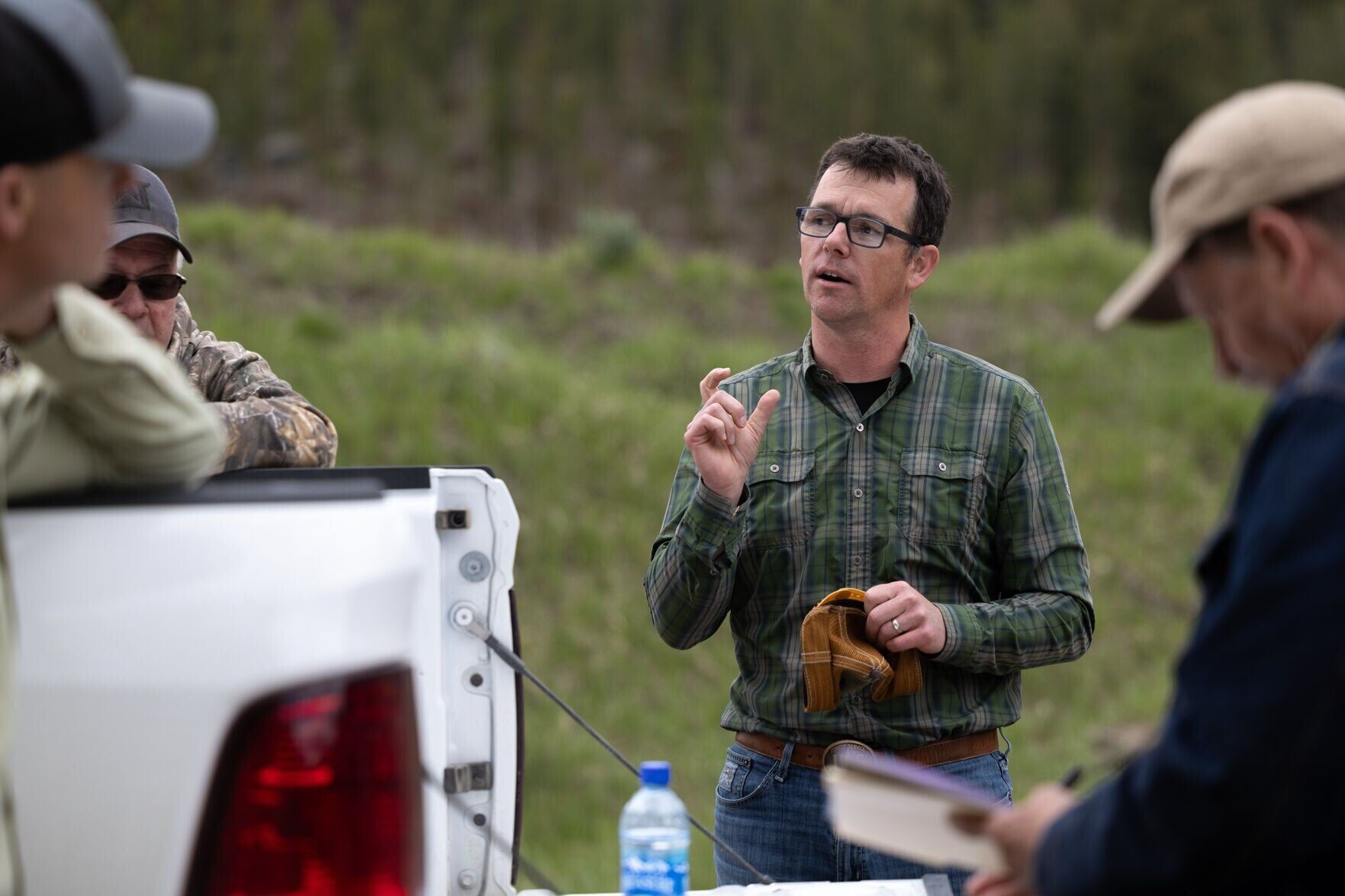
Tim Lahey, district ranger in Butte for the Beaverhead-Deerlodge National Forest, agreed.
“And it really took all three levels of government,” he said. “You had Butte-Silver Bow, Montana DNRC and the Forest Service, all just kind of coming together.”
The agency players knew about the consequences in Colorado of the 2002 Hayman fire. The fire's intensity and obliteration of vegetation led to sediment runoff into the Cheesman Reservoir, a major water source for Denver, impacting water quality and requiring costly sediment removal.
The Basin Creek Reservoir provides up to 60% of the drinking water for Butte. The Big Hole River and Moulton Reservoir augment the supply.
The Basin Creek Watershed Project garnered national attention during a political push for “active forest management.” In June 2023, Randy Moore, then chief of the Forest Service, visited the site.
Work to reduce the chance of a high-severity wildfire in the watershed has occurred under the auspices of the Good Neighbor Authority, authorized under the 2014 Farm Bill. It empowers state agencies like DNRC and tribes to partner with federal agencies to manage and restore federal lands.
Vaia Errett, Working Group co-chair, lauded the partnership that has tackled the work. She referenced Lahey, Ann Parks of DNRC and Keenan.
“We all just got lucky that between Tim and Ann and Jim and everyone else working together — just really committed, skilled, thoughtful people, working on a specific watershed with its own specific history and issues — just ended up being a big success story,” Errett said.
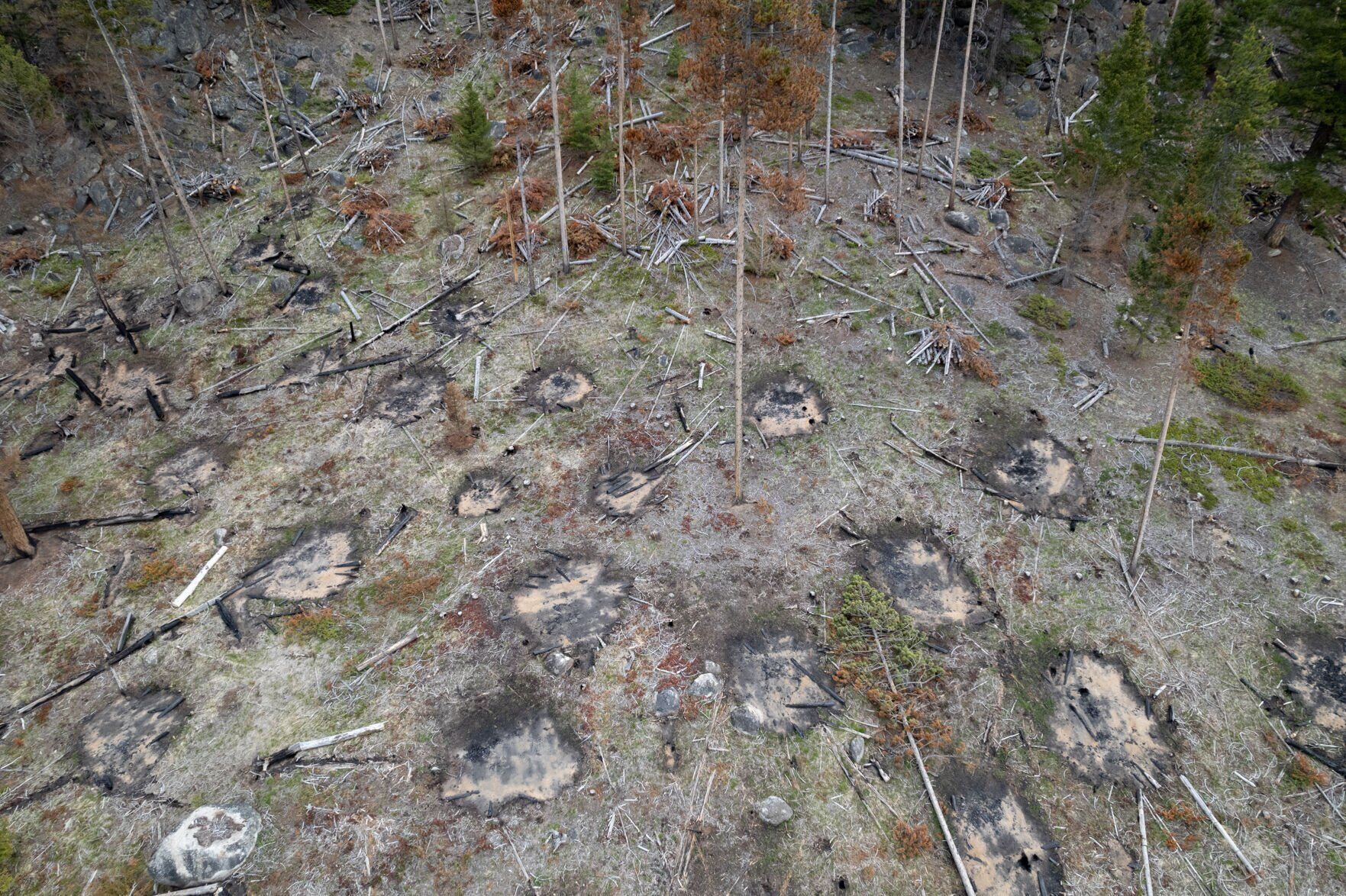
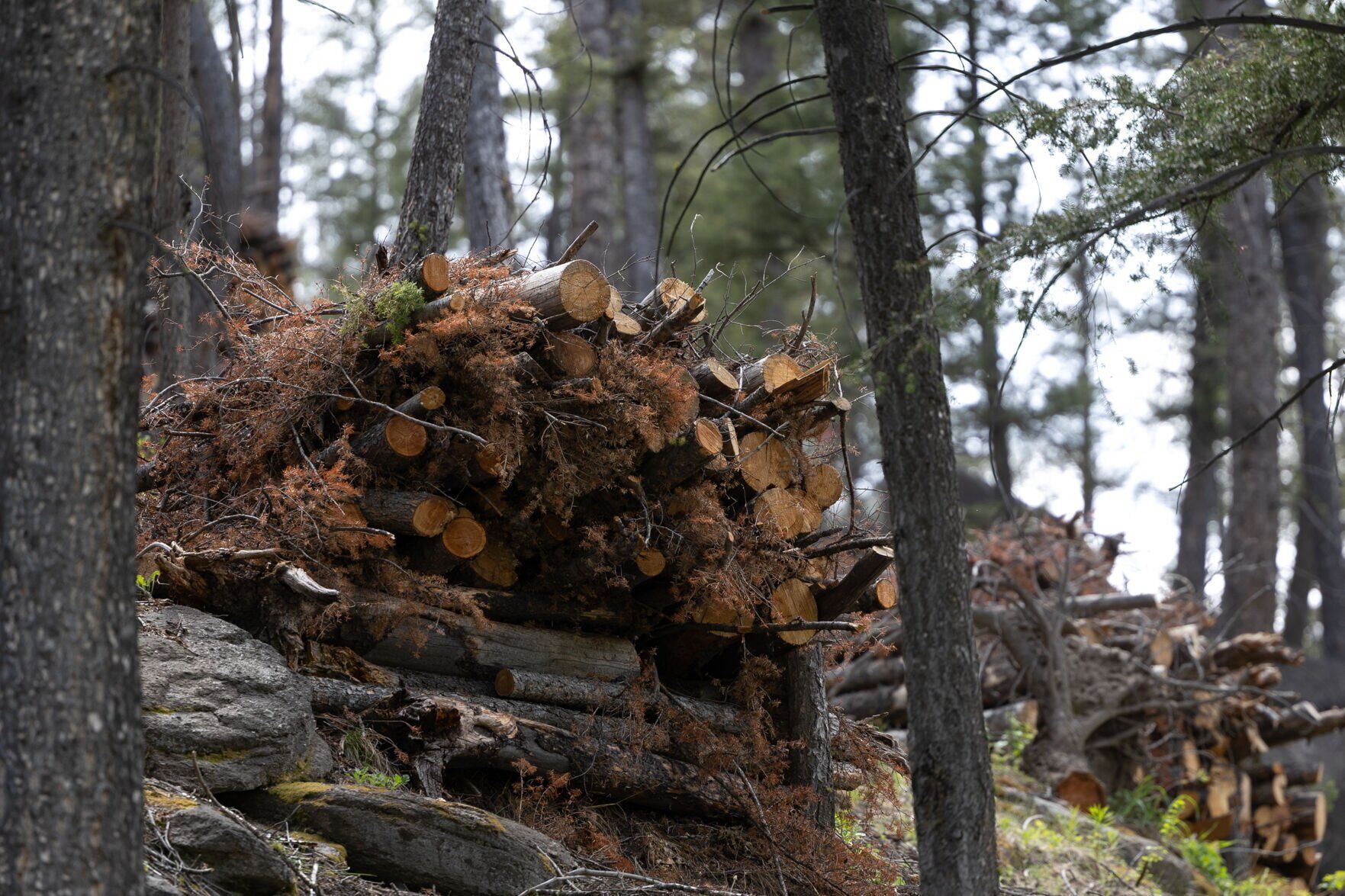
Standing dead trees have been felled and fallen trees have been cut and piled and burned. Accessible and commercially viable timber has been harvested for sawmills, post-and-pole outfits or firewood. Otherwise, piles have been burned or slated for burning.
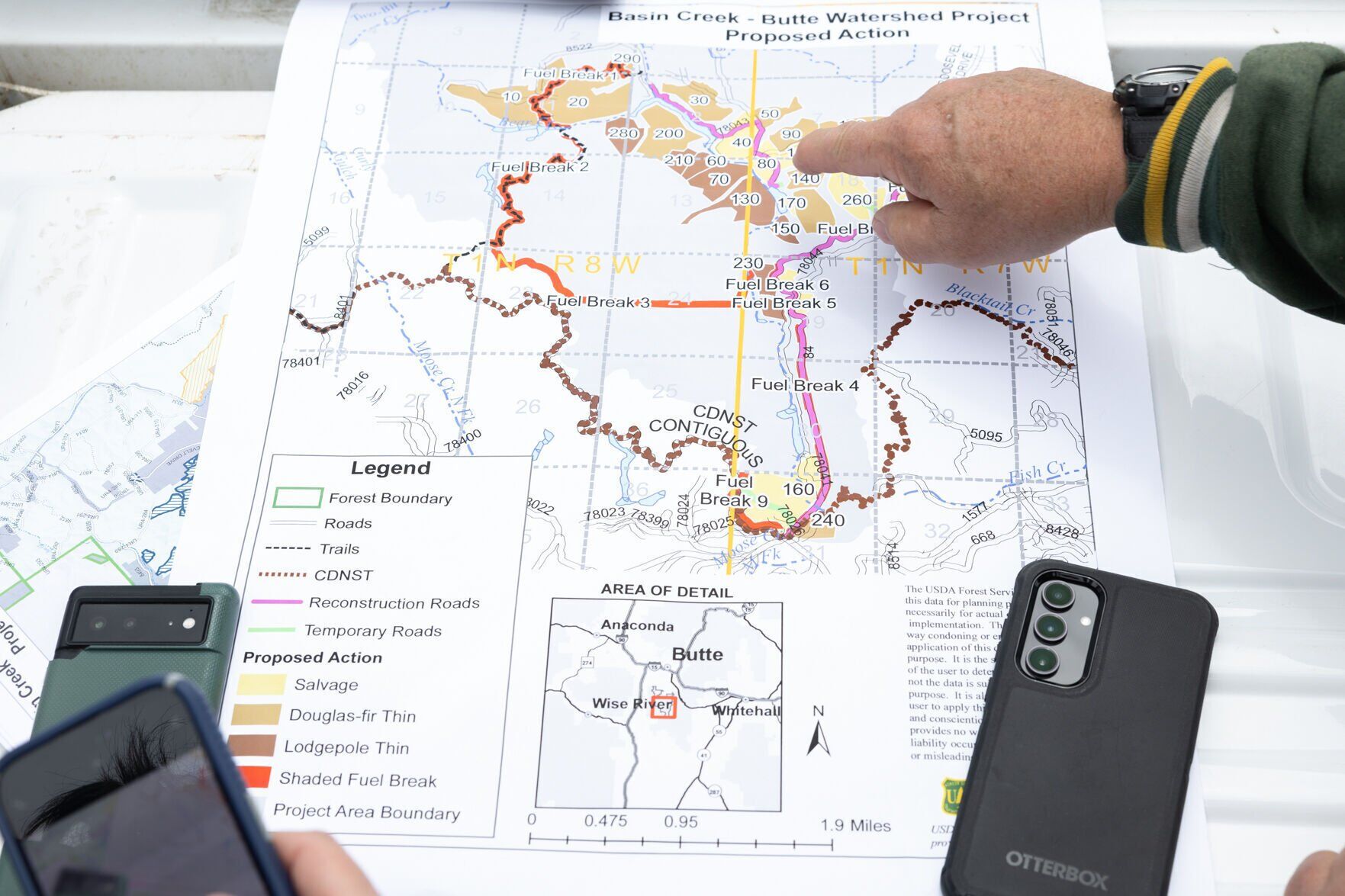
Stands of both lodgepole and Douglas fir have been thinned as part of the project.
Roughly 2,350 acres are being addressed on Forest Service lands. Lahey said Monday that about 450 acres of the federal lands work have been addressed to date and the remaining acres are under contract.
He said associated costs will likely total about $4 million.
Lahey noted that the deadfall, the often-steep terrain and the prohibitions about using mechanical equipment near the reservoir have complicated the work.
“It’s a tough landscape,” he said.
Lahey said representatives from the wood products industry helped finalize logistics.
“It’s been great to just have all the players at the table,” he said.
Work continues. The Forest Service estimated the commercial and noncommercial operations will continue for three to five years.
Eventually, the work should vastly improve the chances for fire crews to successfully attack a wildfire in the watershed, the agency said.
Douglas fir will be favored over lodgepole pine in decisions about which stands to leave. Douglas firs are more tolerant of dry conditions, more fire resistant and more adaptable to climate change, the Forest Service said.
The agency said the Beaverhead-Deerlodge Working Group was instrumental in soliciting public comment for the environmental assessment that preceded agency action in the Basin Creek Watershed.
The citizens-based Working Group’s members represent timber, county commissioners, agriculture/ranching, quiet and motorized recreation, conservation, hunting and fishing, outfitters and guides and more.
The Basin Creek Watershed Project has focused on the more immediate threats to the reservoir.
Lahey said there is no way to fireproof a forest like the one in the vicinity of the Basin Creek Reservoir.
“This area has evolved with fire,” he said. “But we wanted to give ourselves a better chance for when we do get a fire.”



Comments ()