
'Enormous effort': The next 20 years outlined in Helena Forward Land Use Plan
Building dense, diversifying business, planning resources: Helena is growing, and the Land Use Plan seeks to answer how.
Over the next 20 years, the Queen City is expected to grow to 45,000 people, Community Development Director Chris Brink said.
While several studies have been drawn up for Helena before — including the ADA Transition Plan, 2019 Growth Policy and Downtown Renewal Vision for Cruse Avenue, to name a few — the Land Use Plan was born from a relatively new bill.
In 2023, Montana passed the Montana Land Use Planning Act. It requires cities over 5,000 people strong in larger counties to detail a growth policy that focuses on housing and infrastructure.
The last 18 months went toward Helena Forward, the nickname for the Queen City’s Land Use Plan, addressing growth, historic preservation and economic need.
Priorities were set after several calls for public input, Brink said, including 779 in-person participants, 19 public events and over 15,000 fliers.
In total, 1,276 people were engaged, the plan reports. Housing affordability, historic preservation and improved transportation were top of mind for many commenters.
Those big concerns were gathered by staff and broken into smaller goals, Helena’s population and needs in mind.
After multiple drafts, the plan was given final city approval Nov. 17 after a presentation from Brink and project lead Cody Ferguson. It replaces the 2019 Growth Policy.
It’s purposefully fluid, Brink said, listing priorities but not having “teeth” to force specific action.
The purpose isn’t for Helenans to see an overnight change, Brink said. Rather, as the Queen City grows, the plan will ideally prevent change that interrupts what already works.
So, what is the vision for the next 20 years?
Housing
Helena’s median income boomed from $46,313 in 2010 to $69,341 in 2023. That was partially due to COVID-19, Brink said, and Helena’s income isn’t expected to grow that fast in the next 20 years.
However, the shift in money is outpaced by rising housing costs, the Land Use data shows.
Between that and the Queen City’s 16,500 housing units, with a high occupancy rate of 93.3%, housing took the lead as a must-address issue, Brink said.
Helena can’t guarantee affordable housing, Ferguson said. However, it can “set the table” for varied housing options that weather inflation.
Space isn’t an issue, Brink said. The plan estimates Helena could accommodate 22,000 to 58,000 new residents, based on available land.
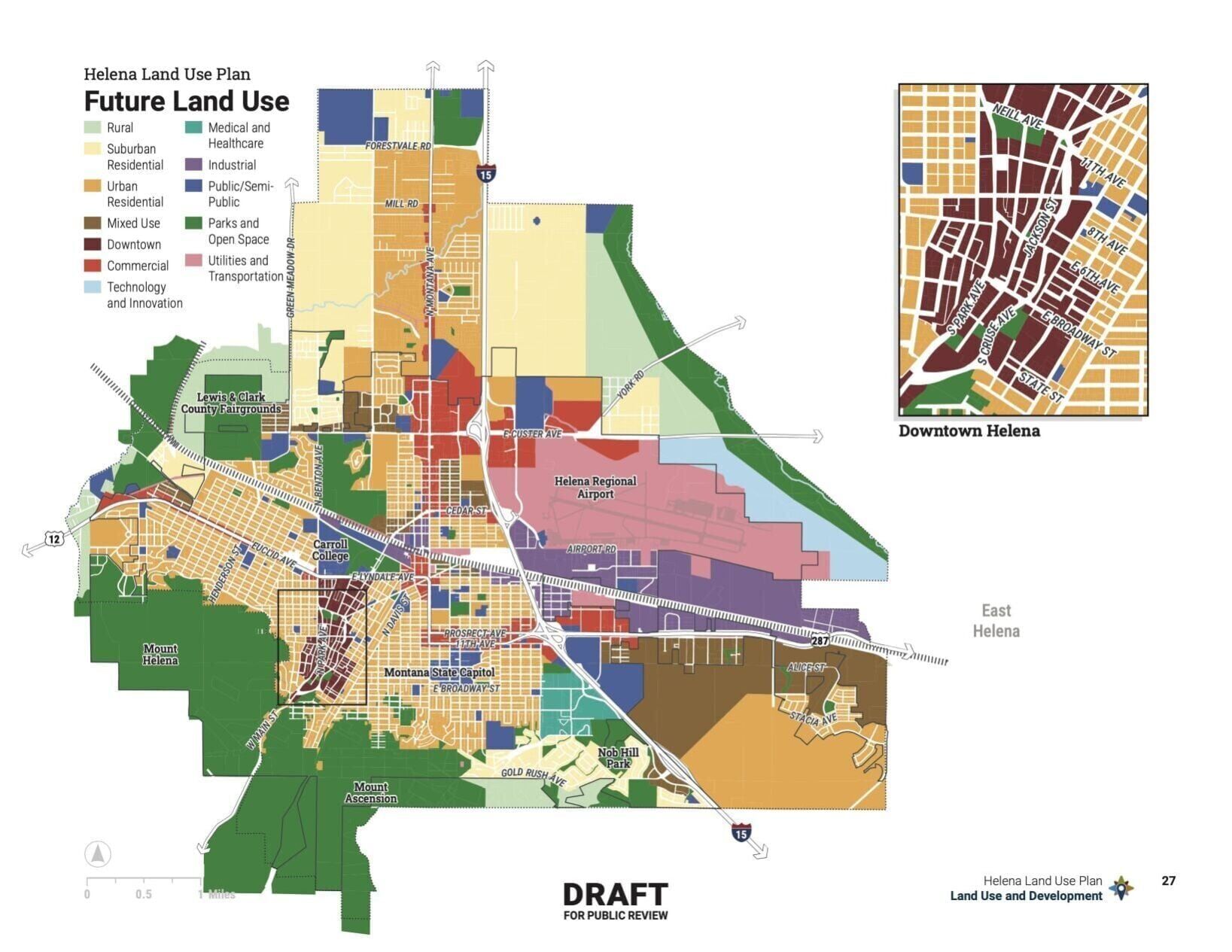
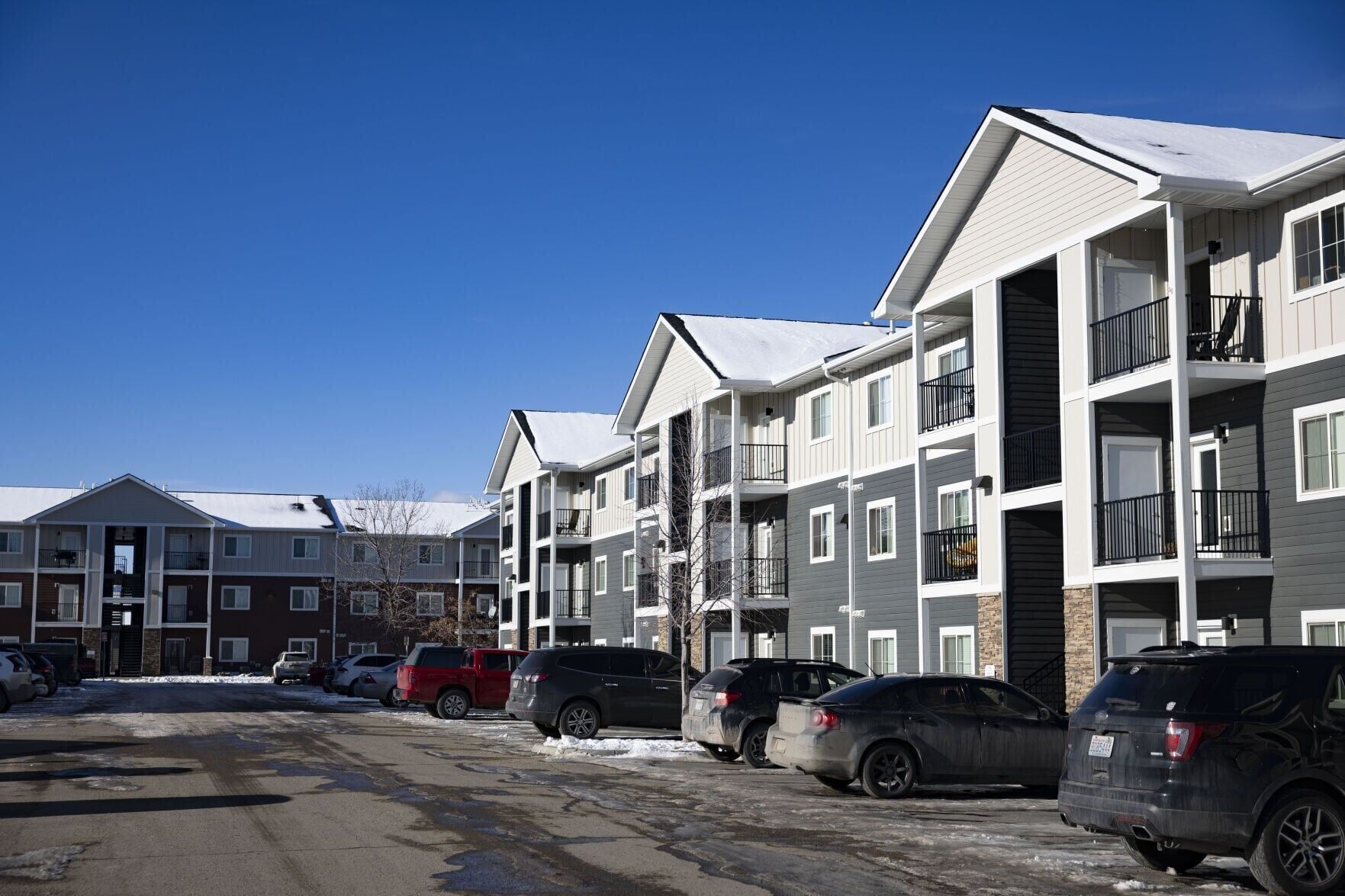
As a whole, it will be more efficient to build up instead of out, Brink said. The Land Use Plan recommends zoning that allows for more duplexes and similar dense housing.
Accessory dwelling units aid senior living and can be more accessible, the plan states.
Mixed-use housing should also be encouraged, Ferguson said. Some neighborhoods should be made with walkability in mind, allowing for residents to walk to stores or schools.
Beyond connectivity, it can reduce the costs of building roads and utility connections.
Part of the overall balance will be historic preservation and maintenance.
As Helena grows, it needs to respect its original character, Brink said. The plan recommends the city work with historic groups to maintain important landmarks and repair older neighborhoods.
Other ideas include making upkeep easier on property owners, such as with grants or low-interest loans.
Economic development
In 2022, Helena’s top industries for employment were public administration, health care, retail trade and hospitality, according to the U.S. Census Bureau.
With so many employers being in government, it means Helena can withstand most stock market storms, Brink said.
However, with so much of Helena’s population growth coming from quality of life rather than specific industries, the Queen City has room to decide what kind of employees it attracts.
Part of the future of Helena’s economic success is expanding its industries, the plan states.
It especially sees potential in the technology industry and aerospace parts manufacturing, it says. The land around the airport is ideal for its closeness to air and rail transportation.
In general, Helena needs to be attractive to incoming businesses, Brink said.
The plan recommends the city think up incentives like tax abatement and development fee waivers to make building in Helena a little more affordable.
“Infilling” commercial corridors, or promoting development in already-existing business clusters, can boost walking traffic and reduce vacancies, it continued.
It should also make Helena nice for the employees, it said. Apprenticeships that lead to jobs keep talent local, it said, and soft skills training and resume workshops boost the resident workforce.
Regardless of where the Queen City grows, it will need housing to accommodate the new employees, Helena Area Chamber of Commerce CEO Callie Aschim said.
According to the plan’s 2022 data, Helena had over 5,700 people living in the Queen City and traveling elsewhere for work, such as Great Falls.
Just over 21,000 people were employed in Helena but lived outside city limits, according to the plan, and 9,775 people lived and worked in Helena.
Whether Helena’s new workers are temporary, like those in construction, or more permanent, like entrepreneurs, they’ll need lodging that is convenient and affordable, or they’ll find somewhere else to live, Aschim said.
Transportation and public services
More people means more demand on everything from roads and schools to water and support services.
As a whole, there’s a demand for multi-modal transportation, Ferguson said. The plan lays out potential major bike routes and roads, should there be a boom in air and rail travel.
Notes were made about maintaining trails and pedestrian options during the winter. The plan suggests a bus system with preplanned routes, should there be enough funds. Public transportation can boost local attractions if they have routes to businesses and tourist destinations.
Regardless of how people get there, signs and wayfinding will be crucial, Ferguson said.
After several public comments worried Helena schools didn't have enough funding, citing millions in deferred maintenance costs that led to a hotly debated $283 million Helena Public Schools bond in September, the plan noted long-term budgeting should be prioritized to keep education buildings up to date.
The plan also recommends Helena boost staffing for the fire department, police and 911 dispatchers, alongside new equipment to manage narrower streets.
Public awareness campaigns could help new Helenans know their options for health facilities, including options for the unhoused. As the city’s population shifts, the plan recommends regularly examining its demographics.
What's next?
Though the Land Use Plan was formally approved Monday, it is only a guidebook, Brink said. For any of it to come true, some of Helena's policies need to change.
The first, and perhaps most important, will be zoning, Brink said. Zoning guides what kinds of properties can be built and where.
The city will be reexamining its zoning policy, which will later go in front of the City Commission. Other departments will likely have their own changes to implement "quickly and more quietly," Ferguson said.
The City Commission praised city staff for the plan and months of effort. Multiple people during public comment said this had a “gold star” for public engagement and reflected what Helena wants.
"This has been an enormous effort," City Commissioner Emily Dean said.
City Commissioner Melinda Reed said she'd referenced the plan before and called it an "excellent model."
"It was state mandated, but Helena really stood up," City Commissioner Andy Shirtliff said.





Comments ()