
EPA repeals mercury regulations Colstrip owners considered impossible to meet
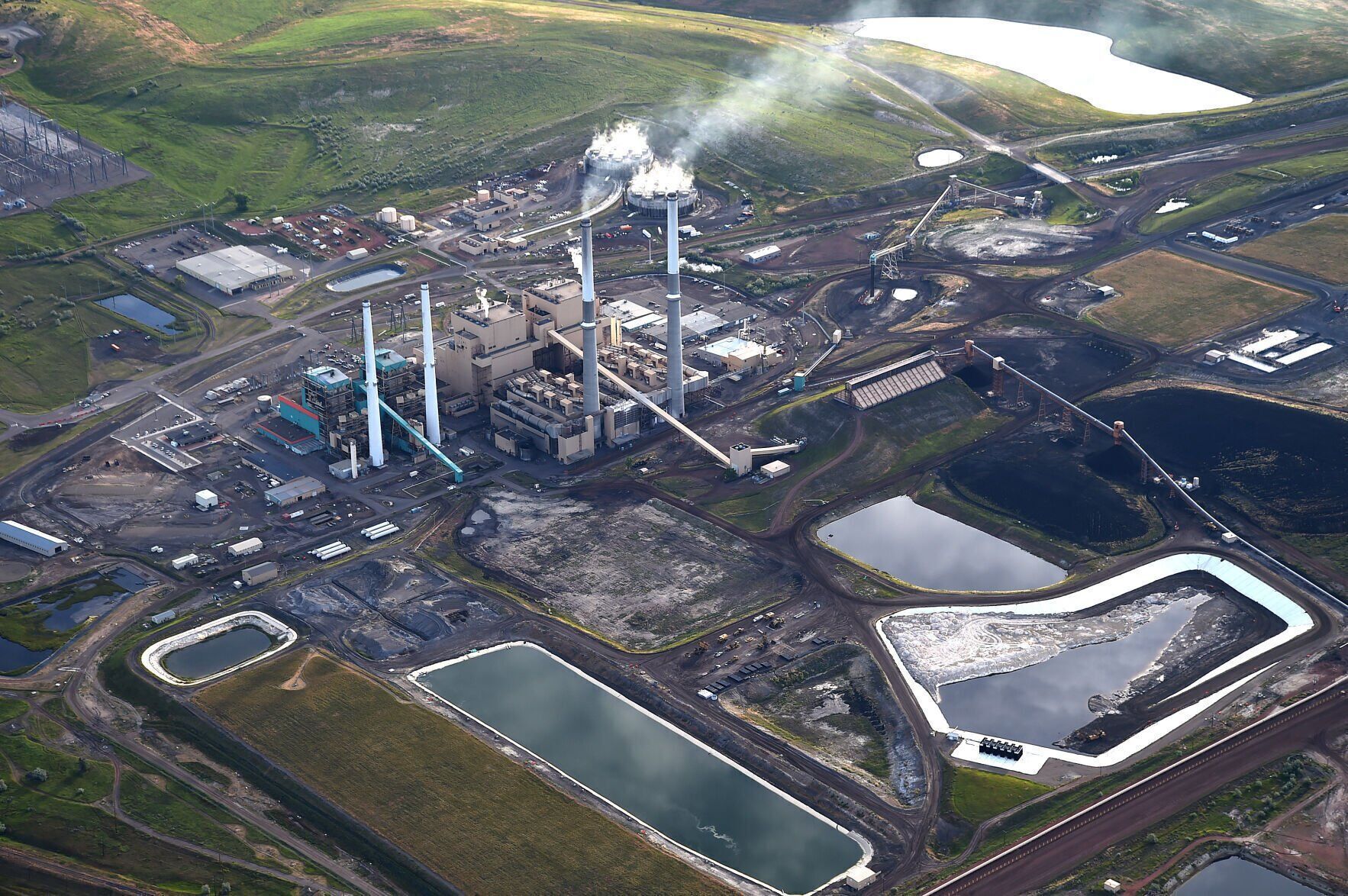
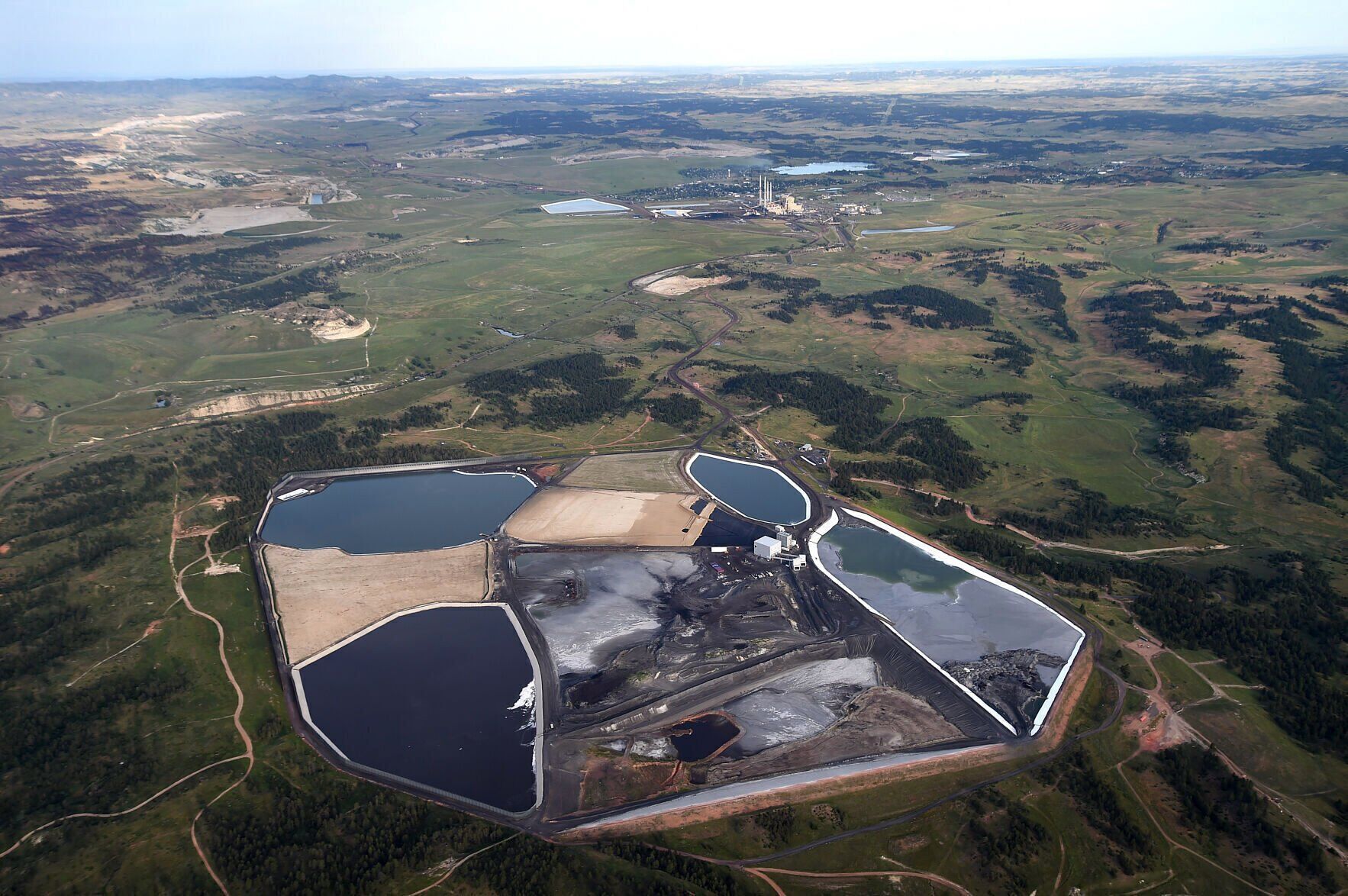
The Environmental Protection Agency announced its repeal of the 2024 Mercury and Air Toxics Standards Friday — referred to as MATS — allowing the Colstrip power plant to continue operations after its operators argued the more stringent requirement on standards impossible to reach.
NorthWestern Energy and Colstrip-plant operator Talen Energy protested the Biden-era rule from the start. This July, the utility was one of a few vocal proponents in an 11-hour-long hearing seeking feedback on the proposed repeal, stating that it would force the closure of its Colstrip coal-powered plant.
In a news release, the EPA said its repeal, which sets back requirements to 2012, “will ensure public health and the environment are protected without compromising America’s energy or economic prosperity. The final rule is expected to save an estimated $670 million, savings American families will see in the form of lower everyday living costs.”
Colstrip’s generators formed a core part of the EPA’s push to reverse the toxic air regulations. In its initial basis for the repeal, the EPA noted that Colstrip was the only facility unable to meet pollution standards with existing controls. Meeting those compliance standards was considered not cost-effective; Colstrip alone comprises nearly half of the estimated total compliance costs nationwide.
NorthWestern tried to challenge the rule in the Supreme Court, but its bid was rejected in late 2024.
“Today’s EPA decision helps ensure Montanans continue to have reliable, cost-effective energy service in all weather conditions, including during cold winter nights,” NorthWestern spokesperson Jo Dee Black said in a statement to the Billings Gazette. “NorthWestern Energy thanks Montana’s congressional delegation and state leaders for their support of an outcome that reflects Montana’s needs and is right for the communities we serve.”
Previously in April, Colstrip received a two-year exemption from the rule after the EPA solicited submissions in early March.
In its request for exemption, NorthWestern and Talen estimated the cost of the rule initially to be $350 million to meet the requirements. That was then bumped up to exceed $500 million, plus maintenance costs of $15 million annually.
The exemption request, obtained via a Freedom of Information Act filing, said that meeting the requirements was technologically and economically unavailable and was impossible to reach by the compliance date of July 2027.
In the U.S., roughly 170 coal-powered plants use the same technology as Colstrip. All of them had the needed filters equipped to address pollution except for Colstrip.
In the exemption request to President Donald Trump, Colstrip's owners pointed out that any emergency suspension of regulations hindering energy production would advance national security.
In a March 28 email, NorthWestern CEO Brian Bird personally lobbied for the exemption, writing that he “would love 15 minutes” with head of EPA Lee Zeldin about the new rules. In his email, he referenced rhetoric NorthWestern continues to use as it plans to build out its gas fleet and obtain a larger share in Colstrip.
“It appeared to us that rule was changed in order that the owners of Colstrip would be forced to close Colstrip to forego the $500 million baghouse investment necessary to comply with the new rule,” Bird wrote in an email to a Department of Energy official. “Colstrip is necessary to Montana for resource adequacy purposes and to be available when the temperatures are -40 and the wind isn't blowing. It is ludicrous that our customers would have to cover the costs of a $500 million investment for such a slight improvement in particulate matter capture. Anything you can do to help would be much appreciated.”
Roughly 15 minutes later he was connected with an EPA official, according to obtained documents.
On March 31, also helping NorthWestern’s chances, Montana’s Congressional delegation similarly requested the president exempt the Colstrip plant.
“Without Colstrip, consumers would bear the burden of higher energy costs and grid unreliability, and its closure would stymie economic development in the region,” Montana’s representatives and senators wrote to Trump.
Gov. Greg Gianforte celebrated the decision Friday. He expressed opposition as far back as 2023 on adjusting the MATS rule.
“The demand for energy is only increasing," Gianforte said in a press release. "Through this action, the federal government shows its support for states like Montana that are focused on strengthening and securing our grid to keep the lights and heat on in our homes, schools, and businesses.”
Pushback
Both supporters and opponents of the rule said Colstrip would be disproportionately impacted — just in different ways. In the Congressional delegation’s letter, they noted how the Biden administration’s EPA estimated that 42% of the MATS rule’s burden would fall on Colstrip.
Meanwhile, environmental groups point out that Colstrip Unit 4 has the highest rate of filterable emissions — like lead and arsenic — in the nation when compared to other coal-fired units. The other remaining operating unit has the third highest rate of toxic air pollution nationwide.
“The 2024 MATS rule was approved for a reason: to protect human health and the environment — the core mission of the EPA,” Montana Environmental Information Center Campaigns & Advocacy Director Shannon James said in a statement. “The Colstrip plant is the dirtiest coal plant in the nation. Why is it fair for the Colstrip plant to cut corners and continue releasing toxic air, while every single other plant in the country has cleaned up their act? Montana communities and tribes should not be sacrificed because the owners of the Colstrip plant don’t want to clean up their act.”
Environmental groups are expected to sue over EPA's decision in the coming weeks.
In its final rule, EPA disputed that its decision solely centered on Colstrip.
“Although the EPA pointed out at proposal that the units at the Colstrip facility accounted for almost half of the 2024 Final Action’s total compliance costs, that was not the basis for the proposed repeal and it is not the rationale for this final action repealing the more stringent fPM standard,” the EPA rule stated.
fPM is short for fine particulate matter.
“Rather, the rationale is the high cost effectiveness values, especially when coupled with the limited risk, including from the Colstrip facility.”
Some Montana doctors have expressed opposition to the repeal after previously celebrating its implementation less than two years ago. From 2012 to 2022, the Colstrip plant has emitted 3.3 tons of lead, 1.45 tons of arsenic, 2.1 tons of chromium, 14 tons of manganese, 2 tons of nickel and 6 tons of selenium, according to MEIC.
The 2024 rule would have cut annual emissions by half, though NorthWestern frames it as capturing 99.6% of pollutants to capturing 99.8% of pollutants.
Such pollutants can cause heart attacks, strokes, cancers, developmental delay and asthma among others. In 2024, EPA predicted the rule will see $300 million in health benefits, a factor that the Trump administration has downplayed in several of its environmental decisions. With its repeal, the Trump administration referenced the cost in reducing the pollutants.
“If they had to accompany me at the bedside of these patients and could see the real suffering and harm they are causing, I would like to believe they wouldn't be so callous as to continue to ignore the science and economics,” Billings Doctor Robert Merchant said. “It makes me sad that short-term economics drives this harm. It makes me angry that our EPA has abandoned the science, the economics, and the commitment to protect people's health. Coal industry executives bought and paid for this decision at the expense of my patient’s lives and our region's overall economy.”



Comments ()