
EPA's directive for lead in soils described in Butte as 'troubling' and 'hogwash'
The EPA announced Monday a new national directive for addressing lead contamination in residential soils — long a hot topic in Butte-Silver Bow County because of Superfund cleanup of pollution from historic mining and smelting.
J.P. Gallagher, chief executive officer of Butte-Silver Bow, described being deeply troubled by the directive’s potential impacts on the community.
The latest guidance specifies a “removal management level,” or RML, for the toxic metal of 600 parts per million and a screening level of 200 parts per million, or ppm (ppm is an abbreviation that typically describes the concentration of a substance in soil or water).
Neither number represents an action level for remediation of residential soils or interior dust.
The action level number is not yet clear, said Eric Hassler, director of Butte-Silver Bow’s Department of Reclamation and Environmental Services.
EPA says RMLs “are used to help define areas, contaminants and conditions that may warrant a removal action at a site.” The agency said they are not de facto cleanup standards and should not be used as such.
An EPA screening level is a risk-based concentration value used to identify areas that may need further investigation for contamination.
The announcement also described raising children’s target blood lead level from a benchmark of 3.5 micrograms per deciliter (µg/dL) to 5 µg/dL.
A year ago, EPA proposed dropping the lead action level in Butte from 1,200 ppm to 175 ppm.
The 175 ppm was celebrated by regional environmental watchdogs, as was EPA’s proposal last year to dramatically expand sampling and remediation to more residential neighborhoods in Butte — which could involve adding 7,253 homes.
EPA’s announcement Monday included no mention of the 175 ppm or the expanded sampling and remediation.
But it did reference Butte.
“EPA will evaluate the directive’s impacts on the Silver Bow/Butte area site, and we will share more information with the community as soon as it becomes available,” an agency press release reported.
It was not clear what that information might be. EPA has been pondering lead levels in Butte for years.
Gallagher released a statement in the wake of EPA’s announcement.
“As chief executive of Butte-Silver Bow, I am deeply disappointed by the EPA’s updated lead guidance, which raises the target children’s blood lead level to 5 µg/dL and may shift soil action levels away from the previously proposed action level of 175 ppm,” he said.
“Under the previous framework, the EPA brought forth a proposed action level of 175 parts per million for lead in residential soil and a blood lead level benchmark of 3.5 micrograms per deciliter (µg/dL) to guide cleanup decisions,” Gallagher said. “These thresholds, while not perfect, were seen as a hard-won compromise between science and policy. They offered a measure of hope that the agency was listening to communities like Butte-Silver Bow.”
Gallagher described EPA’s changes as deeply troubling.
“It suggests that the EPA is willing to tolerate higher levels of lead in children’s blood before triggering cleanup,” he said. “I fear this change will delay or dilute remediation efforts, leaving families exposed for longer periods.”
Gallagher said EPA issued the new guidance with little apparent input from affected communities, adding that the rationale for raising thresholds remains unclear.
“I feel EPA is prioritizing administrative efficiency over public health, streamlining cleanup at the expense of safety,” he said. “In Butte-Silver Bow, where trust in federal agencies has been hard-earned and easily lost, this decision could undermine years of collaboration and progress.”
Dr. Seth Cornell is an internist in Butte, a board member of the Butte-Silver Bow Health Department, and a longtime advocate for a significant reduction in the lead action level in Butte.
His response to the EPA announcement was succinct.
“Hogwash,” Cornell said.
Fritz Daily, a former state legislator and an environmental watchdog often appalled at EPA’s actions or inaction on regional Superfund sites, also weighed in.
“As I always say and write, ‘You always think that with the EPA things can never get any crazier and then they do,’” Daily said.
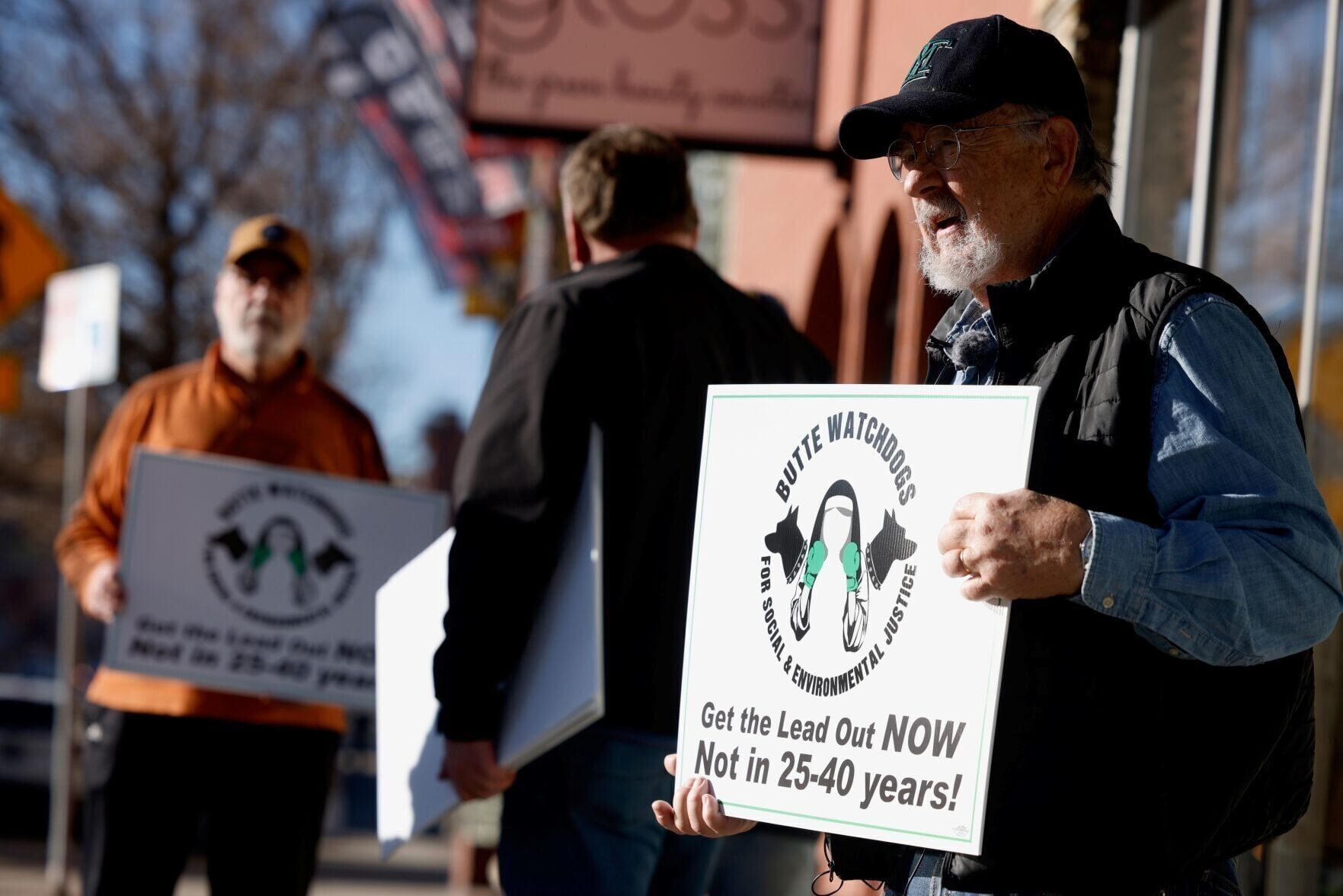
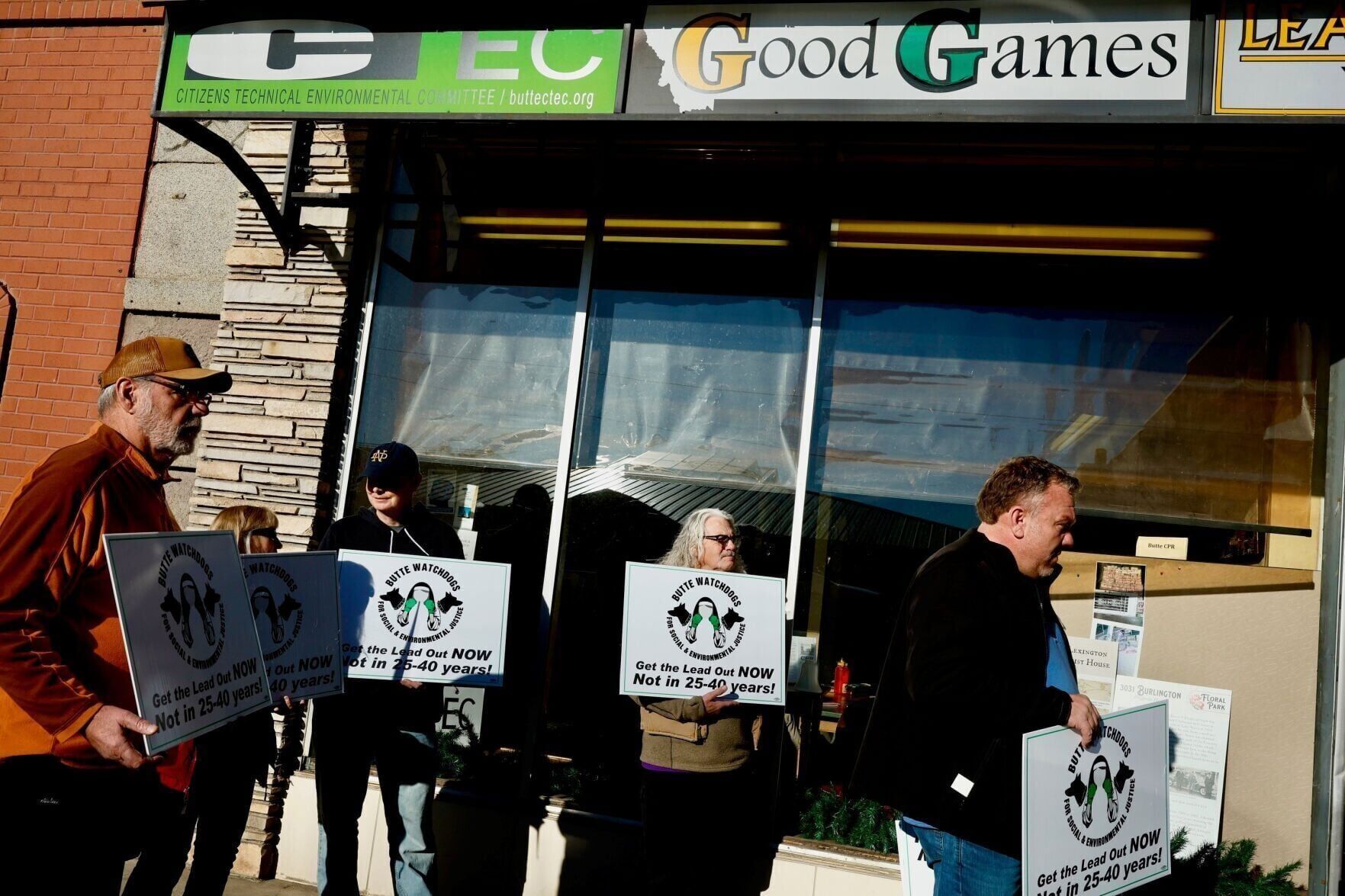
Sister Mary Jo McDonald is a founding member of the Butte Watchdogs for Social and Environmental Justice. She reacted to the EPA announcement.
”While this directive doesn’t address Butte specifically, the people of Butte are forced to continue to wait for a science-based and timely cleanup to protect the people of Butte,” she said. “We will monitor processes and continue to demand all levels of government protect people over foreign corporation profits.
”The devil will be in the details, but we already know the previous lead action level isn’t safe and the pace of cleanup in Butte has resulted in prolonged exposure,” McDonald said. “Butte deserves to get the lead out now, not more bureaucratic nonsense catering to the desires of Superfund settling defendants.”
Separately, EPA reported that “site teams will continue to use site-specific factors to make informed decisions, including risk factors, soil lead background levels and community input that can vary from site to site.”
Butte residents have waited since February for EPA to release a so-called “responsiveness summary” detailing public comments and the agency’s responses to the earlier proposal to drop the cleanup level to 175 ppm and to expand the area for sampling and remediation.
Daily referenced that wait.
“The saddest part to me as they freely admit, after eight months since final comments were received addressing Butte’s unconscionable 1,200 ppm soil removal ‘action level’ issue, they are not addressing the issue at this time,” he said.
Butte’s legacy of copper mining and smelting includes widespread contamination from lead and other heavy metals and arsenic. Butte became a federal Superfund site in 1987.
Watchdogs have criticized EPA for an apparent lack of urgency addressing lead contamination, which poses higher risks to children.
The EPA’s directive, signed by John Busterud, assistant administrator for EPA’s Office of Land and Emergency Management, described a “bold commitment to reduce children’s exposure to lead across the nation in an expedited manner.”
Busterud, a retired U.S. Army colonel, served from 1985 to 2016 as senior director and managing counsel for environment and real estate law for Pacific Gas and Electric Co.
For federal Superfund sites in Butte, Anaconda and along the Clark Fork River, settlement dollars from Atlantic Richfield are paying for remediation because the company was deemed liable given its purchase in 1977 of the Anaconda Co., the original polluter. Atlantic Richfield is a wholly owned U.S. subsidiary of bp America.
Meanwhile, EPA said the new lead directive allows adjustments to regional screening levels, removal levels and preliminary remediation goals on a case-by-case basis
“Regional screening levels are used to help identify and define areas that may need further evaluation. Removal management levels inform the process to prioritize and define areas that may pose the greatest risk to human health,” EPA said.
The Centers for Disease Control and Prevention has observed there’s no safe blood level for lead in children. Cornell previously cited this reality.
“My concerns regarding the action levels are further heightened by the Phase 2 study data that shows elevated levels of lead in Butte study participants, especially those living Uptown, are significantly higher than nationwide rates,” Cornell said has said.
“No level of lead is safe in children. Certainly, the EPA knows this irrefutable fact,” he said. “Higher blood lead levels translate to higher risk for severe and potentially irreversible damage in exposed children.”
In October 2024, Cornell remained reserved when EPA proposed action level for lead contamination to 175 ppm.
“A long overdue step in the right direction, but I’ll reserve my applause until a formal plan is approved and implemented,” Cornell said then.
For years, the burning question for many in Butte has focused on why EPA has relied on a remediation standard allowing a much greater concentration of lead in soils in Butte than has been the standard for many other communities.
EPA has used the 400 ppm standard in Anaconda for deciding whether soil in yards should be remediated but has relied on the 1,200 ppm standard in Butte — meaning that soil in Butte has had to be more contaminated than soil in Anaconda to trigger the same remediation.
EPA’s explanation has hinged on the concept of “bioavailability,” with the agency insisting the lead in Butte is less bioavailable than the lead in Anaconda from smelter emissions. The agency defines bioavailability as the amount of contaminants absorbed into the body following skin contact, ingestion or inhalation.
The stakes are high when agencies establish benchmarks for soil and dust action levels and blood lead levels in children.
Young children are especially vulnerable to lead poisoning because of their tendency to suck on fingers contaminated with lead-laced dust or to put chips of peeling lead paint in their mouths. Research has established that children absorb lead in their bodies at a significantly higher rate than adults.
Potential consequences are stark, placing children at risk for neurobehavioral, kidney and blood disorders.




Comments ()