
Everything you need to know about the ASMSU elections
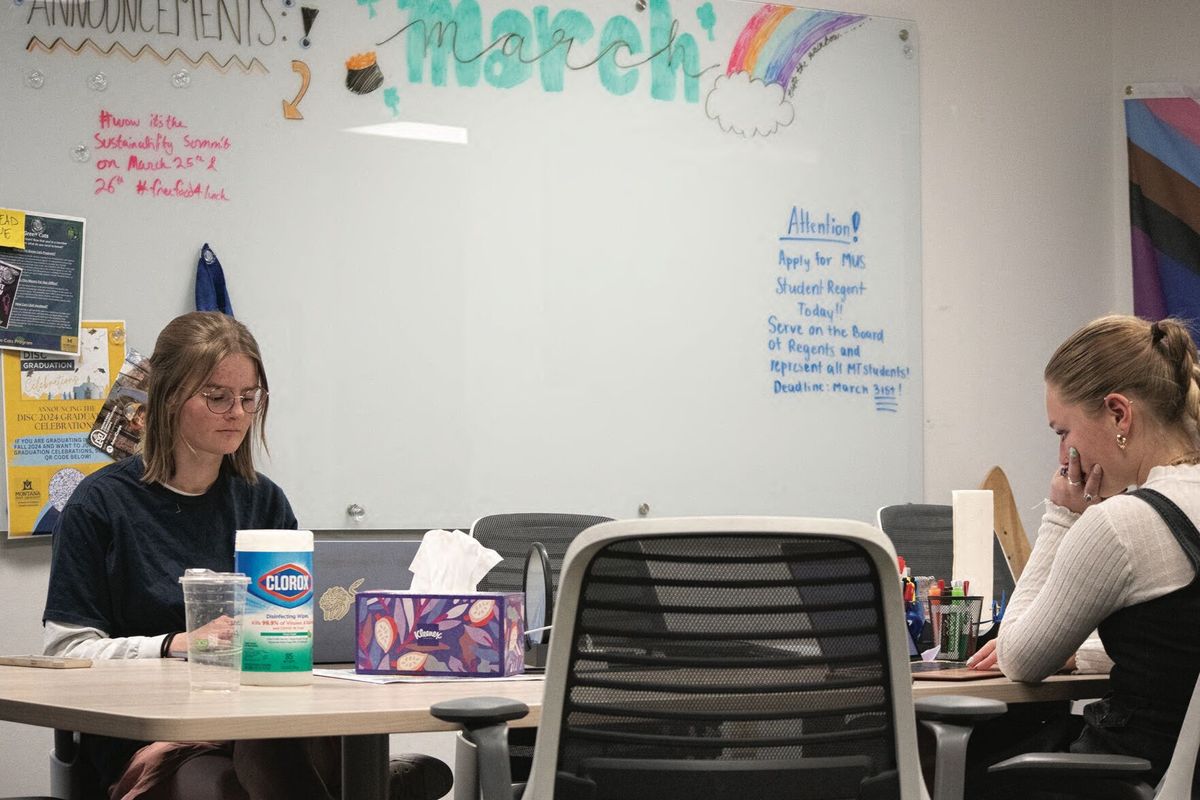
Applications will close for the upcoming Associated Students of MSU (ASMSU) primary election, on March 26. The primary election decides which two students will make up ASMSU’s Executive branch as the president and vice president for the 2024-25 academic year.
The primary election will take place from 8 a.m. on April 2 until 5 p.m. on April 3, according to the 2024 ASMSU Election timeline on the MSU website.
Leading up to the primary election deadline, ASMSU will host several opportunities for students to engage with, and learn about executive candidates. These events, according to the election timeline, are:
- The “ASMSU Primary Debate” on April 1 from 12 p.m. to 1 p.m. at the Union Market in the Strand Union Building.
- “Cookies, Cocoa, Coffee and Candidates” on April 2 from 9 a.m. to 11 a.m. at the Malone Centennial Mall.
- “Donuts and Democracy” on April 3 from 10 a.m. to 12 p.m. at the Malone Centennial Mall.
Melissa Ramirez, the current ASMSU vice president and a senior majoring in political science, said that although each executive and legislative election only places students in power for a one-year term, students can run more than once.
“I think you're only permitted to be sitting president for two years or sitting [executive] for two years. But you can run as many times as you would like.” she said. Ramirez was a senator for two years before running for an executive position in the spring of 2023, ultimately being elected as vice president alongside President Jacob Zink.
After the primary election concludes and the new executive branch has been voted on, applications for the general election will take place. This is where all prospective student senators can run for seats in the ASMSU legislative branch. These applications will be due on April 9 at 5 p.m. The general election will take place from 8 a.m. on April 16, until April 17 at 5 p.m.
As stated by the 2024 ASMSU Elections Policy Manual, “All election results shall be posted and made public within 48 hours following the end of each election.”
The ASMSU student government is made up of three branches: the executive, the legislative and the judicial. The first two are voted on by the students in the primary and general elections in April. However, to join the judicial branch, students must be interviewed by the ASMSU president, the Chief Justice of the Supreme Court and then by a senator, according to Ramirez.
“They put forth a recommendation to the Senate and the Senate interviews them as well and then appoints them or denies them,” she said. Unlike legislators and executives, once elected, ASMSU Supreme Court justices can keep their positions until they graduate from MSU without having to be reelected.
“The executives, I would say, we’re just like the bridge between our senators [and] the administrators. Our senators rely on us for those connections and talk to us quite frequently. But we rely on senators, because they're the people who are doing the work and going out and talking to students,” Ramirez said. “Our Supreme Court, they are the rule followers, and they look at all our stuff and make sure we're adhering to our bylaws and our constitution. So we all work really well in tandem.”
In their mission statement on the MSU website, ASMSU states that it is “the voice of the students.” According to Ramirez, MSU is particularly good at the shared governance model. Resolutions made by the student government act as official statements on behalf of the students. These resolutions are then sent to President Cruzado and all other relevant parties. Additionally, the ASMSU president and vice president attend every Board of Regents meeting to represent the MSU student body at the state level.
The ASMSU senate has 21 seats that must be re-elected each year, according to the MSU website. The College of Arts and Architecture and the College of Nursing each have one senator; the College of Agriculture, the College of Business and the College of Education/Health and Human Development (HDD) each have two senators; the College of Letters and Science and the College of Engineering both have four senators; and five at-large senators are elected to represent the general student body.
According to the ASMSU Elections Policy Manual, all eligible candidates “must be enrolled in a minimum of one credit, pay the Student Activity Fee, be in good academic standing and not be on behavioral probation during the semester of the election.” Additionally, students running for a senate seat “must run for the college of their major, per the MSU Registrar’s Office.”
As a senior, Ramirez will not be running for a position in ASMSU again. But looking forward to future elections, she said all students definitely have a chance. “Sometimes it's a sitting senator. Sometimes it's a justice who decides to jump over to the [executive] branch. But we've also seen a huge amount of at-large students who were like, I want to get involved. I want to do this. I'm gonna run for [executive office]. So I think throughout the history of ASMSU, we've seen all sorts of scenarios.”
“If you want your voice heard, if you have a group of people that want their voice heard more on a campus level, definitely just run. If you want to get engaged, shoot your shot, get in there and apply. Students' voices matter so much, especially in a world where higher education is changing so rapidly. Having the student voice is so important. So I would tell any student, run for [executive,] run for senate, run for what you think you're passionate about,” Ramirez said.
To view a full list of current ASMSU candidates or to submit an application for candidacy, visit https://www.montana.edu/asmsu/programs/civic-engagement/asmsu-candidates.html. As of the time of publishing, there are five days left to apply for any executive position.



Comments ()