
Experts: Abandoned vehicles on Montana highways should be promptly towed
Blowing snow obscures lanes and landmarks. Hands grip steering wheels. Knuckles whiten.
Then, suddenly, a vehicle abandoned on the interstate shoulder appears out of the gloom and swirl. Adrenaline surges.
Disabled vehicles sometimes linger for days on the shoulders of interstates 90 and 15 in Montana.
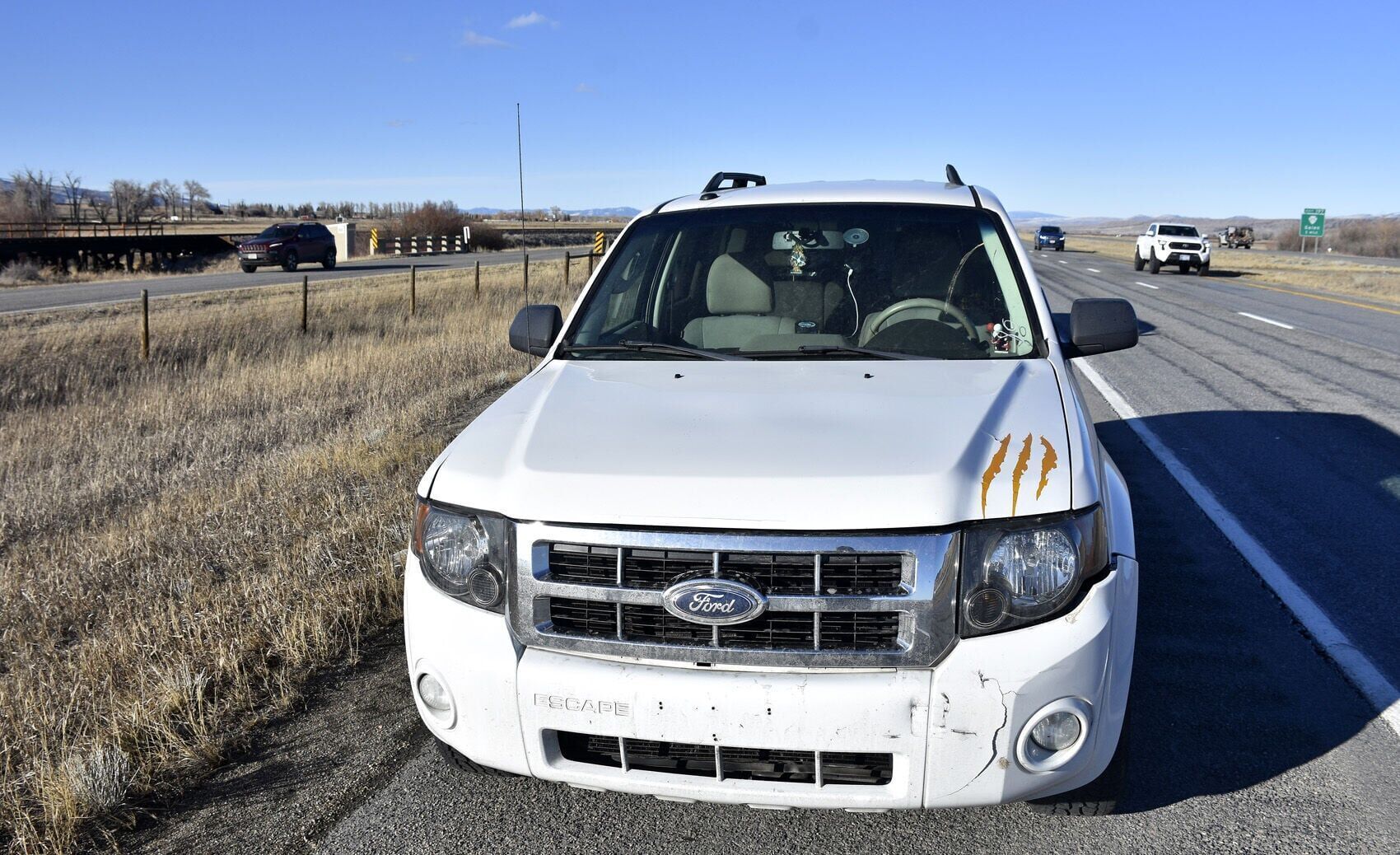
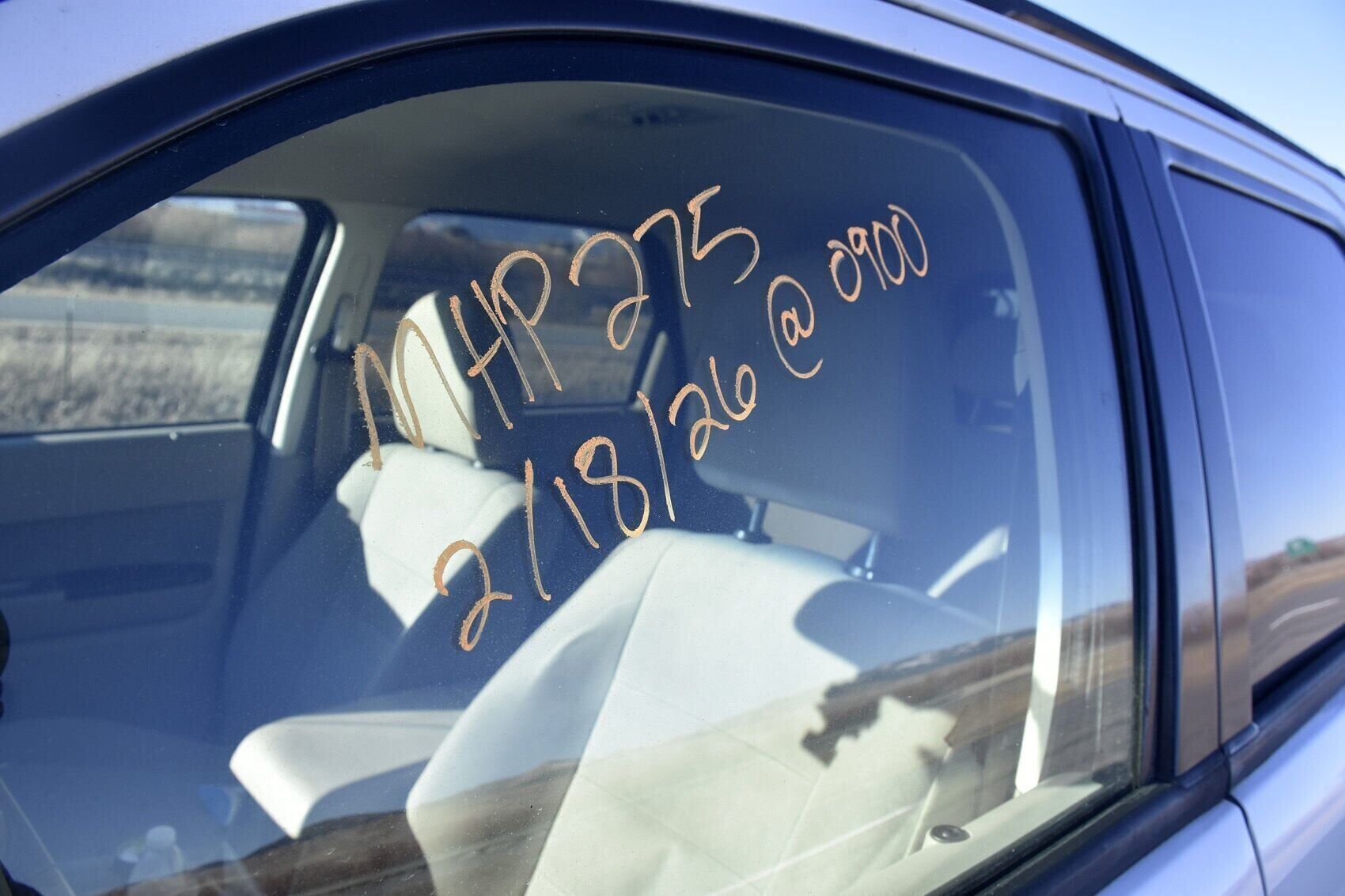
A Ford Escape with a license plate from Washington recently remained on the shoulder of eastbound Interstate 90 between the exits for Galen and Warm Springs for nearly a week.
That’s too long, says Deo Chimba, Ph.D.
Chimba, a professor in the Civil and Architectural Engineering Department at Tennessee State University, and Boniphace Kutela, Ph.D., Texas A&M Transportation Institute, have studied the safety hazards of disabled and abandoned vehicles.
“Based on the data, the longer a vehicle remains on the shoulder, the higher the risk it poses,” Chimba said in an email Monday.
“Winter driving conditions, such as those common in Montana — snowstorms, fog, drifting snow — further amplify this risk because drivers have less sight distance and reduced reaction time when approaching a stationary object at 70 to 80 mph,” he said.
Chimba said the hazard-based modeling used in their research shows that risks increase over time.
“Quick removal consistently reduces these risks,” he said.
The research by Kutela and Chimba focused on Tennessee highways, which are significantly more congested than interstates in Montana even at the peak of its tourism season.
The abandoned Ford Escape sat on a long straightaway, which are common in Montana, and was easily spotted when the weather was clear. But a comparatively modest snowstorm obscured the white vehicle.
Chimba said the most prudent approach is relevant for both Tennessee and Montana.
“States should prioritize removing disabled vehicles as quickly as possible, ideally well within 24 to 48 hours,” he said. “In many situations, especially in rural, high-speed, winter environments like Montana, clearing them sooner is advisable. Each additional hour a vehicle remains unattended increases exposure and crash risk.”
Chase Scheuer, a spokesman for the Montana Department of Justice, described the standard approach by the Montana Highway Patrol.
“MHP typically handles abandoned vehicles on Montana’s interstates and highways and adheres to MCA 61-8-356,” Scheuer said.
“When an abandoned vehicle is located and determined to be a hazard, MHP attempts to contact the owner to remove it or calls a wrecker, either way, we don’t leave it,” he said. “If it is not a hazard, meaning parked legally on the shoulder not impeding traffic, we tow it as soon as possible.”
The state law Scheuer referenced states, “A vehicle may not be parked or left standing upon the right-of-way of a public highway for a period longer than 48 hours or upon a city street or state, county or city property for a period longer than 5 days.”
In addition, the law holds that a vehicle abandoned on a public highway is assumed to be the responsibility of the last-registered owner, who is considered “liable for the costs incurred in removing, storing and disposing of the abandoned vehicle, less the amount realized if the vehicle is sold.”
Duane Williams, CEO of the Montana Trucking Association, weighed in about the risks of abandoned vehicles.
“We agree that these vehicles can be a hazard/obstacle and should be removed quickly to help with the safety of the traveling public,” he said.



Comments ()