
Exploring Montana’s geologic climate with local expert
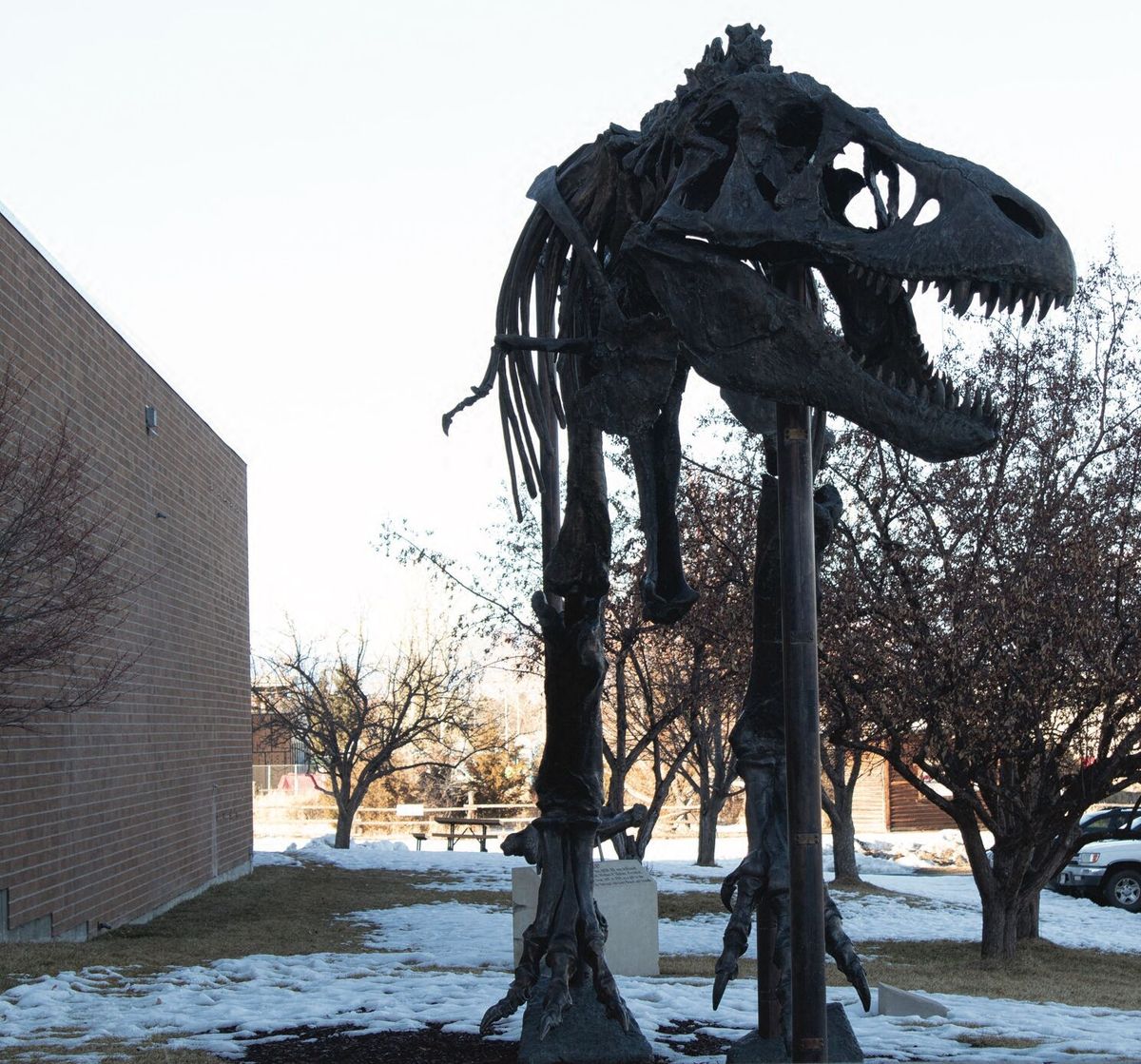
Due to Montana’s rich geologic history, paleobiological research is robust both on MSU’s campus and across the state. Paleobiology is a field that uses the fossil record to study evolution over time, according to the Department of Zoology at the University of Cambridge.
David Varricchio, a professor in MSU’s Earth Science department, said he was drawn to MSU because he wanted to do fieldwork and study dinosaurs. He completed his Ph.D. at MSU in 1995.
Varricchio described how growing up on a farm in Pennsylvania and near mining first drew him to studying Earth’s history and evolution. “I remember collecting trilobites as a kid. Things that are, you know, 400 million years old. You can't sit here dumbfounded all day. We can't get too existential. You can't really wrap your head around that [amount of time],” he said.
He also explained the process of finding certain fossils. “The state has been well mapped multiple times, so you can pull out a map and say, what kind of rocks are in this area? If I'm interested in marine reptiles, I can look for geologic formations that represent the ancient ocean, and if I'm interested in dinosaurs, I can choose ones that are like floodplains and rivers and stuff like that,” he said.
Varricchio said the next step in fossil hunting is to look for “outcrops,” or places where the rock is exposed. There, researchers search for fossils that are weathered out of the ground, according to him.
Another important aspect of preserving natural history is through museums. The Museum of the Rockies’ “exhibits, collections, programs and research create a community resource that brings the world to Montana and shares the Northern Rockies with the world,” according to its website.
There are many research opportunities available for students in the paleobiological field. For example, the paleobiology department at the National Museum of Natural History (NMNH) in Washington, D.C. has multiple fellowship programs that offer immersive research opportunities. There are three different types of fellowships at the Smithsonian. There are Central Fellowship Programs, which take place at Smithsonian museums, research institutes and offices. There are museums specifically through each of these Smithsonian-managed museums, institutes, and offices. Finally, there are fellows hosted by the Smithsonian that apply through a partnering organization. Many of these programs are open to graduate, predoctoral and postdoctoral students. Applications are typically due between Aug. and Nov. each year.
One of the Central Fellowship Programs is the Smithsonian Institution Fellowship Program. The aim of the fellowship is “to conduct independent research and to utilize the resources of the Institution with members of the Smithsonian professional research staff serving as advisors and hosts,” according to the NMNH website.
If you are interested in learning more about paleobiology or earth sciences visit the Smithsonian’s Department of Paleobiology website https://naturalhistory.si.edu/research/paleobiology.



Comments ()