
Failed Ten Commandments bill’s constitutionality in question
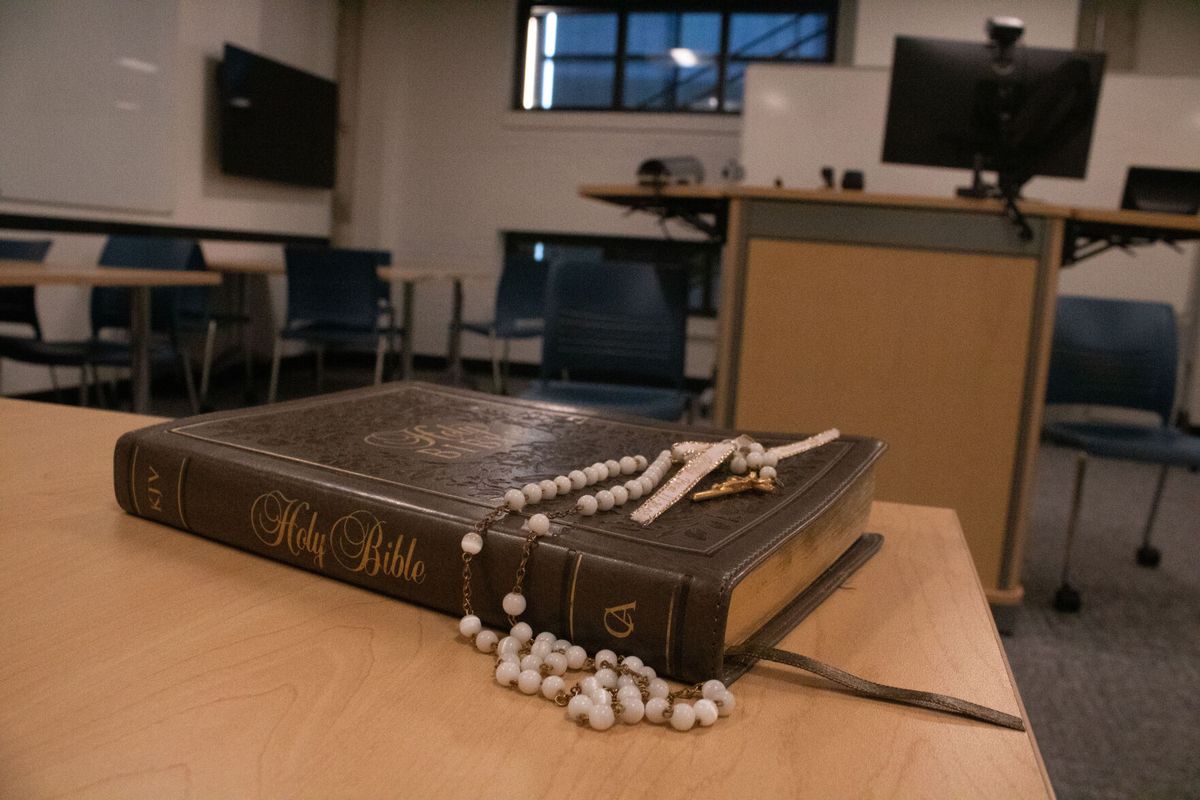
A bill introduced in the Montana state legislature that would require the Ten Commandments to be displayed in every public school classroom — designated Senate Bill 114 (SB114) — failed to pass in the State Senate last Wednesday, Feb. 5.
SB114’s failure comes at the heels of many similar bills mandating the display of the Ten Commandments in schools being introduced nationwide. Georgia and North Dakota are among the states that considered bills requiring the Ten Commandments be displayed in public schools introduced to their legislatures. Kentucky and Ohio also introduced similar bills that could lead to schools posting the Ten Commandments, according to NBC News.
Last year, a law dictating that the Ten Commandments be displayed in Louisiana public classrooms was struck down by a federal judge as unconstitutional. According to the Associated Press, state officials in Louisiana claim that they can mandate the posting of the Ten Commandments because of its historical significance. Texas Lieutenant Governor Dan Patrick also vowed to push similar legislation forward in Texas’ 2025 legislative session, according to a post on X from June 2024.
This push to require the Ten Commandments to be displayed in public schools comes after a recent trend of decisions made by the U.S. Supreme Court (SCOTUS). According to Montana Deputy Public Defender Annie DeWolf, the trend in the SCOTUS’s decisions has shown that they will be “more relaxed regarding certain religious beliefs.”
The 2022 SCOTUS case Kennedy v. Bremerton School District changed how the SCOTUS looks at cases concerning the Establishment Clause of the First Amendment of the Constitution, according to DeWolf. The Establishment Clause is one of two provisions of the First Amendment concerning religion. It specifically prohibits the government from the “establishment” of a religion, according to the U.S. Constitution.
The SCOTUS previously used the Lemon test— a legal precedent set forth by the SCOTUS in the 1971 case Lemon v. Kurtzman — when determining if a law violated the First Amendment, according to the U.S. Federal Courts website. This test established criteria to determine if the law or government action violates the Establishment Clause.
However, during Kennedy v. Bremerton, the Court instead relied on interpreting the Establishment Clause through “reference to historical practices and understandings.” The Court said decisions regarding the Clause should accord with history and reflect the understanding of the founding fathers, according to the Court’s majority opinion in the case.
The author of Texas’ proposed Ten Commandments bill, Phil King, said the bill would stand up to scrutiny in the SCOTUS following the decision in Kennedy v. Bremerton, according to a Feb. 11 article from NBC News. According to DeWolf, issues arise surrounding the compulsory nature of the bill.
“If passed, the law will almost certainly be challenged as a violation of the Establishment Clause of the First Amendment,” said MSU business law professor Owen Borum. According to him, the SCOTUS has historically evaluated legislatures based on whether or not they endorse a religion. “[It] would likely be invalidated as an improper endorsement of Christianity,” Borum said.
Borum explained that predicting SCOTUS decisions is more complicated than looking at past decisions. “The [SCOTUS] has recently shown that it is more open to religious activity in the public sphere, particularly by Christians,” he said.
“The motive is clear: to promote their religious perspective to the children of Montana — which is understandable,” Borum said. He went on to explain that not everyone in Montana is Christian, so the bill does not apply equally to everyone. “The Constitution directs that all be treated alike,” Borum said.
SB114 and similar bills from other states have been met with opposition from organizations like the American Civil Liberties Union (ACLU). ACLU Montana’s website states that SB114 is “blatantly unconstitutional and fundamentally at odds with the founding principles of our country” and that, if passed, the bill would waste taxpayer money after the courts strike it down.
MSU student Jovany Castillo said that he recognizes the importance of religion regarding U.S. history and the nation’s founding, but ultimately sees a distinction between public schooling and religious education as he grew up with religious education outside of public school.
“It’s a really tricky question,” Castillo said when asked if he would support the bill. “Because when it comes to other kids with different religions, they might feel out of place. So, at the end of the day, I feel like there should be a separation,” he said.
To find out more about the bill and its status in the Montana Legislature, visit bills.legmt.gov.


Comments ()