
Federal agency revokes bison grazing permits in Philips County area
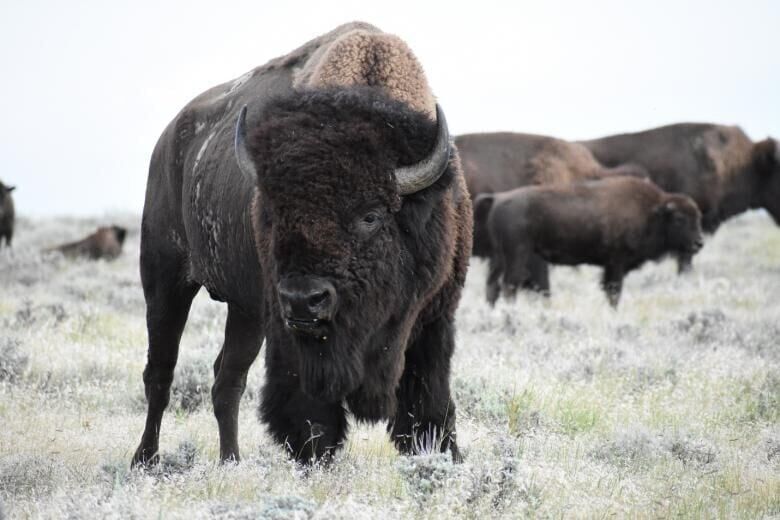
PHILIPS COUNTY, Mont. – Montana state leaders clashed with conservationist groups and local tribes after a federal agency cancelled grazing permits for bison on over 63,000 acres of federal public lands in Phillips County.
The Bureau of Land Management (BLM) decided to cancel the permits because it said the bison herd was not being managed for “production-oriented purposes.”
BLM originally issued those permits in 2022 to the American Prairie Reserve (APR), a Montana-based organization aiming to create one of the largest nature reserves in the U.S., in 2023. The permits allow APR to graze bison on federal public land.
The American Prairie is home to around 900 bison and focuses on preserving them as a part of the ecosystem. Its website says “Bison play a huge role in the prairie ecosystem, making our conservation herd of over 900 bison an important component of our work to conserve one of the last remaining shortgrass prairies in the world.”
APR’s website says it has allowed its bison to graze in the area with BLM’s permission since 2005.
Pushback from the livestock industry
The 2022 decision sparked pushback from a collective of groups led by the Montana Association of Grazing, which argued that the decision would harm the livestock industry.
“Commenters stated that Bison, especially those in non-production herds, are not included in the definition of livestock [...] These commenters cited concern over the destabilization of the livestock industry in the counties affected by conversion of grazing allotments and stated that federal grazing statutes and rules do not provide BLM with the authority to change permits from cattle to bison,” BLM wrote down after a public comment session.
APR responded to the “non-production herds” criticism, saying “‘production-oriented purposes’ is not a term that is defined anywhere in the Taylor Grazing Act or the BLM’s regulations, and to the best of our knowledge this interpretation has not been previously applied to any other livestock manager on public lands.”
It’s defense also included that it treats bison “like cattle” because it follows practices like tagging, vaccinating and donating meat from the animals.
Governor Greg Gianforte and his administration fought against the 2022 bison grazing permits since the moment they were issued.
Bison grazing permits are cancelled
On February 6, 2026, BLM issued a proposal to cancel APR’s bison grazing permit.
APR responded later that day.
“This proposal is an unprecedented reversal of BLM’s own decision-making after more than 40 years of treating bison as eligible livestock under federal grazing law,” said Alison Fox, CEO of American Prairie.
“Abruptly rescinding them now—under political pressure—creates immense uncertainty and sends a chilling signal to Tribes, ranchers, and conservation partners who depend on fair and predictable public land management,” she continued.
Tribal authorities also responded with protest against the BLM’s proposed decision. A collection of statements were released by the Coalition of Large Tribes, which includes the Cheyenne River Sioux Tribe, the Cheyenne and Arapaho Tribes, Tanka Fund and others.
Additionally, state representatives Tyson Running Wolf and Tom France spoke out against BLM’s decision in an op-ed first published in the Missoulian titled “Montana’s future being decided without tribes — or the buffalo.”
Despite the protest, the BLM issued the decision to cancel the permits on May 8, 2026.
What will happen next?
Gianforte issued a statement the day the permits were repealed, proclaiming the decision a “victory.”
“This final decision is a victory for the rule of law and the generations of Montanans who have stewarded our lands with care,” Gov. Gianforte said.
He continued by attributing the 2022 decision to the Biden administration.
“For far too long, the Biden administration ignored the clear language of the Taylor Grazing Act in favor of an ideological experiment. I’m proud of our administration for leading the fight to reach this decision,” he said.
Montana Attorney General Austin Knudsen also issued a statement celebrating the decision.
“The decision by the Trump Administration to cancel the American Prairie Reserve’s bison grazing permit is a huge victory for Montana farmers and ranchers,” Knudsen said. “As someone who grew up farming and ranching in Northeast Montana, I know how important this decision is to protect the hardworking livestock and ranching communities in that region and keep the elitists from destroying their livelihood.”
BLM’s announcement about the decision said it is not attempting to “evict” hundreds of bison from Montana and that APR’s bison were welcome to graze on private land.
BLM currently allows 8,831 bison as domestic livestock on federally managed grazing allotments. U.S. Fish and Wildlife says there are currently 20,500 Plains bison in conservation herds and an additional 420,000 in commercial herds across the country.
“While bison are no longer threatened with extinction, the species faces other challenges. The loss of genetic diversity, combined with the loss of natural selection forces, threatens the ecological restoration of bison as wildlife. A low level of cattle gene introgression is prevalent in most, if not all, bison herds,” U.S. Fish and Wildlife said.



Comments ()