
Feds reach $3.5M settlement in Yellowstone National Park oil spill that impacted river
The federal government has reached a $3.5 million settlement following a 2020 gasoline spill in Yellowstone National Park that polluted the Yellowstone River and groundwater next to it.
The money will be used to continue remedial work in the area that's expected to continue for years. Some of the spill area's groundwater still tests more than 100 times above cleanup levels.
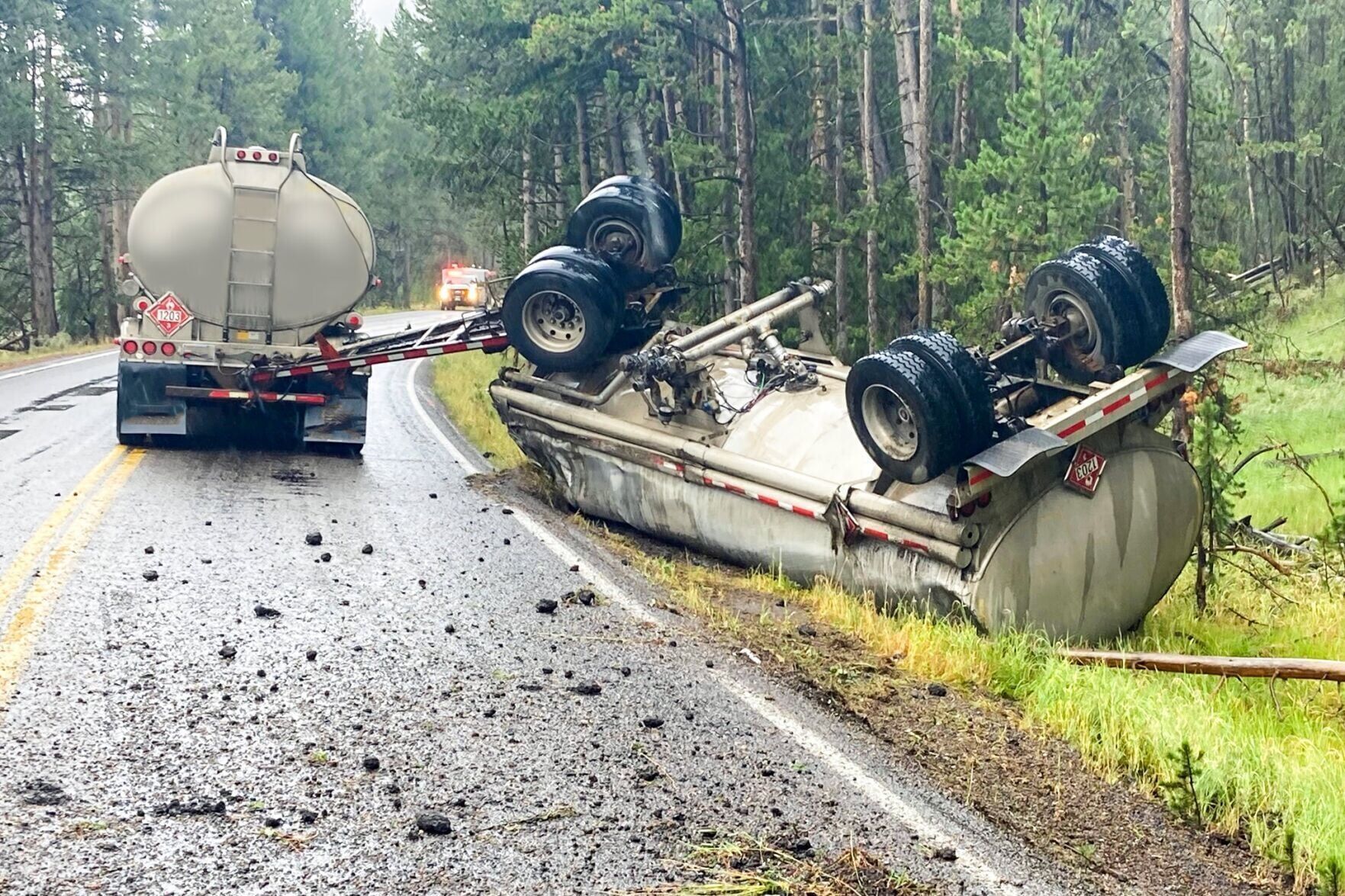
The incident dates back to Aug. 27, 2020, when Lee Andreas drove his business’ semitrailer along the Grand Loop Road in Yellowstone’s Hayden Valley near the Cascade Picnic Area. Andreas, associated with Andreas Petroleum, is alleged to have lost control of the vehicle’s “pup” trailer, a shorter trailer connected behind a longer one. Andreas Petroleum mostly operates in Big Timber and Bozeman, according to business filings.
The pup trailer rolled over and was punctured, releasing more than 3,100 gallons of unleaded gasoline onto and alongside the road in a wooded, grassy area, parts of which slope toward the Yellowstone River. The nearby section of the river is an important spawning area for native Yellowstone cutthroat trout that migrate out of nearby Yellowstone Lake in the spring.
The spill covered around 20,000 to 25,000 square feet or about 40% the size of a football field. The incident occurred four miles north of Yellowstone Lake and 70 to 80 feet from the Yellowstone River.
The National Park Service closed the road between Mud Volcano and Fishing Bridge Junction that morning. It took more than a week to fully reopen.
During the closure at the end of the summer season, visitors had to navigate without the 16-mile central route, instead traveling an 80-mile alternative between the two different destinations.
The spill was first handled by the National Park Service and related contractors with initial cleanup completed by Sept. 17, 2020. The agency posted on Facebook a day after the spill stating, “there is no evidence that gasoline entered the Yellowstone River.” But the agency was wrong.
“NPS believed the spill had been sufficiently contained, but when it was discovered that was not the case, we became involved as the lead agency,” Environmental Protection Agency Region 8 spokesperson Melissa Walther said in a statement to the Billings Gazette.
EPA initiated a response to the pollution on Nov. 20, 2020, when they were informed of contamination in the Yellowstone River. EPA estimated that it recovered 760 gallons of the spilled 3,200 gallons of gasoline and 7,400 gallons of impacted groundwater in its initial response.
The rest of the petroleum had soaked into the ground and related water bodies by then. EPA treated 1.3 million gallons of water in the summer of 2021, reducing the amount of benzene, a gasoline component, by 90%, according to Walther. The cleanup continues to this day by the National Park Service and the Wyoming Department of Environmental Quality.
Oil floats on top of water and can easily spread, making it difficult to remedy. Movement of the spilled petroleum still poses risk to groundwater, the Yellowstone River and wildlife. The contamination overall can affect habitat, recreational resources and food sources.
“Benzene can pose severe health risks to humans, including various types of cancer and reproductive issues,” Walther said. “Within the environment, it can harm aquatic life and ecosystems in similar ways and can reduce soil quality and cause plant death. EPA has set the Maximum Contaminant Level for benzene in drinking water at 0.005 parts per million (5 parts per billion), with a goal of zero due to its cancer-causing potential. While this spill was not large, the potential harmful effects needed to be mitigated.”
She stated that EPA tried to draw contamination back through pumping and treating to reduce the spread.
In March 2022, the federal government was notified Andreas was potentially responsible for the oil spill. In September 2023, the National Pollution Funds Center, associated with the United States Coast Guard, sent Andreas a billing package for EPA’s cleanup. A month later, he was sent a letter from the National Park Service demanding he pay for the agency's response costs and associated damages.
On Feb. 9, the agencies reached a settlement with Andreas. He agreed to pay $3.5 million for the response costs and related damages, according to court documents. The settlement does not imply guilt on his part. The previously unreported settlement took place in a span of four days at Billings’ federal courthouse.
A revised remedy plan stated that in 2021, levels for benzene still remained high in some test wells. In one area, benzene was concentrated at 1,442 micrograms per liter, more than 288 times higher than the established cleanup limit of 5 micrograms per liter in the state of Wyoming. Similarly, 24 out of 112 soil samples tested above the reporting limit later that year.
Still, the initial tests showed a reduction since the start of the groundwater recovery effort that has improved somewhat since the spill. In 2023, 13 of 56 test wells tested above the cleanup limits, with one sample 34 times higher than the established cleanup limit. Reduction in benzene concentrations were noted in 15 of the 56 groundwater samples in June 2023.
The 2024 remedial plan includes recommendations for a continued excavation, fluid injections to further degrade the fuel compounds and a barrier that could capture the remaining petroleum. Compliance monitoring is expected to continue for years until compliance goals are met. Those goals were expected to be achieved in five to six years in the 2024 remedial plan.
Comments ()