
Fending for themselves: Bozeman sisters scramble out of Saudi Arabia as Iran war erupts
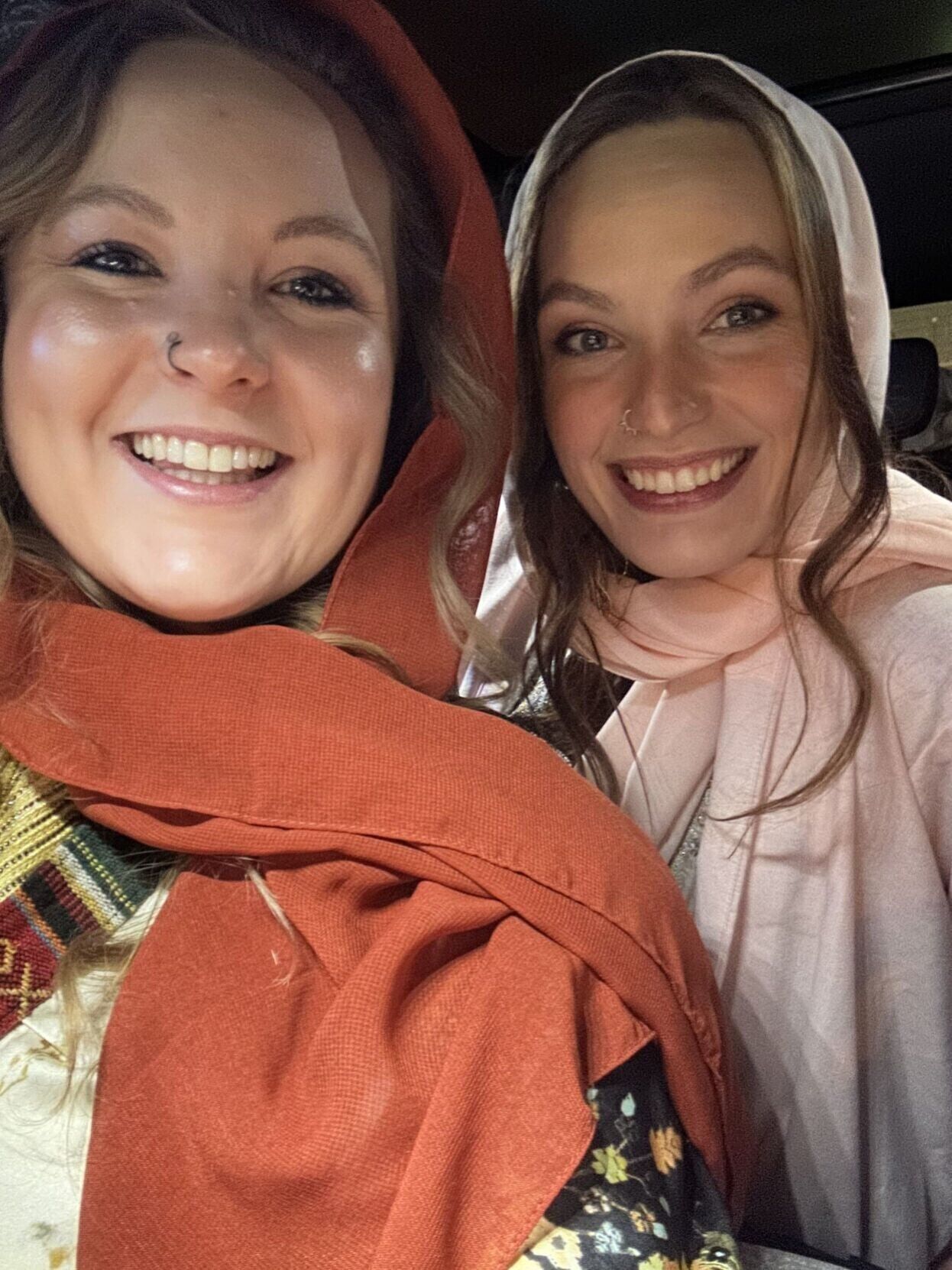
Alise and Laurel Glenn spent one more day in Riyadh than they had intended. That day may have made all the difference.
The Bozeman sisters had flown to Saudi Arabia at the end of February to visit friends, with a road trip to Qatar on the itinerary. They were supposed to be in Bahrain on Feb. 28, when the first joint U.S.-Israeli bombs were dropped on Iran.
“Had we followed our original itinerary, we would have been in the city of Bahrain that got hit the hardest on that day,” Alise said. “We were a day away from being right in the middle of that.”
The sisters landed in Riyadh, Saudi Arabia’s capital, two days before the conflict started, in the middle of Ramadan. Neither is Muslim, but they found themselves welcomed into the holiday so fully that they fasted alongside their hosts through the day, and came alive with the rest of the city at night.
For someone who had visited 15 countries, Alise said Riyadh still managed to surprise her — cleaner, friendlier and safer than anywhere she had been, including back home.
“There’s a lot of misconception about the Middle East being this dangerous, barren wasteland,” Alise said. “But it’s very modernized, it’s very safe, it’s the cleanest city I’ve ever been to. They take such good care of it.”
For Laurel, the social dynamics were refreshing. Far from the catcalls and unwanted attention women navigate at home, she said Riyadh worked differently. Men approaching women is not accepted, she said, so unless she initiated a conversation, she was simply left alone.
“Never in my life, in most other places, would I get on a metro elevator at midnight with 10 men and be OK with that. There, you didn’t even have to think twice about it,” Laurel said. “They don’t look at you. They just make room for you, a lot of room, and you’re good to go.”
But before the jet lag wore off, the sisters awoke the morning of the bombings to a flood of texts from family and friends back home asking if they were safe. At first, they read the messages the way many have processed alarming headlines over the past year, by waiting to see if it’s serious.
Over the next few hours, as strikes continued and Iran launched retaliatory fire across the region, they realized it was — and started looking for next steps.
“They really left Americans to fend for themselves over there,” Laurel said of the U.S. government. “We’re starting to try and look at what we’re supposed to do, directives and things. And there’s just nothing.”
When they flew out of Bozeman, Saudi Arabia was a Level 1 country, the State Department’s lowest travel advisory and effectively a green light for American travelers. It was not until March 3, three days after the strikes, that the Level 4 designation was issued, instructing Americans in Saudi Arabia to make a plan to leave that “does not depend on U.S. government help.”
Alise and Laurel, who both describe themselves as politically progressive, said American military intervention abroad was not a new concept. But as they scrambled to secure a route home from their Riyadh rental, the conflict felt different.
They watched reports of a U.S. Tomahawk missile strike a girls school in Iran, and heard President Trump acknowledge publicly that “there will likely be more” American casualties after the first U.S. soldiers were killed.
“They don’t even care about the military. War crimes are happening, these things are happening,” Alise said. “They certainly don’t care about us right now.”
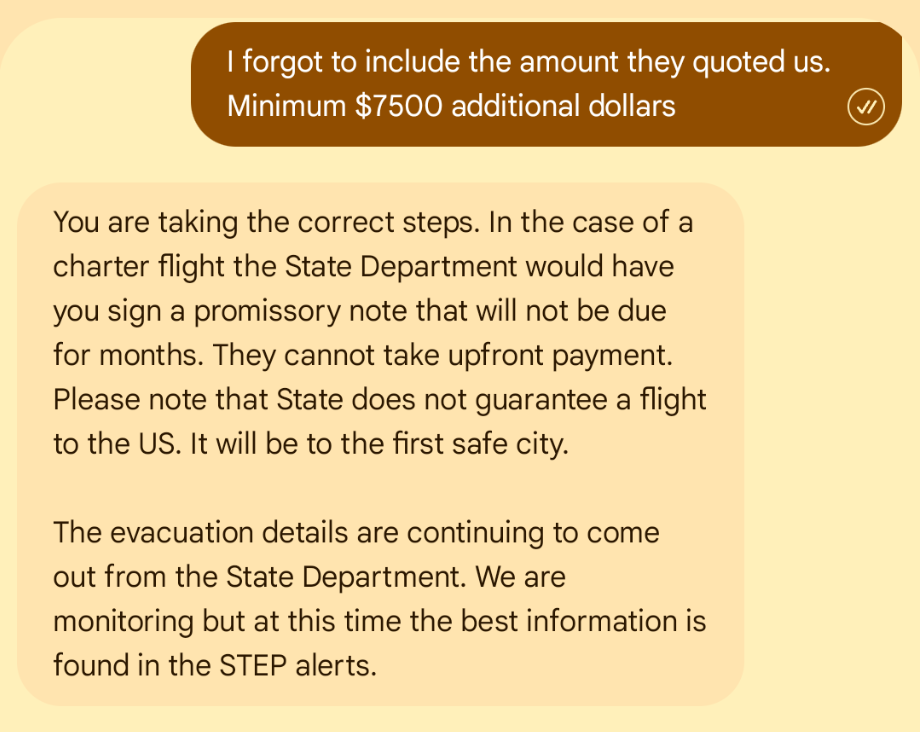
With no plan from the federal government, the sisters said they reached out to state Sens. Steve Daines and Tim Sheehy. They were in email contact with Daines’ casework liaison, who advised them that while State Department evacuation flights would be free of charge, the destination could not be guaranteed.
“That just felt so sketchy,” Alise said. “We would not be allowed to know where we were going.”
They also spoke with a member of Sheehy’s staff, who told them that in the case of a flight chartered by the State Department, they would have to sign a promissory note agreeing to repay the U.S. government for the cost. They were not provided a dollar amount, but with commercial flights going for $25,000 at the time, the sisters said they couldn’t imagine the “astronomical” fee they would have to repay if they proceeded with the government option.
“We’re budget travelers,” Alise said. “I’m usually the person staying in $15 hostels. I had a small emergency fund, but we’re still not wealthy.”
In an email to the Chronicle, Sheehy’s Chief of Staff, Mike Berg, said the office gave a heads up about the promissory note so the sisters would not be met with a surprise bill, and pointed to legislation that dictates crisis evacuation protocols.
“Our office does not set State Department or airline policy,” Berg wrote.
Similarly, Gabrielle Wiggins, deputy communications director for Daines, emphasized that the office did everything they could to assist Alise and Laurel.
"Senator Daines’ office has been in contact with Montanans in the Middle East from the beginning of the conflict and provided assistance to more than 15 individuals who were stranded," Wiggins said.
In statements provided to the Chronicle after the sisters self-evacuated, both Daines and Sheehy said they were glad Alise and Laurel made it home safely and that they remain committed to the safety of their constituents.
For the sisters, the sentiment fell short. Both senators had voiced support for the joint US-Israeli strikes, citing Iran as a longstanding threat to the United States, as the war has since cost $12 billion, according to the most recent White House statement.
“They have billions of dollars to be spending on this (war) every day,” Laurel said. “But can’t help citizens with a couple thousand dollars.”
After realizing that assistance from the state or federal government wasn’t coming, Alise eventually booked a flight to Egypt using their own emergency fund, and donations from friends and family. They spent a 24-hour layover in Cairo before flying to Frankfurt, then to Denver, before finally landing in Bozeman.
But the journey home did not bring the relief they expected. It was devastating, they said, to leave behind the community that had welcomed them so warmly.
Despite the sisters’ relative privilege as Americans with a way out, their local hosts’ friends and family had been the ones constantly checking in, asking after their physical safety and how they were coping with the shock of finding themselves in the middle of a war.
“They know this is so much less normal for us,” Alise said. “But that’s its own kind of heartbreak. And then just getting on a plane and leaving them all there in the mess that we have created. I felt so sick getting on the plane to leave.”
Now back in the Big Sky state, with that sky free of missiles and drones, Alise and Laurel are struck by what they see as a disconnected American public. As U.S. weapons continue firing overseas, with no signs of slowing down, they said it feels surreal that life at home goes on as normal.
“Everybody’s just going to work,” Alise said. “We have to go back to work and act like everything’s fine. It’s just going to feel so hard to pretend.”


Comments ()