
Free Missoula vet clinic provides ‘irreplaceable’ care for homeless and low-income pet owners
MISSOULA — When Johnna Thompson moved to Missoula about two years ago, she was homeless and struggling.
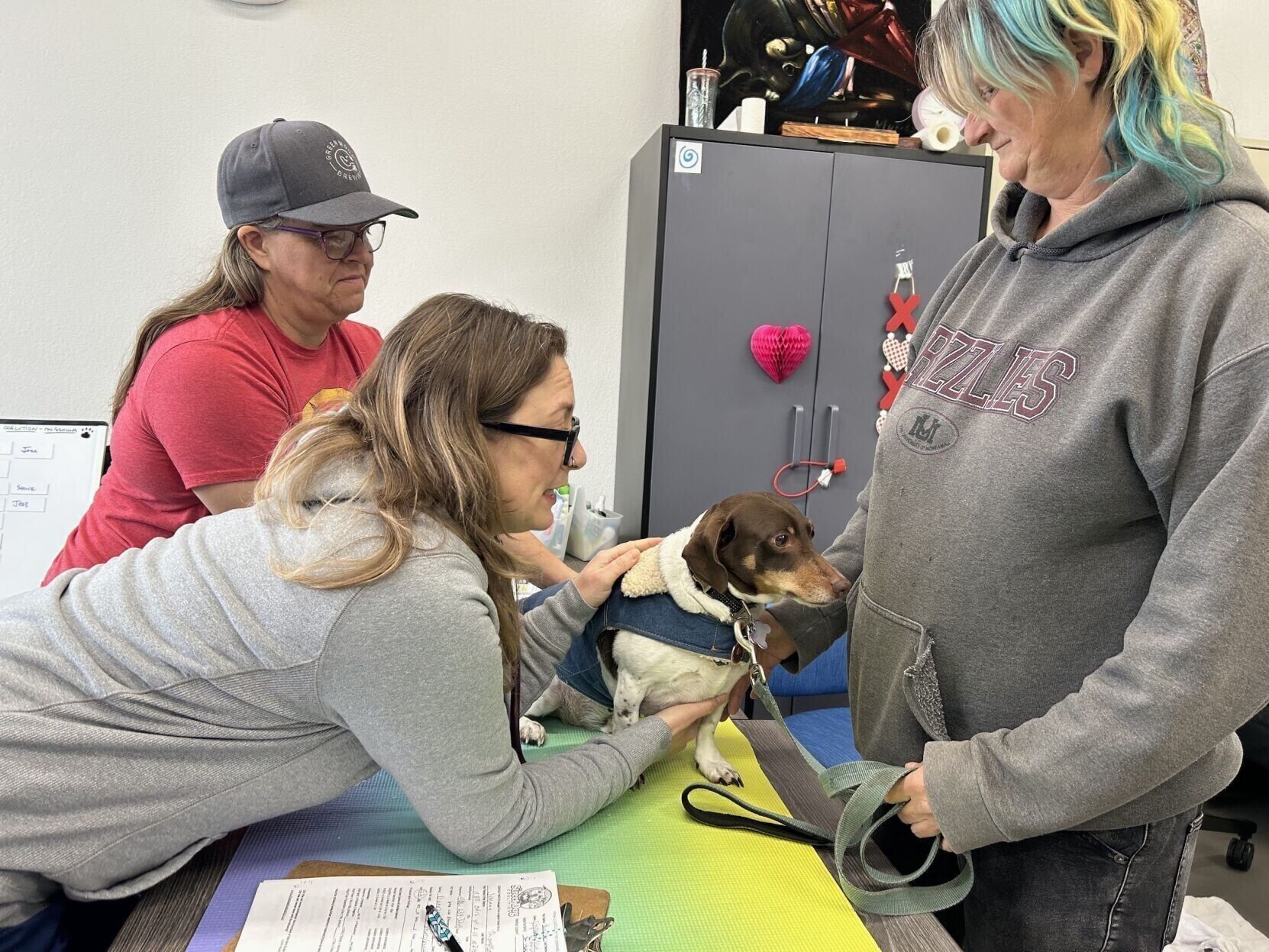
To move into an apartment, she needed to get her dog, DiNozzo (named for the NCIS character), vaccinated, but she couldn’t afford it. A prospective landlord referred her to the Street Dog Coalition, and she has attended their free monthly veterinary clinics as needed ever since securing housing.
“This is my little protector,” she said with DiNozzo, a dachshund mix, at her side. “He keeps me safe, and he’s there with me when no one else is. So them being here to help him and help me through this time has been irreplaceable, honestly.”
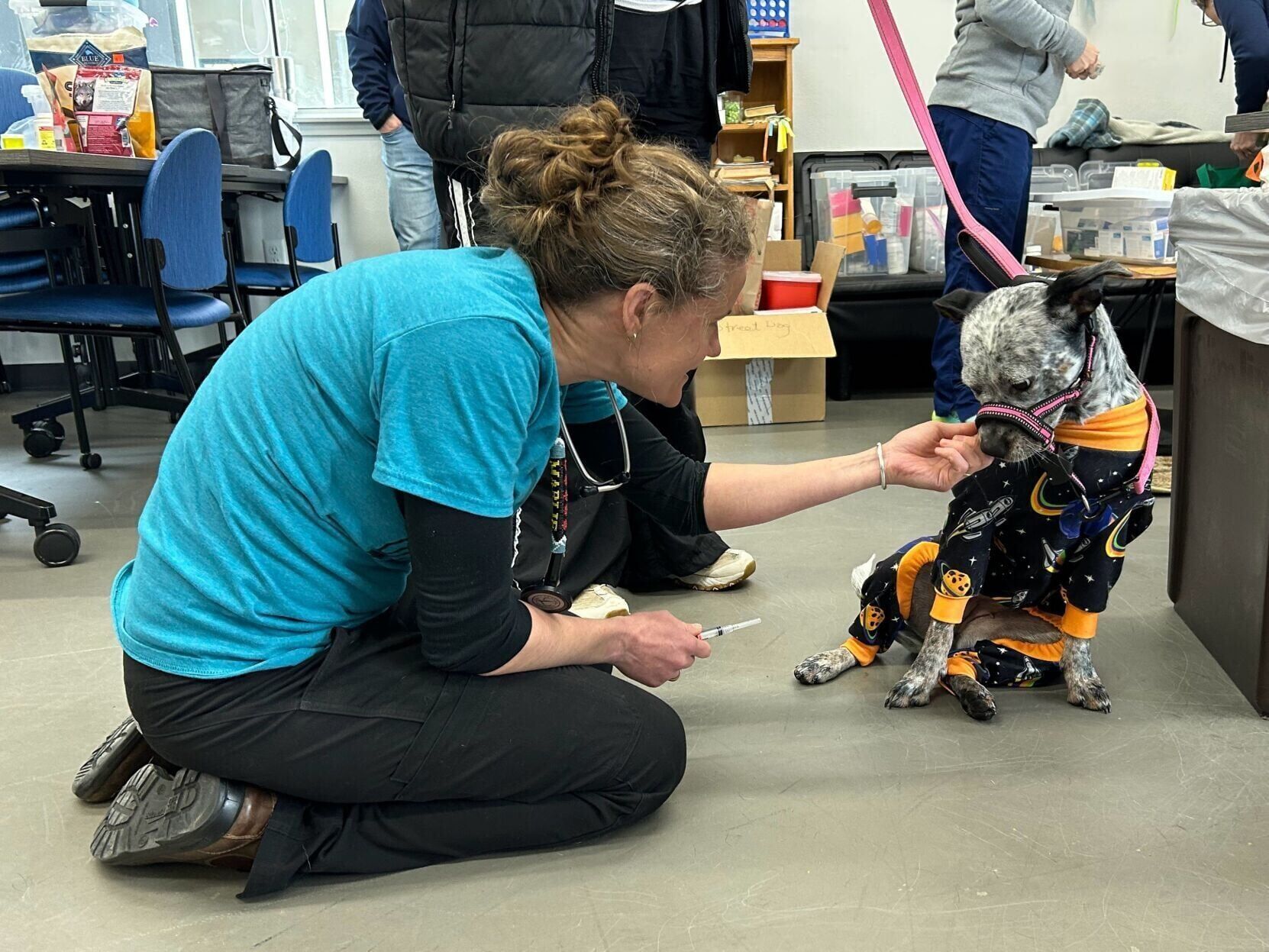
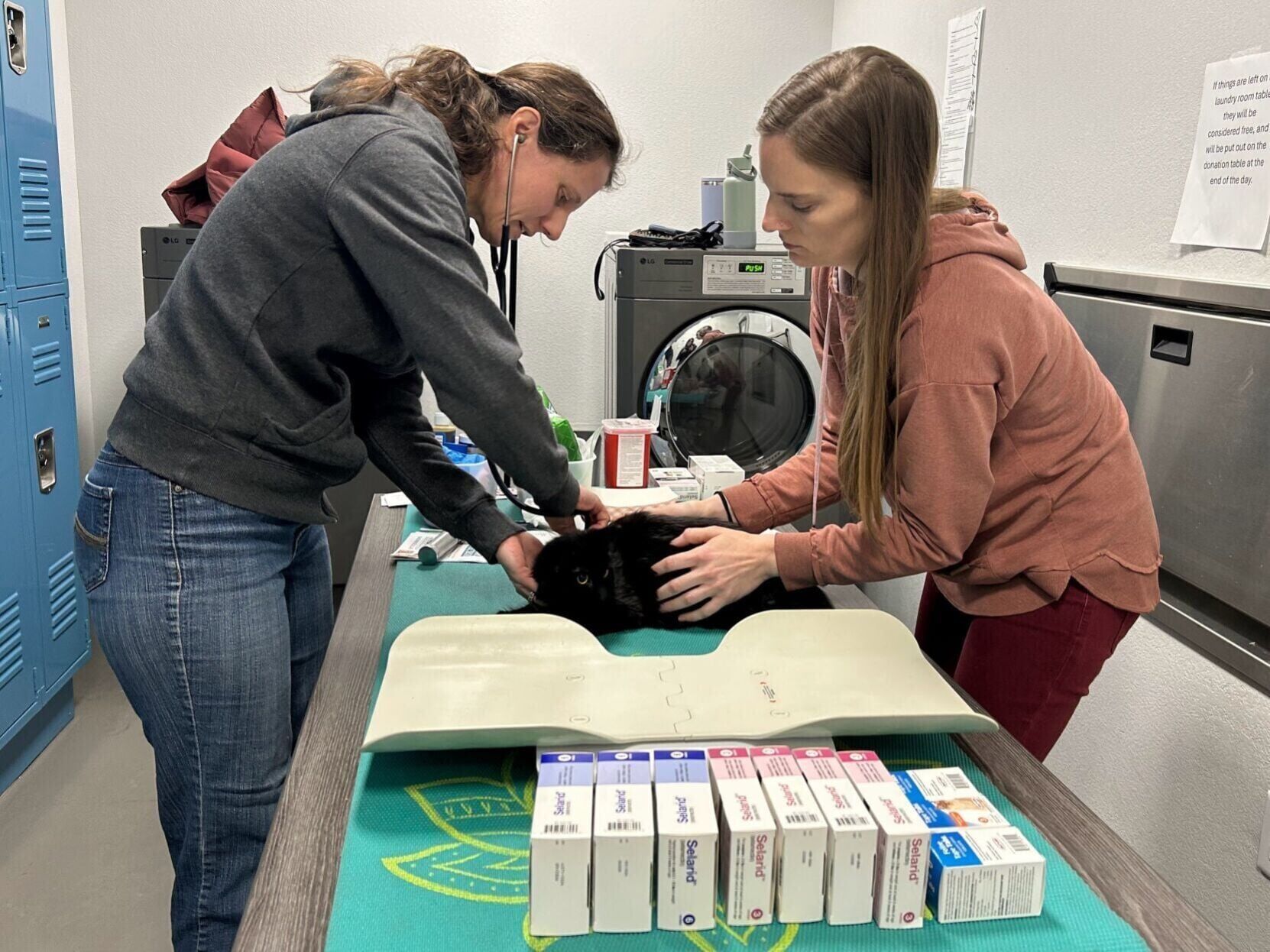
Thompson was among the more than a dozen people who brought their pets to the Street Dog Coalition’s monthly clinic at the Watershed Navigation Center in Missoula last Saturday. The free clinic serves unhoused and low-income pet owners and provides free vaccines, exams and medication. Attendees can also get vouchers for free spay or neuter surgeries through the Humane Society of Western Montana.
Veterinary care is expensive, and prospective landlords often require proof that tenants’ pets are up to date on vaccinations, according to local shelter and housing organizations. While pets come with costs, they also provide meaning and companionship, regardless of someone’s housing situation, Clayton Shaya with the Unhoused Neighbors Union told Montana Free Press.
“People need hope, and maybe that’s just a little bit of that hopefulness of coming home to being needed and being appreciated all the time,” by a pet, he said. “I think that’s a hot commodity for all of us being housed or unhoused.”
On Saturday, DiNozzo received annual vaccinations for rabies, distemper and parvovirus and had his nails trimmed. Thompson said she wishes more people knew about the clinic.
“There are so many people out there that are struggling just to live, and their animals are suffering through it with them,” she said. “I think that this is a great resource, and honestly, I wish it was everywhere.”
The Street Dog Coalition is a national organization that provides free veterinary care for the pets of people experiencing homelessness, with more than 50 clinics nationwide, including one on the Fort Peck Indian Reservation. The Missoula clinic started in 2020 and has seen an increasing number of animals, particularly in the last year, according to organizers.
From 2024 to 2025, the clinic saw a 63% increase in the number of dogs and cats served, from 212 to 346. That includes a 58% increase in dogs and a 77% increase in cats. Volunteers attribute the jump in part to increased awareness of the clinic, as well as Missoula’s growing homeless population and high cost of living.
Ann Vestal, the Missoula coalition’s lead veterinarian, told Montana Free Press the clinic helps prevent infectious diseases and control the pet population.
“The concept of having these free clinics for pets of the homeless or nearly homeless is fantastic, and there was and is a big need for it,” Vestal said. “It’s helping to keep our community healthy, … and there’s just such a need for this organization.”
As of January 2025, there were 567 unhoused people in Missoula, according to the annual Point-in-Time Count, which is widely considered to underestimate the community’s homeless population. That’s up from 449 the previous year.
While it’s unclear how many unhoused people own pets, Missoula County estimated its 118,000 residents owned about 40,000 dogs as of 2022.
Shaya, the Unhoused Neighbors Union advocate, said pets were often mentioned during a series of focus groups held last year on what makes life meaningful for unhoused people and what barriers they face. People reported having to give up a pet to secure housing or stay in the shelter, living in their car to stay with their pet and challenges securing the necessary deposit and paperwork, Shaya said.
Shaya said pets help give life meaning, especially for unhoused people who “let go of everything else.”
“You’re allowed to have so little and doing so much on your own that companionship is a big deal,” he said. “Because of the situation I’m in today, that doesn’t mean I made a poor decision to get this dog six years ago or should be discarding it … because I’m on hard times. People need support more than anything.”
Pets can be a barrier to emergency shelter, as the Poverello Center, Missoula’s adult shelter, does not allow pets at its Broadway shelter because of its commercial kitchen, staff previously told MTFP.
The closure of the Johnson Street emergency shelter in September left many people without a place to stay with their pets, said Caren Stumpf, a Street Dog Coalition volunteer.
The YWCA’s domestic violence shelter has six animal-friendly rooms in its Meadowlark building. The Family Housing Center for homeless families with children, located in the same building, does not allow pets except for service animals or certified emotional support animals with current vaccinations, said Becky Margolis, the YWCA’s communications manager. The vaccine requirement is a challenge for some people, but if they have their paperwork, it makes it easier to find housing, she said.
“However, it does still limit the properties they can apply for, and there is often an extra pet deposit and application fee,” Margolis said.
Montana state law allows landlords to prohibit any animal that isn’t a service animal. Tenants with disabilities or a disability-related need for an emotional support animal may request a reasonable accommodation.
Most of Missoula Housing Authority’s affordable housing properties accept pets, and for those that don’t, tenants often request a reasonable accommodation for an emotional support animal, said Sara Stout, the communications manager. The housing authority will waive the pet deposit for certified emotional support animals and does not charge a deposit for service animals, she said. Dog owners must show proof of a current rabies vaccination and a license. Annual license fees vary from $10 to $35 based on the dog’s age and whether it is spayed or neutered.
Vestal, the lead veterinarian for Missoula’s Street Dog Coalition, said an annual exam costs $68 and vaccines cost about $45 apiece at her clinic, Animal Blessings. The cost of spay or neuter surgery varies for cats and dogs, ranging from $145 to $267 for cats and $256 to $425 for dogs, depending on their sex and size.
A spay or neuter surgery through the Humane Society of Western Montana costs $125 for cats and $225 or $250 for dogs. That fee includes annual vaccines, a microchip and nail trimming. The humane society offers regular spay/neuter and vaccine clinics on a first-come, first-served basis, but appointments fill up quickly, according to the organization’s Facebook page.
At the Street Dog clinic Saturday, Shelby, who didn’t give her last name, said she needed to get her cat vaccinated and spayed in order to move to a new place.
“It’s extremely expensive to pay for a vet in the middle of moving,” she said.
Vestal said that, along with providing necessary paperwork for housing, the vaccines are important to protect animals from wildlife that may have rabies and to prevent the spread of parvovirus, which has a high mortality rate. The vets also hand out free medication to prevent heartworm, fleas and ticks.
“Whatever we can do preventatively so these animals stay as healthy as they can and live long, happy, healthy lives is important,” Vestal said.
While a snowstorm made Saturday’s clinic slightly less busy than normal, a steady stream of people, dogs and cats kept volunteers busy beyond the clinic’s two-hour window.
“It’s kind of controlled chaos,” said volunteer Lorena Hillis over the sound of barking dogs.
More information about the Street Dog Coalition’s clinics is available at thestreetdogcoalition.org/missoula-mt. Those interested can donate through this link or purchase items from the organization’s Amazon wishlist.
Hillis, who has volunteered at the clinic for two or three years, said it’s important to prevent the spread of disease among dogs and help pet owners care for their companions.
“These animals are everything to them,” she said. “They love their animal, and they want the best for their animal.”
Jennifer Lingar said Saturday was her first time at the clinic, which she heard about from her brother, who is staying at the Poverello Center. Lingar said she couldn’t otherwise afford vaccines for her dog Pepper, which will allow her to be around other dogs and people.
“She’s been the best friend,” Lingar said. “I want to do my best to take care of her because I selfishly want to take care of her the rest of her life.”



Comments ()