
Gold mining company courts local support for its plans near the Blackfoot River
LINCOLN — Company officials hoping to develop a gold and silver mine near the Blackfoot River have embarked on a charm offensive in the nearby town, aiming to overcome the industry's environmentally checkered history in the region.
The Montana Department of Environmental Quality in March issued a draft environmental permit for Australia-based Sentinel Metals to conduct exploratory drilling on private land east of Lincoln. A public comment period for the proposed project ends April 13.
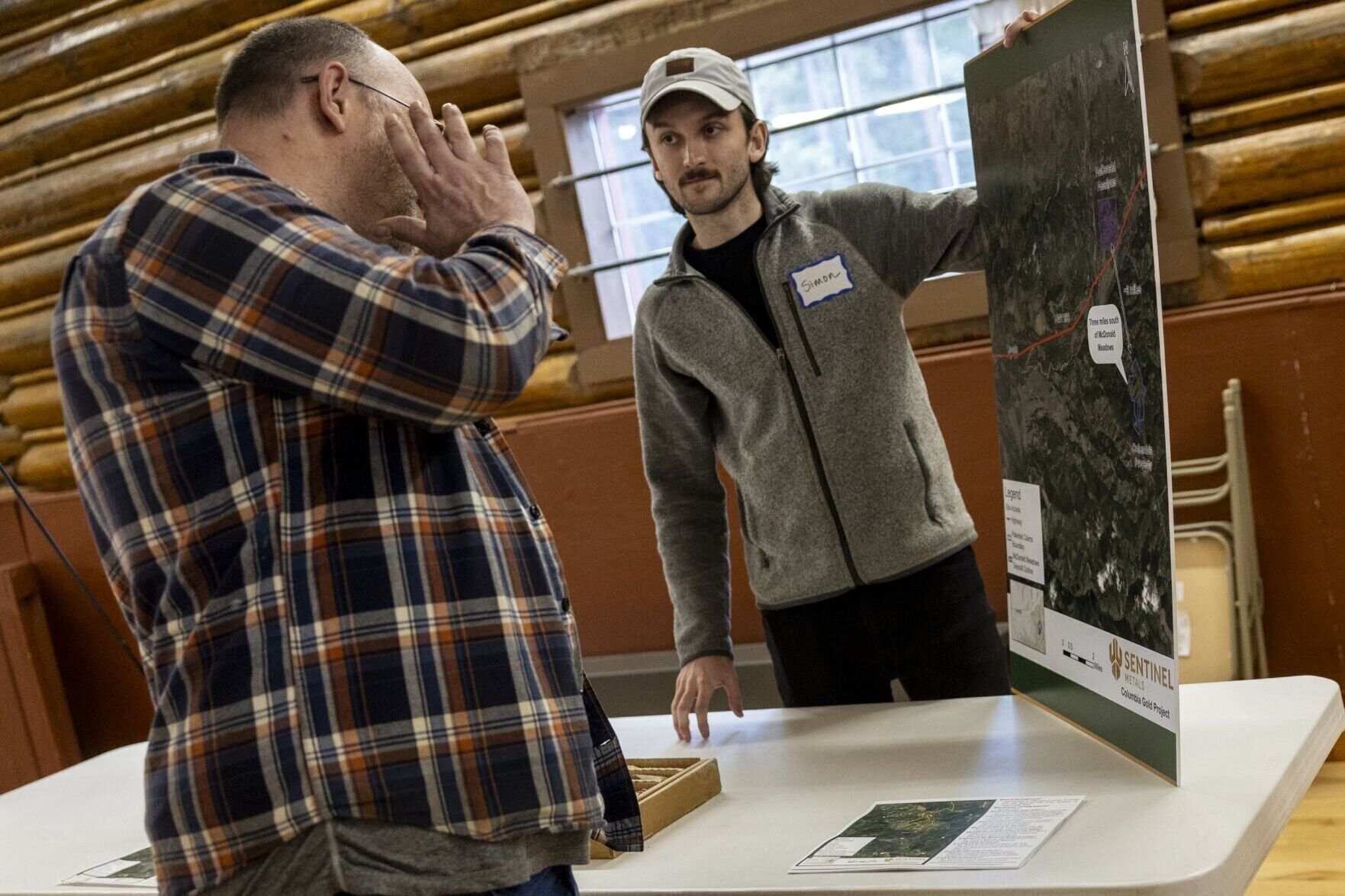
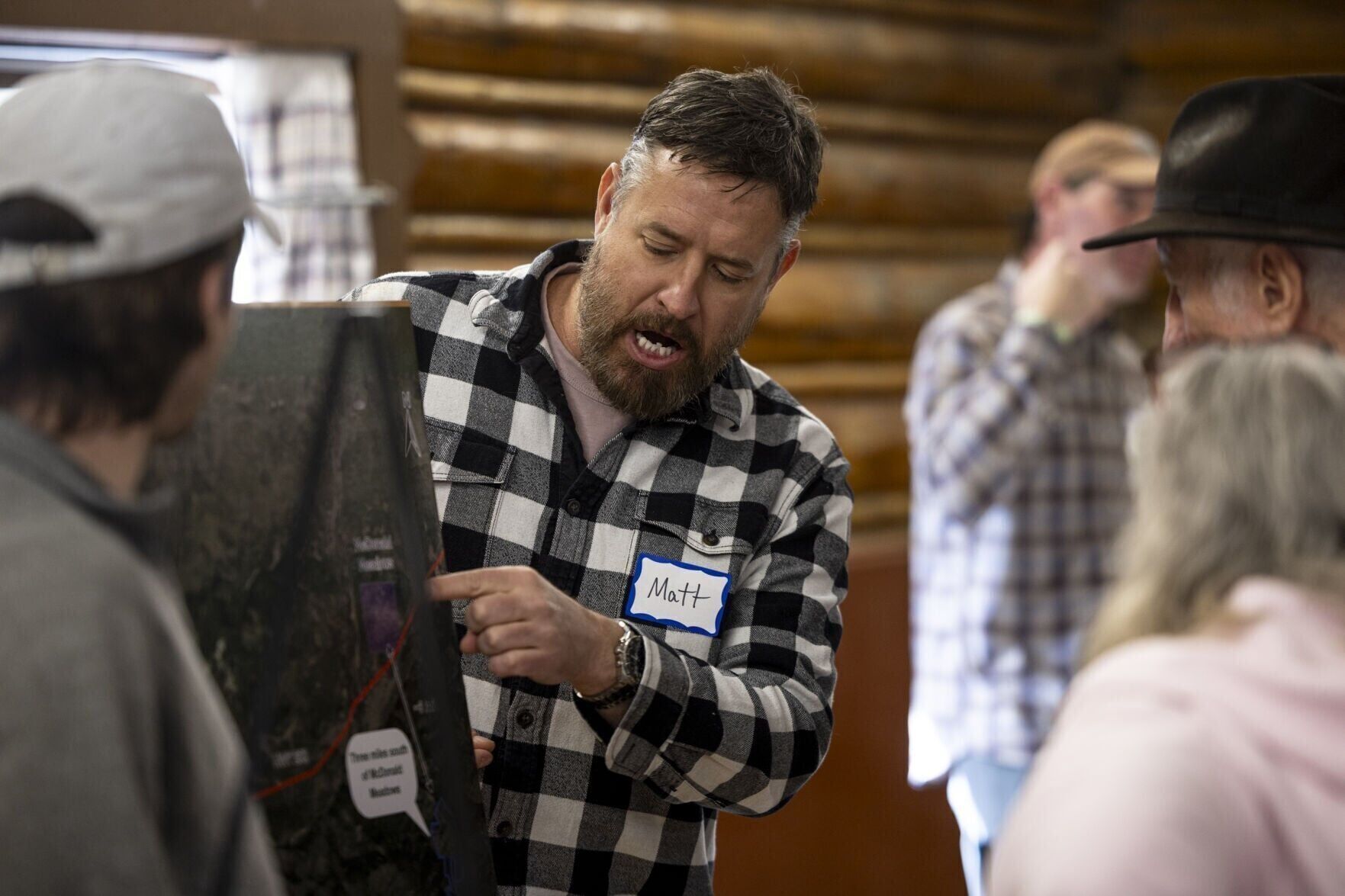
At the Lincoln Community Center on Tuesday evening, a handful of company representatives held an “open house” for local residents, chatting with dozens of people at tables displaying aspects of Sentinel’s near-term plans for their Columbia Gold Project. It’s the sole project for the company, which went public on the Australian Securities Exchange last year. Postcards advertising the meeting were sent to every resident in the zip code, according to Sentinel officials.
“This area has had a really checkered past, and we’re the first to recognize the impact of Zortman-Landusky, the Mike Horse incident,” Sentinel CEO Matt Herbert said. “For a lot of people there’s not going to be a lot of changing opinions, and that’s fine. What we do want is for people to understand the project.”
The shuttered mine near Zortman, on the edge of the Fort Belknap Reservation, remains a stark reminder of the risks that past gold mining practices entailed. Following two decades of activity, the mining company’s 1998 bankruptcy left the state on the hook for cleanup and water treatment expected to extend into perpetuity.
But it was the catastrophic spill of mining waste from the former Mike Horse mining site that still feels fresh in the minds of many Lincoln residents. The 1975 failure of an impoundment dam washed toxic mine tailings into the Blackfoot north of Lincoln and required a $39 million cleanup that spanned a decade.
A mixed reception
But the potential for fresh economic development has won over some in Lincoln, a town of about 1,000 people historically anchored by the timber and mining industries. Since the Great Recession, its unemployment rate has stubbornly remained around twice that of Montana as a whole, according to the Bureau of Labor Statistics.
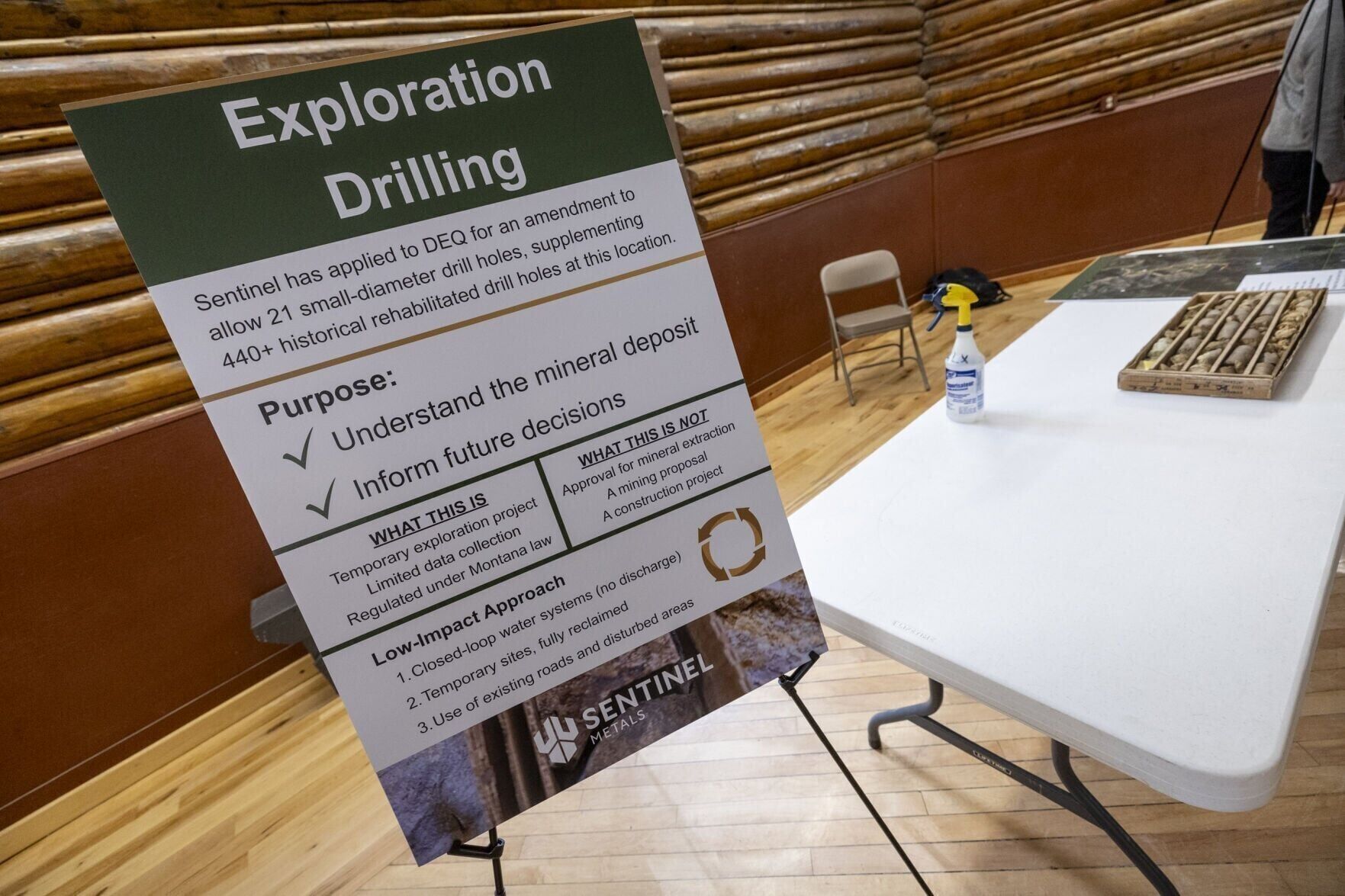
“I think the community needs it, and it’s been extremely blown out of proportion, for what they’re doing,” said Zach Muse, the chief of Lincoln’s volunteer fire department. Like Sentinel company officials at the event, the fire chief noted that current plans only call for exploratory drilling, not extraction.
“To drill, it’s different, and I think if we get to the point where they do an actual mine, we’ll look at it again,” he said.
Muse applauded Sentinel for its recent moves to boost its profile in the community, including donating thousands of dollars to his fire department and to the town’s fund for its annual Fourth of July fireworks display. He acknowledged some mining companies “leave a mess” behind, but said that just means the state environmental agency and locals need to hold Sentinel’s feet to the fire.
“If they’re going to do it responsibly, then I’m all for it,” Muse said.
For others, regardless of the economic promise, there’s no new mine they could support.
“We’ve had a mine here before, it killed the river,” Lincoln resident Ellen Schouten said. “Now they’re back and it’s the same song and dance.”
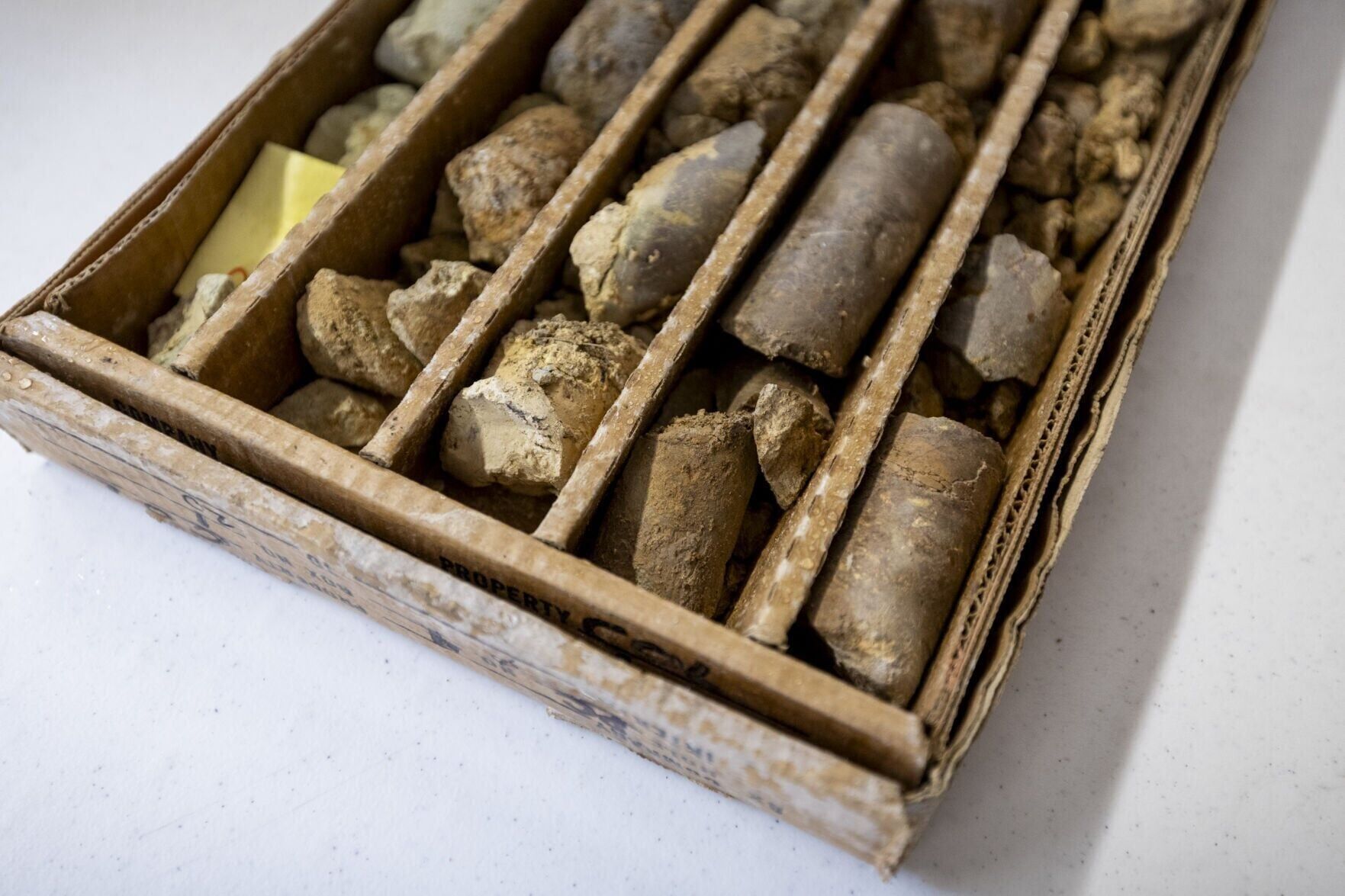
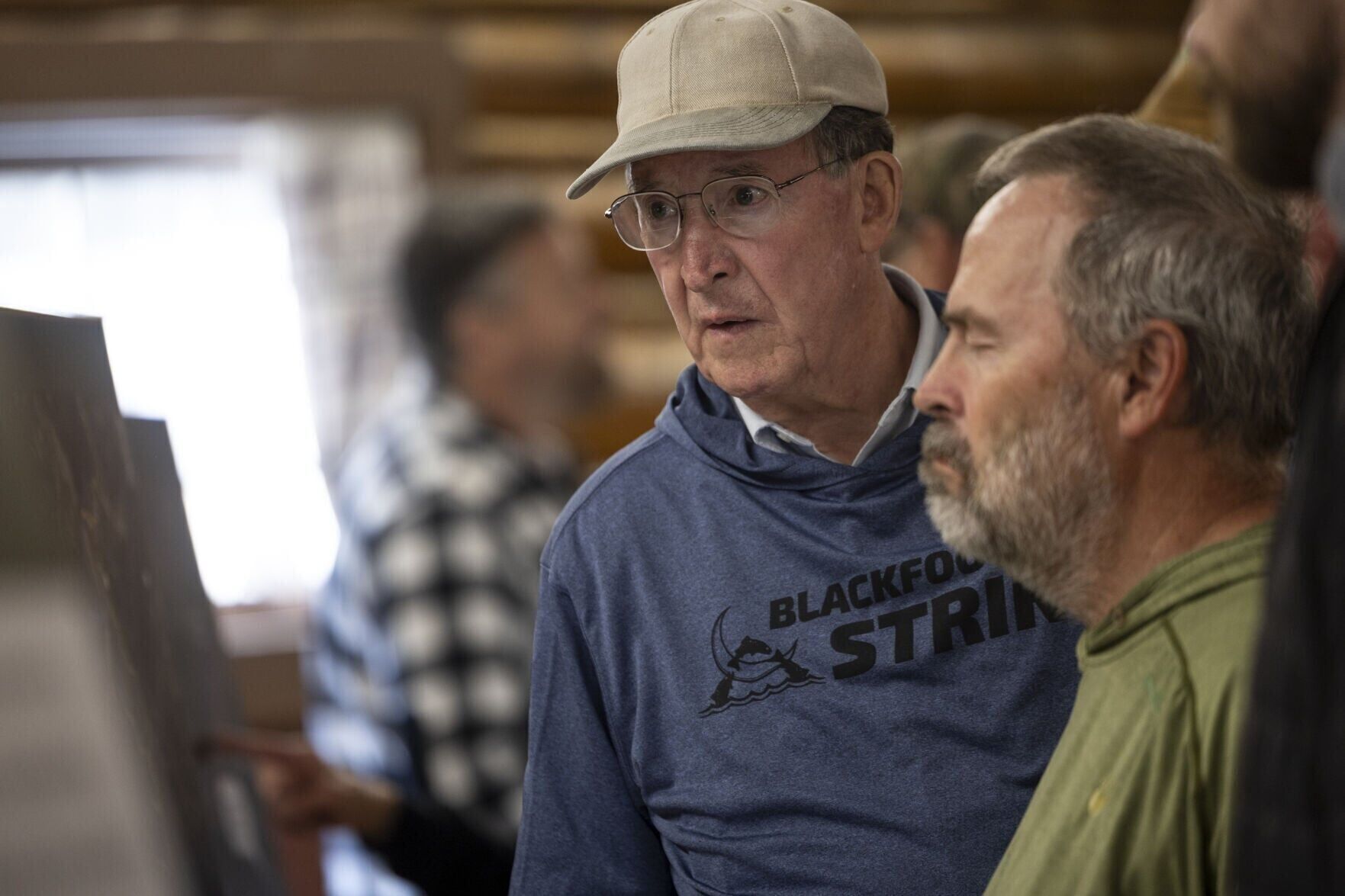
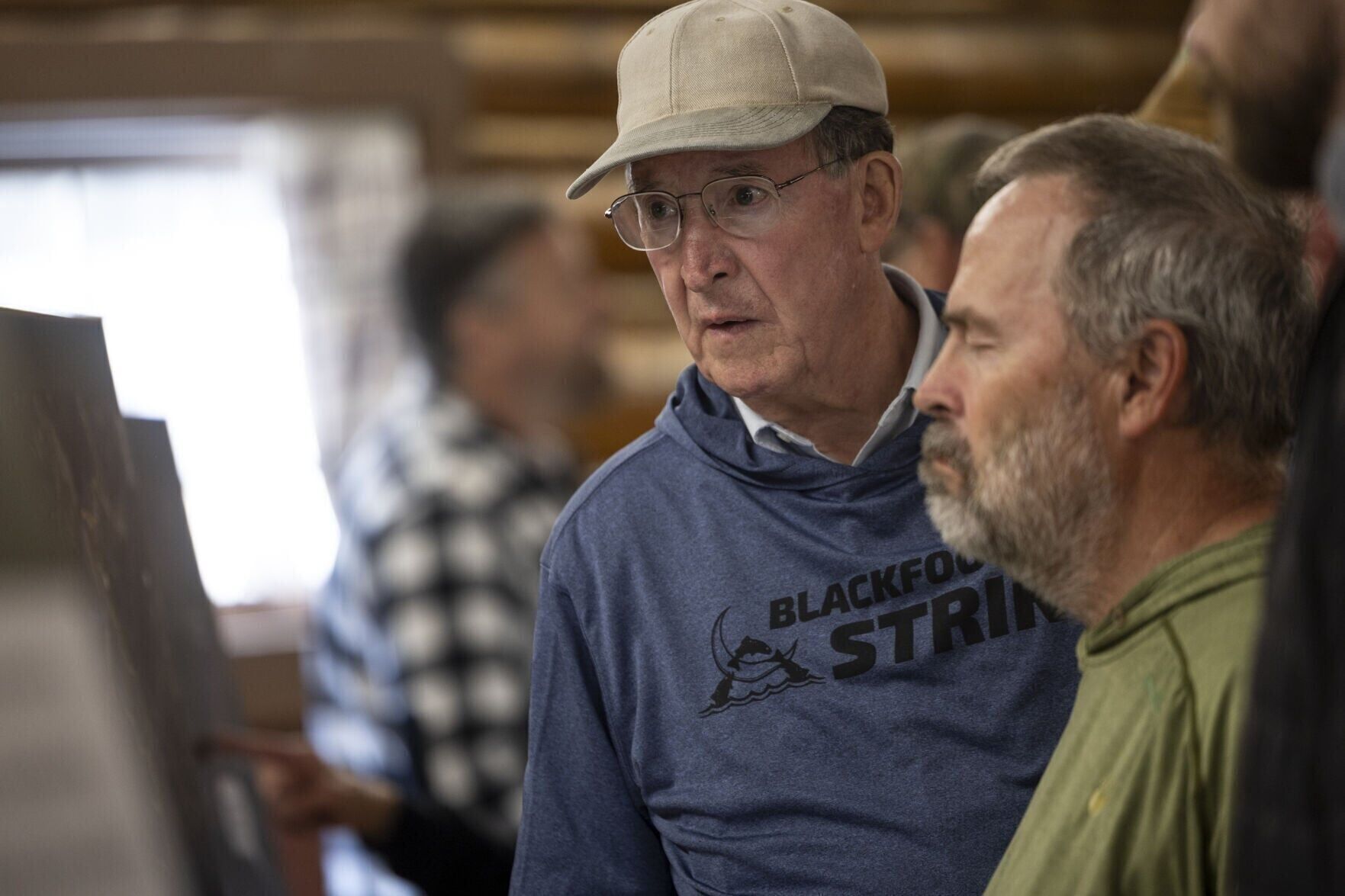
The disaster at the former Mike Horse mine loomed large for many who attended Tuesday’s meeting. Standing by a table displaying core samples similar to the ones the company hopes to drill in the coming months, Missoula resident John Boland was quick to rattle off several more cautionary mining tales from the state’s recent past.
“Some mining would bring some good jobs, but it’s a two-edged sword,” Boland said, adding that historically, “these companies come in, take what they want, and leave.”
Boland grew up in Great Falls, regularly hiking, fishing and swimming in the Blackfoot and nearby public land. After serving in the military, he worked more than 40 years at the Roseburg particle board plant in Missoula. Now retired, the 80-year-old remains a frequent visitor to the storied trout waters of the Blackfoot.
“I don’t want to see any more devastation up there,” he said.
Next steps
Having accepted an invitation from the mining company, state DEQ officials also manned a table at Tuesday’s open house, providing information about their ongoing permit review and inviting residents to submit public comments.
Once the public comment period closes next week, the agency’s next step is to review those responses and potentially modify the draft environmental assessment before issuing a final permit for exploration. Those permits don’t require the state to hold public hearings, and DEQ Mining Bureau Chief Eric Dahlgren said they don’t have any plans to.
Ben Catton, a policy associate with the Montana Environmental Information Center, said he was disappointed the agency wasn’t giving community members a chance to directly question company and agency officials in a forum setting.
“I was hoping they would address the community directly,” Catton said. “Nobody gets the full story being herded from tabletop to tabletop.”
In particular, he said he’d hoped to hear more specifics about how Sentinel would go about mining gold from its claims, since different mining and processing methods entail different environmental risks.
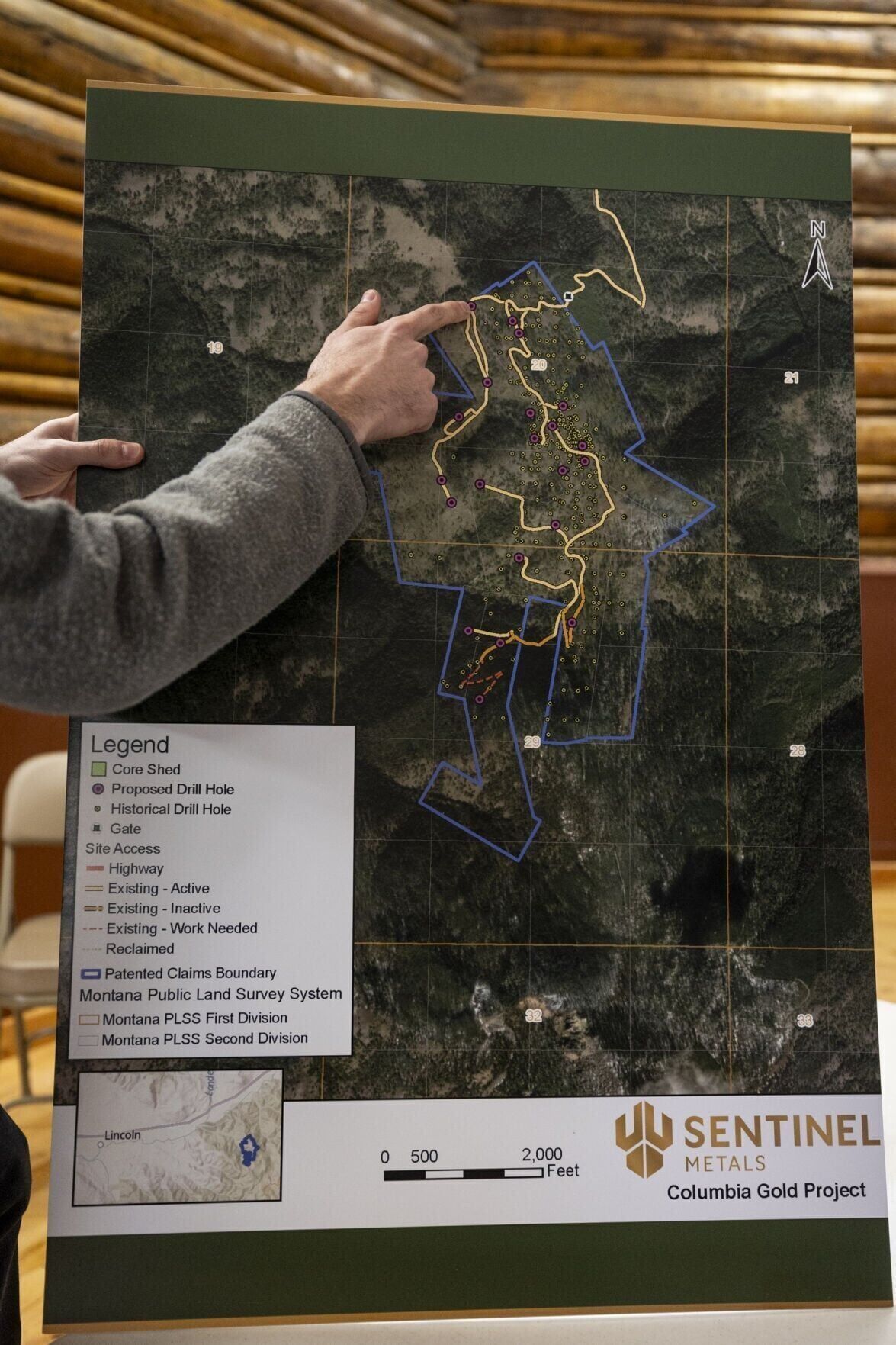
Company officials stressed throughout the meeting that the only work they’re currently proposing is go drill 21 new holes to extract core samples from the ore body — each about 1.5 inches in diameter, with total surface disturbance limited to 1.5 acres.
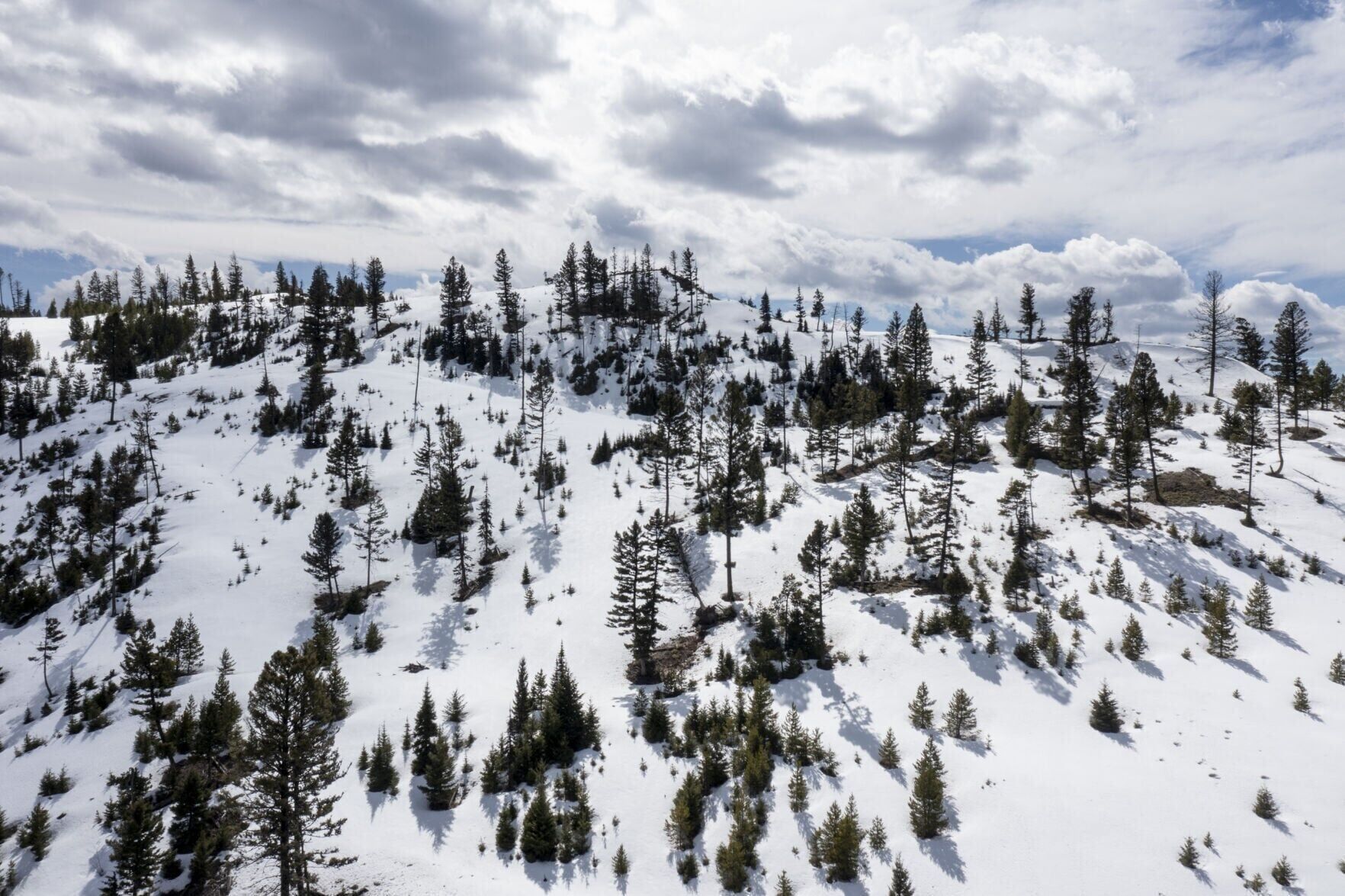
Bearing the historic scars of dirt roads and about 400 existing drill sites, the 435-acre island of private property sits in a mountainous area surrounded by Helena Lewis and Clark National Forest land, 2 miles south of the Blackfoot River. While it holds mining claims on adjacent national forest land, Sentinel’s proposed work is currently limited to the private property.
The 21 new drilling sites would amount to a relatively minor disturbance at the property, which Sentinel Executive Director Simon Dahrouge and others stressed is the only work being planned at this point. Herbert, the Sentinel CEO, said the proposed exploration would take about a month to complete and said it will be followed by a three- to six-month analysis, potentially followed by additional exploratory drilling.
Breaking ground on a potential mine would take seven to 10 years, he said, following a suite of environmental and economic feasibility studies. While Dahrouge said his company’s goal is to keep any future mining operations underground, Herbert declined to characterize his vision for what a mine could look like, if they determine it makes economic sense.
“The landscape changes so much, whether it be extraction technologies, whether it be commodity prices, whatever it might be, if I was to suggest where my mind’s at, in 10 years time it could end up being completely different,” Herbert said. “We all know what we’d like to get. What’s appropriate, these guys (the DEQ) will decide. And that could go from underground to above-ground, it could be processing around the corner, it could be no-water. There’s a whole heap of ways you could do it. But until we get through it we just don’t know.”
Catton suggested that might not be entirely true, pointing to Herbert’s remarks to investors in a November webinar. In it, the CEO acknowledged that understanding the quality of the deposit will require more drilling, but he also characterized its potential as “extraordinary,” “exciting” and “unbelievable.”
“Out of the other side of their face, they’re saying this is just a little poking around to see what the ore quality is,” Catton said.
Jeff Coleman, a lifelong Lincoln resident who has spent his career as a mine foreman and driller, wants to see a new mine opened as soon as possible.
“Property taxes are out of control, schools are hurting,” he said. “You’ve got to have some industry here for a tax base. You can’t depend on tourist money.”
He doesn’t spend much time worrying about another Mike Horse disaster.
“That mine started 100 years ago,” Coleman said. “The laws that we have on the books now save the animals, save the environment, save people.”
Herbert promises his company would abide by the highest environmental standards, and has assured investors there won’t be any “cutting corners” under the regulations. But he acknowledged on Tuesday the mining business still carries risks.
“We have come a long way,” Herbert said. “It is risk-free? It’s not risk-free. Nothing’s risk-free.”
This story has been updated to include the correct end date for public comment on the draft environmental assessment.


Comments ()