
Great blue herons return to Deer Lodge Valley rookery for spring breeding season
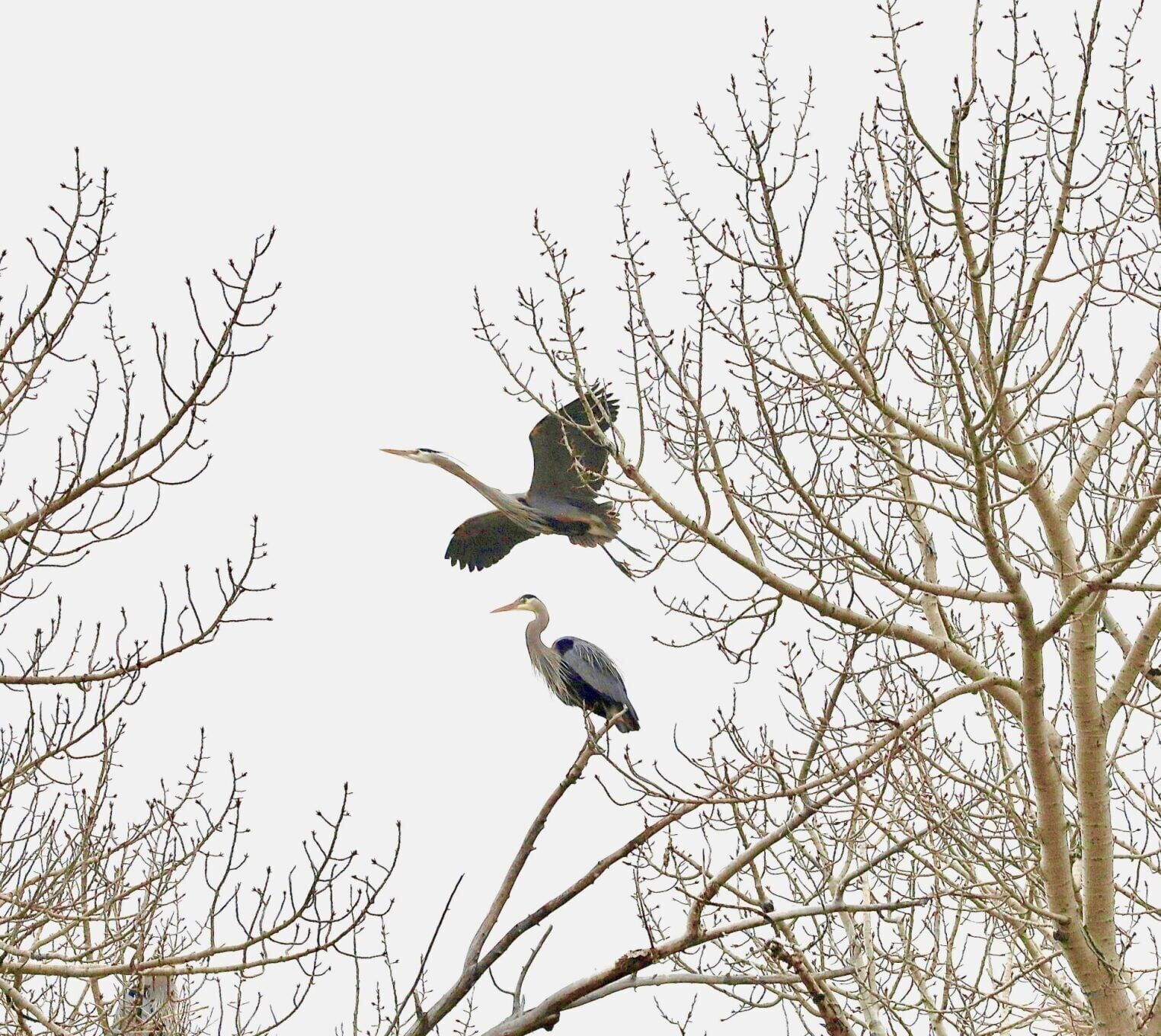
Great blue herons grace the skies, trees and streams in the Deer Lodge Valley as the birds return each spring to breed.
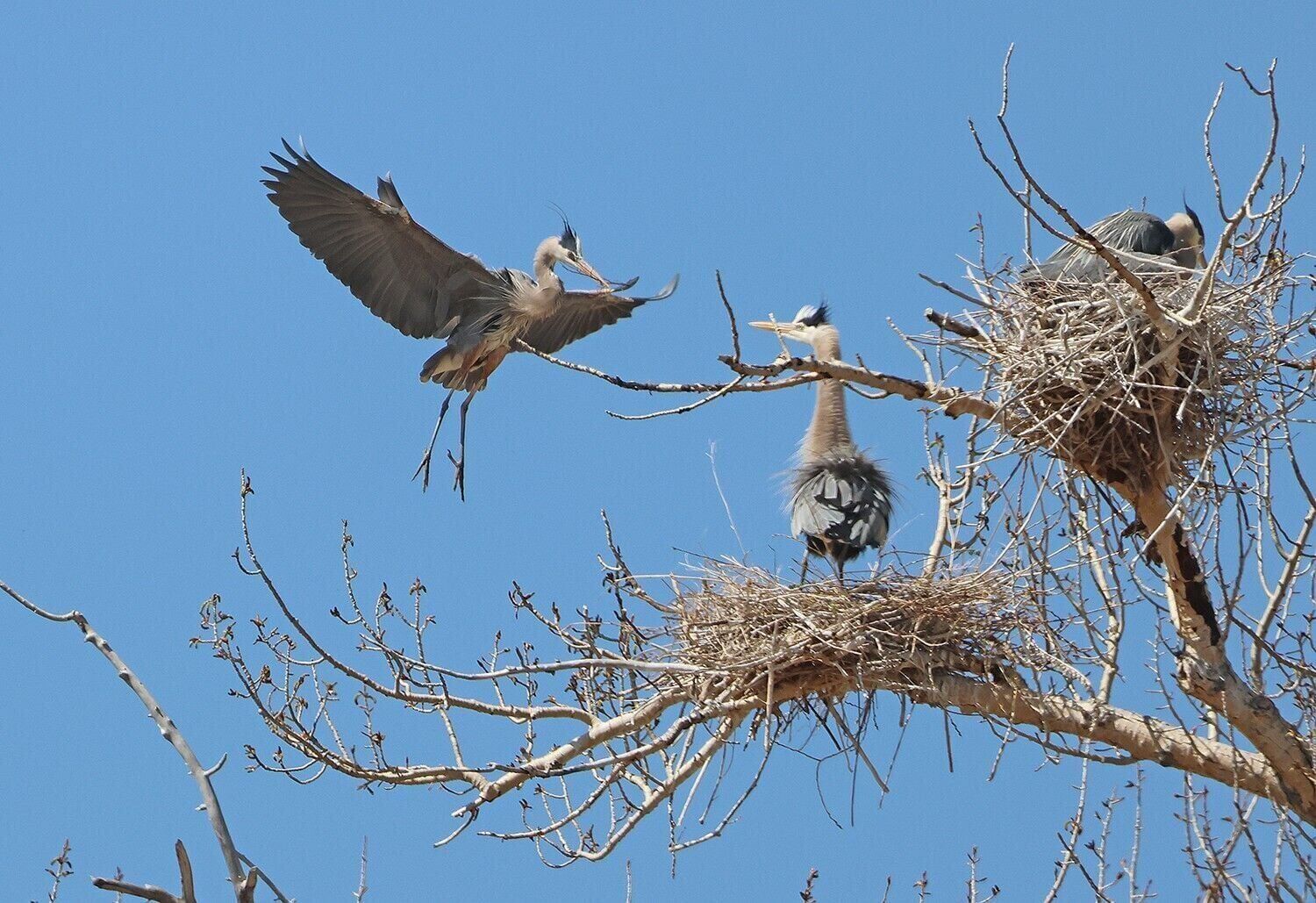
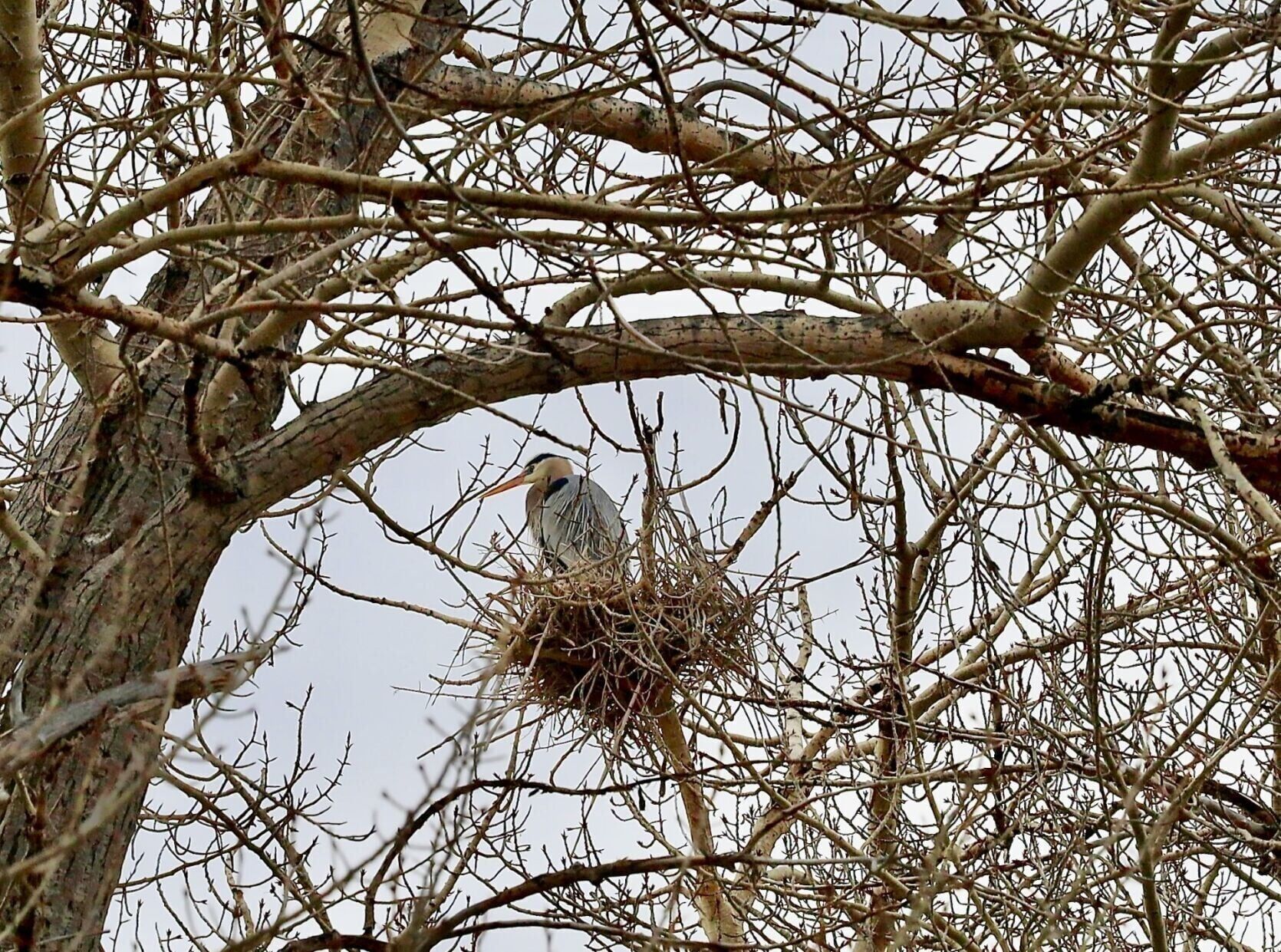
Herons typically build nests high in the trees, which holds true for the regional rookery.
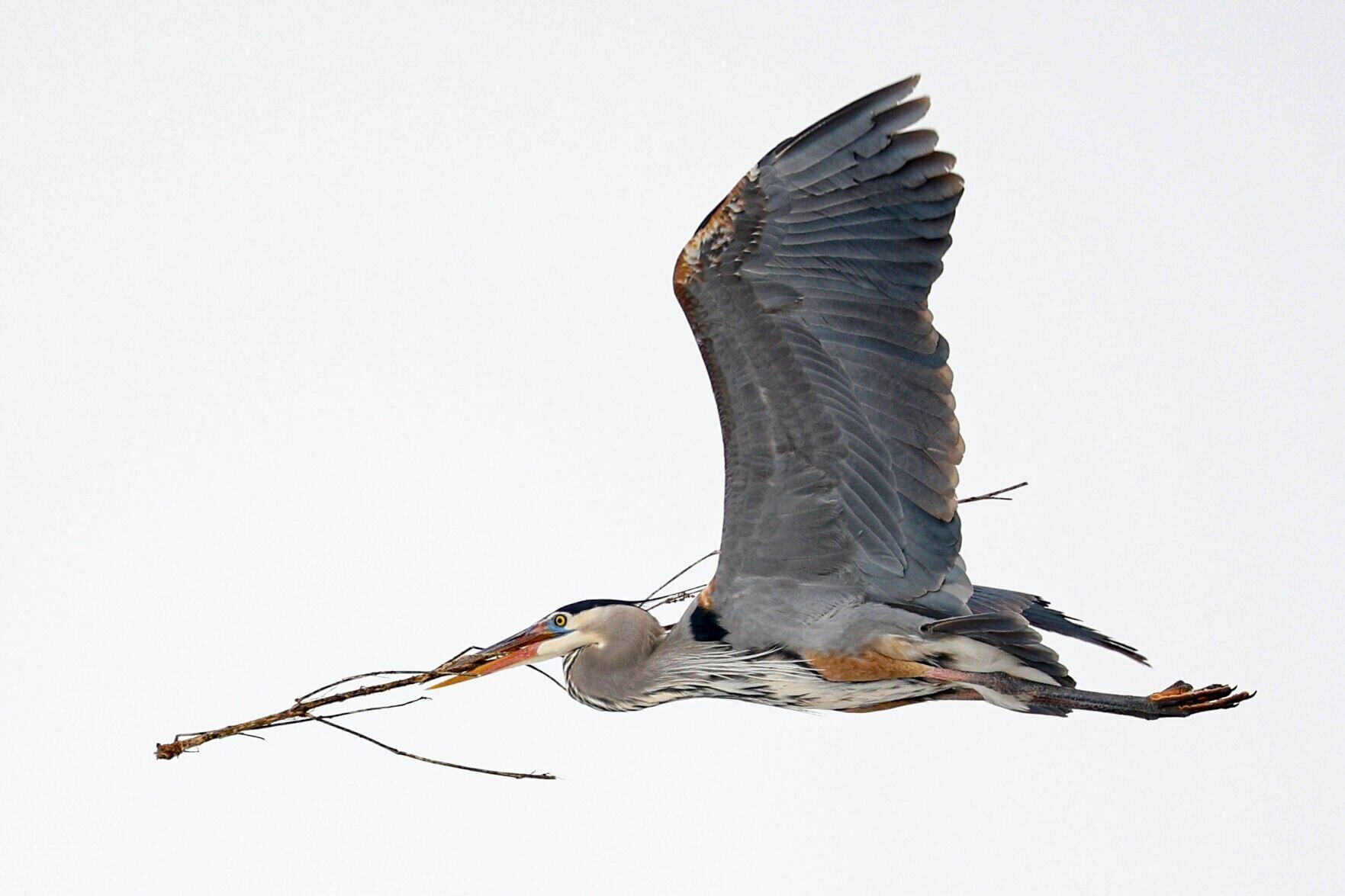
“Male great blue herons collect much of the nest material, gathering sticks from the ground and nearby shrubs and trees, and from unguarded and abandoned nests, and presenting them to the female,” reports the Cornell Lab of Ornithology.
Great blue herons are monogamous during the breeding season and then all bets are off.
From their busy rookery in the Deer Lodge Valley, the herons disperse to feed on fish, amphibians, reptiles, crustaceans, small mammals, insects and other birds.
The late Wayne Hadley, a fisheries biologist for Montana Fish, Wildlife and Parks, used to playfully shake his fist at great blue herons and osprey flying overhead for eating fish from the Clark Fork River and other waterbodies in his territory.
The parents regurgitate partially-digested food into the nest to feed their chicks. Great blue herons model co-parenting. Parents take turns feeding chicks and remaining with them at the nest.
The species, described as majestic by the Cornell Lab of Ornithology, also inhabits the works of countless poets, including Mary Oliver and Wendell Berry.
Oliver waxes poetic about “the long-necked, long-bodied heron” with “smoke-colored wings.” Berry mentions the bird in his poem “The Peace of Wild Things.”
In literature, the birds are said to symbolize stillness, patience, solitude and meditative calm.
Christie Holmgren, a birding expert, photographer and author in Deer Lodge, responded.
“I’m not familiar with any of the poetic references, but herons are quite elegant, graceful and beautiful,” she said. “That should be enough to inspire poetry.”
The great blue heron’s dagger-like beak and its motionless hunt help it catch prey.
“They may move slowly, but great blue herons can strike like lightning to grab a fish or snap up a gopher,” reports the Cornell Lab of Ornithology.
The Cornell Lab says the great blue heron, though large in size, weighs only 5 to 6 pounds, partly because of the bird’s hollow bones.
The birds have good night vision and can hunt both day and night.
Daryl Alm, a digital creator in Virginia, wrote, “The Great Blue Heron moves like a quiet poem written across water and reed, each moment a stanza of stillness and grace. In the golden marsh, it stands poised against a wall of sun-bleached cattails, its slate-blue feathers shimmering like brushed steel in the morning light.”



Comments ()