
Guide to Held v. Montana: A landmark climate case
A landmark court case decided in 2023, known as Held v. Montana, has drastically reshaped how the state's policies attempt to address greenhouse gas emissions, climate change and the resulting impacts on the state's residents.
What follows is a brief guide to the Held case and how it continues to impact Montana's energy and environmental policy. We've also included the latest updates on related cases that continue their journeys through Montana's courts.
What is the 'Held' decision?
The case was filed in March 2020 by 16 young Montanans, including lead plaintiff Rikki Held. With representation from national environmental law firm Our Children's Trust, the case was similar to many the group filed across the United States in recent years.
But after three years of legal wrangling in Lewis and Clark District Court — based in Montana's capital city of Helena — the Held climate case made national headlines when it became the first of those to go to trial.
A seven-day bench trial in the summer of 2023 attracted international media attention and included expert testimony from globally renowned scientists. Many of the young plaintiffs also took the stand to describe how a changing climate was impacting their lives, their families and hopes for their future.
Plaintiff attorneys used that testimony to take aim at Montana's law forbidding its agencies from considering greenhouse gas emissions. They argued the law resulted in additional planet-warming gases, like carbon dioxide, that were disrupting the global climate and resulting in worsening heat waves, more intense wildfires and smoke and other negative impacts on the young plaintiffs.
Defendants Gov. Greg Gianforte and several state agencies, represented by Attorney General Austin Knudsen's Department of Justice, argued Montana's contributions to climate change amounted to a drop in the global bucket. The effects of a changing global climate on the young Montanans, they said, couldn't be linked to those Montana-specific emissions.
Notably, the state's attorneys, representing the governor and state agencies, acknowledged before the trial that "there’s a scientific consensus that earth is warming as a direct result of human GHG emissions, primarily from the burning of fossil fuels."
Despite that admission, Knudsen has continued to dismiss "woke climate propaganda" in public statements.
Two months after the trial, Judge Seeley issued a decision in favor of the plaintiffs and struck down a state law at the center of the legal challenge. Seeley's ruling affirmed, for the first time, that Montana's constitutional guarantee of "a clean and healthful environment" extends to a stable climate system.
Seeley's ruling also stated that Montana's government must consider how its actions, such as issuing permits for new sources of air pollution, highway construction or other projects, will contribute to climate change.
The ruling was hailed as a historic win for climate activists, while some in the legal community believed it would reverberate beyond the state's borders.
What happened after Held?
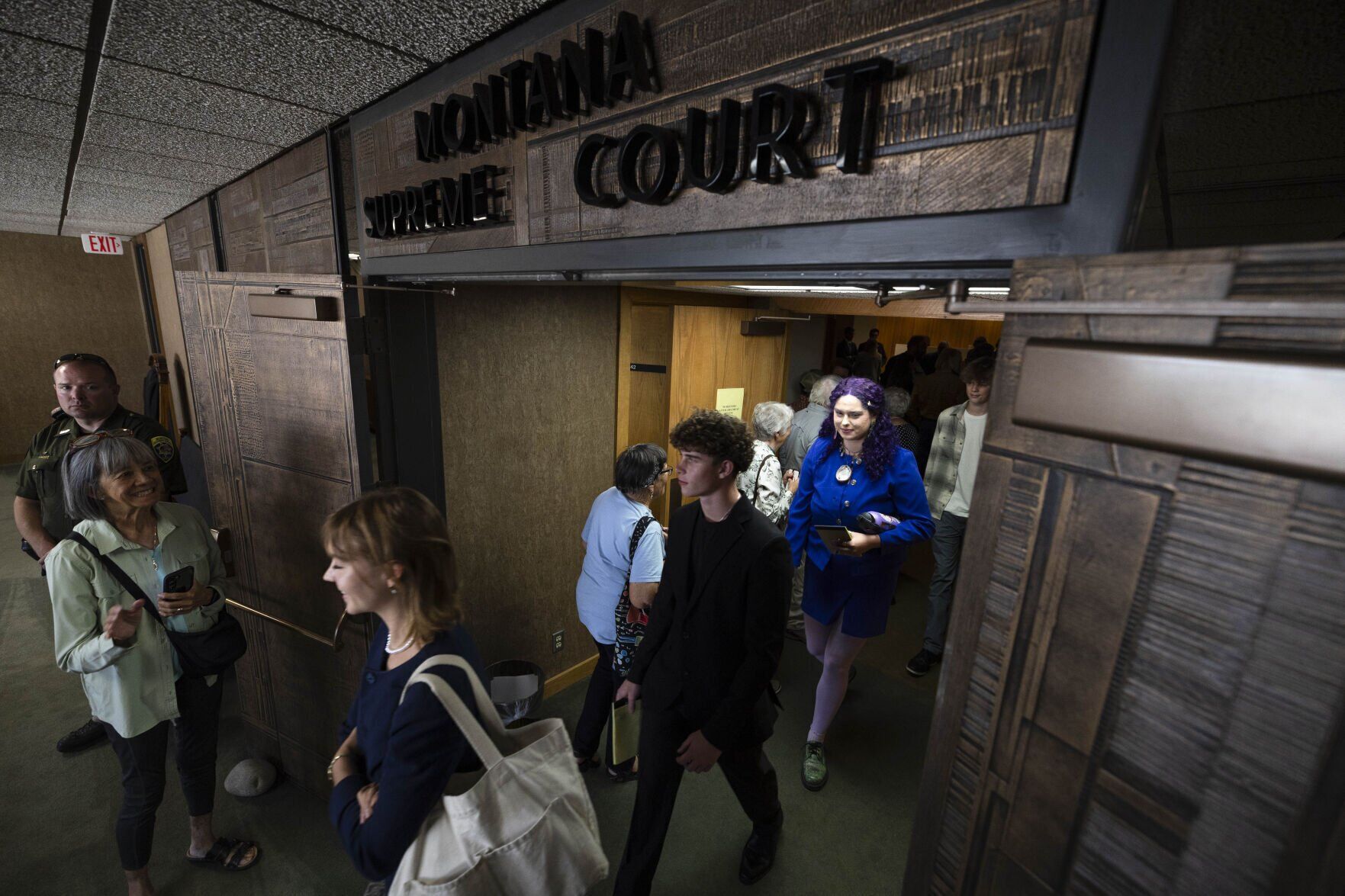
The state's Republican leaders quickly challenged Seeley's decision. But in a 6-1 decision in December 2024, the Montana Supreme Court upheld her ruling, effectively ending the case about five years after it was filed.
Squabbles over attorney's fees continued until September 2025, when the plaintiffs were awarded nearly $3 million in costs for their efforts.
More substantively, the high court's decision came just weeks before the Montana Legislature's 2025 session began. Republican legislators advanced a package of bills aimed at bringing state law into compliance with the new legal landscape. Gov. Greg Gianforte signed them into law in May.
But many Democrats and outside organizations criticized some of those bills as not going far enough and amounted to noncompliance with the court orders.
One of those new laws required the Montana Department of Environmental Quality to issue guidance for state agencies to consider the impacts of their decisions on greenhouse gas emissions. That guidance was finalized in January 2026, although some have argued they still don't go far enough to gauge the indirect effects of permitting.
Held 2.0
Many of the same youth plaintiffs from the original Held case, again represented by Our Children's Trust, filed a challenge (billed as "Held 2.0") to three of the new laws with the Montana Supreme Court in October 2025.
The high court declined to hear it, and the plaintiffs re-filed the challenge in Broadwater County District Court in January. Judge Kathy Seeley is also overseeing the new case.
The lawsuit argues that despite the district and Supreme courts' rulings in the original Held case, the state has continued to shirk its responsibility to fully investigate the climate effects of its actions.
Lighthiser v. Trump
In a separate federal case in 2025, 10 of the 16 plaintiffs from Held joined with youth from around the country to challenge energy policies under the second administration of President Donald Trump. They took aim at several executive orders promoting fossil fuel production and consumption.
Unlike Montana's Constitution, however, the U.S. Constitution contains no guarantee of a "clean and healthful environment," giving the plaintiffs less room to argue their rights are being violated.
Despite a parade of nationally and internationally renowned experts on climate change and policy, a two-day hearing in Missoula in September did not convince U.S. District Judge Dana Christensen to pause Trump's policies. The plaintiffs could not overcome a prior ruling from the 9th Circuit Court of Appeals, he wrote in an order the following month.
That case is also ongoing. The plaintiffs appealed Christensen's ruling to the 9th Circuit in January, with a response from the government due in February.


Comments ()