
Hamilton school district says levies are essential to avoid staff cuts, improve safety
Local school districts are asking their communities for funds through levies to support school safety, and state lawmakers are beginning to discuss possibly drafting school safety legislation.
School budgets are tight, with curriculum subscription costs and inflation rising. But budgets are also tight for many taxpayers and fewer voters have approved levy requests on average in recent years.
Whether a bill for state support for school safety is drafted — and whether funding is attached to a proposed bill — is still to be determined. But some legislators are already expressing hesitance.
Not asking for bells and whistles
School districts receive 80% funding from the state and must ask voters through levy requests to get to 100% funding.
The Hamilton School Board voted earlier this year to put two levy proposals before the voters: one technology levy for $430,000 and another school safety levy for $475,000.
Superintendent Dave Thennis said this isn’t for anything new and shiny. It’s intended to maintain operations and help the district avoid staffing cuts.
“The number one thing we need in a classroom is a teacher, that really is at the heart of all of this,” Thennis said.
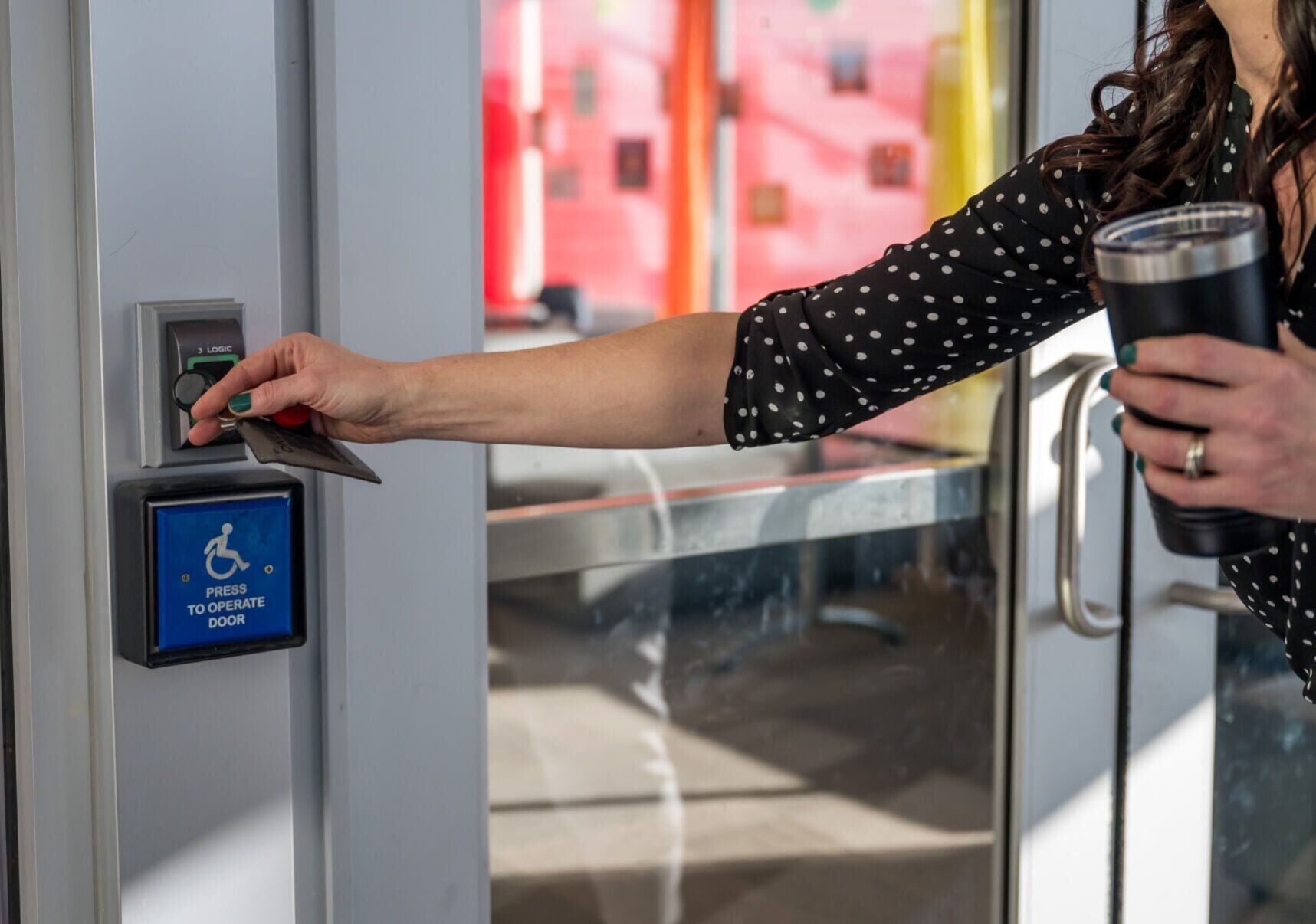
When schools don’t have the funds for essentials like curriculum expenses or safety infrastructure like key fobs, they have to use money from the general fund to meet those needs.
That is the same fund used to pay teachers, and because teacher salaries and benefits make up the vast majority of a district’s budget, diverting funds makes staff more vulnerable to cuts.
“That’s a tough spot to be in,” Thennis said.
During a December windstorm, Daly Elementary lost power. Principal Ericka Dowd told the Ravalli Republic a backup generator would have helped keep the school running like normal. School staff found creative ways to feed kids lunch and keep them safe, she said, but not much learning happened that day as they had no power.
“Teachers were so creative, they were running their computers off of their hot spots and doing what [they] could,” Dowd said. “But it definitely wasn't business as usual.”
Technology is also embedded in school curriculum, but it is getting more expensive.
“We're piloting a new reading program and just the online component — that you cannot teach the program without — costs $3,600 a year,” Dowd said.
Many of these online programs run on subscription models, and like other services such as Netflix and Adobe, prices have increased in recent years.
Students and parents now expect some of the technological advances of recent years, such as teachers uploading grades online and schools sending out campus messages, Thennis said.
“We used to just find out what the grades were at the end of the quarter,” Thennis said. “Now information is available to people much quicker, and those things cost money.”
Daly Elementary technology teacher Alexis Wheat said the tools teachers use to teach have changed in her 27 years as an educator.
“We can still use pencils, paper and scissors, but more importantly, we need computers and software and all those things to do more in teaching kids,” she said.
Making the case to voters
School boards across Montana often agonize over how to communicate to voters how approving levy requests is essential to making a local school district budget whole.
The Hamilton board discussed thoroughly whether it was wise to put two levy requests on the ballot for fear voters will choose one over the other — or neither.
But board members also understand how voters see they have an option to not raise their own taxes, and for some that’s what matters.
A recent study from the Montana School Board Association found these levies have passed less in recent years, with rates going from 90% in the pre-2008 recession to in some cases only 50% in the last three years.
Hamilton voters rejected two bond levy requests in recent years to help move students out of the current middle school and to renovate an existing district property to move them to.
Missoula voters have a solid track record of approving voted levy requests, but last year rejected a $100 million high school safety levy proposal.
There are also strict rules around when and how school district employees and board members can advocate for voters to support a levy request.
Scott Chook, president of the Missoula Education Association, said he started a political action committee to be able to fundraise a campaign to advocate for Missoula’s two levy proposals on this May’s ballot called Yes for Missoula Kids.
The committee was formed March 20 and has no financial reports as of Tuesday, according to the Commissioner of Political Practices website.
Lone Rock School District is hosting two Question and Answer sessions after school hours to help voters understand their two levy requests on the May ballot. The first session is Thursday at 5:30 and the next is April 1 at 6 p.m.
Thennis said he’d like to see the state fund curriculum, technology and safety funding to ensure there isn’t a fluctuation in access to resources.
“We wouldn't ask a carpenter to build a home and not have tools to be able to do that, or a miner to go mine without the tools to be able to do that,” Thennis said.
Would the state provide funding for school safety?
The Montana Safe Schools Center out of the University of Montana presented recommendations to the Education Interim Committee last week for what could be included in possible legislation to address safety needs in Montana schools.
One recommendation was to require school districts to complete a comprehensive site assessment, which the center provides for free, where they document everything from surveillance cameras to how school doors lock and make recommendations like putting one way film on the windows so people outside can’t look in the school.
In survey responses from 152 school districts of various sizes and 15 private schools, nearly half said it’s been three years since their district has done a comprehensive site assessment or they’ve never done one at all.
The center recommended the legislature fund a school safety tip line, as more than 70% of districts responding to the survey did not have one.
Nearly 70% of survey respondents said their district did not have a Federal Emergency Management Agency (FEMA) inspired emergency operations plan, which Tina Hayes from the center said was important to be able to access federal relief dollars more quickly.
Recommendations also included allocating funding for schools to improve campus and classroom safety for things like a double locking vestibule, which is a second door upon entering a school where visitors need to be buzzed in to enter.
“Whether I'm a parent picking up my child or I'm a person making a delivery, it doesn't give me free access to the school,” Hayes said.
Other recommendations include requiring districts to train with local stakeholders like law enforcement to ensure there’s a plan in case of an emergency, and collect school climate data to address bullying and other student needs.
A bill sponsored by Butte Democrat, and then state senator, Edith McClafferty passed in 2023 already requires schools conduct safety drills and both create and annually review a school safety plan.
Staff is working with the center to draft potential legislation for the committee to consider based on these recommendations.
Two advocates during public comment, Rob Watson with the School Administrators of Montana and Kim Popham from the Montana Federation of Public Employees said if the committee was going to draft legislation it was important to include appropriation for districts to make it possible.
Watson said Utah spent $800 million to $1 billion on their school safety legislation, recognizing the state has more students than Montana.
During a meeting the following day, Sen. Sue Vinton, R-Billings, said while that is “commendable” for Utah, she didn’t know if it was “realistic for Montana.”
It’s a matter of encouraging districts to make use of information from OPI and other agencies, Vinton said.
Senate President Republican Matt Regier of Kalispell said many of the recommendations could be done with “just communication.”
“Doesn’t need legislation,” Regier said.
Education Interim Committee Chairwoman Rep. Linda Reksten, R-Polson, said she felt the existing legislation on school safety wasn’t enough.
“God forbid, one of our children is in a situation that we will all regret,” Reksten said. “I'd like to see if we couldn't come up with something either amending Senator McClafferty's bill, or maybe we need something different, and that's where the legislative drafters, I think, give us some idea.”


Comments ()