
'Hard-hitting' conservative ad blitz roils Republican lawmakers ahead of heated primaries
Though it’s his fifth bid for the Legislature, Hamilton Republican Rep. David Bedey says this primary is the nastiest he’s ever seen.
His district for months has been inundated with mailers, radio spots and digital ads accusing him of “plundering” the state taxes alongside treasure chests and gold doubloons.
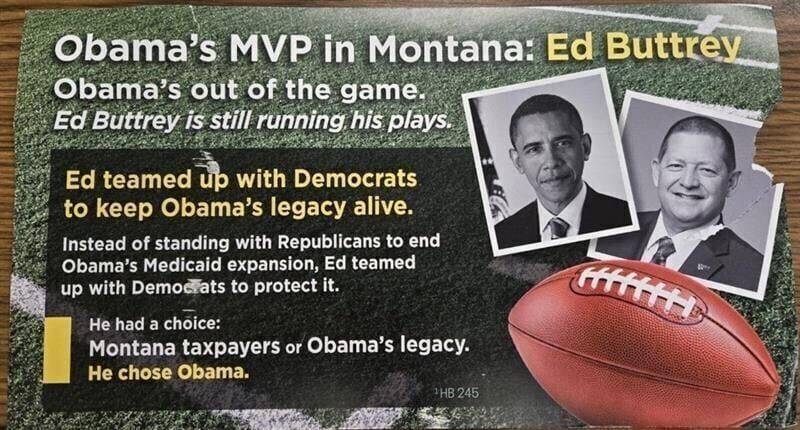
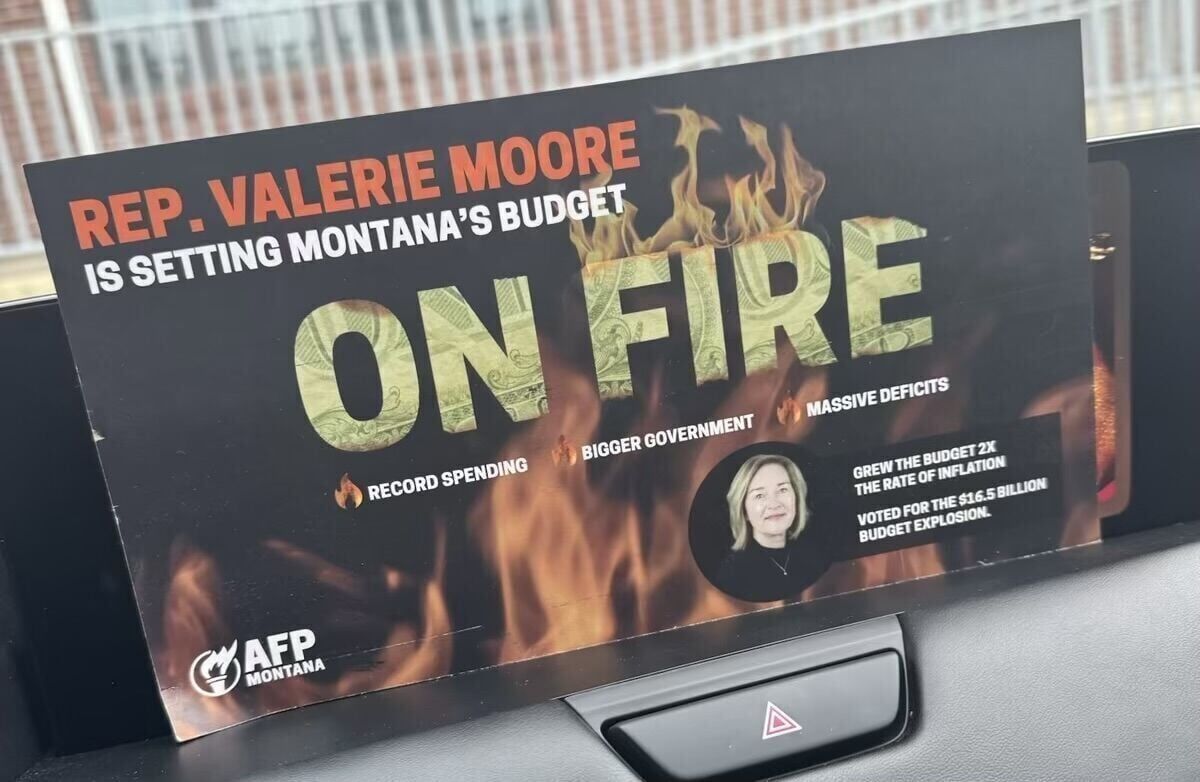
Others invoke the conservative bogeyman of a past political generation — former Democratic President Barack Obama — and his hallmark health care legacy. Some pull the alarm on Bedey for his votes during the last Legislature that they say set the state coffers “on fire.”
The materials arrived branded with the name and logo of Americans for Prosperity Montana, a longstanding antagonist in state politics backed by the conservative Koch network, a powerful coalition of donors and advocacy groups that spends hundreds of millions across the country on various initiatives under the Libertarian banner that often bolster Republican efforts. As a 501 c(4) "social welfare" organization, AFP is notorious for not disclosing its donors.
The tactics pushed Bedey to launch door-knocking efforts earlier this cycle.
“Clearly AFP is spending a lot of money to spread its propaganda,” Bedey said last week. “I am concerned. It’s my hope that most Montanans will not be persuaded by a big money out of state special interest group who's meddling in Montana's elections.”
AFP-MT has been hammering generally moderate Republicans like Bedey, Rep. Ed Buttrey of Great Falls, Rep. Llew Jones of Conrad and Rep. Brad Barker from Red Lodge for their votes on key items like the 2025 property tax revisions, Medicaid expansion and state spending bills. The group slams them with mailers and digital ads, the scope of which is difficult to determine because this activity all falls outside the reach of the state’s disclosure laws.
Asked last month directly how much it has spent on this campaign, AFP-MT state director Jesse Ramos declined to share.
“That is something that we are not going to disclose,” he said in a recent phone interview.
This year in particular has seen a surge in politicking on state legislative races where the Montana Republican Party is working against a faction of GOP legislators it believes betrayed the party platform during the 2025 Legislature. Many of the same lawmakers the GOP wants to unseat are also being targeted by AFP-MT.
AFP-MT told the Montana State News Bureau it’s not working with the party, while state GOP chair Art Wittich declined to comment.
The operation has drawn the ire of Republicans targeted by the mailers and at least one complaint this month with the state commissioner of campaign practices. AFP-MT, meanwhile, has boasted about carrying out its donors’ intent by landing blows against certain lawmakers — who just happen to be running for office this year. That complaint was returned without action after Commissioner of Political Practices Chris Gallus determined AFP-MT had not run afoul of any state laws.
While none of its activity behind the mailers and digital ads must be reported through Gallus’ office, Facebook’s parent company, Meta, showed as many as 240 ads from AFP-MT were active during February, with thousands of impressions at a price of a few hundred bucks for each.
As for its efforts up until this point, Ramos said AFP-MT is not interested in big-dogging certain groups by flashing its price tags.
“At the end of the day, what we’re trying to do is we are trying to educate voters on how their elected officials voted on issues, and we’re really not trying to make a statement as to how big of a dog we are in the fight with the issue advocacy side of things,” Ramos said.
“It’s not an intimidation campaign,” he added.
'Hard-hitting' messaging
The AFP fever pitch has made its way to Montana’s northeasternmost corner as well, where freshman legislator Rep. Valerie Moore, R-Plentywood, cut short her winter stint in Arizona to return home to talk to voters and counteract the campaign flyers landing on their doorsteps. Moore is facing a primary from Scobey resident Linda Harmon.
“Not what I was hoping for, but expected,” Moore said in a text message. “I hate to think how bad it will get closer to the primary, but I will just continue what I’ve been doing, representing and talking to my constituents.”
And while Ramos contends his organization is not out to intimidate anyone, AFP-MT has not shied away from describing its tactics as aggressive.
At the GOP Winter Kickoff Event last month, AFP-MT’s deputy director, Henry Kriegel, gave a rousing speech to an 8 a.m. audience. He included a couple minutes about the organization’s mailers and told the candidates, donors and money bundlers sipping coffee that some messaging was going to be uncomfortable.
“Many of you have seen our mailers and our digital ads, and they are hard-hitting for a purpose,” Kriegel said. “Why? Because we want to capture the attention of voters. We want to honor our donor intent, who contributed to us, so that our mailers aren’t thrown in a receptacle, but get peoples’ attention.”
Asked by the Montana State News Bureau about donors he was referring to, Kriegel said he didn’t know them.
Ramos said in an interview the donors are those who broadly support the high-level principles that Americans for Prosperity makes central to its messaging, like limited government.
A promise to carry out donors’ intents and maintain their privacy may have played well to a Winter Kickoff crowd that included some people looking to open up their pocketbooks, but it’s been decried by several Republicans targeted in those mailers.
“Nobody really knows who is funding these guys. It’s hard to pin down who their interests would be,” said Rep. George Nikolakakos, a moderate Great Falls Republican running for an open Senate seat and facing a far-right primary opponent. “They’ve got a lot of loyalty to their unknown donors.”
Complaint rejected
On March 2, Ross Fitzgerald, a former Republican lawmaker from Fairfield and entrenched member of the GOP’s more moderate wing, submitted a complaint alleging AFP-MT violated state campaign practice laws.
He pointed to endorsements issued by AFP-MT in February that backed the primary opponents of Republicans targeted by the group’s run of advertisements as a sign that the efforts, together, amount to a campaign designed to defeat candidates.
“AFP-Montana has said the purpose of the expenditures is to hold certain candidates accountable,” Fitzgerald wrote in the complaint. “AFP-Montana is trying to hold these candidates ‘accountable’ by defeating them in the upcoming primary election.”
Most of the organization’s spending can be bucketed into two different campaign finance categories that determine whether and when it must be disclosed.
In his March 4 response declining to pursue a complaint, Gallus examined the organization’s actions as two parallel efforts.
One is “issue advocacy” spending, which can’t fund materials that explicitly tell someone to support or oppose a candidate. That’s where much of AFP-MT’s energy has been directed so far this election cycle and it doesn’t require reporting until 60 days before voters receive their ballots. Once those 60 days begin, even issue advocacy must be disclosed to the COPP. That window opened on Monday, March 9.
The other is “express advocacy” spending, which tries to get voters on board with certain candidates, triggering reporting requirements under electioneering rules.
Gallus found that AFP-MT spent no money to post the endorsements to social media. State law includes “paid” in the definition of “election communication,” so there was nothing to report.
“While future use or distribution via other mediums may require different analysis, as currently presented I cannot conclude these candidate endorsement posts to be paid election communications subject to reporting or disclosure,” Gallus wrote.
As for the remaining digital ads, Gallus noted they were published before Monday’s deadline, and so they also do not fall under Montana’s disclosure laws.
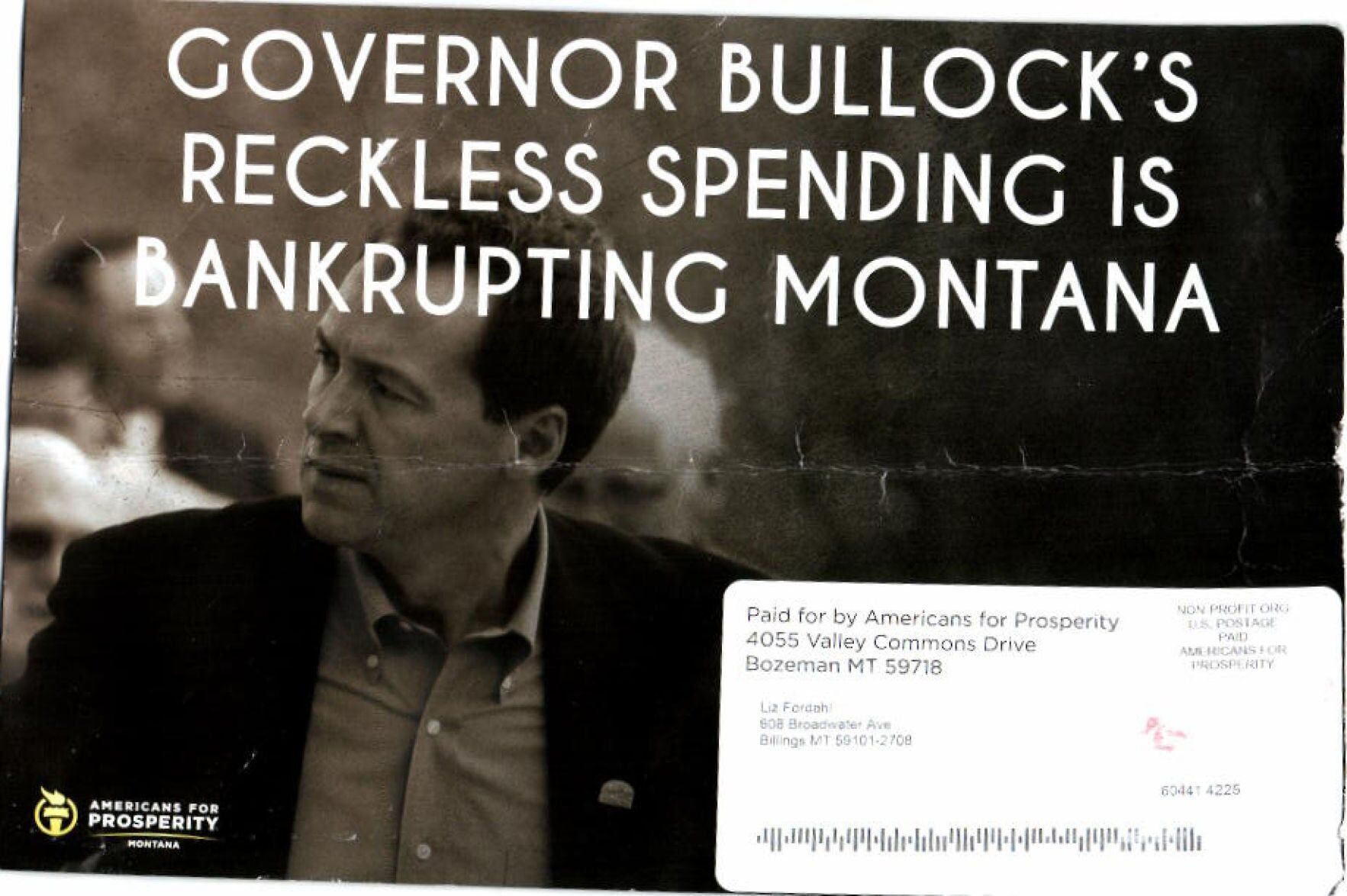
The organization fended off a complaint similar to Fitzgerald’s in 2016 when a Billings resident alleged postcards leveling claims of “reckless spending” by then-Gov. Steve Bullock should’ve been subject to disclosure. The political practices commissioner at the time dismissed the complaint, also citing the 60-day line in the sand.
It’s a maneuver that allows AFP-MT to make a splash with voters without having to say how much they’re spending or where they’re spending it, all within legal bounds.
AFP-MT has, in the past, abided by state disclosure laws after the 60-day window begins. State records show AFP-MT spent $75,860 in state elections in 2024 and $413,576 in 2022.
Alignment, not coordination
There’s clear overlap between AFP-MT and the state Republican Party in the priorities laid out this cycle, namely property taxes and the state’s final budget numbers. In AFP-MT’s legislative agenda published in December, the organization also makes a case for allowing partisan politics in judicial elections, one of the state GOP’s top priorities.
Votes from the Republican faction that has fallen out of favor with the Montana Republican Party and is in AFP-MT’s crosshairs largely determined whether or not those policies for the state GOP passed or failed in 2025.
State law and administrative rules in Montana elections doesn't clearly make coordination between AFP-MT and the Montana GOP illegal, the same way it does for a committee like AFP-MT to coordinate directly with candidates.
Wittich, chair of the Montana Republican Party, declined to answer any questions for this story.
Ramos, however, said the two organizations are not working together.
“There’s zero coordination between us and the Republican Party, whatsoever,” he said. “This go-round, they might like our choices but that certainly doesn’t happen every time.”
Last primary season, he noted, AFP-MT endorsed Republican newcomer Tim Sheehy in the U.S. Senate race. Many in the state Republican Party were loyal to then-Congressman Matt Rosendale, a firebrand member of the Freedom Caucus, until he withdrew from consideration. Nationally, AFP opposed Trump's 2024 reelection and spent $40 million on his primary opponent that year.
Timing is everything
On March 1, over 100 people had gathered at the Missoula library for a free screening of “Dark Money,” a 2018 documentary about campaign finance victories and violations in Montana politics. The film captured, among other things, a jury finding Wittich illegally coordinated as a candidate with political committees without disclosing the relationship.
Wittich was a state senator at the time. At the film’s conclusion, voters had elected a different Republican in the 2016 primary election.
The event was hosted by Transparent Election Initiative, a ballot issue campaign set out to block corporate spending in Montana’s elections.
Bedey joined Sen. Ellie Boldman, D-Missoula, on a panel after the documentary to talk about some of the parallels between the film’s elements and the current cycle. Bedey noted Wittich’s recent rise to the head of the state Republican Party and called AFP-MT, another prominent character of the film, his “nemesis.”
“I can’t prove that Wittich is coordinating with these people,” Bedey said. “But I know that Wittich stands between Americans for Prosperity and the candidates that benefit from this. I suspect … there’ll be no smoking gun. There’ll be no technical violation of the law. But what we have is an out-of-state organization that wishes to influence our politics.”
“If they succeed,” he continued, “... I think what you’re going to find is politicians in this state are going to take a lesson from this, and the lesson is you don’t mess with the party leadership if you want to get reelected.”
Correction: This story has been updated to correct the name of the ballot issue group that hosted a documentary in Missoula. The story has also been updated to note Wittich was found to have violated campaign practice laws as a civil matter.





Comments ()