
Hate speech condemned in Faculty Senate resolution
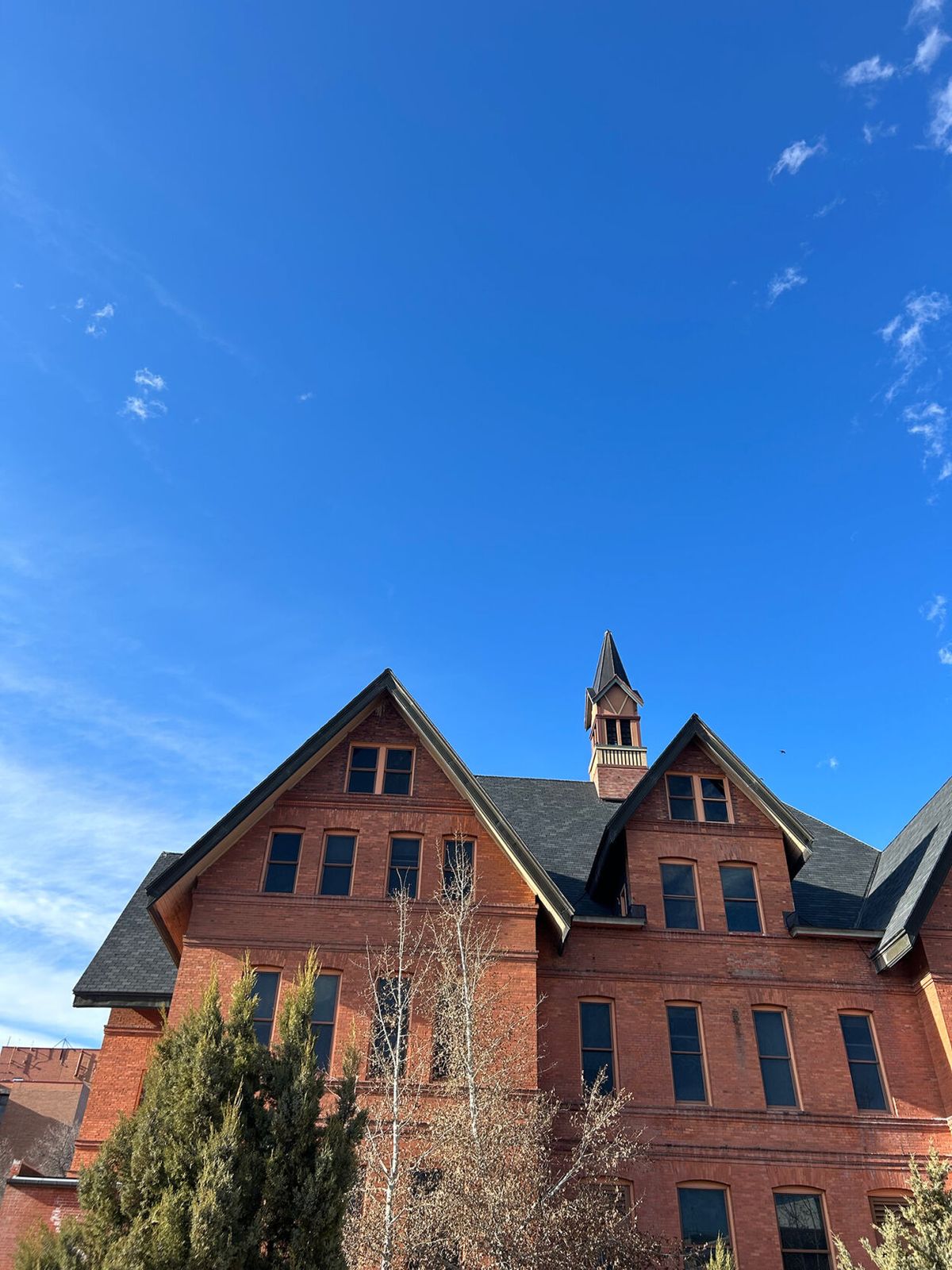
The Faculty Senate passed a resolution condemning hate speech last Wednesday, April 5, in front of a room full of students who expressed their frustration and personal experiences with MSU’s response to threats directed at LGBTQIA+ and BIPOC students.
The Faculty Senate is the governing body of faculty on campus and is composed of members from each department on campus. The senate regularly meets to determine policies, standards and procedures within MSU’s Faculty Handbook, supervise curriculum and improve communication between MSU faculty, administration and students, according to its website.
Normal proceedings during the April 5 meeting were altered from the beginning. Once the minutes had been approved from the last meeting, Jerry Johnson, a faculty senator and political science professor, suggested that public comment in the meeting should be moved from the end of the agenda to the beginning, given the large number of students in the room.
“These people have turned up to Faculty Senate because they're looking to the faculty,” he said. “And I think we owe it to them and I think it's a sign of respect to our students that we allow them to move to the top of the agenda.”
The motion was seconded and approved, and it was decided by the senate that this advance public comment should be limited to twenty minutes.
Students then moved to the podium to comment about recent hate speech on campus, including threats to MSU’s Queer-Straight Alliance (QSA) and individual students on campus.
Marquayvion Hughes, former diversity and inclusion director for the Associated Students of Montana State University (ASMSU) student government, said he is leaving MSU despite four years of working hard to succeed here.
“We deserve basic human rights, and aside from basic human rights, to not pay thousands of dollars to not be protected,” Hughes said. “So if you're going to charge me for tuition, at least make sure either I don't kill myself or someone else doesn't get the pleasure of killing me.”
Taryn Van Steeland, an ASMSU senator for the College of Letters and Sciences and a senior at MSU, said that even as an extremely high-achieving and involved student, she is struggling to keep going. She said she can’t get out of bed most days, doesn't feel safe in her classes and feels nervous to even pick up her phone in the morning because she is worried that something has happened to her LGBTQIA+ or BIPOC friends.
She then urged faculty to help protect students on campus. “You guys are our first line of defense. You bear the burden and the responsibility of caring for your students,” she told the Senate. “The administration and the school have mostly failed to defend us. You want to talk about access to education and time, place and manner? I don't have access to education right now because I don't feel safe in my classes and I don't feel defended.”
“I deserve better than that. These students deserve better than that. And we ask you that when we go to bat to defend our rights, that you stand by us, that you support us and that you take the side of your students,” Van Steeland said.
Faculty Senate Chair Jennifer Thomson explained in a statement to the Exponent after the meeting that the faculty interacts with students daily and cares deeply about all of its students. Every faculty member feels a profound responsibility to their students and wishes to help them as much as possible, she said.
“When students bring issues to faculty, we take our responsibility of connecting them with the appropriate resources on campus seriously. Most of us are not law enforcement officers, discrimination investigators or licensed counselors,” she said. “Still, we will always help a student connect with those resources — many faculty will even walk students to those offices to help with an introduction.”
During the first segment of public comment, an anonymous freshman political science student said students are leaving MSU due to safety concerns on campus. After the semester, they said, they will take their money and leave the university as well.
They said that they know this situation isn’t the faculty’s fault, because many of them have done their best to help students — but it’s time to do more. At this point, they said, the university has shown a disregard for students’ safety — in addition to treating their identities, which cannot be controlled, as a political argument instead of unchangeable facts.
“I spend my time here doing what the university should be doing — making sure students are aware of what’s going on, aware of the threats that have come up against many minority students and aware of the danger we face instead of learning,” the anonymous student said. “This is no longer a place of education for me and many other students here. It is a place of fear.”
Provost Robert Mokwa, who was present at the meeting, wrote in a statement to the Exponent after the meeting that the university has consistently lower crime rates than the surrounding community, according to annual security reports. MSU has to receive a report to begin an investigation, he wrote.
“In this particular instance, given the relatively low number of cases reported, we want to understand why some students are saying at this moment that they don’t feel safe,” Mokwa wrote.
“We agree with students: the investigation of crimes and protection from acts of violence are the responsibility of professionals at the university, it is not the responsibility of students,” he wrote. “Faculty and staff can assist in some situations, but in a limited manner. The university employs highly-trained professionals whose job is specifically to protect and to support our students.”
He said MSU will continue to offer students a high level of safety, security and support services, but that students must report issues.
“Unfortunately, if a student refuses to report an issue or to seek help, we end up in a cycle in which paralysis, rather than action, impedes the possibility of a successful intervention. It is not fair nor is it good for anyone,” he said. “If a student has specific concerns or recommendations to share with us, we urge them to share those with the responsible units. We are always ready to listen and to help.”
Mokwa also said that if a student, faculty, or staff member reports a threat, there is a well-established protocol that is activated by MSU, which is normally led by the University Police. He said there are many reporting mechanisms that students can use, including reports that can be made confidentially to UPD through silentwitness@montana.edu. He urged people to call 911 in case of an emergency.
In the senate’s proposed Hate Speech Resolution — which was discussed after the public comment — the faculty of MSU acknowledge recent hate speech and threats on campus and reaffirm their commitment to a learning and working environment free from discrimination, harassment and retaliation.
The resolution affirms that the existence of hate speech should not be ignored, as that could be seen both as a tacit endorsement of hateful rhetoric and isolating to those experiencing threats. Ignoring this speech also slows down the passing of critical information between targeted groups and is overall detrimental to the mental health of these members of the MSU community, it reads.
It lists the resolutions of the senate; including supporting efforts to increase communication between administration and faculty about hate speech at MSU, continuing support of targeted groups by connecting them to campus and community resources, working to ensure the safety of all members of the MSU community, and finally reaffirming the Senate’s commitment to equity and justice, according to the resolution.
Personal testimonies were not limited to students last Wednesday. Faculty senator Gilbert Kalonde, an associate professor in the College of Education, Health and Human Development and the curriculum and instruction program leader, explained that as a person of color with a son on campus, this is a pressing matter — and he considers this resolution draft the first step. “What we've heard from our students, saying ‘We are ready to jump ship from MSU’ — is serious,” he said.
Kalonde said his own son told him that he was leaving MSU for the University of Hawaii. When he tried to convince him to stay, his son also told him that he will not be moving around with a gun in his vehicle and that it’s scary on campus — and that’s the extent of where things are going, he said.
He explained that there needs to be short-term and long-term solutions soon in order to protect both students and faculty on campus. “So thank you for the draft, but at the same time, we need a solution ASAP,” he said.
Faculty senator Maggie Thorsen, an associate professor in the Department of Sociology and Anthropology, also defined this resolution as a first step. She said that she wanted the Faculty Senate to reflect on how it can achieve its goals defined in the resolution.
“How do we actually put these words into action? What does that mean? I don't have the answer right now,” Thorsen said. “But this is something that we need to be working on.”
Ultimately, the resolution was voted on and approved by the Faculty Senate. It is now visible on the senate’s website.
Later on, during open discussion in the meeting, Kalonde asked the room to acknowledge the elephant in the room, as he defined it. “What are [the students] going out with from us? What am I going out with for my son? What am I going out with for myself?” he asked. “This shouldn’t be business as usual. There are kids who are hurting and this shouldn’t be looked at like it’s normal.”
Thomson responded to Kalonde saying that she personally understands the pain felt when your child is suffering, as she has an LGBTQIA+ child who faces daily bullying at school. She said that faculty have a responsibility to make sure students know they care.
“I would encourage any faculty member or student to go directly to the administration with their concerns,” Thomson said.
When a second segment of public comment began at the end of the meeting, more students shared their experiences. QSA’s treasurer Kole Burdick said that, when searching for old members of the QSA who might have experienced threats before, there were more obituaries than living people to be found.
“When this happens next time, I don’t want students to find my obituary,” Burdick said. “I don’t want students to find the obituaries of people who’ve been helping me fight this, and I fear that is what’s going to happen.”
Wyatt Clark, a junior political science student, said that the Montana Human Rights Network (MHRN) has issued a human rights alert for MSU’s campus. The MHRN aims to organize residents to create justice and equality in their communities, support marginalized people and advocate for legislation for basic human rights, according to its website.
“This isn't the 50s. We should be doing better. And with all due respect to every faculty member that says they're sending hopes and prayers, and that they stand with us — they aren’t reflecting their words through their actions,” Clark said.
In her statement after the meeting, Chair Thomson said faculty are working on the specific actions the resolution committed them to. She said that faculty have been advocating for and continue to advocate for increased communication on campus, and are engaged in planning and brainstorming with administrators to improve support and ensure the safety of all on campus. Additionally, she said, faculty advocate for student support resources to be well-funded and well-staffed.
“Faculty realize that our interactions with students are only one part of the many things that contribute to student success,” she said. “As a result, we are always open to student recommendations about actions we can take to support them better.”
The Faculty Senate resolution also follows a resolution the ASMSU Senate passed on March 9 condemning hateful and threatening actions at MSU. In it, the student senate stated that it condemns hate in all forms with particular emphasis on the hateful speech that occurs on the MSU campus directed at protected communities. In the resolution, ASMSU laid out several objectives; such as providing meaningful support for protected groups and their allies in the aftermath of future events, providing training for MSU community leaders to prepare them to support protected groups and to create a culture of acceptance and solidarity, according to the resolution.
Van Steeland, the ASMSU senator who was a co-sponsor of the resolution, said that she hoped that this document would have a visible effect and show students that they are not alone. “ASMSU is doing things, and we care and that we are working on behalf of them. We wanted to take a little bit of that work and make it visible by standing in solidarity with students,” she said.
If you or someone you know is struggling, there are resources available to help. These include MSU Counseling & Psychological Services, the Voice Center, the Dean of Students CARE Program, the Women's Center, the Office of Institutional Equity and the Diversity and Inclusion Student Commons (DISC). For anyone experiencing immediate distress or crisis, call or text 988 for 24/7 access to assistance.


Comments ()