
'Hearing these stories': Traveling Anne Frank exhibit visits Bozeman Public Library
At first glance, the wooden cases did not seem like anything special.
They had metal handles and silver latches that could be found at any regular craft store. They sat stacked on top of each other, situated on the floor in a small room across from the community kitchen in the Bozeman Public Library.
Yet, the writing on the back of the cases reveals a horrifying reality. Each case is etched with the name, age and death of a child killed by Nazis during the Holocaust. Inside the seemingly average cases, Montana artist Willem Volkersz spent years detailing the once-forgotten stories of their lives before and after their murders.
Volkersz grew up in Amsterdam and attended the same Montessori school as the children. According to a placard in the exhibit, in 2006, a teacher at the school researched and wrote a book about WWII’s impact on the school. The teacher discovered that 172 students, along with their families, were sent to concentration camps and murdered — later research confirmed that 183 students were killed.
Volkersz crafted 172 suitcases, similar to the ones the children were allowed to take with them as they were deported to concentration camps. Today, nine of the cases are on display at the Bozeman Public Library.
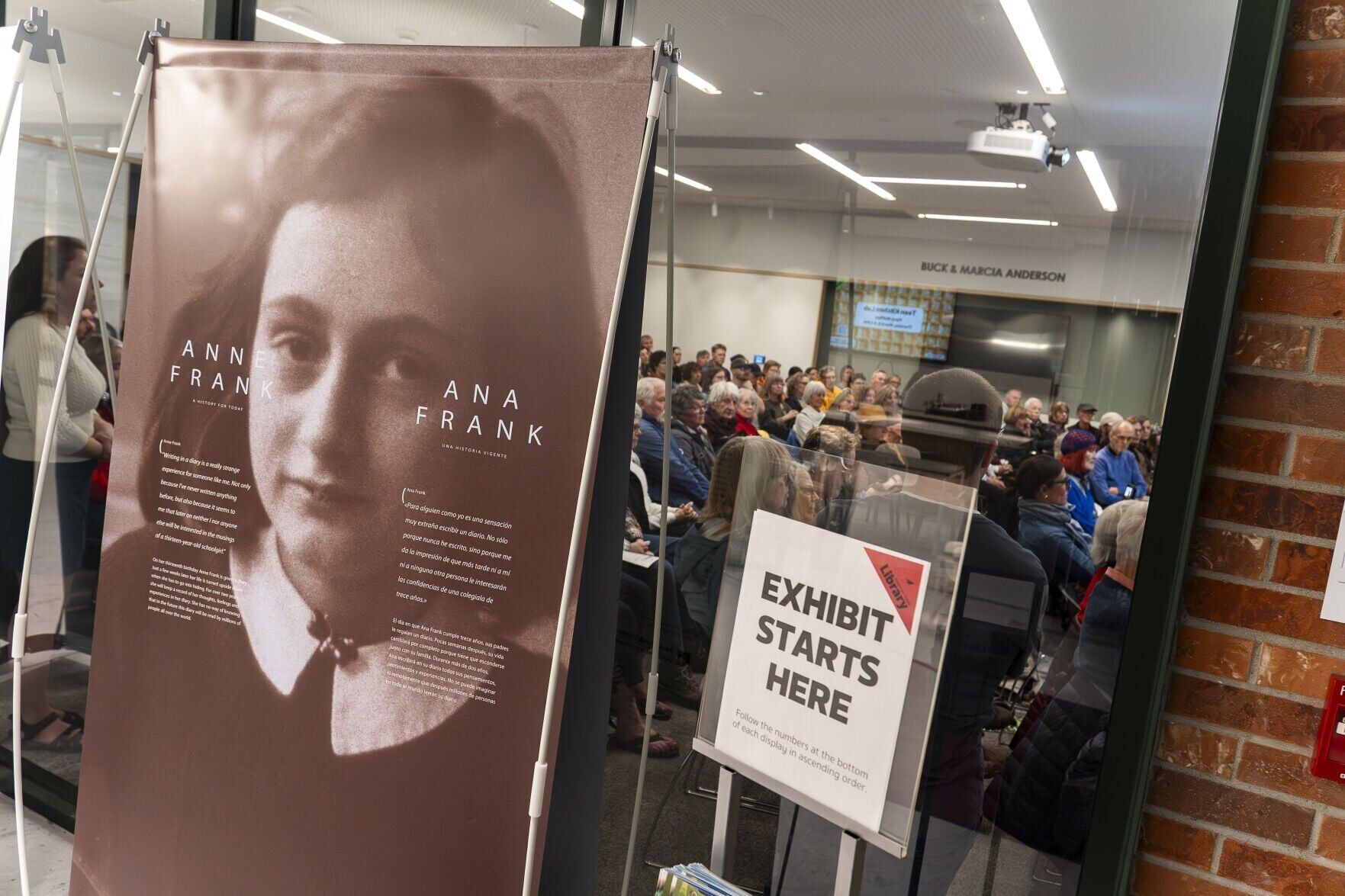
The traveling exhibit, titled “Anne Frank: A History for Today,” was curated by the Anne Frank House in Amsterdam and is presented by the University of South Carolina’s Anne Frank Center. The exhibit is making multiple stops across Montana.
Ben Nielsen, head of adult programming and outreach at the library, said the exhibit forces people to reflect on one of the darkest times in history.
“It’s a good thing for people to come and view — it’s not necessarily easy,” he said. “I find thinking about the Holocaust and learning about it to be a really difficult experience myself. But that doesn’t mean it’s not important.”
“It’s really easy to think of historical characters (as) fictional characters,” he said. “Especially when we’ve heard about them a lot in maybe one way. But going through the exhibit, there are photographs and it humanizes them.”
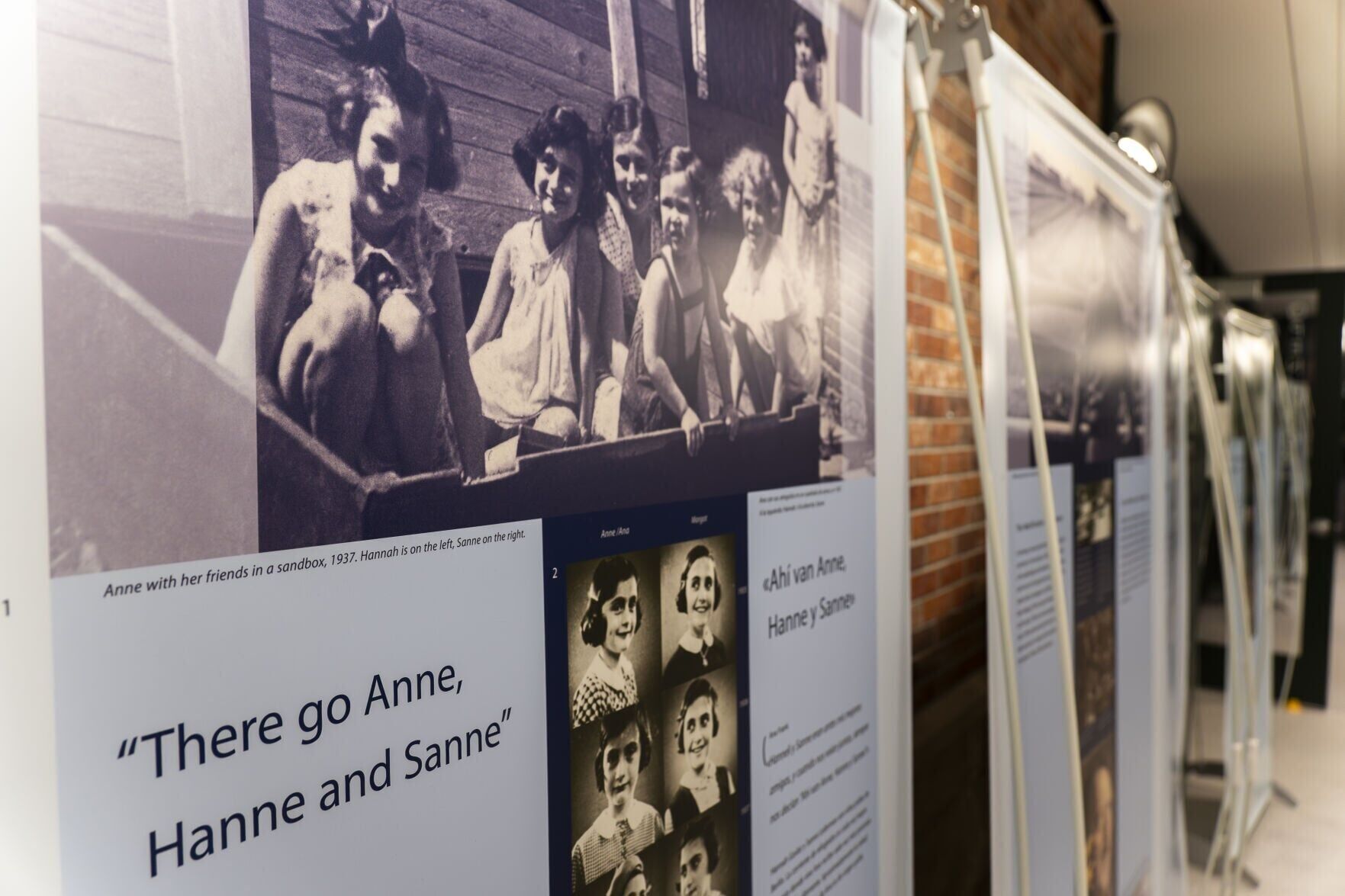
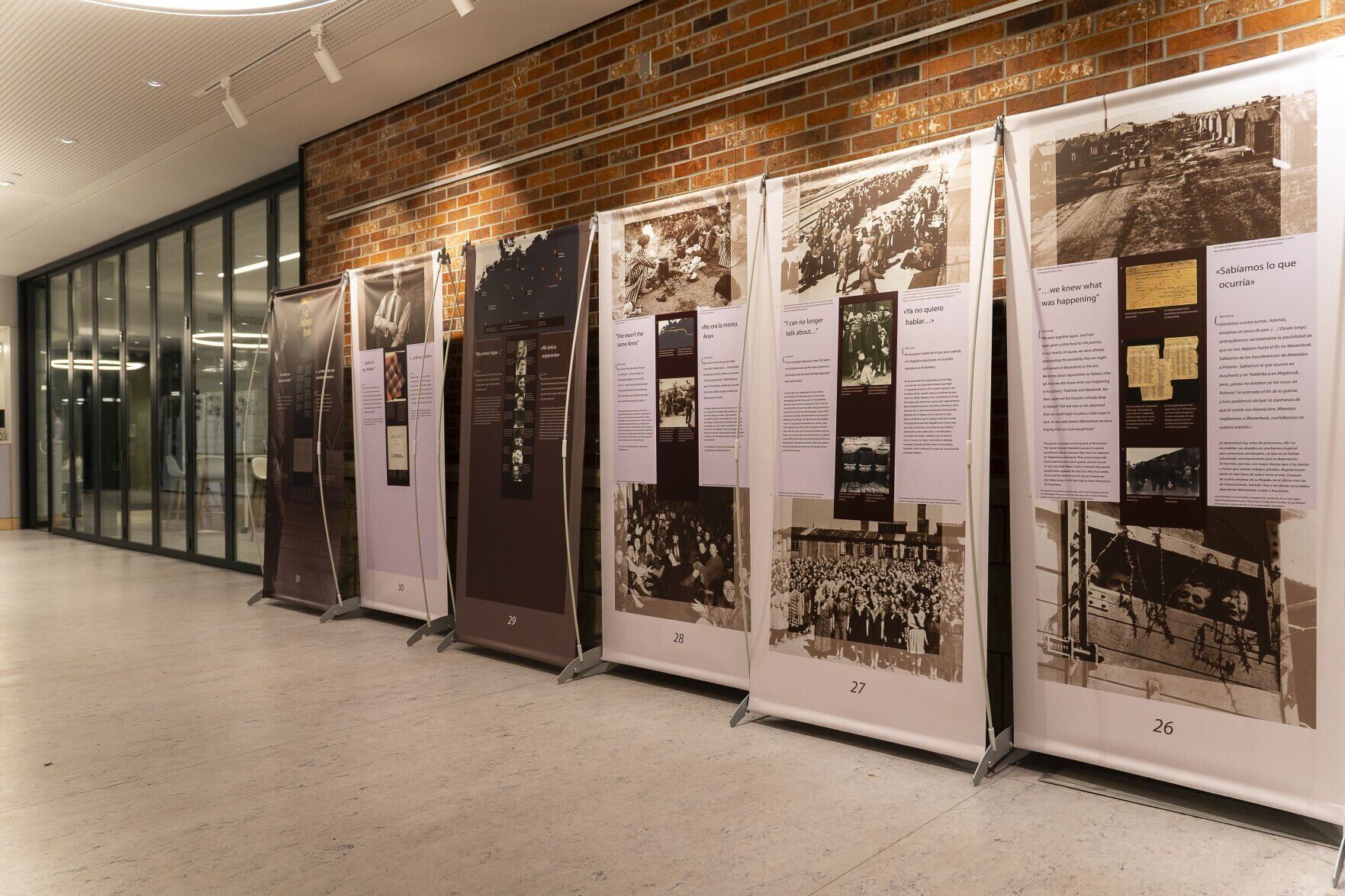
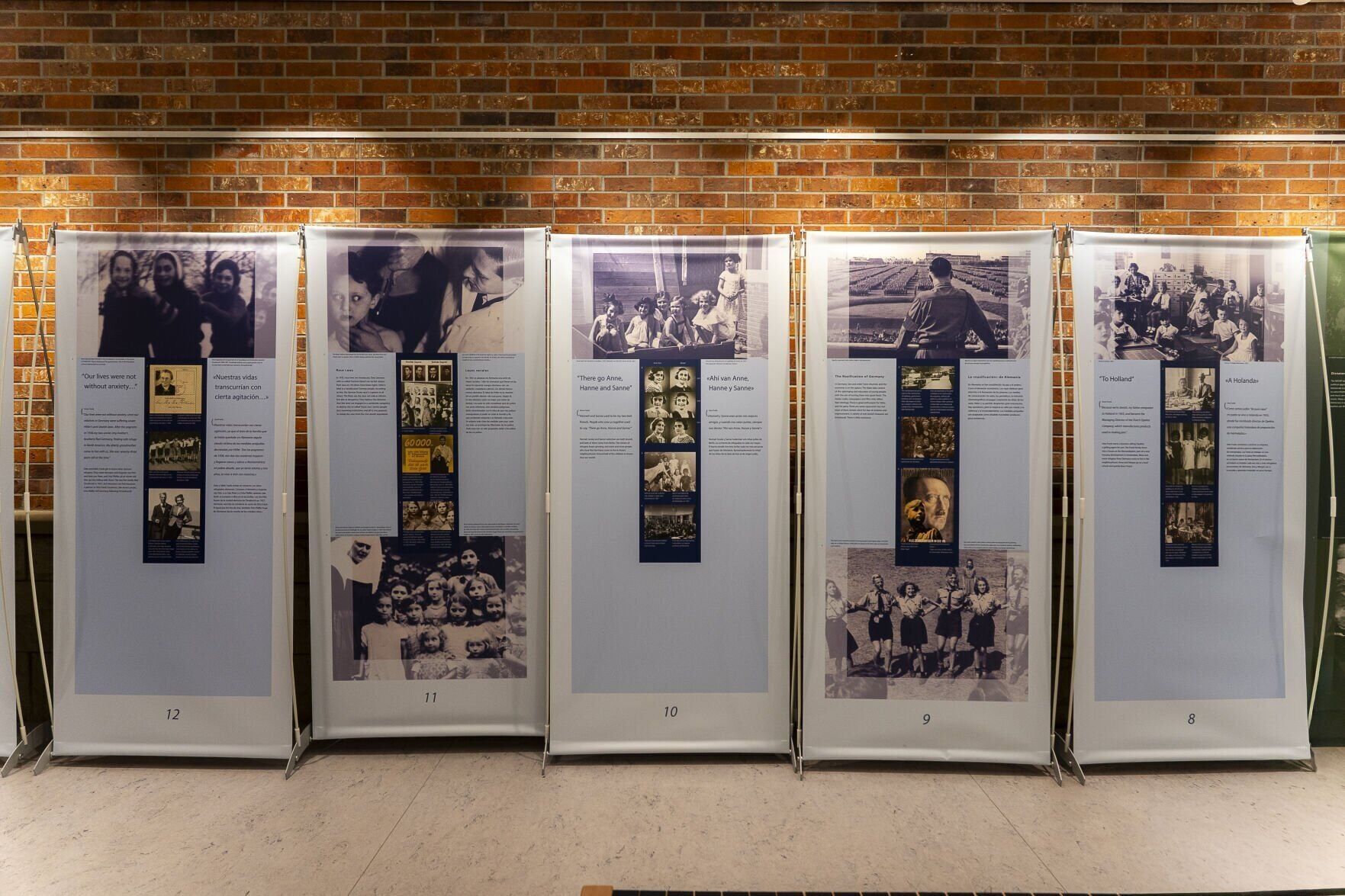
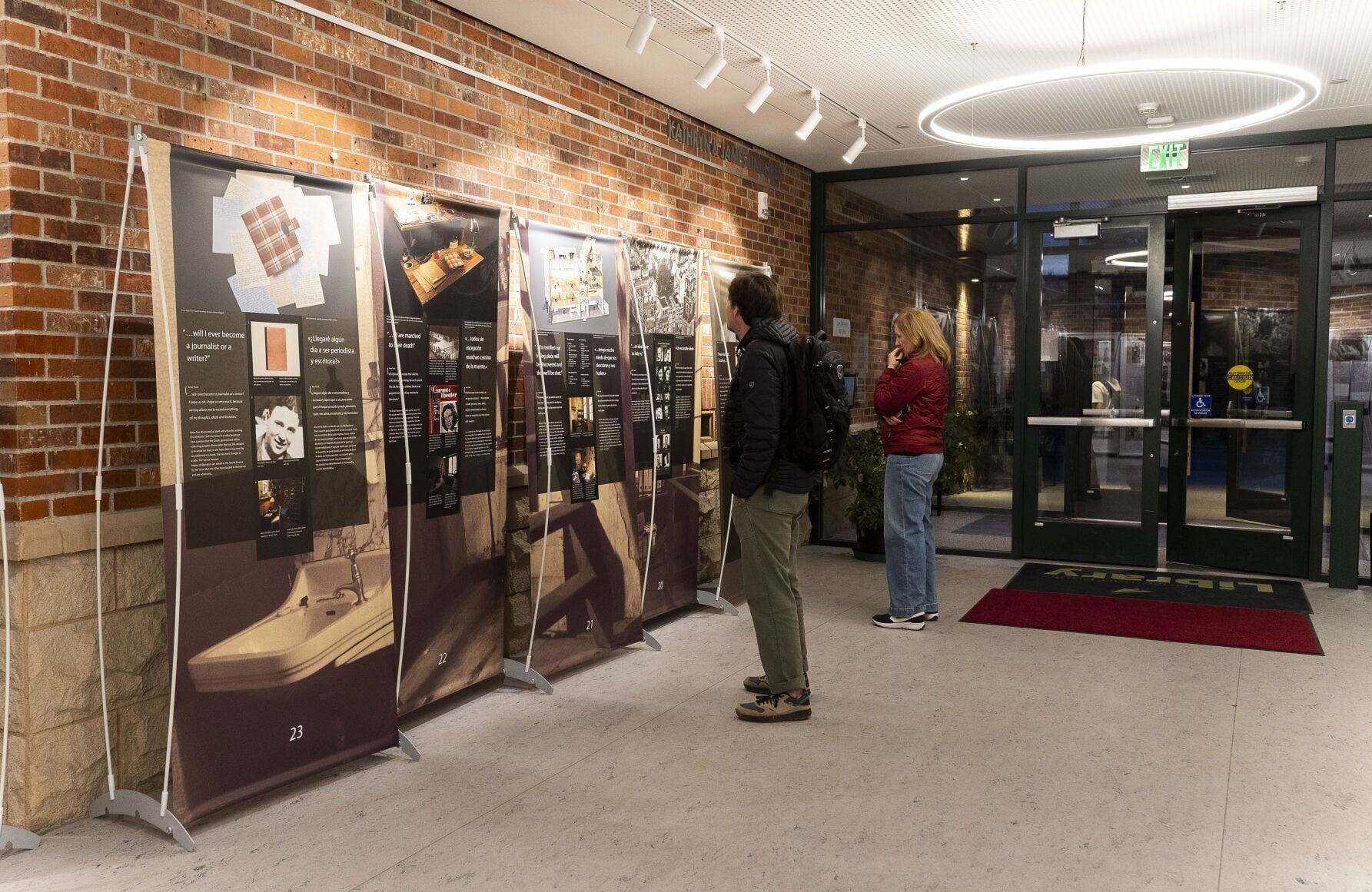
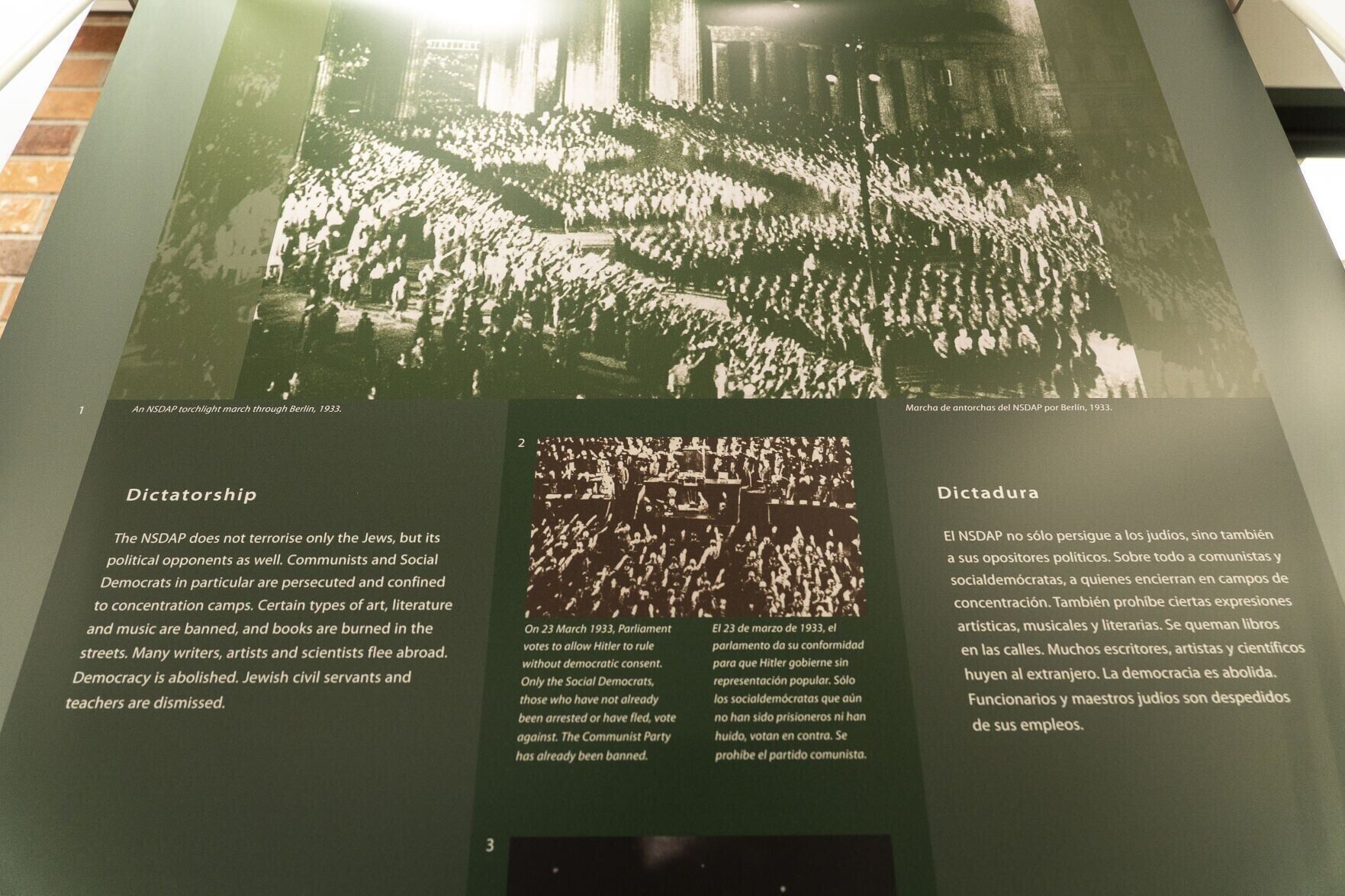
The exhibit is held inside the library’s atrium and will be up until the end of March. It features 32 free-standing panels that detail Anne Frank’s life before, during and after her time in the secret annex.
“It situates (Anne’s story) in the larger context of what was happening in Amsterdam at the time, in the world at the time and what Hitler’s regime was doing at the time,” Nielsen said. “The exhibit does a good job at bringing home the monotony of their day-to-day life in the annex, where there’s nothing to do except wait.”
According to him, Anne’s optimism amid the horrors surrounding her is one of the most meaningful aspects of the exhibit.
“That’s one of the things that strikes people, those times of positivity and, an almost normalcy in a place where nothing is normal,” he said. “We still experience all human emotions when we are going through difficulties.”
Nielsen said libraries play many roles in a community. They aim to offer a wide range of information about history — the good and the bad.
“The library is a place where anybody — whether they’re a kid or a teen or a grown-up — can come and experience joy,” he said. “They can come to a program, they can get a book, they can find a story that resonates with them. They can find what they are looking for here and experience both joy and hold that recognition.”
The curators of the exhibit also created a peer-guide training program, where community members learn how to guide people through the exhibit.
“We will have both teen and adult volunteers who are helping out with that,” he said. “So, if you happen to be in the exhibit and you see someone wearing a lanyard with a name tag, they’re the docent who’s there to help you through the exhibit.”
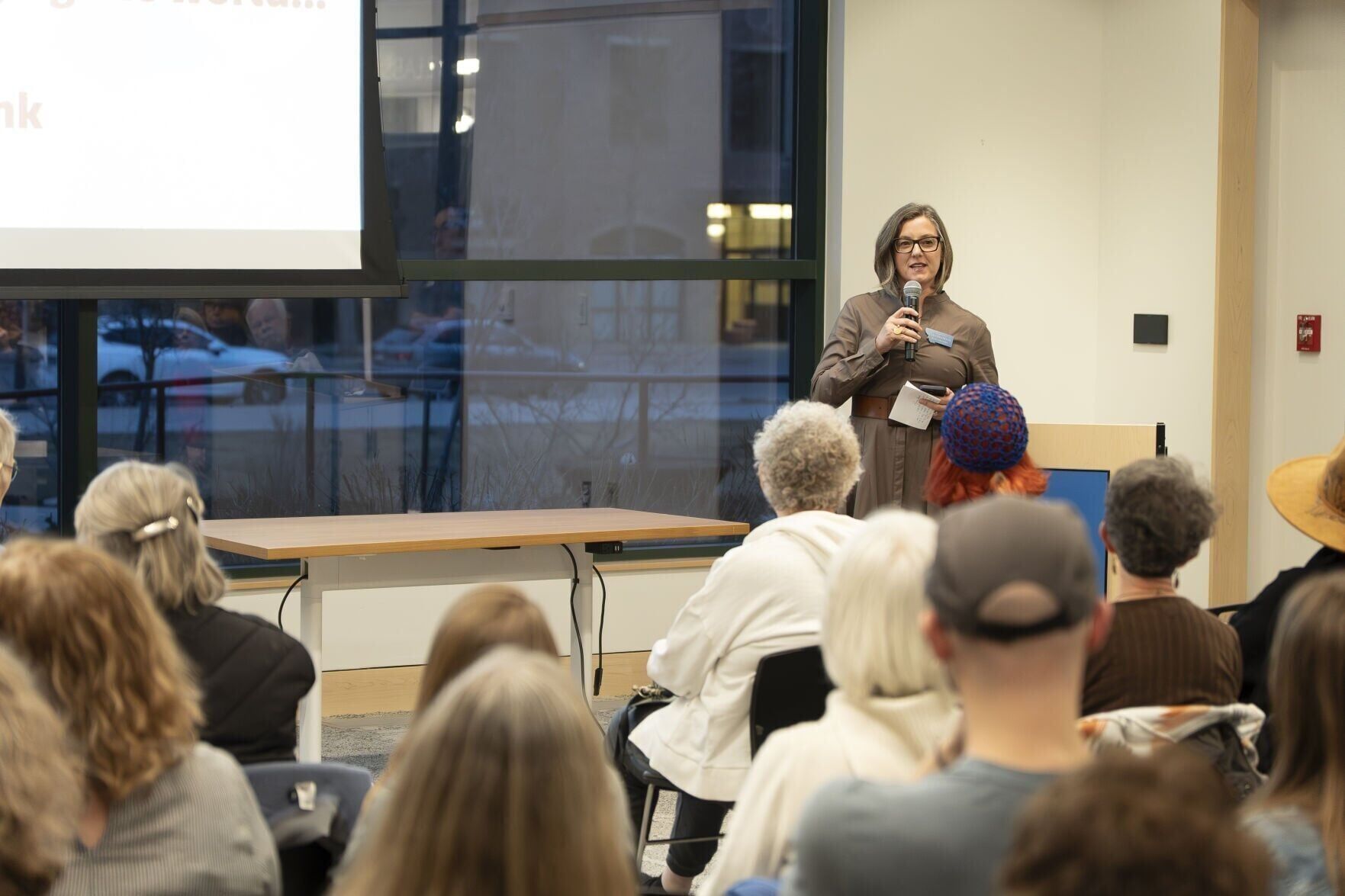
This past Wednesday, the library held an opening reception in the community room. Sen. Cora Neumann spoke at the reception, sharing that her grandparents were Holocaust refugees.
Neumann’s grandfather, Alfred, fled Austria in 1938, after the country was invaded by Nazi Germany. He was marked to be sent to Dachau concentration camp, but his mother bribed an official to give him 72 hours to escape.
Neumann’s grandmother, Johanna, escaped Germany in 1937 with help from family members who were already in the U.S. Johanna’s parents arrived in the U.S. two years later, but the rest of their family died in concentration camps or were killed by Nazi officials.
“Luckily, they were able to escape, but half of my family was murdered,” Neumann told the Chronicle. “I grew up hearing these stories: My grandfather being arrested and tortured, and my grandmother also being intimidated, having everything taken away from them, being threatened — losing everything.”
Neumann said these stories scared her as a child, but what scared her the most is that she would grow up to be someone who stood by and let similar injustice happen.
“That was something that really formed me and made me go into a life of service,” she said. “That’s part of why I think having (the exhibit) come here — even though it may not be personal for people — it does help us think about: What type of person do you want to be? What kind of impact do you want to have in the world?”
Neumann said her grandparents’ story reveals how hate can shape and damage communities. She said the world has seen an increase in anti-Semitism since the Oct. 7 attacks and onset of the Israel-Hamas war.
“I’ve seen a really strong resistance to even just conversations about how anti-semitism is growing and how we can combat it,” she said. “I think out political culture is — it’s all feeding into this real, dangerous culture of hate and othering and scapegoating and targeting.”
Near the end of January, Neumann said she led a group of democratic legislators to the Minnesota State Capitol in St. Paul to protest the Trump administration’s immigration crackdown. Before leaving for Minnesota, she said her cousin there sent her a video of his neighbor being taken by ICE agents.
“I just had this flash where I thought, this looks like my grandfather being rounded up and taken and jailed and tortured,” she said. “You can’t compare the Holocaust. But the secret police — the Gestapo — is relevant. That (idea) that we are destined to repeat history — we don’t want to believe that.”
“But what’s happening? What are we doing to stop the targeting, the hate, and the scapegoating right now? I am trying to use my platform to combat (this). We all have to do that if we don’t want to repeat this — because you have the capacity to repeat it,” she said. “That’s what history, unfortunately, has shown us. If we don’t want to repeat, we can’t forget.”
Nielsen echoed this sentiment.
“History needs to be remembered if it’s not going to be repeated. There have been many tragedies in the world — the Holocaust ranking amongst the worst and most impactful,” he said. “Remembering those things, so that we as a society can not go down those paths again, is really important.”


Comments ()