
Helena homeowner’s call led to osprey rescue near nesting platform
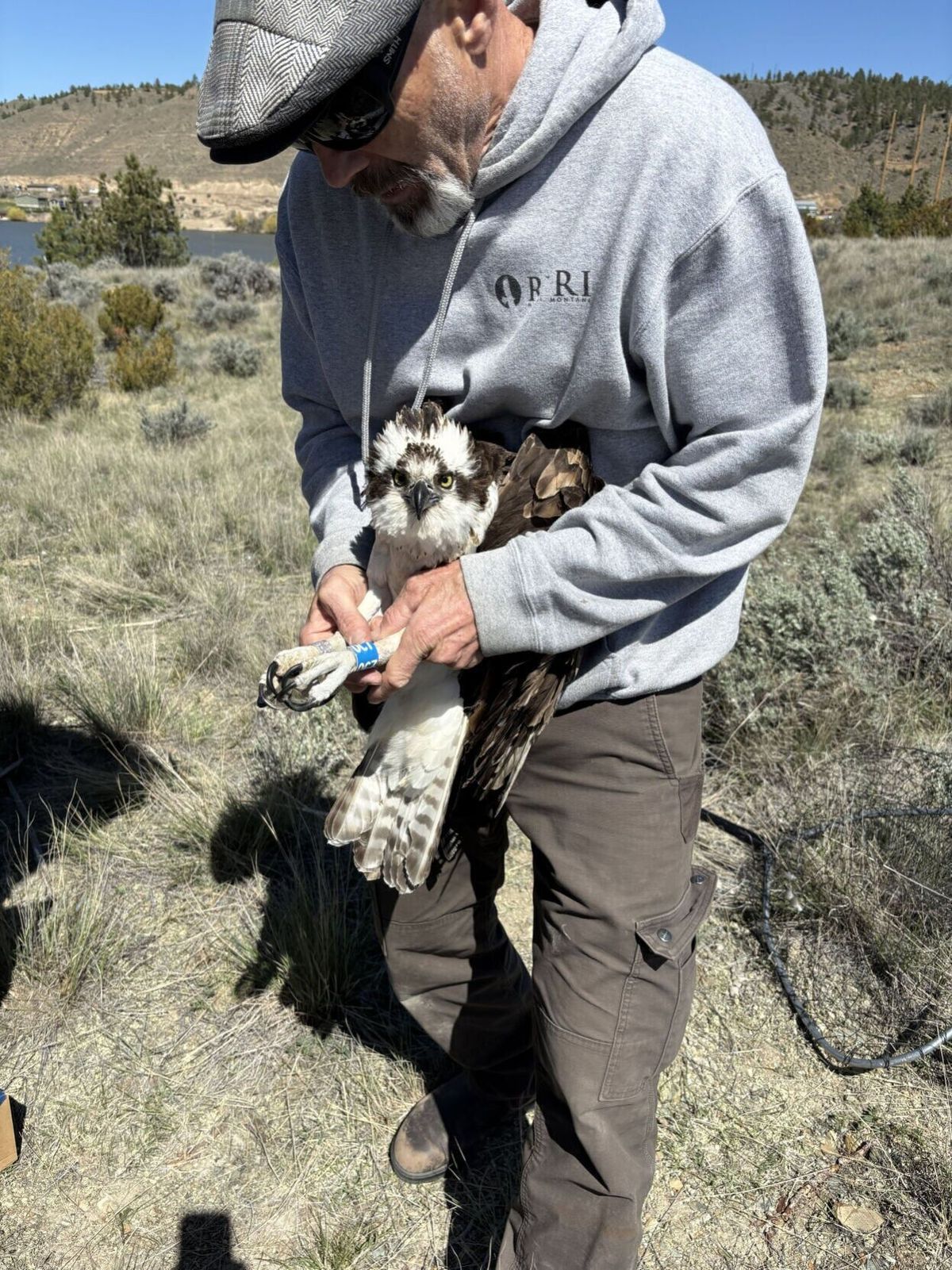
HELENA, Mont. — NorthWestern Energy said a homeowner’s call about an osprey near a Helena-area nesting platform led to a rescue effort involving utility and wildlife professionals.
The company said the rescue moved forward because the weather cooperated and a service technician was already nearby. NorthWestern Energy worked with the Raptor View Research Institute and Montana Fish, Wildlife & Parks during the response.
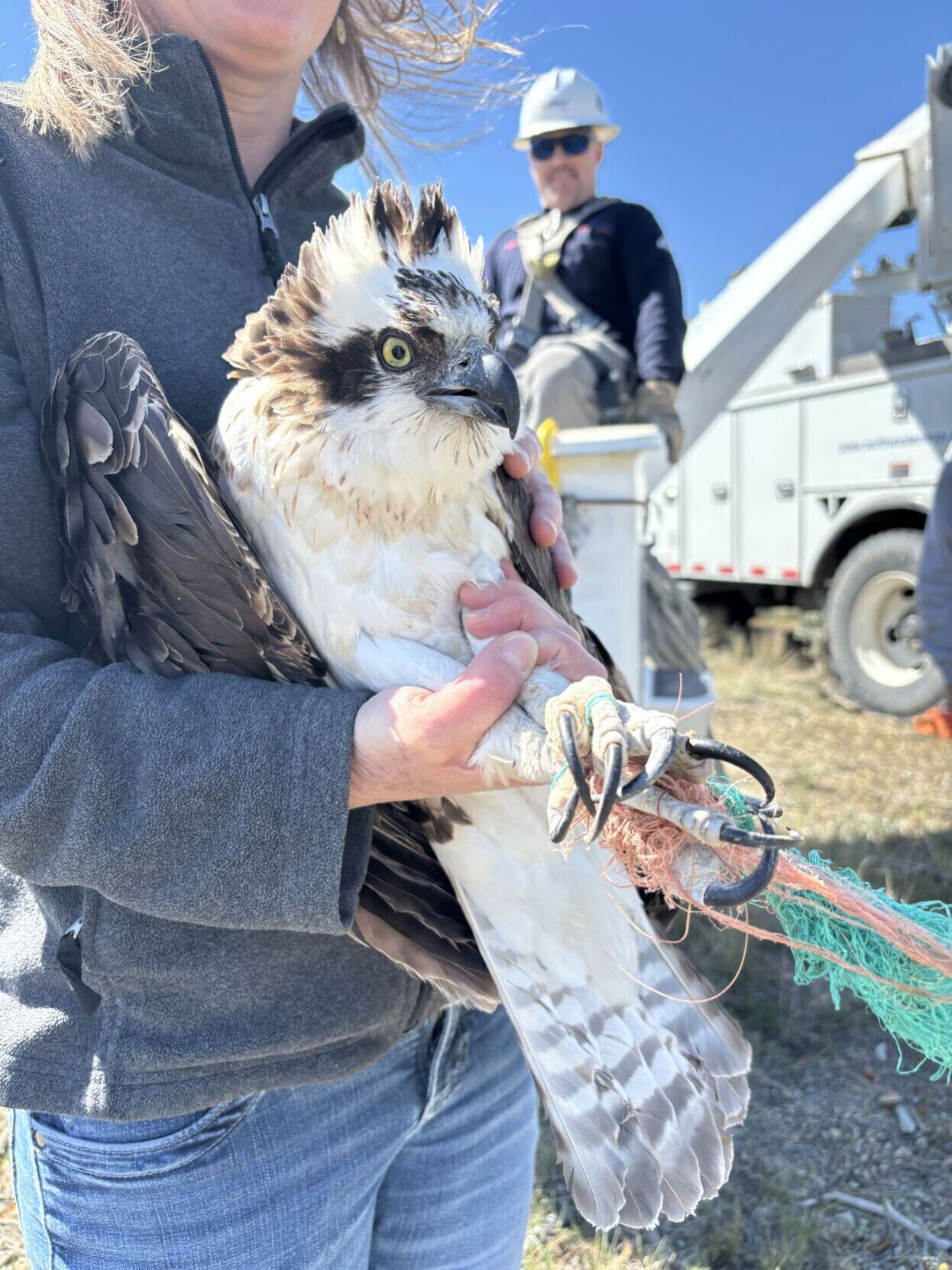
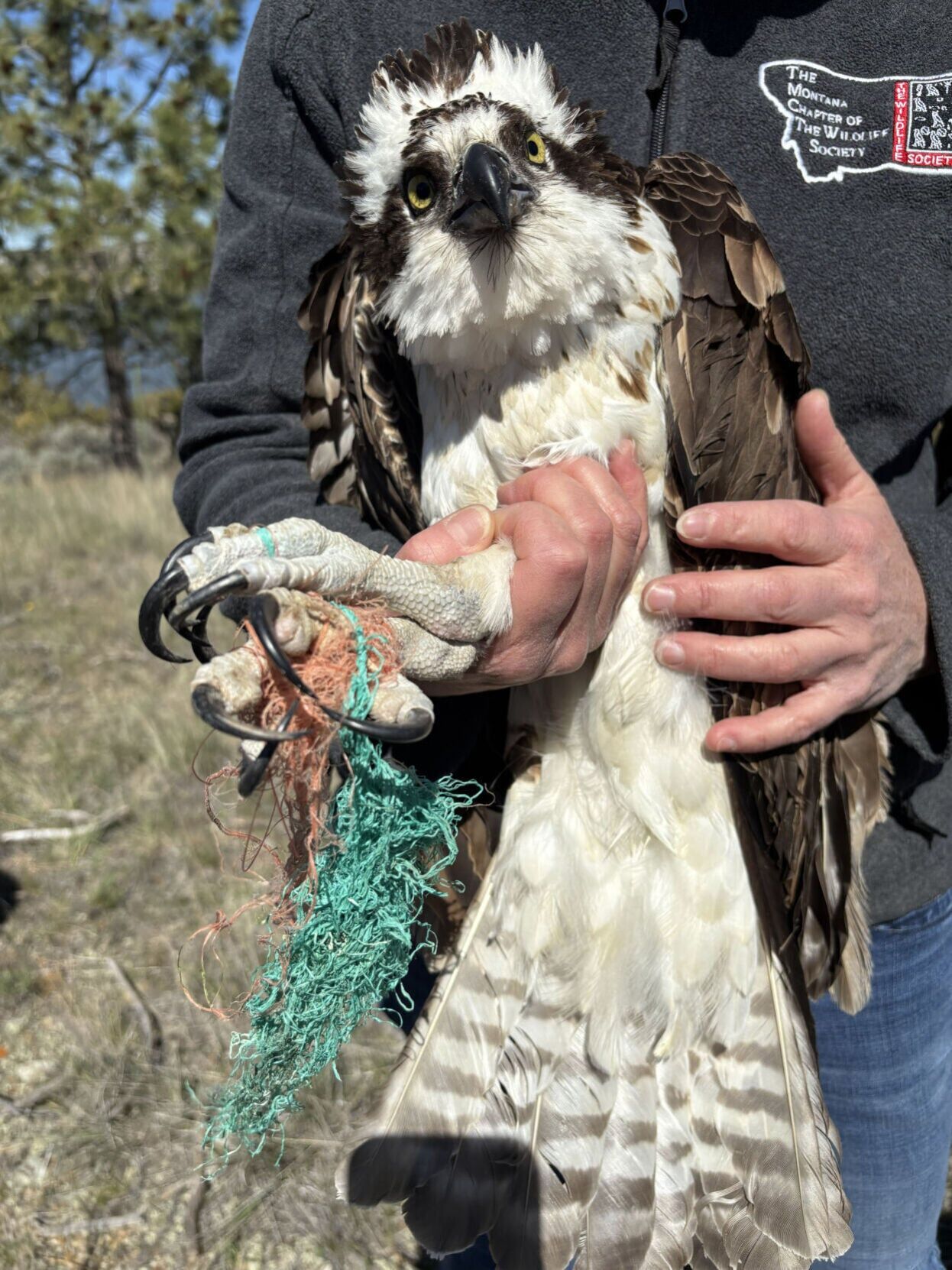
The homeowner reported what appeared to be baling twine around the osprey’s legs. NorthWestern Energy said trained professionals determined the twine posed an immediate risk of injury or death even though the bird was still flying.
Rob Domenech, executive director and biologist with the Raptor View Research Institute, reached the nesting platform using a NorthWestern Energy bucket truck. Responders used an osprey trap to contain the bird so it could be brought to the ground.
Krista Smucker with Montana Fish, Wildlife & Parks held the osprey while the baling twine was cut away. After the material was removed, the osprey was released.
“It was fortunate that weather, service tech schedules and safety conditions aligned to support the rescue,” said NorthWestern Energy Supervisor of Electric Operations Steve Rock. “Everyone involved was pleased to see this end with a good outcome.”
NorthWestern Energy said the incident also highlighted a broader concern about loose baling twine. The company said biologist Marco Restani’s long-term study of ospreys along Montana’s Yellowstone River found that nearly half of nests contained plastic baling twine [link to study].
“When baling twine is left unsecured, it can create serious hazards for osprey,” Restani said. “Osprey often incorporate loose twine into nests, which can be deadly for both adults and hatchlings. The best prevention is to pick it up promptly and store it in secure containers or buildings.”
NorthWestern Energy said its avian protection plan includes nesting platforms, equipment changes aimed at reducing electrocutions and collisions and coordination with wildlife agencies and conservation groups.


Comments ()