
Help Me Ben: Is rounding change the new norm with pennies on the way out?
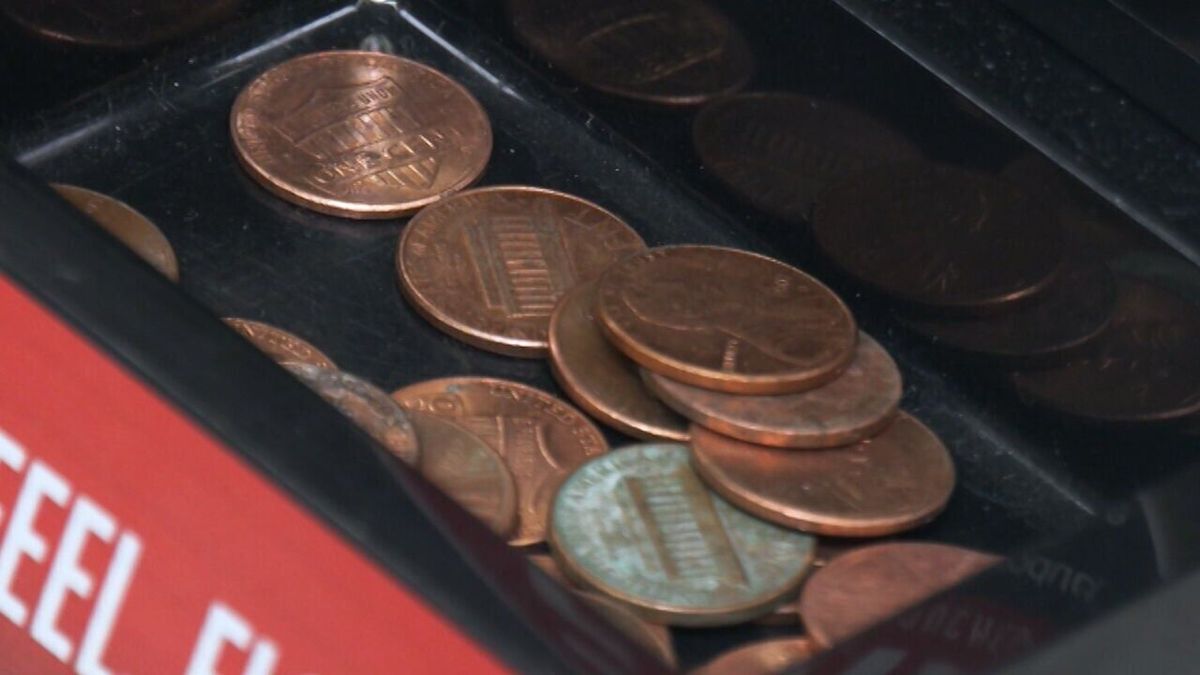
BUTTE, Mont. -- You know how the old saying goes: A penny saved is a penny earned. But what happens when you pay with cash, and your penny magically disappears?
This is becoming a more common trend around the country and in Montana, as a NonStop Local viewer in Great Falls shared his experience, stating in a submission that when he makes cash purchases at local stores, sometimes those businesses will withhold pennies as change, claiming a penny shortage as the reason why.
And what is now a penny shortage may soon become a penny extinction.
As of 2025, the United States no longer mints pennies, due to the fact that they cost more to produce than they're actually worth.
Other states are enacting legislation to address this. In mid-May, Florida Governor Ron DeSantis signed into law that all cash transactions must be rounded up or down to the nearest nickel.
At the national level, the House of Representatives introduced a bill last year known as the "Common Cents Act," which would enforce rounding countrywide if passed.
But what does the legality of rounding change look like here in Montana? As of May 2026, there aren't any official laws addressing the issue, meaning it's up to businesses to figure it out, hence why change-rounding sometimes occurs.
But, as Dr. Robert Sonora, Clinical Professor Finance at the University of Montana, reminds us, there are always workarounds for consumers if they consider their pennies too precious to forfeit.
"Let's remind ourselves, this [change rounding] is only on cash," Sonora said. "So, if you go use your credit card, and it's $1.37, then you're going to get charged $1.37."
"If you're really concerned about losing or gaining two to five cents, then you could always just rely on your ATM card, or some other type of non-cash instrument," Sonora continued. "People can still wreck checks if they really wanted to--write it to the nearest penny."
As the number of pennies continues to dwindle, Sonora expects change rounding to become more common.
But change rounding isn't happening everywhere, including in the Montana city where they coincidentally mine copper.
Recently, the Butte Chamber of Commerce conducted a poll with more than a dozen businesses, ranging from major retailers, to restaurants, to mom-and-pop stores. Not one said that they have had to resort to rounding.
How are they getting around the rounding issue? By adjusting the prices of their goods ahead of time, before handing back change even becomes a thought.
"I think that they really got a jumpstart on this penny shortage by adjusting their prices, so it was not a reflection of needing to give back pennies for change, and they are not seeing a problem," said Stephanie Sorini, executive director of the Butte Chamber of Commerce. "I noticed even at our retail stores here at the Chamber and at the Berkeley Pit viewing stand, we even adjusted ours accordingly so that we would not have to deal with this."
"We're lucky that Butte is always ahead of the game," Sorini added. "They were prepared, and as business community leaders, they were anticipating it being a problem, so they nipped it immediately. I was very happy to hear that our Butte businesses were on top of this."
Sorini says that other businesses can follow Butte's example by adjusting their prices beforehand to become more consumer- and change-friendly--a realistic possibility, given Montana's lack of state sales tax changing the final transaction price.
But is this a prevalent-enough problem that it requires statewide legislation to address? Dr. Sonora doesn't seem to think so.
"My overarching perception is it's ultimately going to be much ado about nothing," Sonora said. "When I was a kid, a candy bar cost $0.05, and getting rid of a penny would be a big deal. But now, a cany bar is $1.30, and a penny is not such a big deal. The marginal value of a penny is so small that, ultimately, it shouldn't be that huge of an issue."
"It's two cents here or two cents there," Sonora continued. "And I suspect, I'd like to think that it'd be sometimes you take it, and sometimes you lose it."



Comments ()