
Historic Montana climate case rules in favor of youth
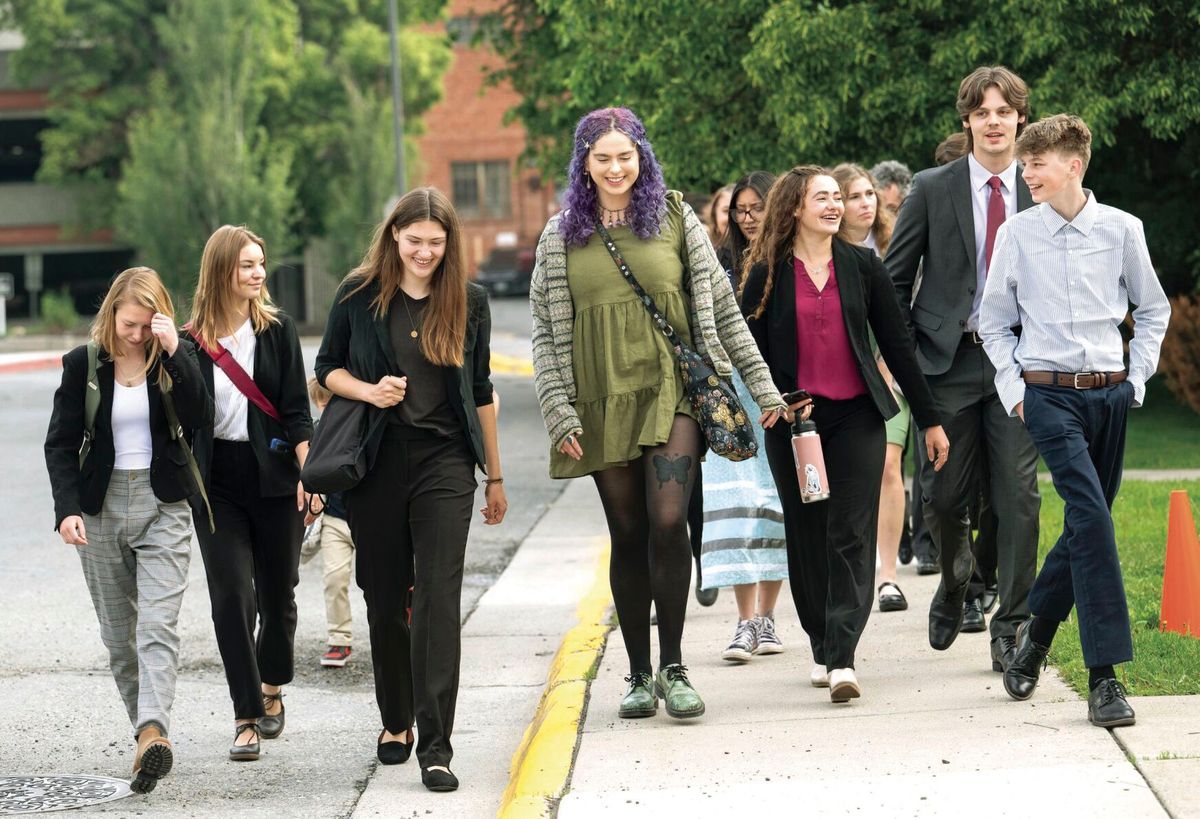
This past summer, the youth-led climate case Held v. Montana went to trial. Starting June 12 in the First Judicial District Court in Helena, Judge Kathy Seeley heard arguments from the state and the youth plaintiffs. On June 20, she ruled in favor of Montana youth, deciding that the plaintiffs have a right to a clean and healthful environment.
The climate lawsuit was filed against the state on March 13, 2020, according to a press kit from Our Children’s Trust, a non-profit law firm. The firm helped represent the 16 youth plaintiffs, all Montana natives with ages ranging from 5-22. 22-year-old plaintiff Rikki Held voluntarily lent her name to the case.
“The plaintiffs reached out to us and expressed their desire to hold their government accountable for the actions it is taking to promote fossil fuels and exacerbate the climate crisis,” Nate Bellinger, senior staff attorney for Our Children’s Trust said. Many of the plaintiffs heard about the case through school groups they were in, their peers, or other climate and environmental work they were already engaged in, he said.
According to the press kit, the youth asserted that the state of Montana had violated their constitutional rights stated in Article II, Section 3, “All persons are born free and have certain inalienable rights. They include the right to a clean and healthful environment.” A second violation was also cited in Article IX, Section 1. “The state and each person shall maintain and improve a clean and healthful environment in Montana for present and future generations.”
The plaintiffs were also represented by the Western Environmental Law Center and McGarvey Law, according to the press kit. It was around this time, in March 2020 that plaintiffs started drafting their statements and stories, Taleah Hernandez, one of the plaintiffs and a MSU sophomore studying animal science, said.
The plaintiffs joined the case individually. “We all had different stories,” Hernandez said. Some were part of climate groups at their schools, others were following Our Children’s Trust’s work and were interested about a possible climate case in Montana, she said. The stories of the plaintiffs centered around changes they had witnessed in and around Montana, she said. Growing up in Polson, Hernandez has personally witnessed fiercer wildfire seasons, drier conditions along with icier and colder winters.
“I think all of our stories are really important,” Hernandez said. “We’re each representing a teeny part of Montana and so I think everybody’s contribution is ridiculously important.” She said her specific strength in the case regarded wildfires, having witnessed how more intense fires interrupt the way people work and recreate in her hometown and the surrounding valley.
From her perspective, Hernandez has witnessed positive responses to the case’s ruling. “I think that I’ve been fortunate to be surrounded by really supportive people,” she said. “People who are trying to protect the environment in the same way that I am, the same way that we all are.”
Some Montana lawmakers do not share the same sentiment. “This ruling is absurd, but not surprising from a judge who let the plaintiffs’ attorneys put on a weeklong taxpayer-funded publicity stunt that was supposed to be a trial,'' Emily Flower, Spokeswoman for Attorney General Knudsen, said in a written statement over email Sept. 20. “Montanans can’t be blamed for changing the climate — even the plaintiffs’ expert witnesses agreed that our state has no impact on the global climate.”
Flower also referred to Seeley as an “ideological judge who bent over backward to allow the case to move forward and earn herself a spot in their next documentary” and regarded the trial as a “meritless publicity stunt to increase fundraising for [Our Children’s Trust] political activism at the expense of Montana taxpayers.”
Hernandez said Our Children's Trust is expecting Held v. Montana to go to the state Supreme Court and the attorneys on both sides are preparing for appeals. “We presented our case to the court and as of now we’ve had a decision in favor and that’s what we can hope for,” she said.
The point of this case was to cause systemic change in regard to climate, Hernandez said. “This case is for Montanans, it’s to protect the land we call home.”
To learn more about the details and aftermath of the Held v. Montana ruling, visit https://www.youthvgov.org/held-v-montana.


Comments ()