
How could the president-elect impact the MSU community?
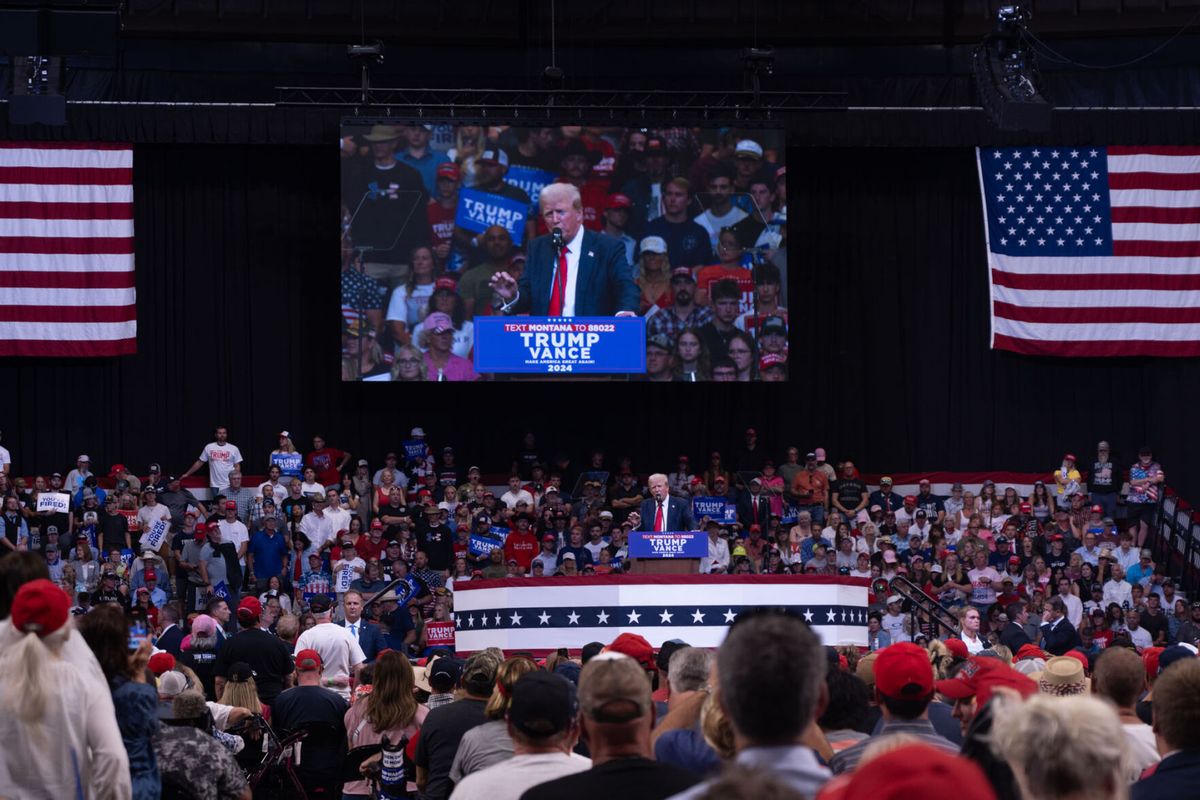
Donald Trump recently won the presidential election — capturing both the electoral college and popular vote — and now the Republican party controls both chambers of Congress. On a national level, this opens the door for the possibility of change, but what do these election results mean for MSU and its students?
According to Eric Austin, head of the department of political science at MSU, not much.
“Are we going to see changes? Absolutely. Are we going to see massive changes? I would be a little surprised,” he said. According to Austin, there are two main areas that students are likely to see some effects on campus: research funding and immigration policy.
Austin explained that MSU students could likely notice changes in research expenditures on campus. According to the MSU News Service, during the 2024 fiscal year, the University saw over $250 million in expenditures. Austin said that funding preferences may change depending on what political party is in charge of the National Institutes for Health (NIH) and the National Science Foundation (NSF).
“Changing priorities on things like climate, on public health, will potentially affect the kinds of funding that those agencies have available and the sorts of research that they are supporting,” Austin said.
The other main effect MSU students could see concerns immigration policy. The potential for changing policies on immigration could impact opportunities international students have to study at MSU, as well as the opportunities MSU students have to study abroad and engage in research in foreign countries, according to Austin.
When nitty-gritty policy issues are decided in the federal government, they are often decided on a technical basis, not necessarily a political one. “Political ideology or party affiliation matters, but it doesn't, it's not necessarily the determining factor and in terms of what actually plays itself out,” he said.
MSU students are likely to see social changes not on campus, but in Bozeman and the greater Montana community, according to Austin. For example, change in general fiscal policies. “Most of the effect that a president is going to have is going to be in advancing, you know, fiscal policy of one form or another,” Austin said, explaining that much of the U.S.’s economic policy is run through the Federal Reserve, which is structured to be fairly independent.
Additionally, housing policies may change under the second Trump administration, according to Austin. He said that the president-elect has said he wants to make changes in terms of regulatory policies on the housing market, but explained that it’s not clear if rolling back restrictions would make housing costs all that much cheaper. Montana may see other effects of deregulatory policies such as these.
Austin said that Republicans are generally on the side of deregulatory policies because the presumption is that they cut costs. However, he explained that companies in industries like food and drug safety aren’t always interested in regulating themselves. When there’s no federal regulation, it can mean that each state has different regulatory practices, which is hard for industries to deal with.
“It can be a lot more efficient if they have one product that they make available rather than 50 different versions of that product,” Austin said.
Finally, Montanans may see effects in public lands management. Austin said that the current trend is less in favor of privatization of public lands and more interested in turning over management of public lands to state agencies. The issue has transitioned away from land ownership and toward the issue of which state agency can afford to manage the land.
“Then the question becomes do those agencies have the resources to actually manage those lands, certainly [in] the same way that they're managed by the Forest Service or the Park Service, [Bureau of Land Management], whatever it might be,” said Austin.
Additionally, there are massive costs associated with managing public lands that Montana currently does not pay. Austin said that Montana receives a lot more in federal funding than what they pay in terms of federal income tax. “Montana taxpayers are paying less for [the management of public lands] than they are receiving in those federal revenues or federal appropriations to manage all the forest lands and the park lands that are here in the state,” Austin said.
The bottom line? There will certainly be changes to how specific instances of governance in Montana and in how certain policies or expenditures on the MSU campus might play out. However, students are unlikely to see a whole scale change.
“I think by and large, we're not going to see massive changes,” Austin said.


Comments ()