
How this week's ‘seismic’ shift in Montana Republican politics came together
Jeff Essmann, a pillar of Montana Republican politics who was first elected to office in 1978, said that the political shake-up that hit Montana this week was unlike anything he’d ever seen before.
Essmann, whose career has included stints as president of the state Senate and chair of the state’s Republican Party, said that a plane crash in 1988 that killed the Republican secretary of state who was running for governor is the only other — albeit very different — historical moment in the state’s politics that this week compares to.
The deadline to file to run for elected office in Montana was Wednesday at 5 p.m. But in the preceding days, political contests in the state were altered dramatically in a way that shocked most Montanans except those who were in on the plan.
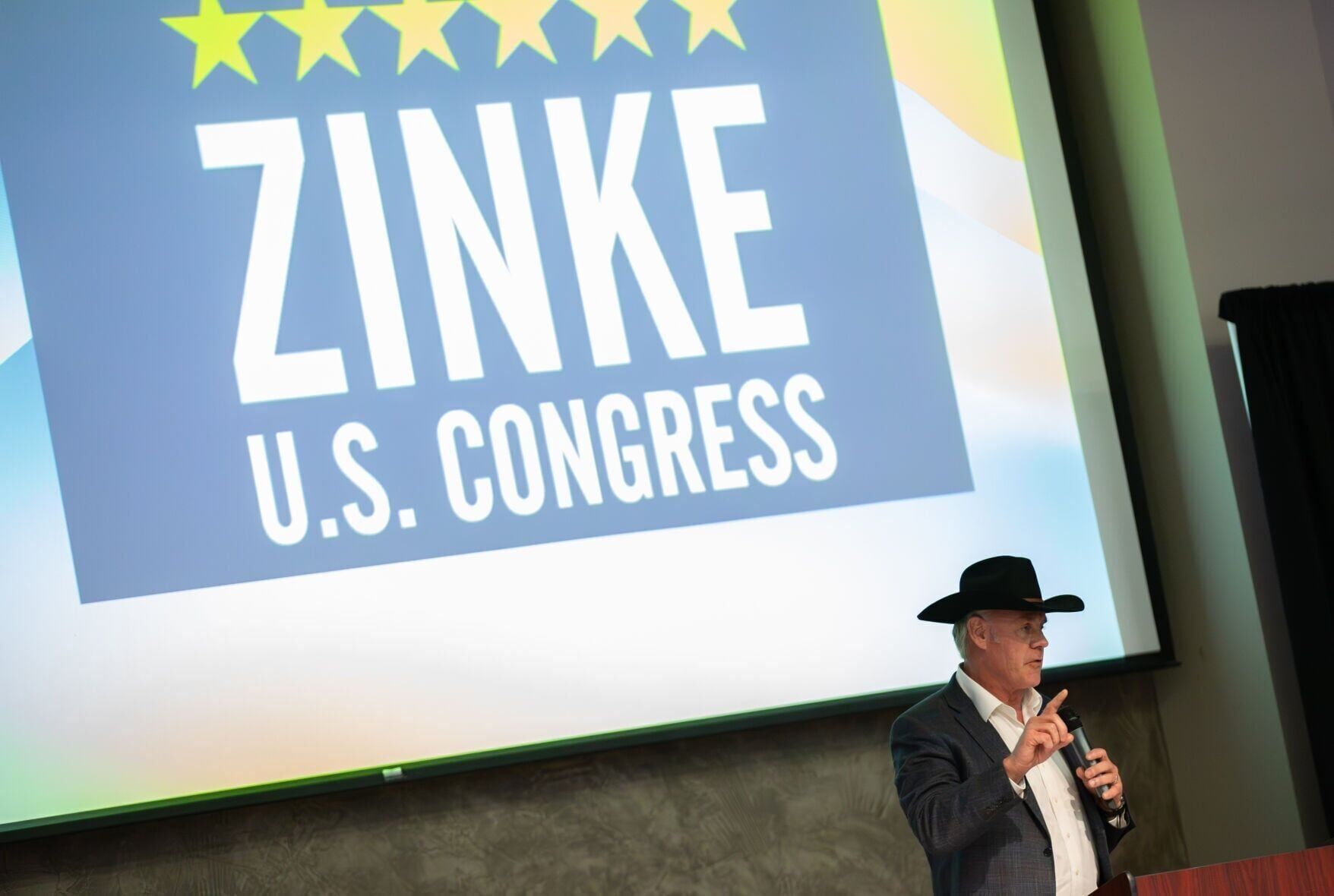
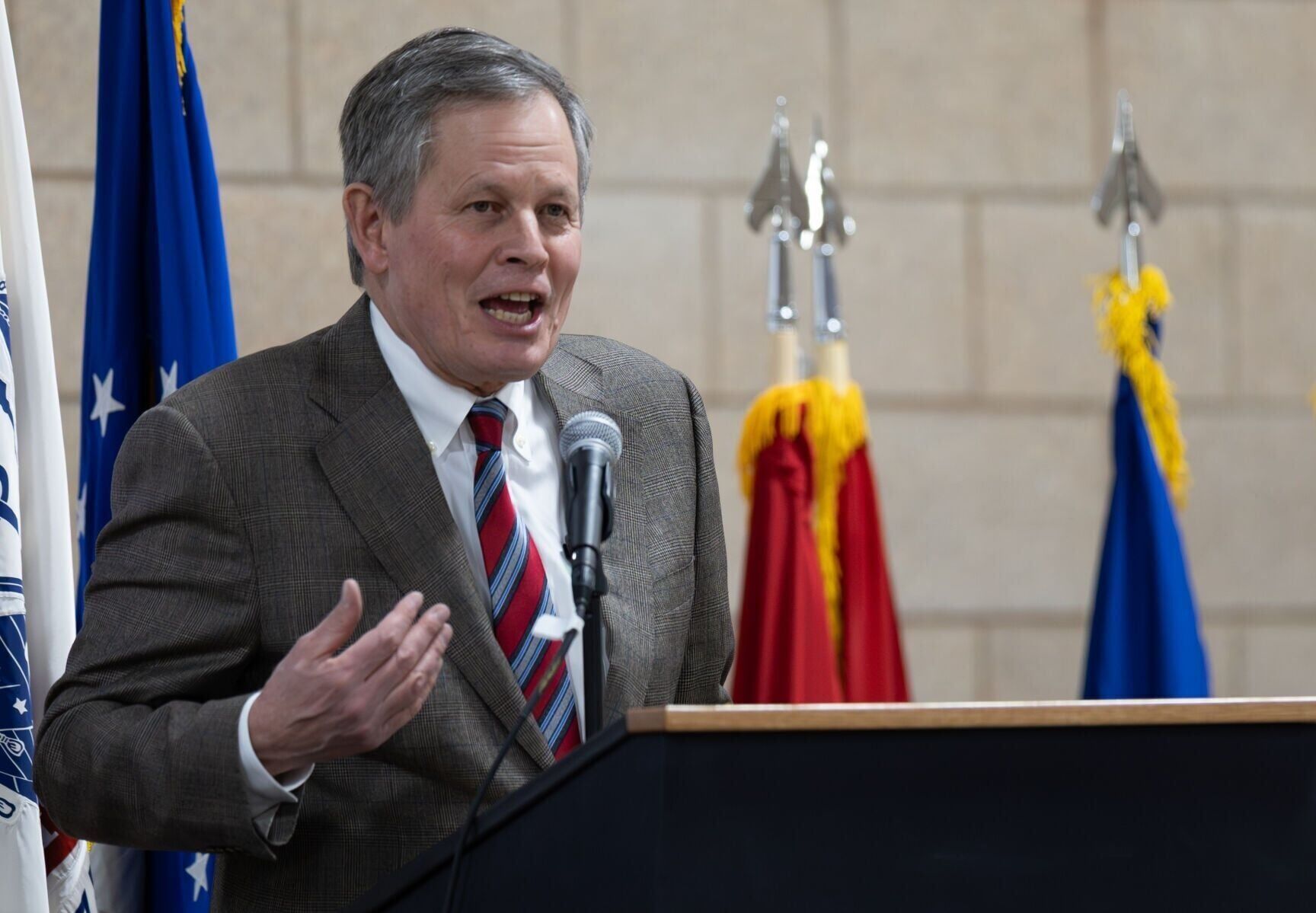
On Monday, Republican U.S. Rep. Ryan Zinke unexpectedly backed out of running for a fifth term citing ongoing but non-life threatening health issues, which spurred three formidable candidates to run in his place. Zinke gave his immediate endorsement to conservative radio host Aaron Flint. While that seemed like a last minute and tectonic shift in the state’s politics, it would eventually be one-upped when minutes before Wednesday’s deadline, Montana’s senior Sen. Steve Daines announced that he was withdrawing from running for another term, and that the U.S. Attorney Kurt Alme would run in his place, leaving no time for others to throw their hat in the ring.
The last-minute candidate shuffle and behind-the-scenes coordination spurred harsh reactions from other candidates and political players who accused powerful insiders of orchestrating the state’s politics without giving Montanans the chance to vote on a full slate of candidates who would have entered if the field had been open to begin with.
Whiplash
A spokesperson for Daines on Thursday provided a timeline to the Montana State News Bureau of how the succession plan came together.
“Senator Daines called Kurt at the end of last week to tell him he wanted to retire, but would only do so if he knew someone like him (Kurt) would step up,” a Daines spokesperson said in an email. “The Senator has on several occasions in the past, urged Kurt to consider running for office in Montana since he ran the Yellowstone Boys and Girls Ranch Foundation. Kurt expressed interest.”
Daines told Alme on Wednesday morning that he would withdraw from the race if he was serious about entering in his place, the spokesperson said. Alme resigned shortly thereafter and told Daines he would run if the senator chose not to.
“That’s when he made his final decision to retire,” they added.
Daines told Semafor on Thursday that the setup was intended to preclude any heavy-hitting Democrats from entering the race in the last moments, creating a high-stakes race for his seat. It would be a shrewd move for the former chair of the National Republican Senatorial Committee, who engineered the ouster of former U.S. Sen. Jon Tester in 2024. Tester disputed that claim in the Semafor article, however, and said Daines’ withdrawal only hurt potential GOP candidates.
“The Senator wrestled with this decision for months and didn’t make a final call on retiring until he was confident someone who could hold the seat, without causing problems for Senate Republicans, would run,” the Daines spokesperson told the Montana State News Bureau in an email.
Due to Montana’s deep red politics, much of the competition for political races happens in the hard-fought primary elections, but that option in the Senate race was out of the question almost as soon as it became available. And in those primaries, candidates often prevail by accruing name ID by running for lower offices or by running and losing elections.
There was, after all, little sign that changes were coming. Zinke appeared in Great Falls last month at the Montana GOP’s campaign kickoff event to rally candidates. Daines was the first to file for office, albeit unceremoniously.
“Steve Daines just betrayed the trust of all Montanans. This deceptive maneuver is no different than what Zinke and Aaron Flint pulled on Monday,” Al Olszweski, the first Republican candidate to file for the western congressional district after Zinke announced his retirement, said in a social media post. “We have been betrayed by our federal senator and representative. This practice cannot be accepted by the people of Montana.”
Former Democratic governor Brian Schweizer joined the chorus of disbelief Wednesday night, calling reporters around the state to share his theory that the political surprises were more like calculated plots to subvert elections.
“Who do Daines and Zinke think they are to anoint somebody,” he said. “Nobody in Montana is going to accept kingmakers.”
In the Semafor article, Daines did not rule out a future run for Montana governor.
Daines withdraws from Senate race, sparking last-minute shift in key Montana election
Adding to the whiplash of the week, U.S. Sen. Tim Sheehy made his own national headlines for rushing into a quarrel where Capitol police were attempting to remove a protester from the room.
"Earthquake"
Within hours of Daines’ exit, some political analysts theorized that the seat that had previously been considered an easy GOP win could now be in play for an upset.
“The big takeaway is that we are in a whole different electoral political moment than we thought we were two days ago,” said Jessi Bennion, Montana State University political science professor.
Though Bennion also pointed out that while chances may have gotten better for the non-Republican candidates, it will still be an uphill battle.
“You’re going to see a lot complaining about how [Daines] basically controlled this process,” Bennion said. "You're going to see that but I don't think that's necessarily going to hurt his predecessor’s chances.”
The week’s shakeups changed the outlook for former University of Montana President Seth Bodnar, who filed Wednesday morning to run for U.S. Senate as an independent and launched his campaign with materials explicitly referencing Daines as his opponent.
Bodnar criticized the timing of Daines' retirement as an example of business as usual in Washington D.C., and took the opportunity to drive home his independent message.
“Steve Daines has so little respect for Montana Republicans that he withdrew at the last minute to coronate his handpicked successor instead of giving them a voice at the ballot box,” Bodnar said in a statement.
The Montana Republican Party did not directly denounce the last-minute exits as anti-democratic, but in a statement sent Thursday morning, the state’s majority party expressed support for a competitive primary process.
The party also declined to endorse any of the candidates for federal office.
“At this time, the MTGOP will not be endorsing any candidate for federal office, instead leaving that decision to Montana voters,” the statement said. “The party hopes every candidate will make their case to the public, contrasting their Republican policies and principles with those of Democrats — as well as phony ‘Independents.’”
Daines has risen to a level of national political prominence and power unlike any Montana Republican in recent history. A close ally of Trump, he was integral in gaining back the Republican majority in the U.S. Senate, including getting Sheehy elected. He is also credited with helping facilitate Montana’s rightward shift over the past decade.
Bennion said that it is common for retiring politicians to have successors in mind, but the last-minute surprise approach all within 48-hours set it apart.
“It’s an earthquake,” she said.
Looking Forward
Democrats seized these political moments, with western congressional candidates signaling a clearer path forward and taking credit for Zinke’s exit despite the fact that the incumbent cited health issues.
“Well folks it’s true, just weeks after I got into this race we already scared Ryan Zinke right out,” MT-01 candidate Ryan Busse said in a social media video. “Truth is it wasn't just me; the voters here, they hate the MAGA agenda.”
Sam Forstag, another Democrat running for the western congressional seat, said that Zinke “saw what was coming and it was all of us.”
It is typical for the party that is not occupying the White House to pick up seats at the federal level in midterm election years. Montana’s western congressional district is newly created and has only ever been held by Zinke, but it’s more competitive of the state’s two House seats.
Midterm year swings are usually not strong enough to sway a solidly Republican district like Montana’s Senate seat, particularly when there is a third party candidate in the mix.
Essmann said that after Alme filed, he received a call from the new GOP candidate, who said the decision had been made “in the last three, four days.”
Alme asked him for advice for the months ahead.
“‘Look people in the eye,’” Essmann said he told the first-time candidate. “I told him to tell the truth.”


Comments ()