
Indigenous Peoples’ Day celebrated for first time as paid holiday, replaces Columbus Day
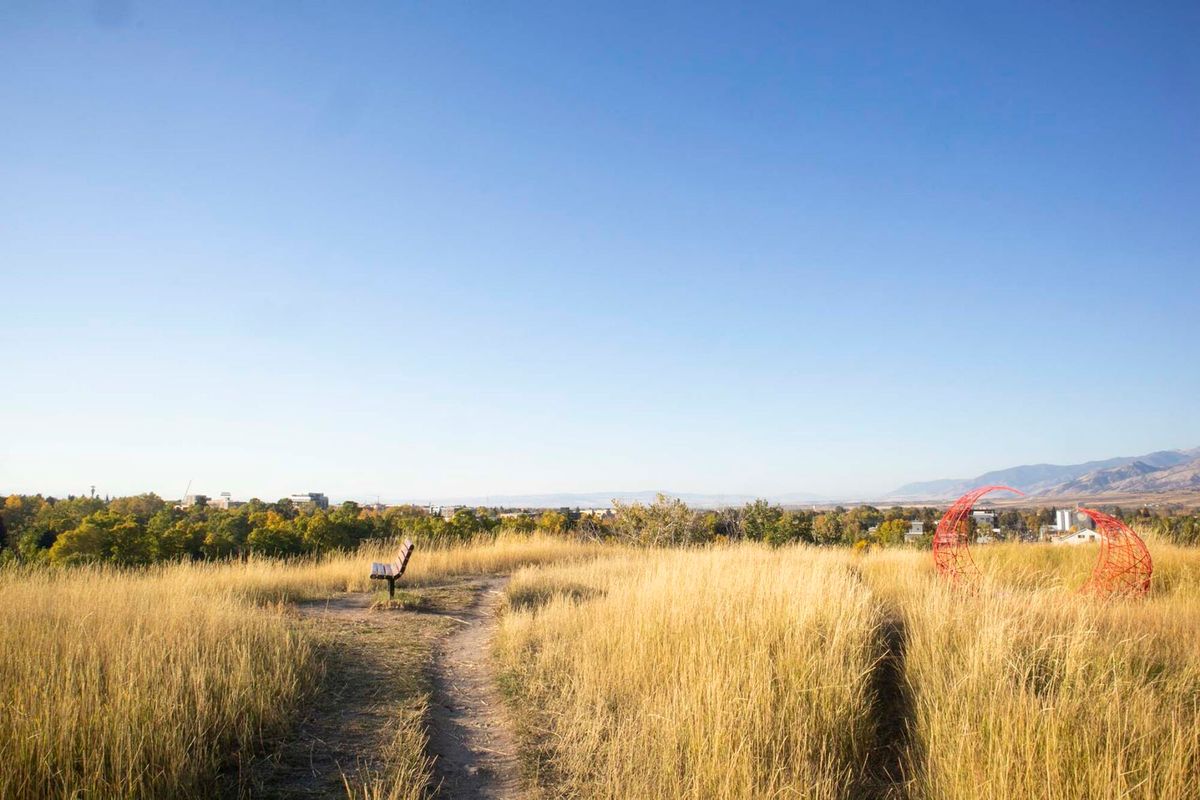
History was made from the top of Peets Hill in Bozeman on Monday as community declared and celebrated a new official holiday. On October 10, Indigenous Peoples’ Day was celebrated for the first time as a paid holiday declared by a city of Bozeman ordinance.
The celebration was presented by Mountain Time Arts, a nonprofit that works with local artists to complete public art projects. It hosted multiple speakers including the Executive Director of Mountain Time Arts Francesca Pine-Rodriguez, former Mayor Carson Taylor, current Mayor Cyndy Andrus, MSU Professor Walter Fleming and others.
Taylor spoke about the history of Indigenous Peoples’ Day in Bozeman. When he became mayor, there was already an existing movement to replace Columbus Day with Indigenous Peoples’ Day.
“The logic of it is pretty simple. Christopher Columbus did not discover America. His actions on coming to these continents marked the beginning of tragedy and genocide for all Indigenous people in both what is now called North and South America…maybe we should be celebrating the perseverance of those that survived,” Taylor said.
As mayor, Taylor started the discussion with tribal communities to see what could change. “It became clear to all of us that an exchange of diverse cultures and ideas would be a good thing for everybody,” he said. “We understood that getting to know one another would break down barriers, and that the exchange would open up new discussions and new ideas.”
What followed was his mayoral proclamation in 2016 that the second Monday of October would be Indigenous Peoples’ Day. “The celebration further developed into an understanding that we are all indigenous to somewhere, and it became one of all cultures. We’ve now celebrated Indigenous Peoples’ Day in Bozeman for seven years,” Taylor said.
Andrus, the current mayor of Bozeman said, “The celebration of Columbus Day is an affront to all indigenous Peoples in the Americas and Indigenous Peoples’ Day is a day that recognizes and commemorates the contributions of native people. The city recognizes and celebrates the cultural survival and resilience of the indigenous peoples in the face of genocide.”
On June 28, 2022, the city unanimously passed ordinance 2109 that replaced Columbus Day with Indigenous Peoples’ Day, officially designating the second Monday of October as a paid holiday to celebrate.
Pine-Rodriguez, a member of both the Apsáalooke/Crow and Tsitsistas/Northern Cheyenne tribes, emphasized the importance of this decision. “We are united by our commitment to instilling accurate historical knowledge, preserving all cultural heritages and integrities [and] advocating for tribal sovereignties,” she said.
“We are all indigenous to one place or another, and that is the beautiful thing about this, is that we’re trying to help heal [and] move toward a collective horizon as one,” Pine-Rodriguez said.
She also said that she has found Bozeman to be the only city that has foundationally implemented Indigenous Peoples’ Day as a paid holiday specifically replacing Columbus Day.
Pine-Rodriguez also gave a call to action to the gathered crowd, urging everyone to call their state representatives. “We want to move Indigenous Peoples’ Day to the state level.”
Fleming, the MSU department head of Native American Studies, explained that despite this success, there is still progress to be made. “Today, there was a post from MSU Bobcats congratulating the campus on the recognition of Indigenous Peoples’ Day, and I read the many comments: ‘congratulations, way to go, great job,’” he said. “Then there was that one. ‘Columbus Day.’ So, some people haven’t gotten as far as we have. We will let them come on their time. we shouldn’t get discouraged about that one ‘Happy Columbus Day.’”
At the close of the evening, Patti Baldes, a member of the Northern Arapaho/Northern Paiute and her team of matriarchs and their daughters shared their REMATRIATE performance, a dance with buffalo sculptures. As the sun began to go down, everyone from the community was invited to participate in a round dance.
A dramatic sunset and deeply colored mountains framed the silhouettes of extended arms and joined hands perfectly illustrating the evening theme — unity in community. For an evening, Bozeman paused to remember the history of the surrounding Valley of the Flowers, and to honor those who came before.
Comments ()