
Invigorating Three Minute Thesis competition
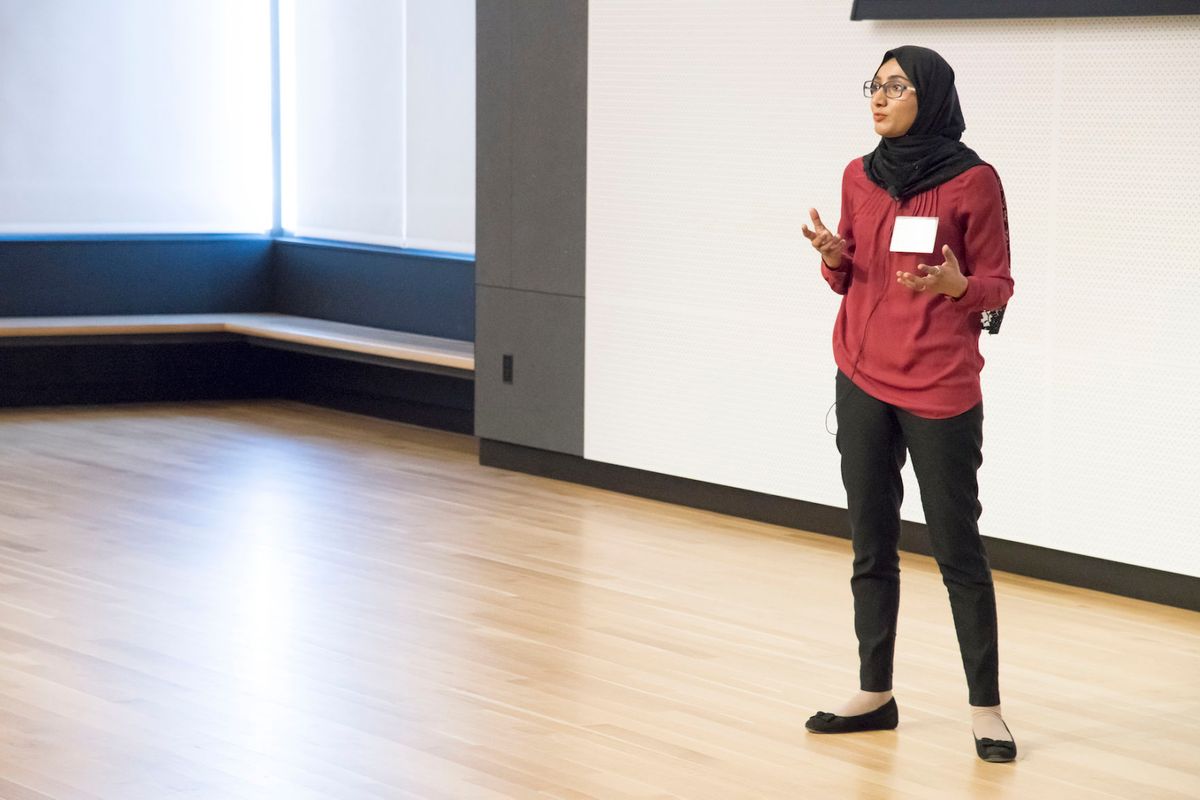
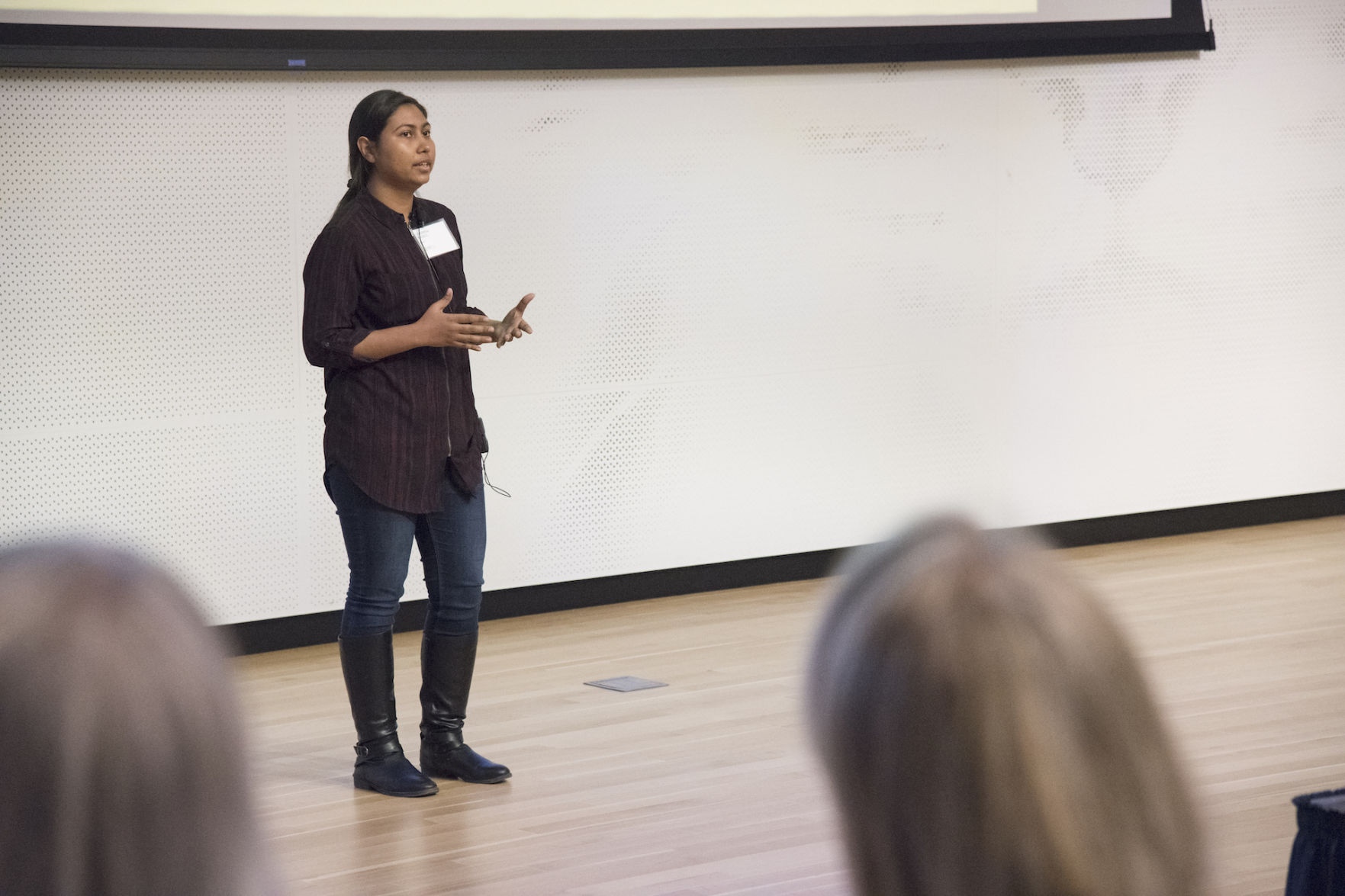
With five noteworthy judges, seven graduate-level finalists and a full audience, the Norm Asbjornson College of Engineering hosted the sixth annual “Three Minute Thesis” competition in Inspiration Hall this past Thursday, Feb. 27. Contestants were required to condense their 80,000-word thesis projects into a 180-second presentation that explained how their research affects the average person. Researchers were allowed only a single presentation slide as a visual aid.
The “Three Minute Thesis” competition began at the University of Queensland, Australia in 2008 with a total of 160 Higher Degree by Research candidates competing. The idea for the competition was born when the state of Queensland was facing a severe drought. In an effort to conserve water, citizens of Queensland placed a three-minute egg timer in their shower. The Graduate School Dean at the University, Professor Alan Lawson, put two and two together and invented the “Three Minute Thesis.” Since 2008, the competition has spread to 900 universities in more than 85 countries worldwide.
This year’s finalists and their thesis topics are as follows: Sobia Anjum "Back to the Future: Ancient Processes, New Adhesives," Ariel Lusty "Surface Preparation for Quality and Durability of Wind Turbine Blade Repairs," Farshina Nazrul Shimim "Resilient Distribution System Architecture and Power Management," Patrick Fischer "The Impacts of Complex Multitasking Scenarios on Neuromuscular Control," Jubaer Ahmed "How Does Emotional Intelligence Predict Risky Driving Behavior," Hannah Koepnick "Improving Bacterial Selenium Removal Using Nitrate-dependent Iron Oxidation" and Sam Verplanck "Leveraging Seismic Technology to Better Understand Avalanche Initiation."
As the presentations came to a close, one winner was chosen by the panel of judges and one winner from the audience members. The judges’ pick went to Patrick Fischer. He is using computer simulations to show how distractions influence movement in sports. Fischer expressed how one type of injury, ACL injuries, is strikingly high among athletes. His research delves into the idea that current training programs are lacking proper injury prevention exercises to keep athletes safe.
The winner chosen from the audience was Sobia Anjum. She began her presentation asking, “Can you imagine a world without adhesives?” Anjum stressed the harmful effects current adhesives have on the environment and humans. Her research unearths a new adhesive combining biofilm and minerals to generate a “glue that will save the world.”
“Anyone can do it, you just have to put your mind to it,” said Anjum. She advises any students pondering whether to participate in this event in the years to come to find a way to establish relevancy within the crowd and just do it. The Norm Asbjornson College of Engineering hopes to expand this competition to other disciplines on campus, including an overall competition at MSU.
For more information and videos from the competition held in Queensland, visit threeminutethesis.org


Comments ()