
Judge weighs claim Forest Service needn't review bison hunts at Yellowstone park border
The Forest Service has no obligation to conduct an environmental analysis regarding bison hunting on its lands outside Yellowstone National Park, a federal attorney argued in U.S. District Court in Great Falls on Tuesday.
“The Forest Service does not manage bison, it never has,” Michelle Ramus, a Department of Justice attorney, told Judge Brian Morris. “The Forest Service manages bison habitat.”
She also noted that any bison hunting involving the eight tribes with treaty rights, which take place outside Yellowstone National Park, further complicates the issue. No hunting is allowed inside the park.
Bison were declared the national mammal in 2016, more than 100 years after unregulated slaughter nearly drove the animals to extinction.
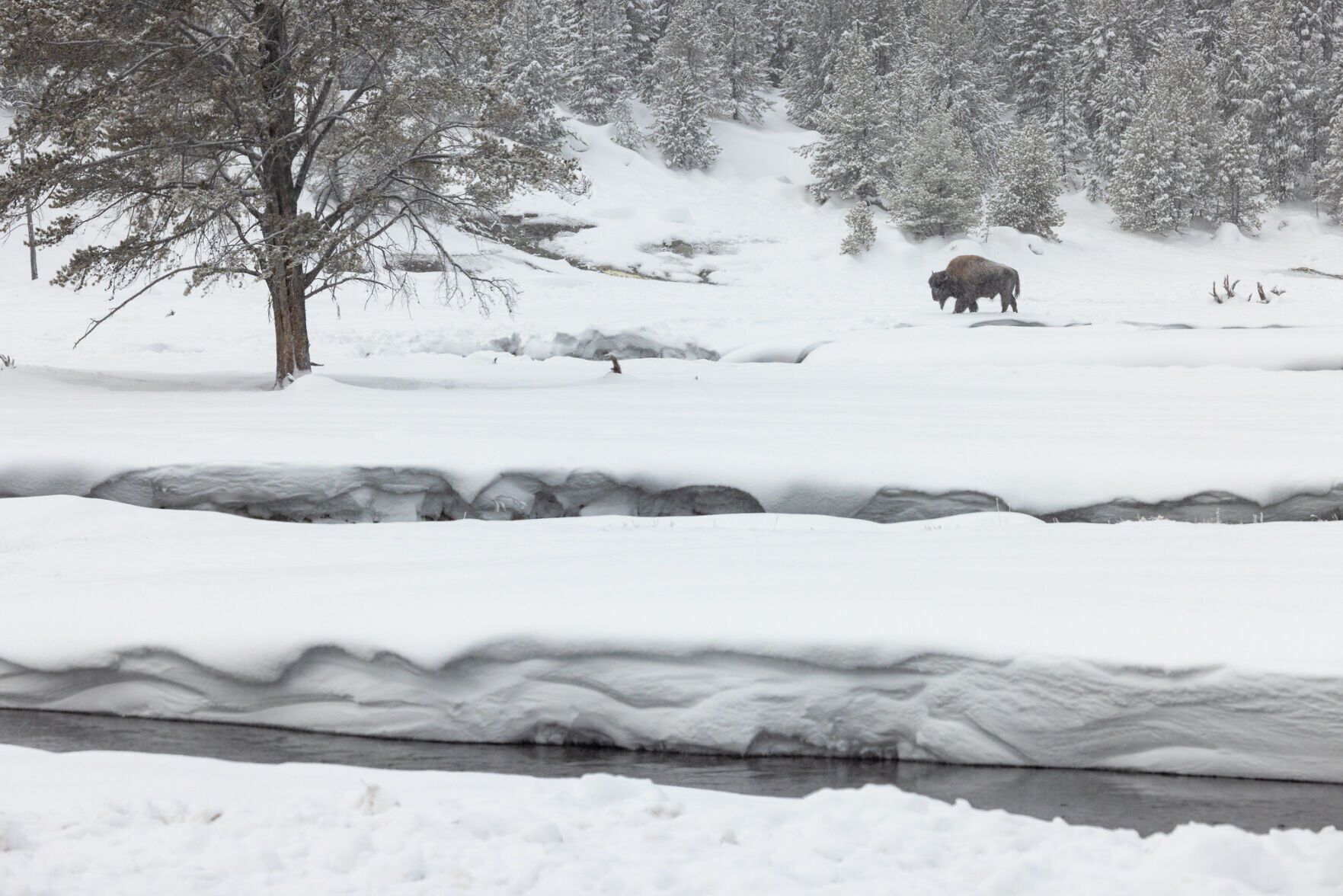
So far this winter, state hunters have killed 21 Yellowstone bison with tribes reporting 27 bison shot. All but four were killed west of the park.
2019 lawsuit
Ramus spoke in response to a lawsuit filed in 2019 by Neighbors Against Bison Slaughter and Gardiner-area resident Bonnie Lynn who have been prodding the agency to halt concentrated bison hunting on a small parcel of forest land along Beattie Gulch near Yellowstone’s northern border.
“They've been ducking and weaving for six years trying to avoid their obligations,” argued Jared Pettinato, the attorney representing Neighbors and Lynn.
“So is this more of a political football than a legal issue?” Judge Morris asked.
“Just because it's political, the question is whether this court has jurisdiction over the issues, and it's got to decide the issues in front of it, and these are final agency actions,” Pettinato responded.
Bison in the courts
The lawsuit is one of three still weaving through the courts regarding Yellowstone bison management. The other two involve the state of Montana and the Alliance for Wild Rockies suing the Park Service over its 2024 bison management plan, each for different reasons.
In Montana, Yellowstone’s bison are the only wildlife whose management is overseen by the Department of Livestock, due to concern about the animals spreading the disease brucellosis to cattle. However, all of the verified infections of cattle have been traced back to elk. Nevertheless, Montana argues bison pose a bigger threat to cattle because of their higher exposure to brucellosis.
Because bison are limited in where they can roam outside of Yellowstone by the state, hunting areas are also limited to two zones, called tolerance zones, close to the western and northern borders.
The Beattie Gulch area, on Custer Gallatin National Forest land just north of the park, can at times become a literal firing line as mostly native and a few state hunters utilize the location to kill bison before they disperse farther down the valley.
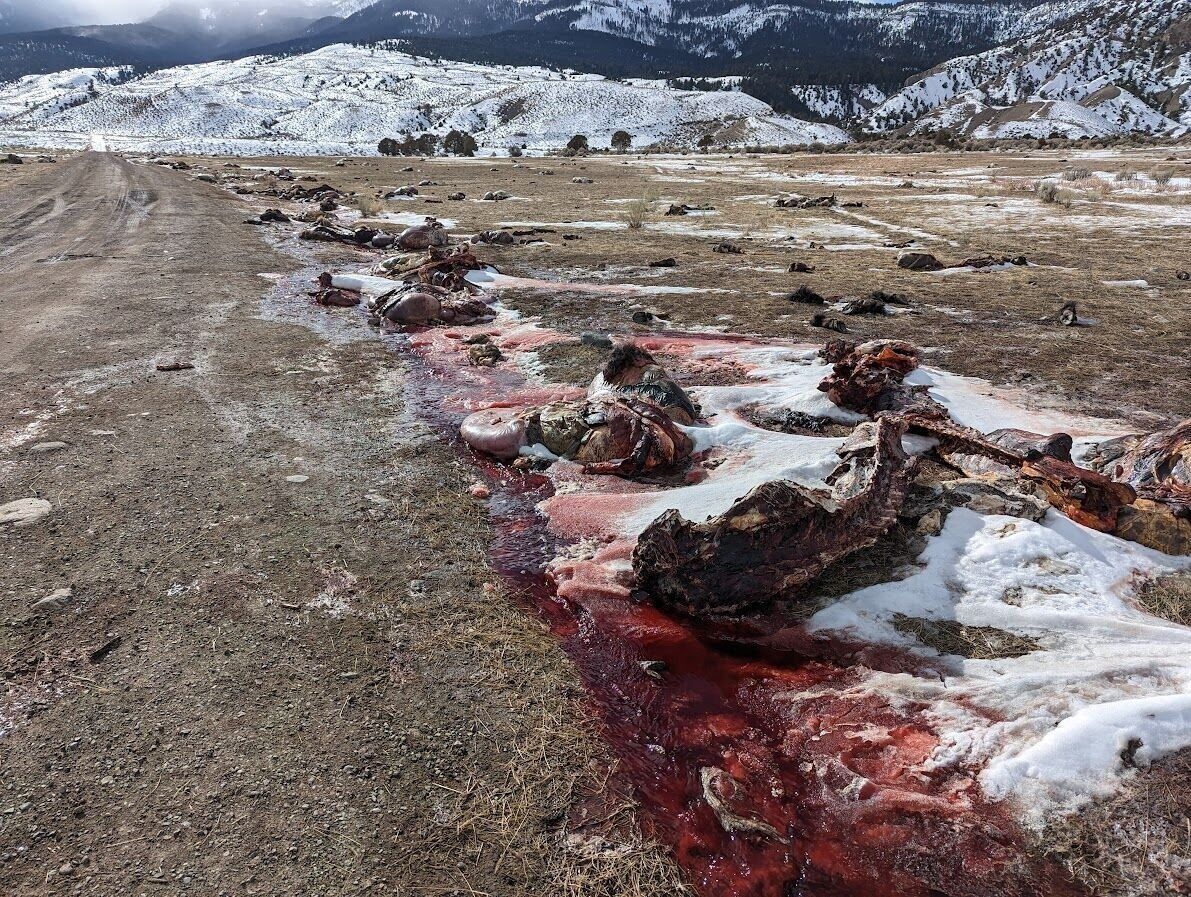
In the winter of 2022-23, more than 1,100 bison were killed mostly by tribal members with treaty hunting rights, with the bison entrails causing concerns for neighboring landowners like Bonnie Lynn.
“A stream of blood from dead bison literally flowed out of Beattie Gulch,” Pettinato said. “We have videos."
“We're here on behalf of the people of the United States and neighbors who live across the street from this travesty of Yellowstone wild bison management, and on behalf of the bison themselves,” he added.
The original lawsuit argued that rather than address the situation, “the Federal agencies have foisted the dangerous and concentrated impacts of bison hunting onto a small group of private property owners, neighbors, and visitors.”
Although the Forest Service has “denied jurisdiction over Yellowstone wild bison hunting,” Pettinato argued the Federal Land Policy Management Act gives the Forest Service “that power.”
Assigning blame
Pettinato took credit for his lawsuit, which initially included the National Park Service, for forcing that agency to finally update its bison management plan in 2024.
“No other plaintiff in any bison management litigation had ever gotten a new (environmental impact statement) in 20 years,” he said.
Once the new management plan was issued, a District Court judge ordered the clerk of court to close out the Neighbors Against Bison Slaughter lawsuit, but that’s not how Pettinato read the decision.
“Just because the clerks close the case doesn't mean that it's not appropriate to file motions in it, that it is not closed forever,” he continued.
Pettinato told Judge Morris he had expected the Forest Service to file a Record of Decision as a cooperating agency with the Park Service on its bison management plan. Since that never happened, his clients’ case could be reactivated, he argued.
“We ask you to reopen our case and allow us to continue briefing summary judgment,” he said.
Judge Morris questioned why the Forest Service needed to issue its own environmental impact statement and a record of decision if it was a cooperating agency with the Park Service.
“It didn't analyze any Forest Service obligations,” Pettinato said. “The Park Service said our jurisdiction stops at the Yellowstone National Park boundary, and so we are not going to analyze what happens after that.”
The forest plan
The Custer Gallatin National Forest did finalize a new Land Management Plan in 2022.
“It’s through the Forest Plan that the agency addresses habitat management and cooperative work with tribes, the state and other partners on increased tolerance for bison,” former forest supervisor Mary Erickson told the Billings Gazette for a 2025 story.
When Judge Morris noted that “hunting is typically not an activity regulated by the Forest Service,” Pettinato cited a portion of federal statute that allows certain forest lands to be regulated for fishing and hunting for reasons of public safety.
“Which is one of our objections to what's happening exactly here in Beattie Gulch, and that has never analyzed,” Pettinato said, noting earlier in his argument that a Nez Perce tribal member was injured by a bullet that ricocheted during a 2023 hunt.
Ramus, the DOJ attorney, countered that the Forest Service would need to conduct an environmental analysis only if the agency was going to regulate hunting and it has no intention of doing so.
However, past actions by the agency have attempted to make hunting at Beattie Gulch safer, including: a permanent shooting closure for a portion of the gulch near the Yellowstone River; a 150-yard no-shooting zone along the county road where bison remains must be removed; and opening of an administrative road to ease crowded parking conditions on the county road.
After noting that the number of bison killed on forest lands has markedly increased over the years, Judge Morris asked Ramus at what point have the circumstances on the land changed enough to trigger an environmental analysis?
“The Forest Service has no obligation for NEPA with regards to bison management, because it has no federal undertaking related to bison management of the bison themselves,” Ramos said, referring to the National Environmental Policy Act that requires federal agencies to assess the effects of actions on things such as land management.
Ramus continued that the 2022 forest plan was the Forest Service’s NEPA action, which considered the possible expansion of bison habitat onto more forest lands should Montana agree to expand the so-called tolerance zones for bison to wander outside of Yellowstone.
Pettinato countered that the bison can’t get any farther into the tolerance zones because of the firing line at the park border.
“It’s a wall of lead,” he said.
With each of the Interagency Bison Management Plan cooperators acting in their own self-interest, Pettinato said the court needs to step in to end the “blame game.”
“The agencies need help, because it's not a sustainable situation,” he said. “It's dangerous for everyone, and there is a better solution that the agencies are shying away from.”
Comments ()