
Judges express skepticism during Lighthiser v. Trump youth climate appeal hearing
A 9th Circuit Court of Appeals three-judge panel expressed skepticism Monday toward both sides of an appealed request meant to halt some of the Trump administration's energy-related directives.
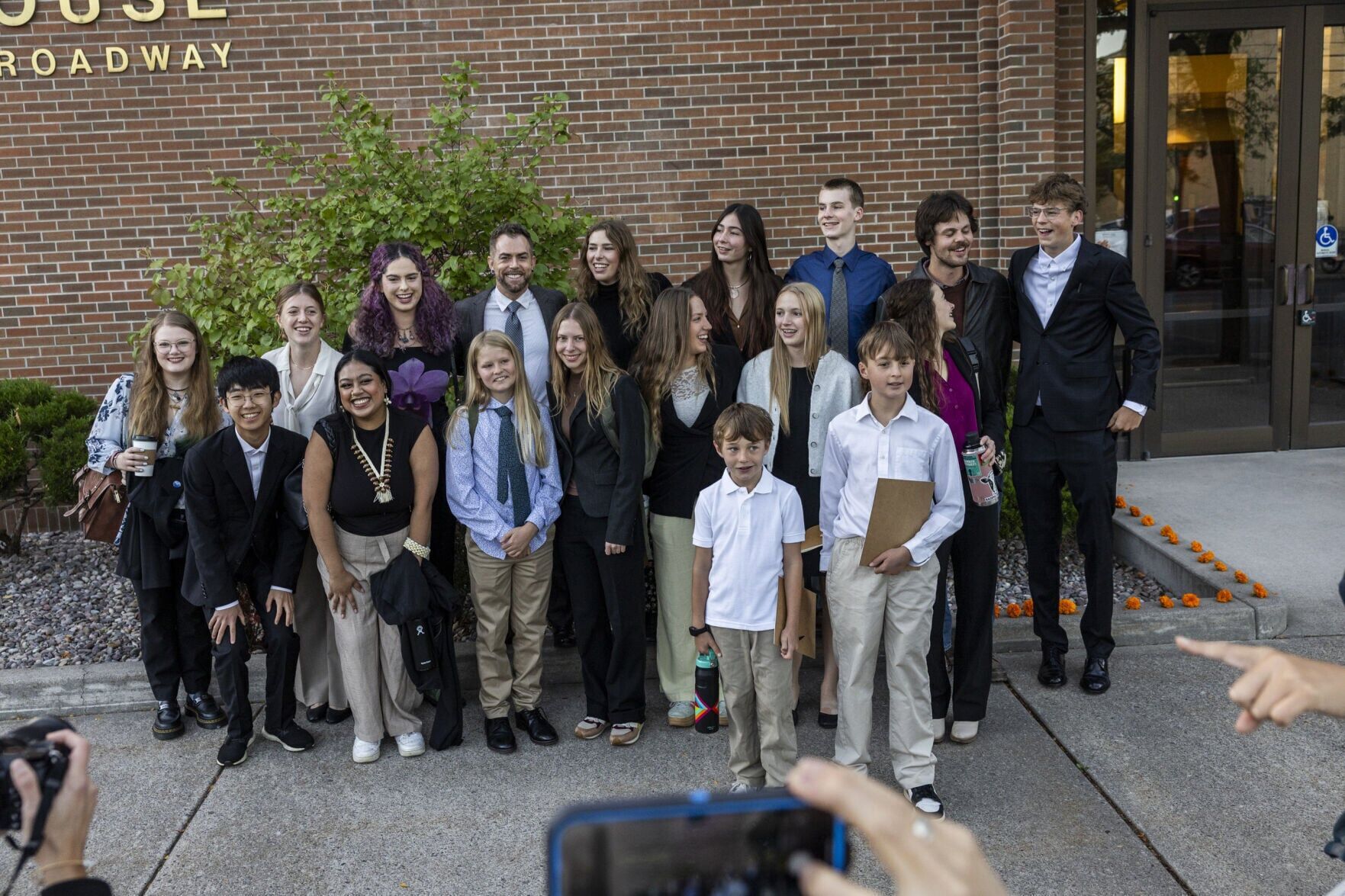
The lawsuit, Lighthiser v. Trump, was filed in May in U.S. District Court in Missoula on behalf of 22 people under the age of 25, most of whom are from Montana. Some of them are the same group from Held v. Montana, whose 2023 case reaffirmed Montanans' right to a clean and healthful environment as outlined in the state constitution. The state of Montana and 18 other states have intervened in the Lighthiser case to defend the U.S.'s directives.
The group, represented in part by the environmental group Our Children’s Trust, told the panel that U.S. District Judge Dana Christensen erred in his October assessment. His decision concluded it wasn’t in the judicial system’s capacity to address the plaintiffs’ concerns. Nonetheless, he still said Trump’s policies will increase the harm plaintiffs experience from a warming climate in his "reluctant" decision.
At its core, the appeal asks the 9th Circuit whether the groups of young plaintiffs can assert harm inflicted by three executive orders. That means they could seek remedies, likely ending those directives. Those three executive orders included seeking to “unleash American energy” (focused mainly on fossil fuels), declaring a national energy emergency and revitalizing the country’s slumping coal industry. Once their standing is asserted in the appeals court, plaintiffs want it to be sent back to district court in Missoula where it could proceed to trial so they can present their evidence of harm.
Plaintiffs
Our Children’s Trust attorney Julia Olson referenced the Learning Resources, Inc. v. Trump case as why plaintiffs merit standing to challenge administrative directives associated with five executive orders. That case, ruled recently in February in favor of the plaintiffs by the Supreme Court, overturned tariffs previously authorized by the president. The plaintiffs have viewed the rare rebuke of the Trump administration by the Supreme Court as a boon for their case, which wasn’t there when the district court made its ruling.
Olson emphasized the remedy sought isn’t a decision meant to itemize hundreds of actions taken at the direction of the orders. Instead, the plaintiffs want the revocation of the executive orders that Olson said were illegal and reviewable.
“What plaintiffs seek is for energy policy to be restored to the policy that Congress enacted,” Olson told judges. “And again, since 2020 there have been three major pieces of legislation that address energy and climate, and those pieces of legislation have moved the country intentionally towards renewable energy, to expand it, to electrify the transportation system, and very intentionally, Congress' policy has been to reduce greenhouse gas pollution.”
After her opening statement, Judge Lawrence VanDyke told Olson it felt like a finding in favor of the plaintiffs “could just be something that goes on and on,” echoing some of the district court’s opinion before him that it could be difficult to enforce in one sole order.
“It’s not a ruling that the district court would make just once, because you've got a massive federal government that’s doing a bunch of things, including probably out of this (the executive orders),” the first-term Trump appointee said.
He added that the government could still take some administrative actions and just not reference the executive orders, although plaintiffs would likely want to dispute that in court.
Olson replied that administrations could still act, but they would need to act within the boundaries established by Congress.
VanDyke insisted the government could still take some of the actions with or without the executive order, which he said would prompt plaintiffs to seek contempt actions if the district court ultimately ruled in favor of harm.
Olson said “the fact that defendants may violate an order of the district court and require contempt proceedings is not a basis for the court” to reject its basis for standing.
A 9th Circuit panel dismissed G.B. v. U.S. Environmental Protection Agency last week, another youth climate case, finding that the California children lacked standing to bring the lawsuit. Olson said the case wasn’t relevant here.
Defendants
John Adams, representing the federal government, made his opening statement by deriding the lawsuit as “another climate change case with sprawling and speculative legal theories and claims.” He said the plaintiffs lack any standing to make their claim. The plaintiffs in part have pointed to the constitutional rights established in the 14th Amendment, which assert the U.S. shall not “deprive any person of life, liberty, or property.”
Adam referenced Juliana v. United States, which ruled in favor of the U.S. in 2020 against plaintiffs who sought remedies around the federal government causing dangerous carbon dioxide concentrations. The case was dismissed repeatedly for lack of standing with its youth plaintiffs, although it covered a wider swath of government actions. The district court referenced the ruling involving Our Children’s Trust as well.
The federal government also said some actions established in the executive orders could still be taken without them. Adam pointed to the coal executive order and said the Secretary of the Interior could still prioritize coal leasing as established by Congress, though no new coal lease sales have successfully happened under the second term of Trump.
“In other words, even in the absence of this executive order, the Secretary of Interior could still take the same actions that plaintiffs claim caused their injury,” Adam said.
He said the plaintiffs and defendants would be here for the rest of their “collective lifetimes to be able to figure out what it is that plaintiffs are seeking to require here.”
The attorney referenced climate change as “alleged” at one point, stating that what plaintiffs seek in climate change is beyond the court’s power nor can it be localized to one specific injured person, prompting questioning by a judge.
“Are you saying there can never be a climate change case?” Judge Jennifer Sung asked, expressing skepticism of the government’s argument throughout. “There can never be a plaintiff who suffers a particular injury, because it affects everyone?”
“I think in this particular circumstance, your Honor, yes, I am saying that,” Adam replied.
He asked for a court to make a decision on the merits, though shortly thereafter retracted the request after Judge John Owens, mostly silent in the hearing, told him to be careful for what he asked for. A case ruled on the merits, even if against plaintiffs, would likely establish standing to challenge government actions around climate action in the future.
Olson, the plaintiffs' attorney, concluded the hearing by giving judges a hypothetical scenario based on the government’s rationale that any climate injuries are unreviewable.
“It would lead to the unreviewable discretion of executive action,” Olson said. “A president concerned with climate change issues executive orders and declares a climate and energy emergency, and then he eliminates the gas, coal and oil from the definition of energy resources. He then, by executive order, directs agencies and officials to block all permitting for oil, gas and coal and coal extraction as undue burdens on renewable energy. He directs the unleashing of wind, solar, renewable energy and electrifying the transportation system, and he expedites renewable energy projects on federal lands, but he does everything to block oil, coal and gas on federal public lands. The stated goal of the president is to drive a dagger through the heart of the fossil fuel religion.”
Judge VanDyke expressed skepticism after the hypothetical was given, still questioning if the case was being challenged in the proper way.
In an interview with the Gazette after the 45-minute hearing, Nate Bellinger, who worked as the lead attorney in the successful Held v. Montana youth climate case, said he felt “really good overall” about the hearing.
“We're really just asking the court to do its job as, you know, the third branch of government, to review the executive orders to determine whether or not they're constitutional, as they've done in other executive order cases like the Learning Resources case.”
He said the position the government took was alarming, describing that its stance would prefer all climate cases to be unreviewable by the court.
“But I think it is consistent with their goal to consolidate power in the executive branch and minimize the job of the courts to act as a check on the political branches,” Bellinger said. “Thankfully, the Supreme Court rejected those arguments in Learning Resources, and hopefully they will here as well.”
The United States Department of Justice didn’t respond to a media inquiry. The panel of judges will issue a decision in the coming months.


Comments ()