
Kappa Sigma fraternity faces interim suspension
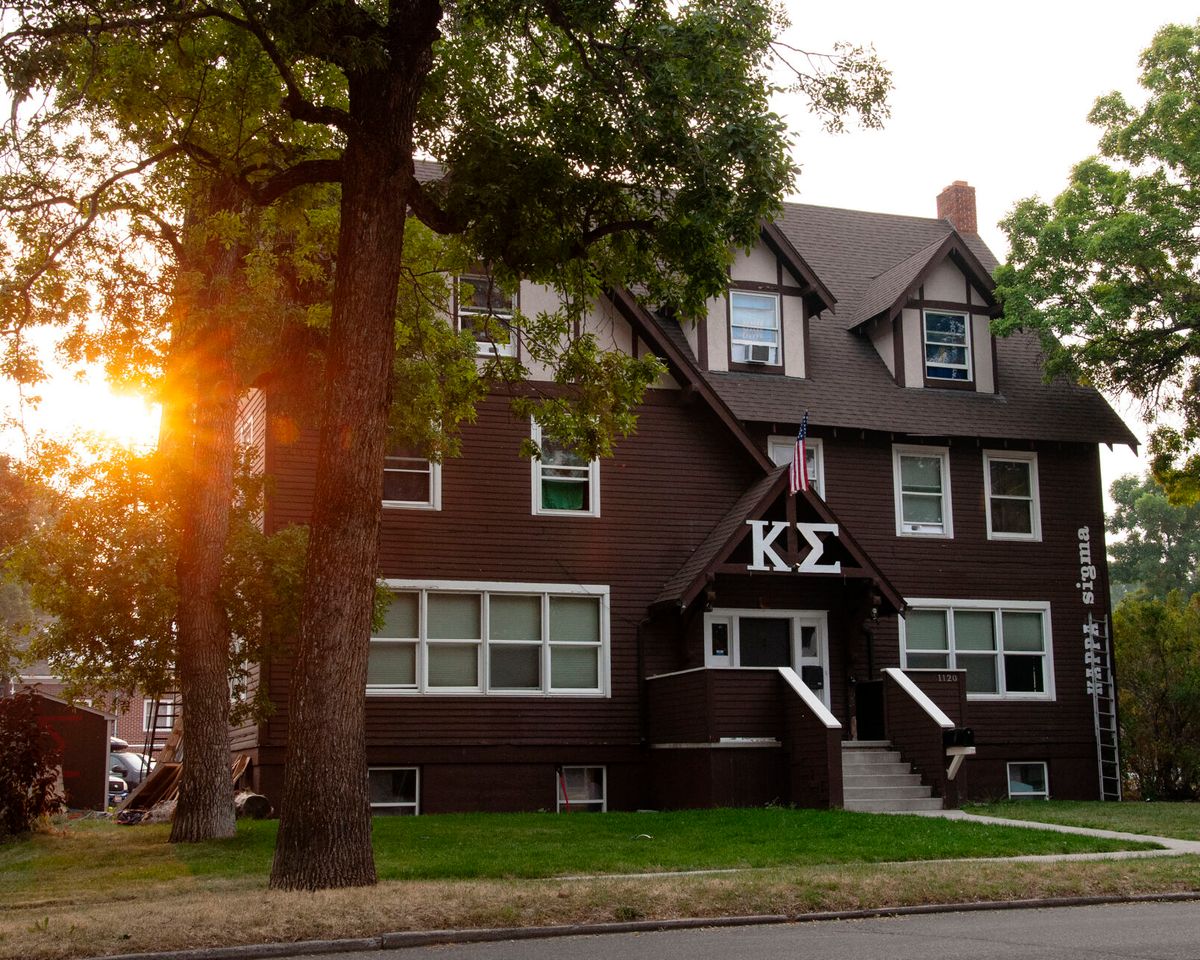
On Wednesday, Aug. 31, the Division of Student Success and Office of the Dean of Students placed the Kappa Sigma Lambda Delta chapter of the Interfraternity Council (IFC) at MSU on interim suspension.
The fraternity, residing at 1120 S 6th Ave, is a chapter of the largest national fraternity in the nation. It has been under scrutiny multiple times in the last year, most notably when 11 members of the fraternity faced felony and misdemeanor charges in relation to hazing, forced underage drinking, assault and unlawful restraint charges.
As a result of these hazing incidents, the fraternity was placed under probation, which included a no-alcohol policy during the fall semester. The leadership team of Kappa Sigma also went through a restructuring following the hazing events and the removal of key fraternity members.
The recent interim suspension, occuring under new Chapter President Jacob Brueher, comes in response to a large gathering at the chapter house on Friday, Aug. 26, where two guests were transported to the hospital under the influence of alcohol, and one of the guests alleged that she was the victim of a date-rape drug.
It comes as no surprise that fraternities and sororities are under the tight watch of universities across the country. Each year, members of these college organizations face criminal charges for crimes like hazing, underage drinking and university alcohol policy violations.
“Fraternities are unique because they’re the only student group we have that have the privilege of hosting events with alcohol,” said Matt Caires, MSU’s dean of students, during an interview with the Exponent. Pledges of fraternities and potential new members, or PNM’s, of sororities, are the titles associated with students attempting to gain initiation, or membership, into these groups. It is common practice, albeit prohibited by universities, for chapter members to haze, or require any tasks and actions to be done by these pledges and PNMs at the request of full-members, during this initiation phase.
It is also MSU policy to prohibit ‘hard-alcohol,’ or alcohol over 15% ABV at any fraternity event, however it is important to note that the alcohol-free policy Kappa Sigma allegedly violated on the night of Aug. 26 was specific to the terms of the chapter’s probation, and does not extend to every IFC group on campus.
Under university policy, hazing can be as simple as “waking students up at 6 a.m. and making them run through the sprinklers,” said Caires during an IFC and Panhellenic Council (PHC) Town Hall Meeting on the evening of Wednesday, Sept. 7, in the SUB. In attendance at the meeting were leaders of Fraternity and Sorority Life (FSL) at MSU, President Waded Cruzado, Caires, Vice President of Student Success Chris Kearns and Michael Stanley, MSU’s Chief of Police.
According to Caires, the leadership team of Kappa Sigma met with the Office of Student Success and FSL earlier in the day on Aug. 26 to clarify and review the terms of their probation, including the no-alcohol policy that the fraternity violated later that night.
“On Friday afternoon, they had agreed to the alcohol-free status and the probation. Less than six hours later, we had information citing a number of students claiming they were drinking, not just alcohol, but hard alcohol, which is also a violation of national policy,” Caires said.
As for the date-rape drug allegations, the investigation is ongoing and the university was unable to comment.
“I have now worked with our attorneys for 12 years,” Caires said. “And there’s been lots of allegations of date rape drugs. We’ve never, in my time, had one of those allegations come forward with legitimate, chemically-proven date-rape.”
According to the National University of Natural Medicine, there are several forms of testing available for the presence of date-rape drugs, both in drinks and in a bodily system. They are often extremely accurate and the drugs are detectable for 72 hours after ingestion, according to the website. “The date rape drug of choice [on the evening of the 26] was alcohol…and for me, that’s just as scary as a date rape drug,” Caires said. “The fraternity, not specific members, the fraternity is under investigation,” he clarified at the town hall meeting.
FSL members attending the town hall voiced concerns surrounding numerous past conduct violations by Kappa Sigma.
According to Dylan Edlund, the president of Pi Kappa Alpha, these allegations are not a “one time thing with the Kappa Sigmas. This is now a series and a pattern of behavior.”
Multiple other fraternities have faced probation and suspensions since 2011. Caires said that this is the fifth time his office has placed a fraternity on interim suspension, including two suspensions of Pi Kappa Alpha in 2013 and 2016 and the removal of Sigma Alpha Epsilon fraternity in 2018, a group that has since been reinstated on campus.
Following an explanation of Kappa Sigma’s behavior and the pending consequences of the recent allegations, Caires and FSL leaders sat for a 30-minute Q&A session. One of the first questions asked was by Megan Prigge, a senior in Pi Beta Phi, who wanted to know how the Dean of Students planned to hold fraternities “accountable for situations where there are sorority women, or other first year freshman students, who are…given alcohol on these [fraternity] properties.”
Caires emphasized throughout the meeting and during the Q&A that it is university and national chapter policy for fraternities to restrict hard-alcohol, or, in Kappa Sigma’s terms of probation, have no alcohol.
“Fraternities and sororities are student organizations recognized by the university that are ultimately run by [young] adults. And sometimes young adults make mistakes, but at the end of the day, the responsibility of the drinking and the activities that occur in fraternities or sororities belongs to you,” Caires said to the audience of over 400 fraternity and sorority members. “Our job is to facilitate your understanding of the rules and to hold you accountable when you violate them.”
Caires also noted during the session that any allegations of sexual assault within the university community is handled by the Office of Institutional Equity, and other support offices like the VOICE center and university police.
Caires wrapped up the town hall meeting by emphasizing that there are no university plans to permanently shut down Kappa Sigma in light of the recent allegations.
“I want to be clear, and I was very clear with the Kappa Sigs when I met with them, the university has no interest in purchasing the Kappa Sigma house,” Caires said. “So rest assured, Kappas and the rest of them, we’re not interested in taking over your fraternity.”
The interim suspension is in place indefinitely while the accusations are investigated. The suspension means that as a fraternity group, Kappa Sigma cannot hold or participate in any university events. The fraternity was also forced to end their fall rush early amid these accusations. Kappa Sigma declined to comment on the allegations and interim suspension.


Comments ()