
Know where you’re safe: VOICE Center educates about Red Zone
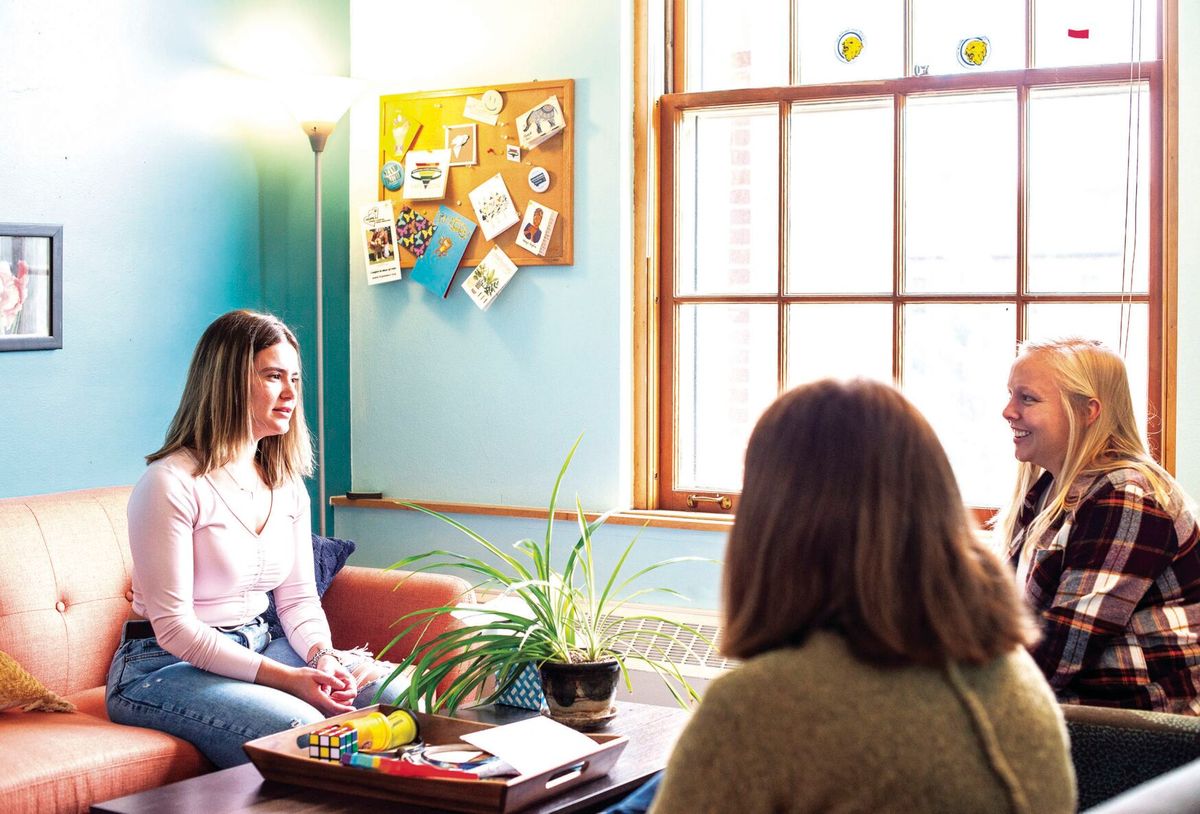
Starting college can be an exciting but scary experience and taking personal safety into account is sometimes easier said than done. According to the MSU VOICE Center, our campus is in the Red Zone until October 4.
The Red Zone is recognized as the first six weeks of classes on any college campus, in which heightened instances of sexual assault and violence occur VOICE Center director Anna Slown said. “It’s a time of heightened incidences of sexual assault and sexual violence.”
Between August and November, 50 percent of the rapes that happen throughout a school year happen during that time, she said.
The VOICE Center is a 24/7 confidential support system for survivors of sexual assault, relationship violence and stalking. They want to educate people about the Red Zone, not necessarily for risk reduction but to increase awareness, according to Slown.
There are several factors that induce higher rates of sexual crimes within the first six weeks, Slown said. Although upperclassmen can experience the Red Zone, freshmen are typically impacted more. “They’re coming to a brand new environment where they’ve never been, they’re making friends and probably aren’t coming in [with] the same tight social structure that they had in high school,” she said. “They don’t have these people that they know, that are safe to lean on.”
Other factors include individuals not knowing their own alcohol and drug tolerance as well as normalizing violence, Slown said. “I think sometimes there’s a culture of like, I’m in college, [violence] is a normal thing, when really, some of it is not normal,” she said. “Violence happens because somebody is perpetrating it.”
Miller Rijfkogel, the president of Students Against Sexual Assault (SASA) suggested that one of the causes is predatory behavior on campus from people that recognize there are a lot of vulnerable people out there.
“The biggest thing SASA focus on is changing the culture,” Rijfkogel said. “We try to change the culture to ensure that first, the people who are predatory are no longer endorsed and then a change to make sure that people support people.”
Rijfkogel also said that there is still a lot of victim blaming going around so changing the culture to one of support is what students need most.
Additionally, the social messaging around sex on college campuses helps to create a narrative that many college students are having a lot of sex, Slown said — so much so that college students think that their peers are having 25 times the amount of sex their peers are actually having.
“This social messaging creates an environment where people think that sexual activity is much more common and people can expect to have this much sex,” Slown said. “Violence can occur when people expect sex and are not having conversations about consent, also because a lot of sexual activity is normalized, some people normalize sexual violence as well.”
Issues of consent often happen when people have different sexual goals, Slown said. Although it doesn’t matter what sexual goals people have, it’s important to communicate those differences so that individuals can make informed decisions, she said.
It’s important to know that various resources including confidential sessions and sometimes monetary assistance are always available for students who need them. Since the VOICE Center focuses on education, they are present at every first residence floor meeting of the year so that students in the residence halls can connect with them, but they are just one office, Slown said. “I think it’s very helpful for faculty and staff to understand that this is a time that is a little bit more vulnerable.”
Sexual assault is one of the least reported crimes, Slown said. “On college campuses, two to four percent of sexual assaults that happen do get reported to the police or the Office of Institutional Equity.”
Since the VOICE Center is confidential, they hear a greater amount of accounts of violence, she said.
“For people that do experience violence at the beginning of school, it’s so detrimental for a lot of different reasons,” Slown said, explaining that it is more difficult for individuals to form a community after they’ve experienced violence.
Survivors often require emotional support after their experiences. The VOICE Center is providing people a space to tell their stories. “We’ve had a lot of people come in and say ‘this is the first time I’ve been believed when I tell my story.’”
According to Slown, the VOICE Center also acts as a bridge to other resources helping students move housing or providing academic support. Off-campus students can also receive housing support if they need it. “We’ve got what’s called a survivor fund, it’s a pool of money that you’d use to support survivors in any monetary way,” she said. That money can be used for new rental deposits if someone needs to move among other uses.
“It’s been really great to be able to connect people to what they need, especially seeing that sometimes it’s a lot harder,” Slown said.
The VOICE Center is located in SUB 370 and runs a 24/7 confidential emotional support hotline, call or text (406)994-7069.
To learn more about the Office of Institutional Equity or to file a report, visit https://www.montana.edu/equity/.



Comments ()