
Launching a dream: Dawson Community College student earns visit to NASA’s Langley Research Center
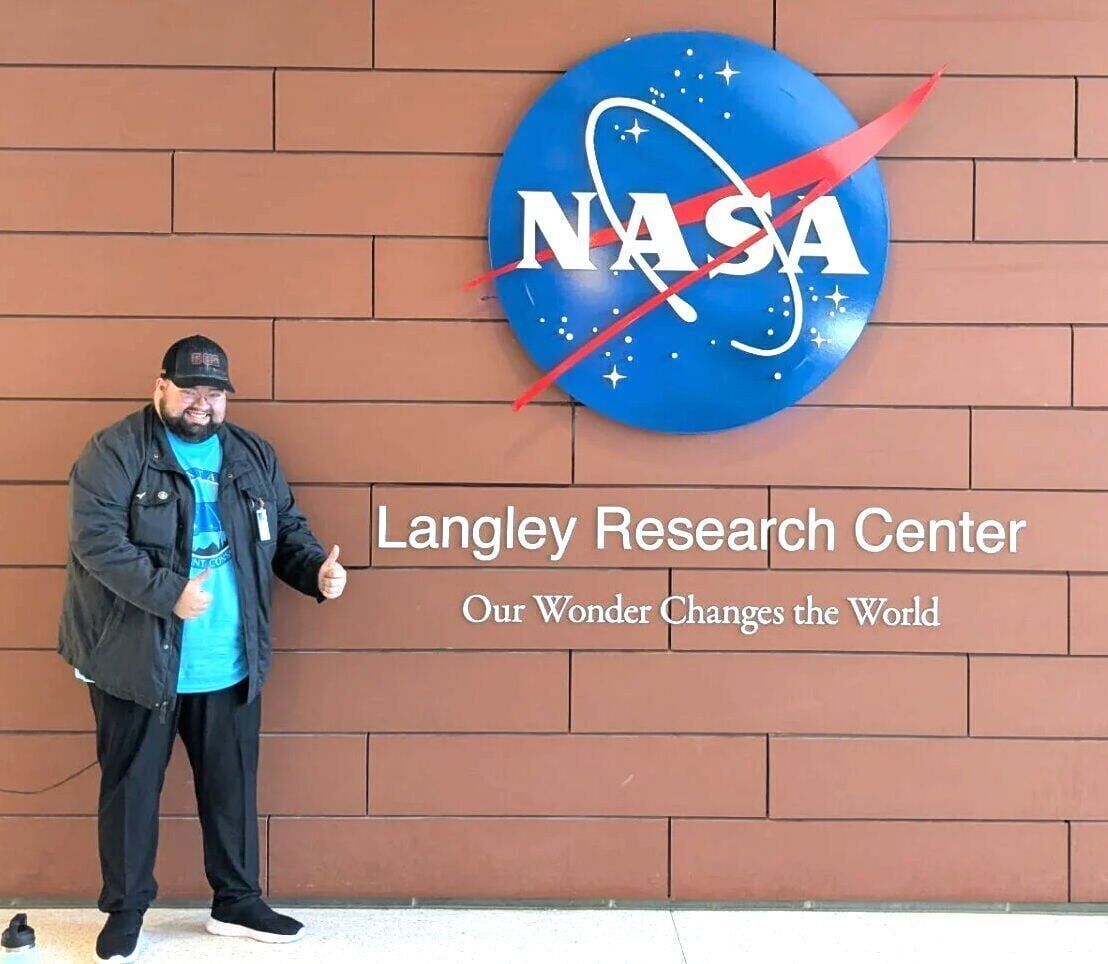
GLENDIVE — A lifelong fascination with the night sky turned into a once-in-a-lifetime opportunity for Dawson Community College student Mac Haggerty, who recently earned a two-day visit to NASA’s Langley Research Center through the Montana Space Grant Consortium.
Haggerty’s fondest memories as a child were space week in school and spending nights looking up at the sky. He is majoring in physics and astrology at Dawson Community College, and his lifelong goal is to work at the Langley Research Center.
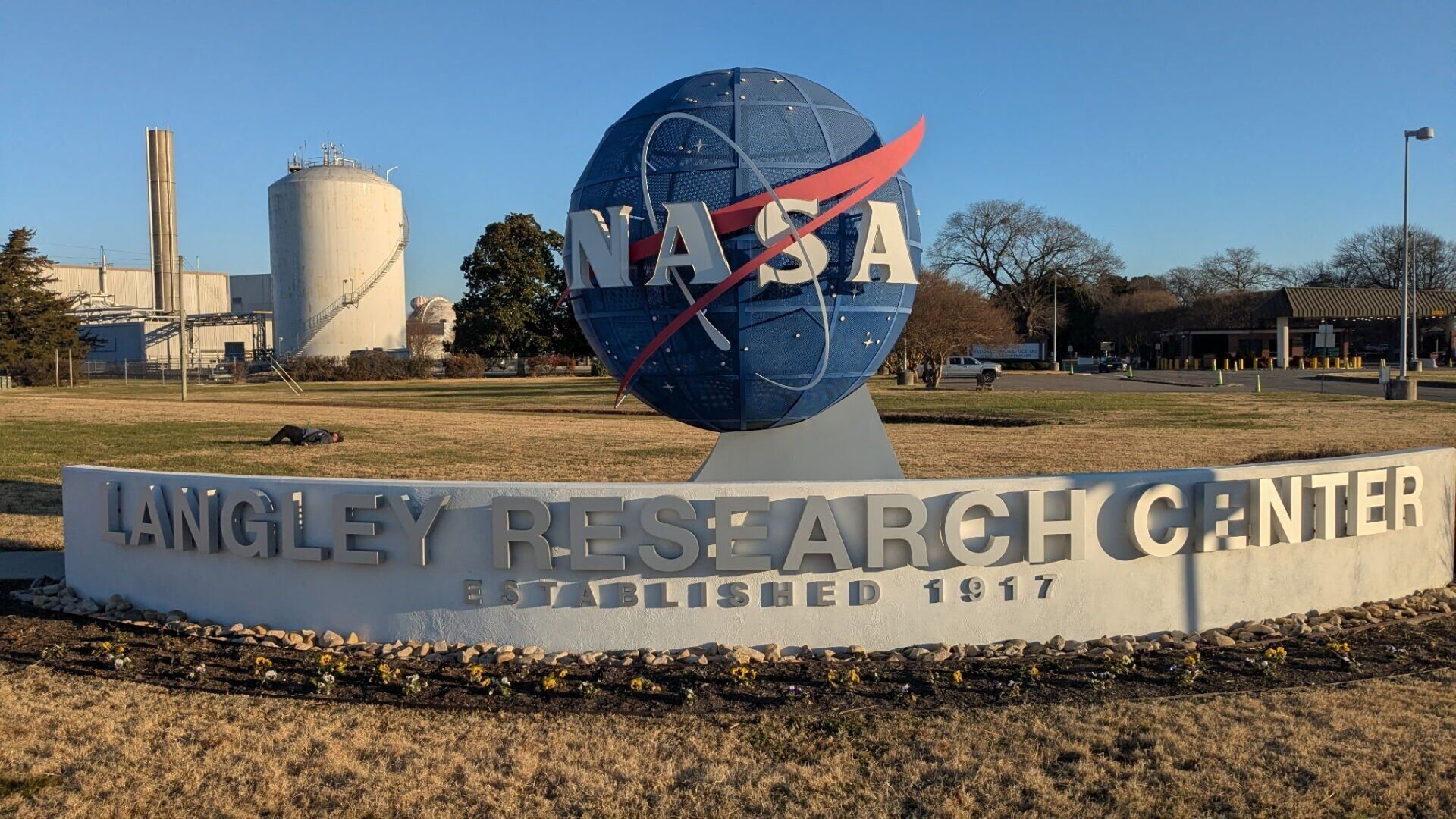
It was a match made in space in January as Haggerty was awarded a chance of a lifetime, a two-day visit to the Langley Research Center in Hampton, Virginia. Haggerty earned the opportunity through a grant from the Montana Space Grant Consortium, submitting an essay outlining why he should be selected and what he hoped to gain from the experience.
The Montana Space Grant Consortium is a program that strives to strengthen Montanans’ education in NASA-related fields. MTSGC accomplishes this by offering students and faculty opportunities geared toward hands-on projects. MTSGC is affiliated with all 23 colleges and universities that offer at least one STEM (science, technology, engineering, mathematics) degree.
Haggerty was told that not many people from Eastern Montana put in for the grant, and with a major in physics, he was a “shoo-in to achieve the grant.” The student closest to Eastern Montana besides Haggerty came from Billings.
On Haggerty’s first day, the focus was on NASA’s aeronautics division, where officials showcased several aircraft equipped with scientific instruments used to collect atmospheric data. He said the largest plane he saw was outfitted to measure the upper atmosphere above Greenland.
Haggerty asked to see inside the aircraft for a closer look before moving on to the drone program, but received no response.
The drone program featured three unmanned aircraft, with demonstrations highlighting the capabilities of two. The first was a four-propeller, aluminum-wrapped electric drone used for advanced radar tracking. It could be programmed with a preset GPS return location, and its compact size made it easy to transport.
Based on its design and function, Haggerty speculated that it may have been developed to replace weather balloons, though he did not receive a definitive answer when he asked.
The second drone offered a unique hybrid concept. It was designed for vertical takeoff using electric-powered propellers. Once it reached a specified altitude, the aircraft transitioned to a rear-mounted gas engine for conventional forward flight. The design could potentially make it easier for pilots to transition from flying traditional airplanes to operating drones.
It wasn’t just a show and tell on the first day. After demonstrating the capabilities of the hybrid drone, the students had the opportunity to pilot their own drone.
As it was Haggerty’s first time piloting a drone, he admitted it “showed.” He said he was just as happy to sit back and watch the other pilots perform aerial maneuvers with their drones.
The second day began with a tour of the Measurement System Laboratory building by the chief engineer. The focus of this group is to shrink sensors and instruments, allowing air/spacecraft to have longer flight times.
The first item shown was a mirror. When looking at the mirror under a microscope, he can see “thousands if not millions” of little dots, he said. When Haggerty asked how small the dots were, the response was 1 micron wide, which is 1/10 the width of a human hair.
They were shown a scientific instrument that had been reduced from the size of a 55-gallon drum to a device small enough to fit on a dining room chair — a demonstration of how compact modern technology has made such equipment. Haggerty asked the engineers whether they had reached the point of fundamentally rethinking how these instruments are designed and built.
Haggerty’s biggest takeaway from the experience was the opportunity to speak with NASA scientists and hold thoughtful, in-depth conversations — something he valued deeply, especially coming from a small town, he said.


Comments ()