
Mark Egge: Will we finally focus on safer streets for cyclists, runners this time?
On Feb. 26, Leslie Brown was killed in a marked crosswalk on Oak Street while out for a morning run. She is the latest in a series of cyclists and pedestrians killed on Bozeman’s high-speed, multi-lane roads.
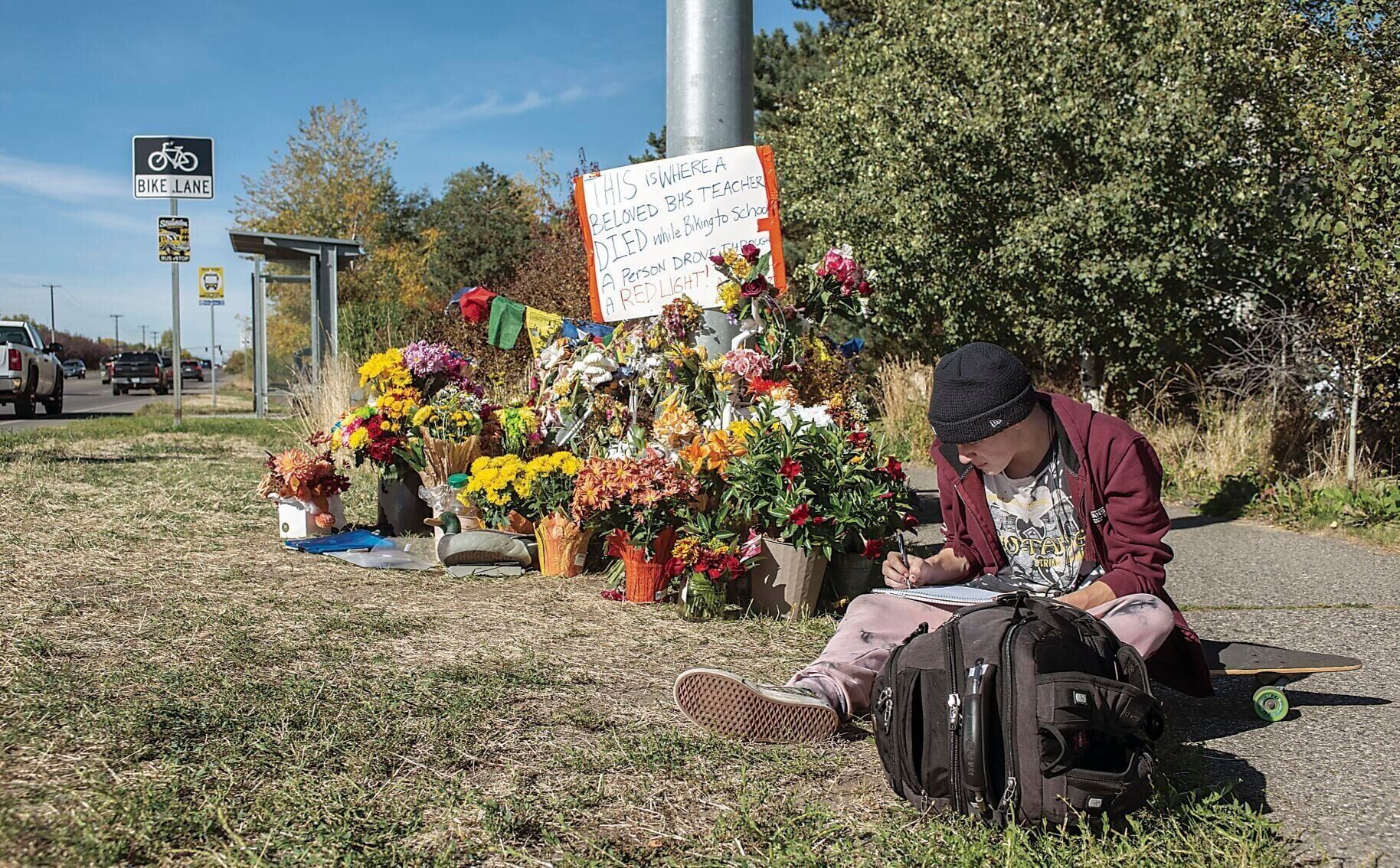
In 2019, Alexa Dzintars was killed riding her bike home from work on 19th Avenue. In the fall of 2022, Richard Evers was killed on his bike crossing Huffine Lane, and weeks later Kelly Fulton — a Bozeman High math teacher biking to work with a green light — was killed when a driver ran a red light on Oak Street. Now Leslie Brown, on the same street.
After each death, the same cycle plays out. The community grieves. City leaders express concern. Residents urge the City Commission to act. And then nothing changes. And then someone else dies.
The question before the Commission now is whether this time will be different.
There are reasons for cautious hope. The Commission has a road safety work session on April 14, and a new transportation master plan is in development — moments where priorities get locked in for years. But Bozeman has had moments like these before, and the pattern has held.
In 2023, the Commission adopted its Streets Are For Everyone (SAFE) Plan. It is a good plan. Its full implementation could have saved Leslie Brown’s life. A safer crossing. A road diet. A lower speed limit. Consistent traffic enforcement.
Credit where it’s due — the direction is improving. The city has programmed $2.7 million for shared-use path construction starting next year, and some projects like South 3rd Avenue do appear genuinely driven by multimodal needs. But the city’s budget for safety features like flashing beacons on existing streets is still just $150,000 per year — roughly half of 1% of the city’s transportation budget.
The pace is not commensurate with the problem. People are dying now, on streets the city controls now.
The bigger picture remains lopsided. The Kagy Boulevard reconstruction carries a total budget of $31.7 million. It includes shared-use paths and pedestrian tunnels, and those are welcome. But the project exists because of a perceived need to widen from two to four lanes.
The pattern persists: Active transportation improvements most often get funded when they hitch a ride on a road-widening project.
City staff say they don’t have the money for standalone safety projects, pointing to restrictions on how transportation revenue can be spent. Even if that’s correct, it is not the end of the conversation — it is the beginning of one.
The city could lobby the legislature to loosen those restrictions. It could put a dedicated safety levy before voters. Bozeman residents consistently say they want safer streets for walking and biking.
Has anyone actually asked them to fund it?
We know what works. Sweden adopted Vision Zero in 1997 and has since cut its road fatality rate by more than 70% — not by demanding perfection from drivers, but by designing streets where human error doesn’t equal death.
Bozeman has a plan built on this principle. Implementation has been tepid and slow.
The upcoming transportation master plan will shape Bozeman’s streets for a generation. If it ranks projects the way the current capital program has historically — by vehicle throughput, with safety as a secondary consideration — we’ll fail to improve the safety of our streets and people will keep dying on them.
April 14 is the next chance to break the cycle. The Commission’s work session is open to the public, and commissioners read every message sent to comments@bozeman.net.
If you have ever worried about crossing a busy five-lane road, trying to bike downtown, or walking your kids to school, this is the moment to say so. Show up. Send a comment.
Tell the Commission what kind of streets you want to live on.


Comments ()